DbcultAccessing Vault...
Cult Review
Senior Film Conservator
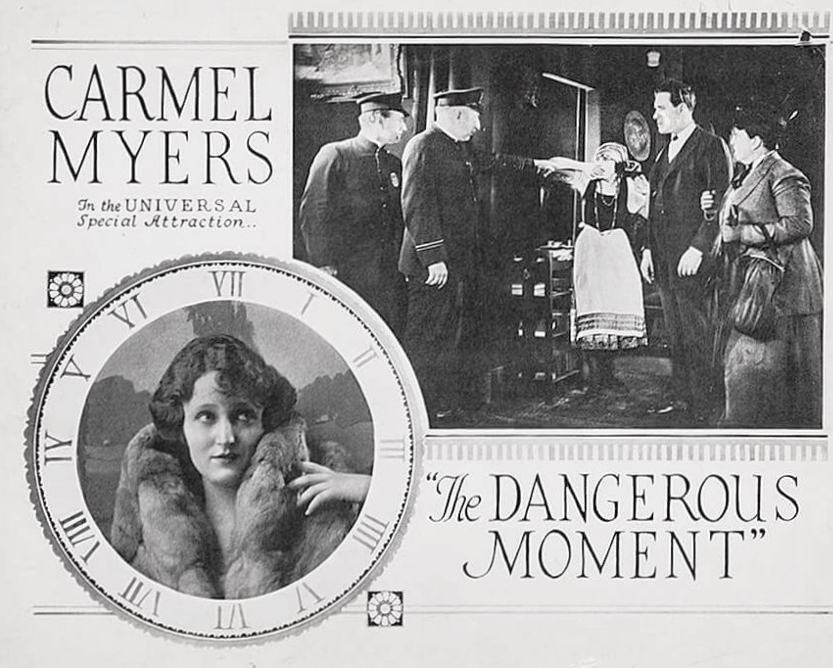
Midnight at The Black Beetle smells of espresso scorched almost to bitterness and of Turkish tobacco that curls like calligraphy above each table. Into this perfumed haze screenwriter John Colton drops Sylvia Palprini—waitress, clandestine poet, accidental nemesis—played by Lule Warrenton with eyes so luminously restless they seem to flicker even between title cards.
Warrenton, better known then for maternal roles, weaponizes fragility here; her Sylvia quakes yet never crumples. Watch her fingers drum against a porcelain saucer—each tremor foreshadows the fatal swing. The camera, hungry for intimacies, glides past bow-tied cellists and dilapidated poets to land on Fred Becker’s George Duray: gaunt cheeks stippled with cobalt, cuffs stiff with gesso. Becker moves like someone perpetually hearing distant music, a body calibrated to rhythms the rest of us ignore.
The plot, deceptively linear, is a Möbius strip of gazes. Every character watches someone who watches someone else; desire ricochets off brass rails and beveled mirrors until Movros Tarkides—Bowditch M. Turner channeling every Broadway cad swagger—ruptures the circuit. Turner plays him not as thug but as collector: of women’s glances, of sculptors’ gossip, of the exact angle a chair leg must strike to fracture a parietal bone.
Cinematographer William Marshall (uncredited yet identifiable by his chiaroscuro fingerprints) bathes the café in ochre lamplight that pools like cognac. When Sylvia flees, the palette desaturates to slate and pearl, as though the city itself holds its breath. George’s garret erupts with color: vermilion, viridian, a cruciform slash of cadmium that predicts the Expressionist explosion of Dämon und Mensch across the Atlantic.
Art is not refuge here; it is evidence. Canvases become character witnesses, brushstrokes affidavits.
Contrast this with Lord and Lady Algy’s drawing-room brittleness or The Master Key’s serial cliffhanger brightness. The Dangerous Moment opts for chiaroscuro noir before noir had a name, paving greasy cobblestones for later masterworks like Carmen and Breakers Ahead.
There is no spoken word, yet vocal cords seem to vibrate through the screen. Carmel Myers, cameoing as a cigarette girl, sells entire backstories with a single shoulder lift. Marian Skinner’s landlady enters for twelve seconds—enough to etch a lifetime of evicted dreams. The cumulative effect is cacophony without decibels, a reminder that restraint can be thunderous.

Meanwhile, Herbert Heyes’s detective—equal parts Javert and Keystone—embodies institutional inertia. His badge catches lamplight like a predatory eye, and when he finally ascends George’s staircase the camera tilts fifteen degrees, implying moral imbalance long before Sylvia’s arrest. It is silent-era vertigo, predating Hitchcock’s bell-tower by six years.
Colton and co-scribes William Clifton, Douglas Z. Doty compress the procedural into haiku: assault, accusation, absolution. Yet within compression blooms ambiguity. Did Sylvia intend to kill or merely cripple? The film withholds the fatal blow; we see only the arc, never impact. Such elision radicalized 1921 viewers accustomed to mustache-twirling clarity. Compare it with A Child of the Wild’s wholesome animal allegories; here morality sports bruises.
George’s studio sequence—nearly twenty minutes—plays like chamber opera. Hidden compartments, half-eaten apples, canvases facing the wall: every object murmurs red herring. When skylight shards sprinkle across Sylvia’s hair, Marshall’s backlight turns them into halo fragments, sanctifying the “murderess.”
Sylvia’s apron is her ball-and-chain yet also her passport; the café affords proximity to genius denied most working-class women. The film interrogates muse versus maker, though 1921 censorship blunted its bite. Still, Warrenton’s performance leaks subversion: notice how she signs George’s guestbook with a flourish that obliterates her given occupation, replacing “waitress” with “observer.”
This tension resonates with A Model’s Confession yet surpasses it by refusing penitence. Sylvia’s ultimate vindication is not marriage but mutual creation—George paints her portrait; she titles it. Partnership supplants possession.
For decades the picture languished in a Brussels archive, mislabeled as Midnight Fugue. A 4K restoration premiered at Pordenone 2019, revealing textures previously smothered: the velvet nap of Sylvia sleeve, the pock-marked brim of Tarkides’ fedora. Kino’s Blu-ray pairs the film with Captain Jinks of the Horse Marines, offering scholarly commentary that situates the movie within post-WWI urban anxieties.
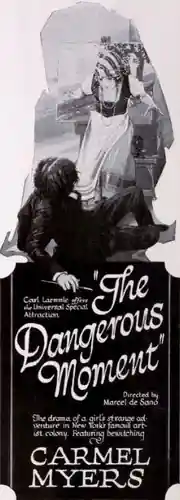
Streaming? Criterion Channel rotates it quarterly; Tubi occasionally hosts a grainy SD transfer. Insist on the restoration; sepulchral tones make or break the experience.
Colton’s screenplay anticipates the fatal romanticism of Rose-France and the underworld fatalism of The Empress. Yet unlike those continental reveries, The Dangerous Moment is indelibly Manhattan: elevated trains rattle the windowpanes; Washington Square’s arch looms like a judge’s brow. It is the rare American silent that marries pulp velocity with café-society ennui.
Interestingly, George Regas—here a menacing bailiff—would later cameo in Huck and Tom, proof that early character actors hopscotched genres like stone-skipping across a creek.
Why revisit a 60-minute curio? Because its heartbeat syncopates with our perpetual now: marginal laborers crushed under accusation, art spaces as sanctuaries, the lucky break of someone finally believing your truth. The camera may have stopped cranking in 1921, yet Sylvia’s tremulous inhale feels streamed in real time.
Watch it for Warrenton’s eyes—two struck matches that refuse to snuff. Watch it for Becker’s wrists, daubed in chromatic guilt. Watch it because every era needs reminding that exoneration often arrives from the unlikeliest confession, and that love, while not redemption, can be co-conspirator.
Verdict: 9/10 — a phosphorescent relic whose glow lingers long after house lights rise.
IMDb 7
1916
Community
Log in to comment.