DbcultAccessing Vault...
6.7/10
Senior Film Conservator
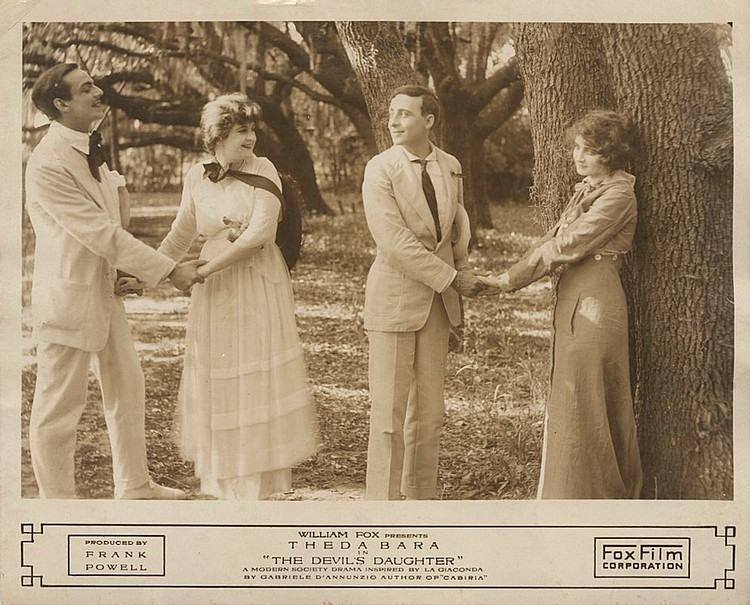
A definitive 6.7/10 rating for a film that redefined the boundaries of cult cinema. The Devil's Daughter remains a cornerstone of transgressive art.
In the flickering pantheon of early silent cinema, few figures loom as ominously or as alluringly as Theda Bara. In 1915, the year of Fox Film Corporation’s ascendancy, The Devil's Daughter emerged as a definitive statement on the destructive power of the feminine mystique. Based on Gabriele D'Annunzio's play Gioconda, this film—now tragically lost to the ravages of nitrate decomposition—remains a phantom of celluloid history, a spectral reminder of the era when the 'Vamp' archetype was forged in the fires of Victorian anxiety and burgeoning modernism. To discuss this film is to navigate the labyrinth of D'Annunzio’s decadent sensibilities, where the line between artistic creation and carnal destruction is blurred beyond recognition.
Gioconda Dianti, portrayed with a predatory grace by Bara, is not merely a woman seeking vengeance; she is a personification of the fatalistic impulse that haunts the creative soul. Unlike the more whimsical portrayals of romance found in Cinderella from the previous year, The Devil's Daughter dives headlong into the murky depths of psychical erosion. When her lover deserts her, Gioconda does not retreat into a state of melancholic isolation. Instead, she weaponizes her rejection, turning her gaze toward Lucio Settala, a man whose life is built upon the solid, respectable foundations of marble and matrimony.
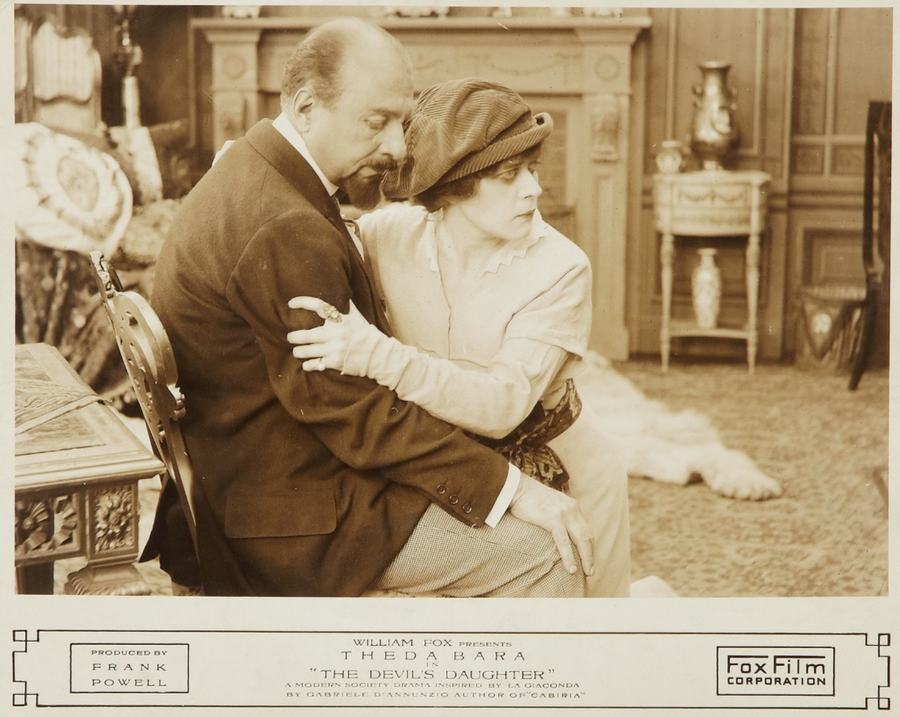
Lucio, played by Clifford Bruce, represents the archetypal artist who believes he can master the elemental forces he invites into his studio. His hubris is his undoing. The film meticulously charts his transition from a focused craftsman to a hollowed-out vessel of desire. This theme of the artist’s ruin was a recurring motif in 1915, seen through various lenses in works like Hypocrites, which similarly explored the intersection of morality and the naked truth of human nature. However, where Hypocrites utilized allegory, The Devil's Daughter utilized the raw, unadulterated magnetism of Bara’s screen presence to convey its message.
One cannot overstate the cultural impact of Theda Bara during this period. She was the antithesis of the 'Girl Next Door' persona that would later dominate Hollywood. In The Devil's Daughter, her performance is described by contemporary accounts as a masterclass in stillness and ocular intensity. She does not need to resort to the frantic histrionics common in early melodramas like The Leap of Despair. Instead, she commands the frame through a calculated economy of movement. Her Gioconda is a spider at the center of a web woven from Lucio’s own insecurities and aesthetic longings.
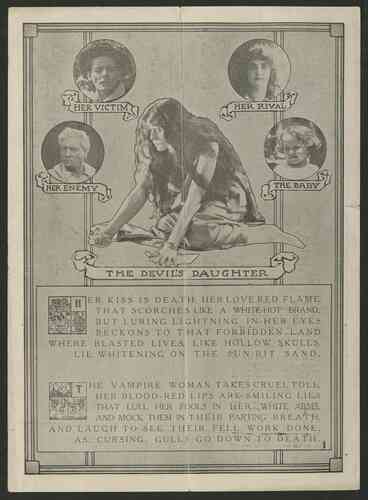
The writers—Garfield Thompson and Joseph H. Trant—working from D'Annunzio’s source material, leaned heavily into the idea that Gioconda is a force of nature. She is the 'Other' that threatens the sanctity of the nuclear family. The contrast between her and Silvia (Jane Miller), Lucio’s long-suffering wife, is stark. Silvia represents the domestic ideal, the nurturing spirit that sustains the artist’s physical life, while Gioconda represents the volatile inspiration that feeds his ego but destroys his soul. This dichotomy was a staple of the era, mirroring the societal tensions found in films such as In the Prime of Life.
The narrative pivot of the film occurs during the confrontation between the two women in Lucio’s studio. This scene is a visceral manifestation of the conflict between creation and destruction. Gioconda, in a fit of spiteful rage, attempts to destroy the masterpiece Lucio has labored over—a statue that ironically captures the very beauty she possesses. Silvia’s intervention is not merely an act of marital defense; it is a desperate attempt to save the only tangible evidence of her husband’s former greatness. The resulting accident, where the heavy marble falls and crushes Silvia’s hands, is a moment of profound symbolic resonance. The hands that nursed Lucio back to health are sacrificed to save the image of the woman who is destroying him.
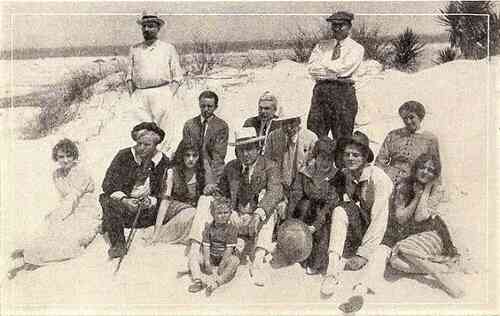
This sequence elevates the film from a standard domestic drama to a high tragedy. The physical crippling of Silvia mirrors the moral crippling of Lucio. It is a far cry from the more straightforward moralism of The Governor's Ghost or the adventurous escapism of The Three Musketeers. Here, the consequences are permanent and devastating. The statue is saved, but the human cost is total. Lucio’s subsequent descent into madness—becoming a 'raving maniac'—is the logical conclusion of a man who has lost the ability to distinguish between the object of his art and the reality of his life.
The final act of The Devil's Daughter is a harrowing exploration of psychological collapse. The film doesn't grant Gioconda a clean victory. In a brilliant narrative stroke, she too is eventually discarded by the world she sought to dominate. Her descent into madness mirrors Lucio’s, suggesting that the darkness she harbored was not a tool she controlled, but a contagion that eventually infected her own mind. This double-tragedy provides a more complex ending than the typical 'fallen woman' narratives of the time, such as those found in Alone with the Devil.
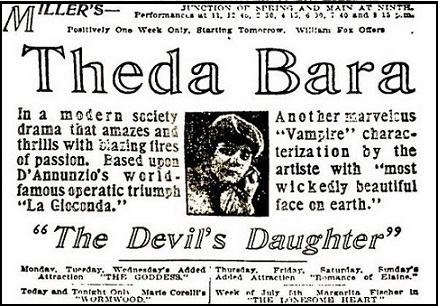
The cinematography, though we can only glimpse it through surviving stills and reviews, likely utilized the chiaroscuro lighting that became a hallmark of the Fox 'Vamp' films. The shadows in Lucio’s studio would have served as a visual metaphor for the encroaching madness. The use of space—the distance between the characters, the looming presence of the sculpture—would have heightened the sense of claustrophobia and impending doom. In this regard, the film shared a visual language with the burgeoning realism seen in Sperduti nel buio, even if its subject matter remained firmly in the realm of the decadent and the sensational.
Releasing in 1915, The Devil's Daughter competed for attention in a rapidly evolving cinematic landscape. While audiences were enjoying the rugged landscapes of The Trail of the Lonesome Pine or the exotic curiosities of The Capture of a Sea Elephant, Bara’s films offered something more psychologically complex and socially transgressive. They tapped into a collective anxiety about the changing roles of women and the perceived fragility of traditional masculinity.
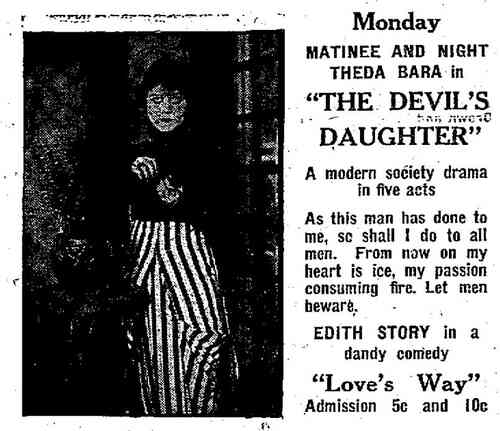
The film’s connection to Gabriele D'Annunzio is also significant. D'Annunzio was a figure of immense literary and political controversy in Italy, and his involvement (even as a source author) lent the film an air of European sophistication and 'art-house' credibility. This was not just a movie; it was an event. It was a piece of 'high art' brought to the masses, much like the adaptations of The Betrothed or the various international productions like Der Millionenonkel and Ein Ehrenwort. Yet, The Devil's Daughter felt more visceral, more dangerous than its contemporaries.
Even the cast—featuring names like Paul Doucet, Edouard Durand, and the child actress Jane Lee—was assembled to provide a robust support system for Bara’s central performance. The direction (often attributed to Frank Powell, though he is sometimes uncredited in favor of the production house's overarching style) focused on the slow-burn tension of the household’s disintegration. This was a departure from the more plot-heavy, action-oriented films like Revolución orozquista or the light-heartedness of The Man Who Could Not Lose.
The tragedy of The Devil's Daughter is two-fold: the tragedy depicted on screen and the tragedy of its disappearance. As a lost film, it has achieved a mythic status. We are left to piece together its impact from the hyperbolic prose of 1915 trade journals and the hauntingly beautiful production stills that remain. It stands as a testament to a time when cinema was discovering its power to explore the darkest corners of the human psyche. It was a film that didn't just tell a story; it evoked a mood of decadent despair.
Theda Bara’s Gioconda Dianti remains one of the most potent symbols of early cinema’s obsession with the 'Femme Fatale.' Through this character, the film explored themes of revenge, artistic obsession, and the fragility of sanity with a boldness that still feels modern. While we may never again see the flickering images of Lucio’s studio or the terrifying intensity of the final scene of madness, the legacy of The Devil's Daughter continues to influence the way we perceive the intersection of beauty and ruin in the cinematic arts. It is a masterwork of the silent era, even if its only remaining screen is our collective imagination.
Reviewed by the Editorial Staff - A deep dive into the archives of 1915 Cinema.
IMDb 7
1918
Community
Log in to comment.