DbcultAccessing Vault...
Cult Review
Senior Film Conservator
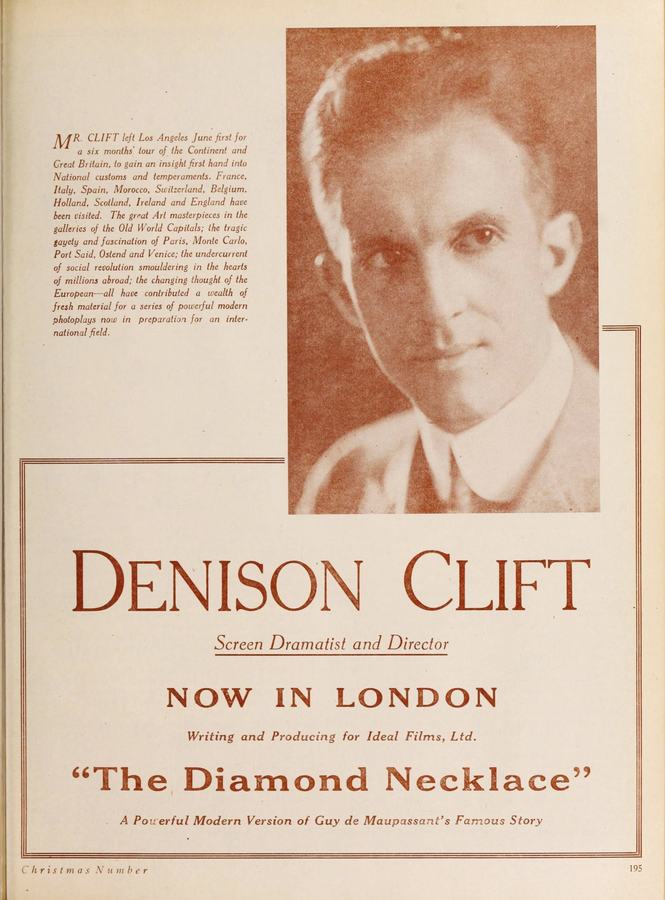
There are stories that merely entertain, and then there are those that burrow deep into the collective consciousness, forever altering our perception of human folly and fate. Guy de Maupassant's 'The Diamond Necklace' (or 'La Parure') is unequivocally one of the latter, a narrative so exquisitely crafted in its tragic irony that it has transcended its origins to become a timeless parable. This cinematic rendition, featuring a remarkable ensemble including Sara Sample, Madeline Fordyce, Mary Brough, John Peachey, Milton Rosmer, Johnny Butt, Jessie Winter, Warwick Ward, and F.E. Montague-Thacker, endeavors to translate that searing critique of societal vanity and material obsession onto the silver screen. And in many respects, it succeeds with a haunting resonance that lingers long after the final frame.
The film, much like its literary progenitor, centers on Mathilde, a woman of striking beauty and refined tastes, tragically born into a modest station. Her soul, a vibrant tapestry of unfulfilled desires, chafes against the drab reality of her existence. She yearns for the glittering ballrooms, the opulent gowns, and the deferential gazes that, in her estimation, are her birthright. Her husband, a humble clerk, loves her devotedly but is utterly incapable of providing the lavish lifestyle she craves. This fundamental misalignment of aspiration and reality forms the tragic bedrock of their lives, and the film deftly establishes this tension from its opening scenes, painting a vivid picture of Mathilde’s internal turmoil through subtle glances and longing expressions.
The narrative’s pivotal moment arrives with an invitation to a grand ministerial ball, an event that simultaneously excites and torments Mathilde. It is her chance, however fleeting, to step into the world she believes she belongs to. Yet, her lack of appropriate attire and, more significantly, suitable jewels, throws her into despair. Her husband, in a gesture of profound self-sacrifice, offers her the entirety of his savings for a new dress. But the true catalyst for their undoing comes when Mathilde, still discontent, borrows a magnificent diamond necklace from her wealthy friend, Madame Forestier (perhaps portrayed by Madeline Fordyce or Mary Brough, whose presence in the cast list suggests a role of social contrast). This act, seemingly innocuous, is the thread that unravels the entire fabric of their future.
The night of the ball is Mathilde's apotheosis. She is radiant, the cynosure of all eyes, believing herself, for one glorious evening, to be the woman she was always meant to be. The film captures this brief, intoxicating moment with a delicate touch, allowing the audience to feel the heady rush of her triumph before the inevitable plunge. The performances here are critical; Sara Sample, in particular, must convey the delicate balance between Mathilde's initial discontent, her ephemeral joy, and the crushing weight of her subsequent despair. The transition is handled with a commendable subtlety, avoiding melodramatic excess in favor of a more nuanced portrayal of human frailty.
The morning after the ball, the glittering dream shatters. The necklace is gone. The panic that grips Mathilde and her husband is palpable, a visceral terror that the film communicates effectively. Their frantic, fruitless search, the dawning realization of their impossible predicament, is rendered with a quiet desperation that truly resonates. What follows is a decade of unimaginable hardship, a grim, unyielding commitment to replace the lost jewels. The film chronicles their agonizing descent into penury with unflinching honesty. They sell everything they own, move into a squalid attic, and take on backbreaking labor previously unthinkable for their station.
The transformation of Mathilde is particularly stark. The once elegant, fastidious woman becomes a hardened, coarse figure, her hands rough, her beauty faded by relentless toil and deprivation. Her husband (perhaps John Peachey or Milton Rosmer, whose roles would likely encapsulate this steadfast, suffering partner) matches her in his silent endurance, sacrificing his health and spirit without complaint. The casting here is crucial, and the actors deliver performances that convey the slow, erosive power of poverty. Their faces tell stories of countless sleepless nights, meager meals, and the constant gnawing anxiety of debt. This prolonged suffering is the heart of the film's message, a stark portrayal of the devastating consequences of a single moment of vanity and a desperate attempt to conceal a perceived transgression.
After ten years, their debt is finally paid, their lives irrevocably scarred. Mathilde, now a shadow of her former self, encounters Madame Forestier, who is still youthful and radiant. The conversation that ensues delivers the narrative's devastating, iconic twist: the original necklace was a mere imitation, worth a pittance. The audience, having witnessed the couple's agonizing decade of sacrifice, feels the gut-wrenching impact of this revelation alongside Mathilde. It is a moment of profound, almost unbearable irony, underscoring the film's central theme: the illusory nature of value and the tragic consequences of superficiality.
The film, in its depiction of this climax, must walk a fine line between dramatic impact and genuine pathos. It avoids cheap sentimentality, opting instead for a quiet, crushing despair that is far more effective. The final scene, with Mathilde grappling with the realization that her entire adult life was squandered for a trinket, is a powerful testament to the destructive power of pride and the arbitrary nature of fate. It forces the viewer to confront uncomfortable questions about ambition, social class, and the true cost of appearances.
The strength of this adaptation lies significantly in its performances. Sara Sample, as Mathilde, carries the emotional weight of the narrative, evolving convincingly from a discontented beauty to a withered, broken woman. Her portrayal is nuanced, capturing both the initial vanity and the later, profound weariness. The supporting cast, including Madeline Fordyce and Mary Brough as contrasting figures, and the steadfast male leads like John Peachey and Milton Rosmer, contribute to a rich tapestry of characters who react to Mathilde's plight in various ways. Johnny Butt, Jessie Winter, Warwick Ward, and F.E. Montague-Thacker likely fill out the societal backdrop, providing the necessary context for the class distinctions and social pressures that fuel Mathilde's desires.
Visually, the film must underscore the stark contrast between Mathilde's dreams and her reality. The initial scenes might employ softer lighting and more elegant sets to depict her aspirations, while the decade of poverty would be rendered in harsher, grittier tones, emphasizing the squalor and the physical toll of their labor. The costume design, too, plays a crucial role, tracing Mathilde's journey from a woman of modest elegance to one clad in rags, mirroring her internal and external decay. Even without the benefit of a detailed production history, one can infer that the filmmakers would have leveraged these visual elements to amplify Maupassant's cutting social commentary.
'The Diamond Necklace' resonates deeply with other cinematic explorations of societal pressures and the often-deceptive nature of appearances. One might draw parallels, for instance, to films like Forbidden Fruit (1921), which also delves into the aspirations of a woman from a humble background yearning for a life of luxury and the moral compromises she might make. Both films critique the superficiality of high society and the perils of attempting to 'pass' into a different social stratum. Similarly, the theme of inescapable fate and the devastating consequences of a single decision find echoes in works like Le destin est maître, where characters grapple with circumstances seemingly beyond their control, leading to tragic outcomes.
The film's exploration of class struggle and the stark realities faced by the working poor could also be viewed in conversation with films that highlight social injustice, though 'The Diamond Necklace' focuses more on individual folly within that system. It's less about a direct 'attack' on the system, as seen in something like Attack on the Gold Escort which might depict more overt struggles, and more about the insidious ways societal expectations can destroy lives from within. In essence, it shares thematic DNA with any narrative that examines the human cost of striving for an illusion, making it a compelling piece for comparative study within the broader cinematic landscape.
This adaptation of Guy de Maupassant’s work stands as a potent cautionary tale, a stark reminder that true value often lies not in glittering adornments but in intrinsic worth and contentment. It dissects the corrosive effects of envy and the destructive pursuit of external validation, urging viewers to reflect on their own definitions of success and happiness. The film doesn’t merely tell a story; it performs an autopsy on a dream, revealing the bare, tragic bones beneath the gilded surface.
Ultimately, 'The Diamond Necklace' is more than just a period drama; it’s a timeless meditation on human nature, the arbitrary cruelty of fate, and the profound, often irreversible consequences of superficial desires. The film, carried by strong performances and a faithful adherence to the spirit of its source material, manages to capture the devastating punch of Maupassant’s original. It serves as a stark, enduring testament to the idea that sometimes, the greatest treasures are those we fail to recognize, and the most devastating deceptions are those we inflict upon ourselves. It compels us to question what we truly value and whether the pursuit of outward appearances is worth the forfeiture of a genuine, if unglamorous, life. A powerful and thought-provoking experience, it cements its place as a significant cinematic interpretation of a literary masterpiece.

IMDb 7
1935
Community
Log in to comment.