DbcultAccessing Vault...
Cult Review
Senior Film Conservator
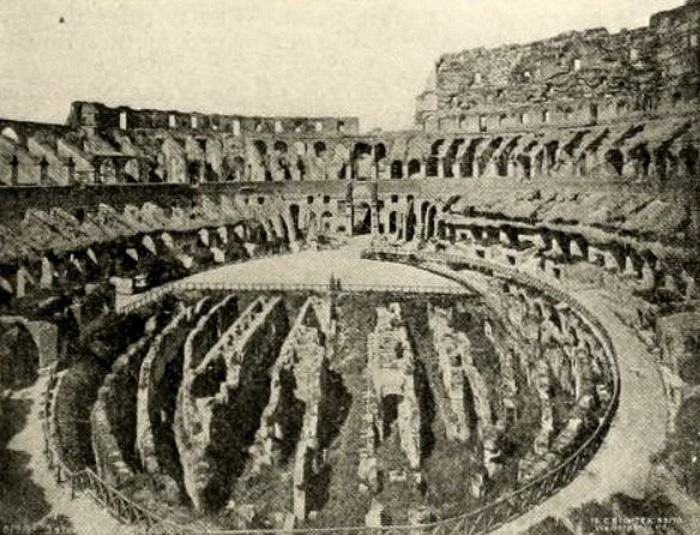
Ah, the Colosseum. A name that conjures images of gladiatorial might, imperial spectacle, and the enduring grandeur of a civilization that once held the world in its grasp. For centuries, this monumental amphitheater has captivated historians, artists, and dreamers alike. But how often do we truly get to peel back the layers of time and witness its multifaceted story with such meticulous detail? The Vero Educational Society, with its ambitious four-part feature, 'The Colosseum in Films,' offers precisely that—a cinematic pilgrimage, granted special permission by the Italian government and guided by the discerning eye of W. Stephen Bush of The Moving Picture World. This isn't just a documentary; it's an archaeological expedition brought to life on screen, a testament to the power of early cinema to educate, enlighten, and utterly enthrall.
From the very outset, the production distinguishes itself. Shot entirely on location in Rome, this feature benefits immensely from its authentic backdrop. The first segment, dedicated to the Colosseum's exteriors, immediately immerses the viewer. We are treated to sweeping vistas of modern Rome, artfully framed from the amphitheater’s upper echelons, creating a compelling dialogue between past and present. The camera lingers on the famed "Meta Sudante," or "Sweating Corner," a name steeped in the visceral reality of gladiatorial combat. This ancient structure, where warriors once cooled their heated bodies, is revealed not merely as a relic but as a vital component of the Colosseum's original water supply system—a feat of ancient engineering often overlooked. Its proximity to the Arch of Constantine, and its original, considerably larger scale, underscore its historical significance, making it far more than just a footnote in the Colosseum’s narrative.
The journey continues, guiding our gaze to the Colosseum’s formidable outer wall, a magnificent structure observed from the serene vantage point of the world's oldest botanical garden. This particular framing choice is nothing short of inspired, offering a unique perspective that highlights the colossal scale and intricate architectural orders—Doric, Ionic, and Corinthian—adorning its different stories. It's a subtle reminder of the blend of human artistry and natural endurance. What truly astounds is the clarity with which one can still discern some of the original numbering above the entrances, a ghost of ancient crowd control, enduring across two millennia. Such details are often lost in casual observation, yet here, they are brought to the fore with an almost reverential quality, much like the painstaking historical reconstructions that might be attempted in a modern epic like Marc'Antonio e Cleopatra, albeit with a focus on factual preservation rather than dramatic interpretation.
A significant portion of the initial section is devoted to the remarkable efforts of restoration undertaken by various Popes of Rome, spanning from 1750 right up to the pontificate of Pope Pius IX. The film meticulously showcases their contributions, particularly highlighting Pius IX's gracefully outlined buttress, a familiar sight to countless tourists. This segment is a poignant reminder that the Colosseum's survival is not solely due to its robust original construction but also to centuries of dedicated preservation. And then, there are the mysterious holes in the ancient Travertine stone, quarried from Tivoli and largely transported by Jewish captives brought by Emperor Titus after the destruction of Jerusalem. Legend attributes these perforations to the Vandals, a testament to their futile rage against an edifice they could not conquer. The film presents these details not as dry historical facts but as compelling visual evidence of humanity's enduring will, both to build and to destroy. The panoramic views of Rome, captured from various levels of the Colosseum, are not merely picturesque; they are infused with a profound sense of historical continuity, each vista a tapestry woven with threads of emperors, gladiators, saints, and everyday Romans.
The second part of this cinematic journey transports us into the very heart of the beast: the lower floor and the infamous arena. This hallowed ground, where man battled beast and man battled man in brutal contests, is presented with a somber reverence. The memorial tablets honoring Christian martyrs, who chose faith over recantation, serve as stark reminders of the arena's dual legacy of bloodshed and spiritual fortitude. The film's technical prowess shines particularly in the depiction of the first lobby, rendered in splendid black and white photography. While most of the feature benefits from a subtle tinting, the decision to present this specific area in monochrome lends it an almost ethereal quality, emphasizing its architectural purity and historical weight. It's a choice that speaks to the director's understanding of visual storytelling, much like how specific lighting choices might define the mood in a silent drama such as Enoch Arden, though here, the intent is purely didactic.
As the camera continues its exploration, we are afforded glimpses of the marvelous sculptures that once adorned the Colosseum, from the lofty upper stories down to the exclusive lodges of the Emperor and the Vestal Virgins. Even in their decayed state, the heads and bodies of these columns and frescoes retain an unsurpassed beauty, whispering tales of ancient artistry and imperial pomp. One particularly intriguing revelation is the remains of a mysterious fresco, rumored to have been brought from Jerusalem during Titus's reign, featuring a strange representation of the crucifixion in its left-hand corner. This discovery adds a layer of profound historical and religious complexity, inviting contemplation on the confluence of cultures and beliefs within the Roman Empire. It's a detail that could easily be overlooked in a casual visit but becomes a focal point under the film's discerning lens, much like a crucial piece of evidence in a historical drama like The Crucible.
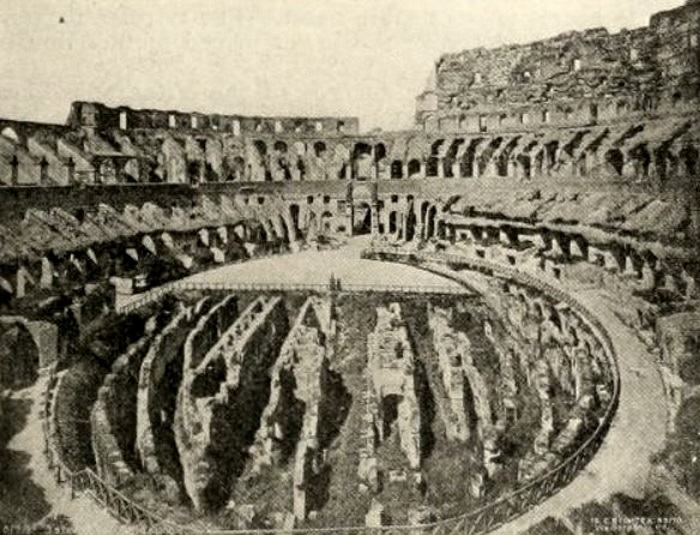
The film then meticulously details the stories and lodges, every part of the auditorium proper laid bare. It is here that the sheer scale of the Colosseum truly hits home, making the historians' accounts of its 80,000 to 87,000 spectator capacity not only credible but astonishingly tangible. Viewers can almost hear the roar of the crowd, the clash of steel, the murmur of anticipation. We are shown various interesting inscriptions, believed to have belonged to the Imperial and Vestal Virgin lodges, offering direct textual links to the lives of those who once occupied these privileged spaces. The remains of incense burners, where a solution of wine and saffron was ignited to purify the air during performances, speak volumes about the sensory experience of attending the games—a fascinating detail that brings the past vividly to life, evoking the atmosphere of a grand, albeit brutal, ancient spectacle.
Perhaps the most captivating segment of 'The Colosseum in Films' is its exploration of what lay hidden beneath the arena. The removal of a portion of the arena floor in 1813 by the government, an act of early archaeological endeavor, unveiled revelations of a most startling nature, confirming much that had only been conjectured in contemporaneous literature. The camera guides us through these subterranean labyrinths, tracing the secret passage-way Emperor Commodus constructed for direct access from his palace to the arena—a testament to imperial paranoia and privilege. We see the niches where gladiators awaited their turn, their fate hanging in the balance, a chilling prelude to their bloody contests. The film also reveals the precise locations where Christians were confined, awaiting their martyrdom, and, most compellingly, the ingenious provisions made to imprison and starve into ferocity the wild beasts destined for the arena. Imagine, if you will, five thousand wild animals, sourced from every corner of the known world, caged in these dark passages, hundreds chained along the "Via Mortis" (The Way of Death), through which the dead or wounded gladiators were carried out. This sequence is a visceral, unvarnished look at the brutal logistics behind the grand spectacles, a stark contrast to the romanticized depictions sometimes seen in popular culture.
Amidst this grim reality, a glimmer of hope and devotion emerges: a chapel, said to have been built by Empress Helena, mother of Constantine, situated directly above one of the Christian prisons. This sacred space, dedicated to the Christian martyrs, offers a profound counterpoint to the surrounding barbarity, a testament to faith's enduring power even in the face of unimaginable suffering. Furthermore, the film reveals the now-choked water mains, overgrown with rank vegetation, through which water was introduced into the arena for elaborate naval spectacles—the naumachiae. This detail alone paints a picture of an even more versatile and technologically advanced amphitheater than many might imagine, showcasing the Romans' mastery of hydraulic engineering. It’s a level of detail that elevates this educational feature beyond mere historical recitation, transforming it into an immersive sensory experience.
To enumerate even half of the wonders revealed in 'The Colosseum in Films' would require volumes. However, brief mention must be made of its poignant concluding scenes, which bear the profoundly significant title, "Thus Passeth Away the Glory of the World." This elegiac conclusion is a masterstroke of cinematic storytelling. We witness pigeons, oblivious to the historical weight beneath their feet, nesting high in the vast amphitheater, their simple domesticity a stark contrast to the human dramas once enacted below. Green lizards, ancient and unhurried, bask on the broken marbles, their cold blood warmed by the same sun that once shone on emperors and gladiators. These images are not just pretty pictures; they are powerful metaphors for the passage of time, the cyclical nature of life, and the ultimate impermanence of even the grandest human achievements. It's a reflection that resonates deeply, akin to the quiet contemplation evoked by the final frames of a profound character study like The Child of Paris, where the grandeur is in the subtle, enduring details of existence.
In an era when cinema was still in its infancy, the Vero Educational Society delivered a feature that was not only ambitious in scope but also remarkably sophisticated in its execution. The blend of historical accuracy, vivid visual storytelling, and a palpable reverence for its subject matter makes 'The Colosseum in Films' an enduring masterpiece of educational cinema. It doesn't just present facts; it invites contemplation, ignites imagination, and fosters a deep appreciation for one of humanity's most iconic structures. This film is a vital historical document in its own right, preserving not only the image of the Colosseum but also a particular early cinematic approach to chronicling the past. It stands as a testament to the power of film to transcend mere entertainment, becoming a conduit for knowledge and a bridge across the centuries. For anyone with even a passing interest in ancient Rome, architectural marvels, or the early days of filmmaking, this feature is an absolute treasure, offering insights that remain profoundly relevant even today.
A truly timeless journey through the heart of the Eternal City's most iconic landmark.
IMDb —
1936
Community
Log in to comment.