DbcultAccessing Vault...
Cult Review
Senior Film Conservator
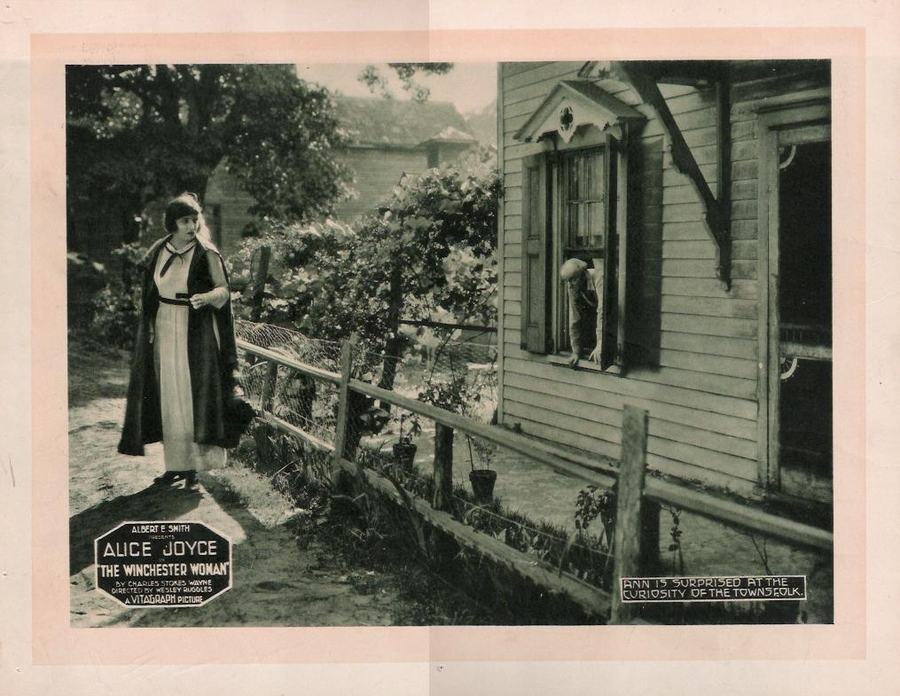
Jean Armour’s Anne Winchester enters the frame not through grand doors but through cracks in society’s judgment, moving with the furtive grace of a creature expecting stones. The courtroom acquittal that opens The Winchester Woman hangs like a poisoned halo—legal absolution never equates to social redemption in 1918’s moral ecosystem. Director’s use of chiaroscuro lighting during Anne’s Nashville exit paints her as both specter and penitent, her shadow stretching longer than the train platform as she flees toward Long Island’s deceptive sanctuary. This geographical shift becomes psychological topography: Nashville’s claustrophobic societal gaze exchanged for the boarding house’s maritime isolation, where fog obscures more than coastline.
The Brinton boarding house emerges as cinema’s early blueprint for psychological noir settings, predating the expressionist dread of The Vampires: The Poisoner. Its staircases don't merely creak—they testify. David Brinton (Percy Marmont) moves through his domain with the stiff gait of unprocessed grief, his affection for Anne kindling not in grand gestures but in shared silence over peeling wallpaper and ledger books. Their romance unfolds in counterpoint to the house’s decay: hope blooming in rotten wood. Marmont’s performance channels a quiet devastation reminiscent of lost father figures in Little Women, yet hardened by financial desperation.
Enter Alan Woodward (Robert Middlemass), a villain whose menace resides in corporate respectability rather than flamboyant malice. Middlemass crafts Woodward as a financial vampire—his predation wrapped in tailored suits and actuarial calculations. His recognition of “Miss Wharton” plays out through a devastating close-up: not a gasp, but a slow coagulation of greed in his eyes. The blackmail scene’s power derives from its banality: no dark alley confrontation, but a parlour negotiation over tea where threats are murmured like stock quotes. This genteel horror evokes the social suffocation depicted in Hans hustrus förflutna, where past sins haunt drawing rooms.
Alice Joyce’s Julia Brinton embodies youthful myopia as pathology. Anne’s warnings crash against the girl’s romantic narcissism—a fascinating counterpoint to sacrificial maternal figures in The Family Cupboard. Julia’s rejection of truth isn’t naiveté but active complicity; she savors the drama of forbidden love. Cinematography isolates Anne in frames during these confrontations, her face bisected by window mullions as she physically bars Julia’s path—a visual echo of the jail cell she escaped. The tragedy here isn’t deception’s success but the voluntary surrender to delusion.
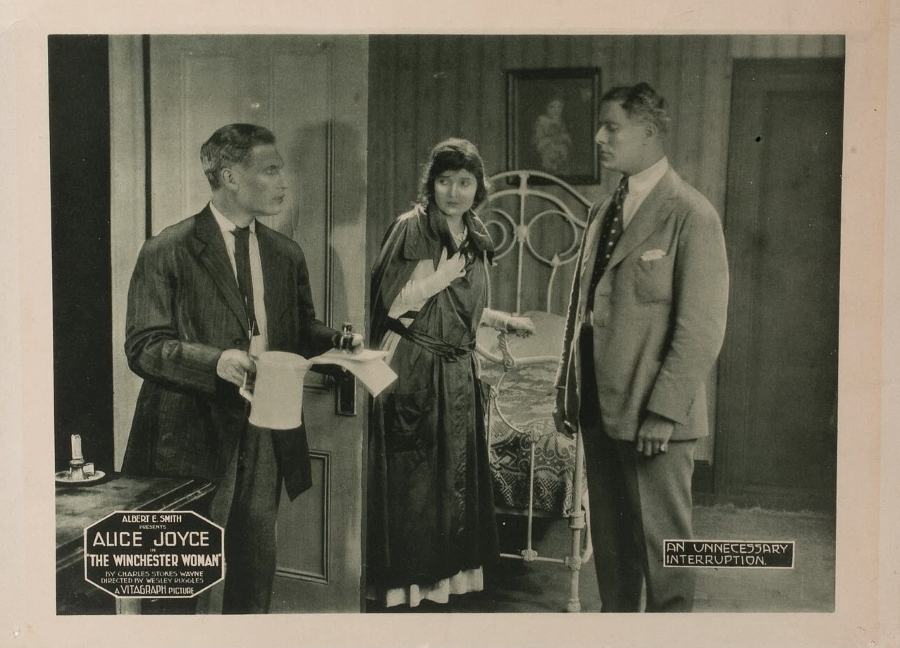
Armour’s genius manifests in what she withholds. When Woodward corners her near the harbor—waves slapping pilings like a jury’s restless shift—her face undergoes a tectonic shift visible only in micro-expressions: fear calcifying into fatal resolve. Unlike the flamboyant transgressions of The Scarlet Sin, Anne’s transformation occurs internally before manifesting externally. The boarding house’s kitchen becomes an alchemical lab where a protector distills herself into weapon. Hazeltine and Krows’ script avoids moralizing, instead forcing viewers to confront an uncomfortable calculus: when does prevention become indistinguishable from the crime it seeks to avert?
The film’s material symbolism rivals the object-focused narratives of Sperduti nel buio. Anne’s teacup collection—carefully transported from Nashville—shatters during a key confrontation, porcelain shards mapping her fracturing persona. Woodward’s pocket watch becomes a metronome counting down toward violence, its chain slithering like a metal serpent across waistcoats. Most chilling is Brinton’s fog-drenched lobster traps, their wooden slats forming cages that foreshadow Anne’s psychological entrapment. Cinematographer’s obsession with hands—Anne’s trembling over poison vials, Woodward’s possessive grip on Julia’s elbow, Brinton’s calloused palms smoothing account books—creates a ballet of intention where touch conveys what intertitles cannot.
The climax’s beach confrontation owes less to thriller conventions than to Napoleon’s elemental fury: wind whips skirts into accusatory shapes, surf erases footprints like nature’s accomplice. Anne doesn’t lunge but converges—a force of desperate gravity. Woodward’s death plays as grotesque slapstick: a man who commodified lives choking on brine as coins spill from his pockets. The real horror emerges afterward: Anne’s methodical arrangement of the scene, her movements precise as a surgeon. This isn’t crime of passion but choreography of salvation.
The film’s legacy resides in its moral ambivalence, predating noir’s golden age by decades. Unlike the righteous vigilantes of Was He a Coward?, Anne exists in ethical penumbra. Her final embrace with Brinton vibrates with unspoken knowledge—a lie binding them tighter than affection. The Brinton house’s closing shot, now radiating warmth through windows, feels less like sanctuary than gilded prison. Contemporary critics misread the ending as triumph; modern eyes recognize the horror in David’s grateful kiss pressed upon a murderer’s brow. This complexity aligns it with Charity’s interrogation of toxic altruism.
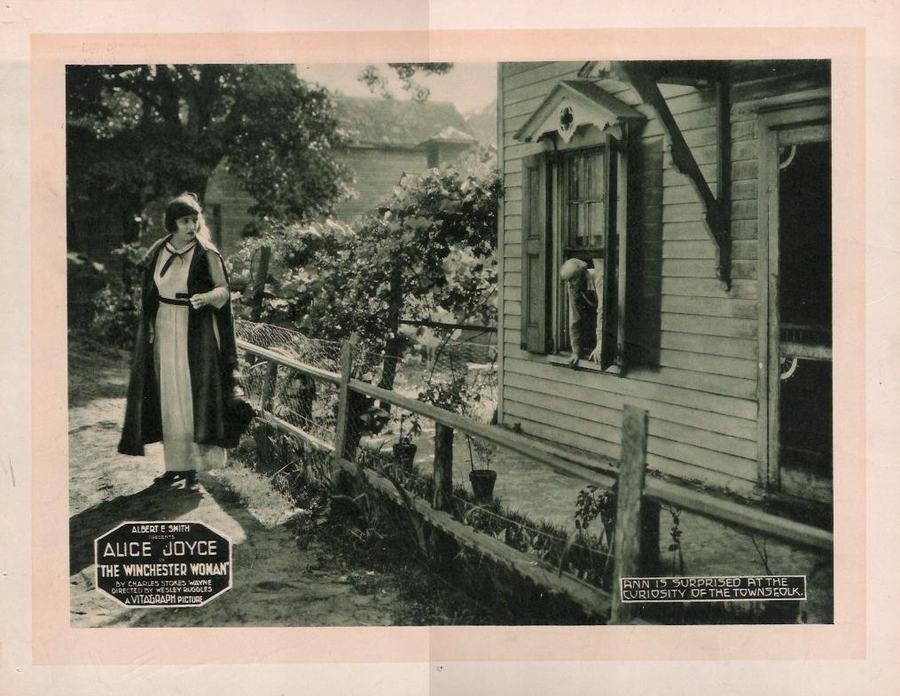
Armour’s performance remains a masterclass in internalized disintegration. Watch her eyes during Julia’s wedding planning: beneath maternal approval glints the knowledge that this celebration pivots on a corpse at low tide. The film’s true tension isn’t “will she get caught?” but “when will the poison reach her soul?”. Unlike the comic misunderstandings of Mum's the Word, silence here isn’t humorous—it’s carcinogenic. By contrasting Anne’s trauma with Julia’s frivolity, the film indicts a society that values innocence over hard-won wisdom.
Recent 4K restoration unveils textual richness lost for decades. Grain patterns in the boarding house sequences now resemble mold spreading across walls—a visual metaphor for moral decay. Previously obscured details emerge: the barely visible hangman’s rope pattern on Anne’s Nashville handkerchief; Woodward’s ledger book revealing Julia’s name alongside stock purchases. Most crucially, we now see Anne’s tears after the murder—not from remorse, but furious frustration at tears themselves. This nuance elevates her beyond tragic heroine into something more disturbing: a woman mourning her own evaporated humanity.
The film’s coastal setting operates on metaphoric and literal levels. Long Island Sound functions as amnestic fluid where identities dissolve—yet tides inevitably return the repressed. Maritime imagery connects to The Lure of the Bush’s frontier waters, though here the wilderness is societal. Fog doesn’t obscure but reveals psychological landscapes: Anne walking shoreline at dawn becomes a figure stepping between worlds, brine soaking her hem like blood no amount of ocean can cleanse.
In an era of sacrificial madonnas like Die Königstochter von Travankore, Anne’s agency feels radically transgressive. Her first husband’s murder (presented elliptically through courtroom testimony) suggests self-defense reframed as hysteria—a forensic gaslighting hauntingly relevant today. The film’s triumph is making viewers complicit: we root for her second murder because Woodward embodies patriarchal predation. Yet the screenplay denies catharsis; Anne gains security through atrocity. Unlike A Study in Scarlet’s clean justice, resolution here stains everyone it touches.
Contemporary censors fixated on the poison sequence, missing the film’s true provocation: its suggestion that female protection requires moral self-immolation. When Anne practices benign expressions before a mirror while poison steeps off-camera, Armour shows us the birth of performative femininity as camouflage. This duality predates the flapper liberation of Flappers and Friskies by presenting armor as survival strategy. Her final smile at Brinton—radiant as it is hollow—haunts more viscerally than any ghost in The White Scar.
Like scrimshaw etched in darkness, The Winchester Woman carves complexity from constraints. Its power accumulates in negative space: the pause before a lie, the weight of objects untouched, the deafening silence of waves covering sins. Over a century later, its questions remain uncomfortably vital—not about culpability, but complicity; not about justice, but the corrosive cost of its procurement. The boarding house still stands in cinema’s architecture: a place where love and horror share the same drafty corridors, where redemption smells suspiciously like poison, and where the most dangerous ghosts wear living flesh.
IMDb 4.6
1930
Community
Log in to comment.