DbcultAccessing Vault...
5.9/10
Senior Film Conservator
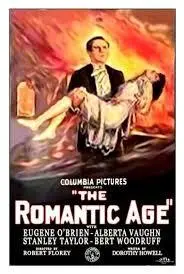
A definitive 5.9/10 rating for a film that redefined the boundaries of cult cinema. The Romantic Age remains a cornerstone of transgressive art.
Is this film worth watching today? Short answer: No, unless you are a dedicated historian of silent-era melodrama or an Alberta Vaughn completist. While it offers a fascinating glimpse into 1920s social values, the narrative is too thin to sustain interest for the modern viewer.
This film is for those who enjoy the archetypal tropes of early Hollywood and the specific charm of silent starlets. It is certainly not for anyone who requires psychological depth, complex pacing, or a story that doesn't rely on a literal 'deus ex machina' fire to solve its emotional conflicts.
1) This film works because: Alberta Vaughn brings a level of kinetic energy to Sally that occasionally breaks through the stiff, formal constraints of the script.
2) This film fails because: The emotional transition for the protagonist is entirely external; Sally falls for Stephen not because of who he is, but because he saved her money.
3) You should watch it if: You want to see how early cinema used physical peril as a substitute for actual character development.
The title, The Romantic Age, feels almost ironic when viewed through a contemporary lens. In Dorothy Howell’s script, romance isn't about chemistry or shared values; it is a reward for service. Stephen’s proposal is initially rejected because he lacks the 'spark' Sally thinks she finds in his brother, Tom. However, the moment Stephen saves her securities in the office fire, her heart does a complete 180-degree turn.
It is a brutally simple transaction. He saves her financial life, so she gives him her romantic life. This theme was common in films like The Deciding Kiss, where the resolution of a romance is often tied to a singular, life-altering event rather than the slow burn of a relationship. It makes the film feel more like a morality play than a romance.
The fire sequence itself is the highlight of the production. While it lacks the inventive camera work of something like Le brasier ardent, it uses practical smoke and lighting to create a genuine sense of claustrophobia. You can almost feel the heat on Eugene O'Brien's face as he navigates the burning office. It’s effective, but it’s a narrative crutch.
Alberta Vaughn was often cast as the spunky, independent woman, a persona she leans into here. Her Sally is not a damsel in distress in the traditional sense; she is a woman with financial interests. The fact that she is worried about her 'securities' suggests a level of autonomy that was becoming more common in the flapper era, similar to the characters in Her Great Hour.
Vaughn’s performance is the only thing that keeps the film from sinking into total obscurity. She has a way of using her eyes to communicate a internal conflict that isn't always present in the intertitles. When she looks at Tom, there is a softness that she denies Stephen. It’s a subtle touch in a film that is otherwise about as subtle as a sledgehammer.
Eugene O'Brien, by contrast, is a bit of a wooden plank. He represents the 'old guard' of acting—stiff postures and exaggerated sighs. He doesn't quite match Vaughn's energy, making their eventual union feel more like a contractual obligation than a romantic triumph. It’s a relic of a style that was already beginning to feel dated by 1927.
The pacing of The Romantic Age is uneven at best. The first two acts drag significantly as the film tries to establish a romantic tension that never quite feels real. We spend a lot of time watching characters walk in and out of rooms, a stark contrast to the kinetic editing seen in comedies like Cops. In those films, every movement serves a purpose; here, movement often feels like filler.
The cinematography is functional but uninspired. There are no daring angles or experimental uses of shadow. It follows the standard 'proscenium' style of early silent cinema, where the camera stays at a respectful distance, acting as a spectator rather than a participant. If you compare this to the visual depth of Die weisse Wüste, the limitations of this production become clear.
However, the use of the office setting is interesting. It captures the burgeoning corporate culture of the late 20s. The desks, the filing cabinets, and the sheer volume of paperwork provide a grounded, mundane backdrop for the eventual melodrama. It makes the fire feel more impactful because it is destroying a world of order and security.
No, The Romantic Age is not a necessary watch for the average cinema fan. It is a formulaic silent drama that relies on outdated notions of heroism and romance. While Alberta Vaughn is charming, the story is too predictable and the pacing is too slow to compete with the masterpieces of the era.
If you are looking for silent films with more emotional weight, you would be better served by Three Weeks or the character-driven stakes of The Pride of Palomar. This film is a museum piece. It’s a relic.
The Romantic Age is a film that lives and dies by its era. It is a fascinating artifact for those who want to understand the social hierarchy of the 1920s, where a man's worth was measured by his bravery in the face of physical and financial ruin. However, as a piece of storytelling, it falls flat. The romance is unearned, the conflict is superficial, and the resolution is far too convenient. It works as a historical document, but it fails as a compelling drama. It’s a relic of a time when 'securities' were more important than 'security' in a relationship. Skip it unless you're writing a thesis on Alberta Vaughn.
IMDb 5.2
1928
Community
Log in to comment.