DbcultAccessing Vault...
5.4/10
Senior Film Conservator
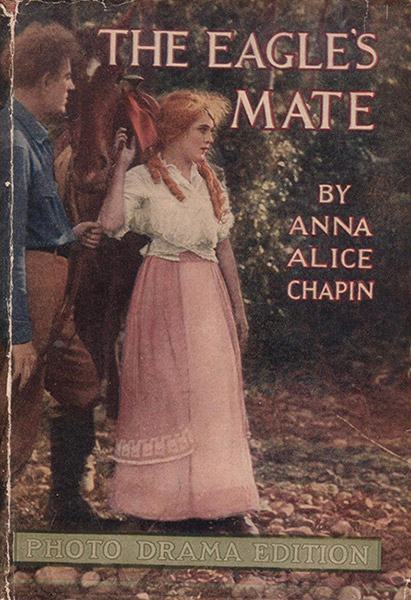
A definitive 5.4/10 rating for a film that redefined the boundaries of cult cinema. The Eagle's Mate remains a cornerstone of transgressive art.
A deep dive into the 1914 silent melodrama that redefined the 'mountain girl' archetype through the lens of early Hollywood's most formidable talent.
The year 1914 was a seismic period for the burgeoning medium of motion pictures. As the world stood on the precipice of global conflict, the American film industry was undergoing a radical consolidation of power and artistic identity. Within this ferment, The Eagle's Mate emerged not merely as a commercial vehicle for Mary Pickford, but as a sophisticated exercise in narrative tension. Unlike the panoramic sweep of The Virginian released the same year, which focused on the expansive myths of the West, this film retreats into the claustrophobic, fog-drenched hollows of the Appalachian range. It is a work that bridges the gap between the primitive shorts of the previous decade and the burgeoning feature-length epics that would soon dominate the cultural landscape.
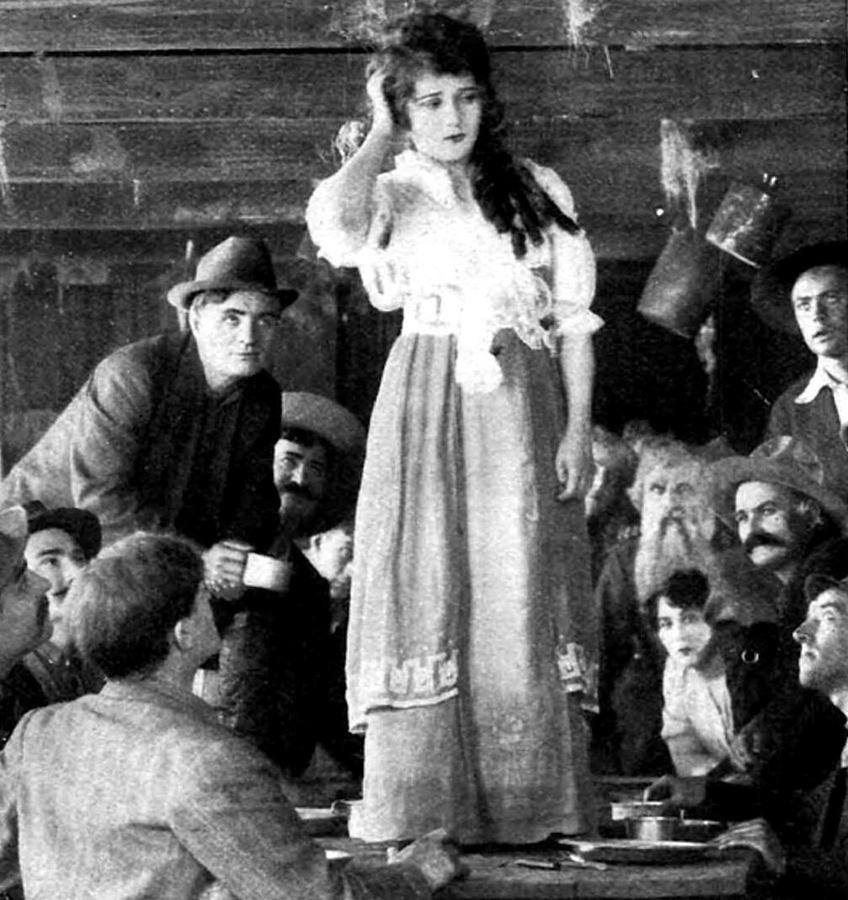
Mary Pickford, often pigeonholed by history as the ringleted 'America's Sweetheart,' displays a mercurial range in her portrayal of Anemone. The character is introduced as a creature of refinement, a wildflower nurtured in the gentler soil of her aunt's care. However, the film's brilliance lies in how it documents the systematic stripping away of this artifice. When the Fisher clan descends like a predatory storm, Anemone's transition from shock to a feral survivalism is nothing short of breathtaking. One cannot help but compare her physical performance here to her work in Tess of the Storm Country, yet in The Eagle's Mate, there is an added layer of psychological complexity regarding her forced domesticity.
The abduction sequence is filmed with a kinetic energy that belies the technical limitations of 1914. The camera captures the rugged terrain not as a scenic backdrop, but as an active participant in the girl's entrapment. The sheer verticality of the mountains mirrors the hierarchical, almost feudal structure of the Fisher family. In this lawless enclave, Pickford uses her expressive visage—those legendary eyes—to convey a lexicon of terror, calculation, and eventually, a strange, burgeoning agency. It is a performance that demands we re-evaluate the silent era's capacity for nuanced character development.
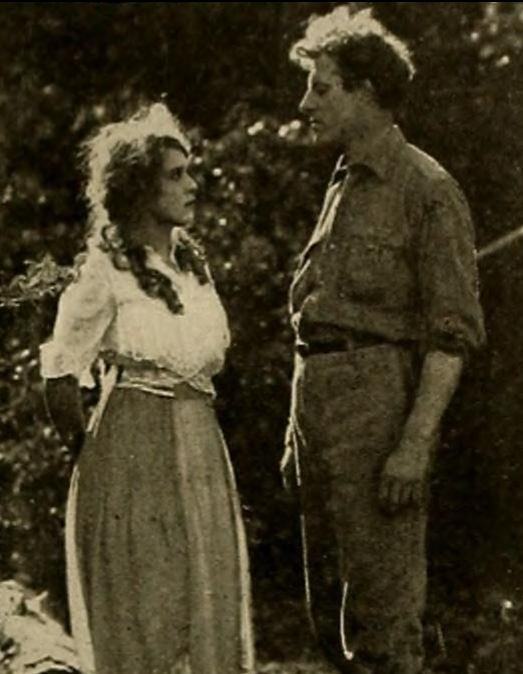
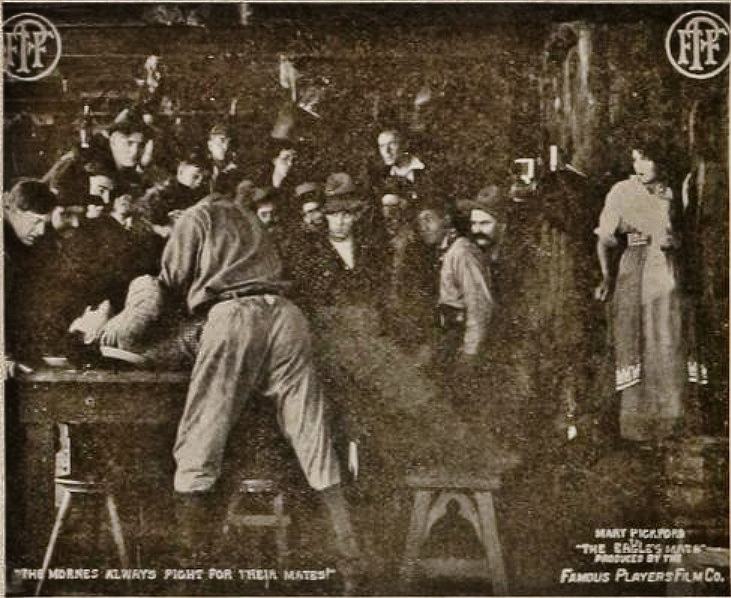
James Kirkwood, both as director and lead actor, provides a fascinating foil to Pickford. His Lancer is a man of the earth, governed by a code of honor that is entirely alien to the 'civilized' world. The central conflict—a brutal fistfight between two relatives for the right to marry Anemone—is a sequence that echoes the raw physicality found in early sporting films like The Corbett-Fitzsimmons Fight. However, Kirkwood imbues the scene with a dramatic weight that transcends mere spectacle. This isn't just a bout; it is a primal negotiation of property and passion.
The subsequent marriage, conducted under duress, is where the film ventures into uncomfortable territory for a modern audience. Yet, seen through the lens of 1910s melodrama, the evolution of their relationship is treated with a surprising amount of screen time. Lancer is not a cartoonish villain but a product of his environment—a man whose tenderness is buried under layers of calloused survivalism. The chemistry between Kirkwood and Pickford is palpable, a spark that ignites in the small, quiet moments between the larger-than-life plot beats of moonshine raids and family feuds.
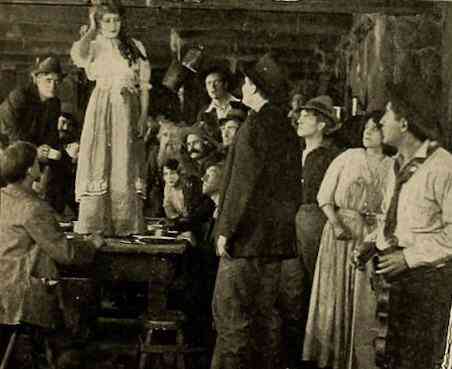
Visually, The Eagle's Mate is a triumph of location shooting. While many contemporary productions relied on the stilted artifice of painted backdrops, this film embraces the naturalism of the Virginia wilderness. The interplay of light and shadow in the forest sequences creates a chiaroscuro effect that heightens the sense of impending doom. The moonshiners' cabins are depicted with a grimy authenticity that stands in stark contrast to the sterile elegance of Anemone's original home. This visual dichotomy reinforces the film's central theme: the clash between the rigid structures of society and the wild, untamed impulses of the human heart.
The cinematography manages to capture the 'eagle's nest' motif effectively, positioning the Fisher camp as an aerie perched precariously above the world. This elevation is both literal and metaphorical, suggesting a clan that views itself as superior to the law-abiding 'flatlanders' below. The framing of Pickford against these vast, jagged vistas emphasizes her initial insignificance and her eventual mastery over this harsh environment. It is a precursor to the environmental storytelling that would later be perfected in films like Glacier National Park.
The screenplay, penned by Anna Alice Chapin and Eve Unsell, deserves significant credit for its subversion of the standard damsel-in-distress trope. While the setup is undeniably patriarchal, the resolution is driven entirely by Anemone's choices. Her decision to return to Lancer when he is in 'dire trouble' is the pivotal moment of the film. It transforms the story from a tale of abduction into a narrative of reclamation. She isn't just accepting her fate; she is choosing her side in a world that has forced her to grow up far too quickly.
This narrative complexity is a hallmark of the transition toward more sophisticated feature films. The plot doesn't rely on simple moral binaries. The Fishers are 'crude,' yes, but they also possess a fierce, insular loyalty that the film eventually treats with a degree of respect. The pacing is deliberate, allowing the audience to feel the slow passage of time in the mountains and the gradual thawing of Anemone's heart. It lacks the frenetic, slapstick energy of Keystone Comedies, opting instead for a somber, emotive resonance.
To a contemporary critic, the ending of The Eagle's Mate is a fascinating specimen of early 20th-century social values. The idea that a woman would fall in love with her abductor is a recurring motif in the 'mountain melodrama' genre, yet here it is handled with a specific focus on Lancer's vulnerability. When he is wounded and hunted, the power dynamic shifts. Anemone becomes the caregiver, the one with the power to save or abandon. Her choice to stay is presented as the ultimate act of devotion, a realization that her 'civilized' life was perhaps more of a cage than the mountain ever was.
This resolution challenges the viewer to look beyond the surface-level violence of the abduction. It suggests that love is not always a product of polite courtship but can be forged in the fire of shared hardship and mutual survival. It is a sentiment that would later be explored in more grandiose terms in Les Misérables, where characters are frequently defined by their responses to systemic injustice and personal tragedy.
The direction by Kirkwood is remarkably assured for the period. He avoids the static, stagey compositions that plagued many early features like Les amours de la reine Élisabeth. Instead, there is a fluidity to the movement, with characters drifting in and out of the frame in a way that feels organic to the setting. The use of depth is particularly impressive; we often see action occurring in the foreground while the vastness of the Virginia landscape stretches out behind the actors, providing a constant reminder of their isolation.
The supporting cast, including Jack Pickford and Ida Waterman, provide solid foundations for the central drama. Jack Pickford, in particular, hints at the talent that would later make him a star in his own right, though here he is largely overshadowed by his sister's colossal screen presence. The ensemble works together to create a believable, lived-in world—a microcosm of a forgotten America where the only law was the one you could enforce with a rifle or a fist.
In the grand tapestry of Mary Pickford's career, The Eagle's Mate stands as a vital missing link. It showcases her transition from the short-form ingenue to the feature-length powerhouse who would eventually co-found United Artists. The film's willingness to engage with dark themes—abduction, forced marriage, and the moral gray areas of frontier life—marks it as a significant step forward for cinematic storytelling. It eschews the easy sentimentality of religious epics like From the Manger to the Cross in favor of a gritty, visceral humanism.
For the modern cinephile, the film offers a window into a world where the rules of cinema were still being written. Every shot feels like a discovery, every emotional beat a hard-won victory. It is a testament to the enduring power of the silent image that, over a century later, Anemone's struggle for identity and her ultimate choosing of her own path still resonates with such clarity. The Eagle's Mate is not just a relic; it is a living, breathing piece of art that continues to soar.
Final Verdict: A hauntingly beautiful, if ethically complex, entry in the Pickford canon that proves the silent era was capable of profound psychological depth.
IMDb —
1918
Community
Log in to comment.