DbcultAccessing Vault...
Cult Review
Senior Film Conservator
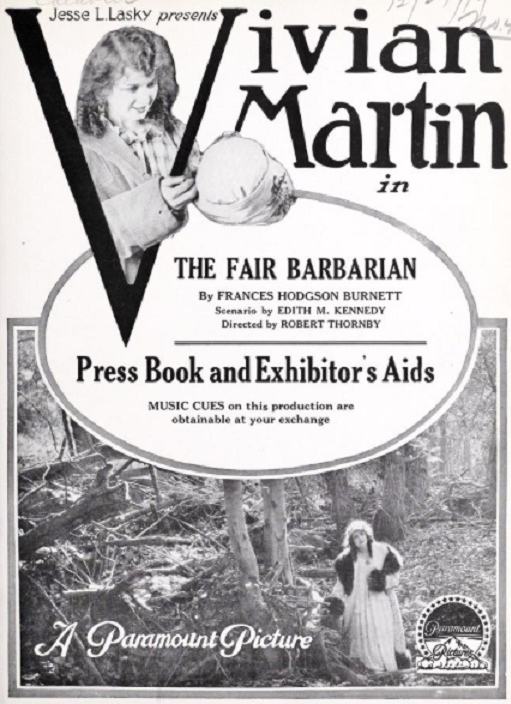
Ah, the quintessential clash of cultures! There's something inherently cinematic about watching an unstoppable force meet an immovable object, and few films capture this dynamic with as much spirited delight as The Fair Barbarian. This cinematic gem, an adaptation of Frances Hodgson Burnett's charming novel, plunges us into a world where the staid traditions of old England are about to receive a much-needed jolt from the effervescent spirit of the New World. It’s a narrative that, even decades after its inception, still resonates with a delightful freshness, proving that the human comedy of manners and the perennial struggle between convention and individuality are truly timeless.
Our story begins with the intrepid Octavia, a young American heiress whose father, having amassed a formidable fortune across the Atlantic, decides it's time to reacquaint himself with his English roots. Circumstance, however, dictates that Octavia embarks on this journey to her aunt, Miss Belinda Bassett, in the sleepy, self-satisfied hamlet of Slowbridge, alone. And what a journey it is! Slowbridge isn't just a geographical location; it's a state of mind, a microcosm of English provincialism, where social standing is meticulously observed, and innovation is met with suspicion. Presiding over this genteel, if somewhat suffocating, ecosystem is the formidable Lady Theobald, a woman whose iron grip on local society is as legendary as her unwavering belief in the established order.
From the moment Octavia (portrayed with captivating vivacity by Elinor Hancock) steps off the train, Slowbridge is irrevocably altered. She is, to borrow a perfect analogy from the plot synopsis, nothing short of a dynamite bomb. Her wardrobe, bursting with transatlantic flair, is a direct affront to the muted sensibilities of the village. Her breezy, unburdened demeanor, a stark contrast to the stifling politeness, sends shockwaves through the local gentry. Lady Theobald, naturally, is apoplectic, finding Octavia's very existence a challenge to her meticulously curated world. Even poor Aunt Belinda, initially terrified by her unconventional niece, finds herself caught in Octavia's dazzling wake. But beneath the initial shock and disapproval, there's an undeniable charm, a magnetic force that gradually begins to win over the initially resistant villagers. Octavia isn't merely rebellious; she's genuinely good-hearted, with a keen sense of justice and an infectious joie de vivre.
Her character is a masterclass in challenging the status quo without resorting to outright antagonism. She doesn't seek to dismantle Slowbridge's society out of malice, but rather, her very presence and natural way of being expose its absurdities and hypocrisies. Her American spirit, unburdened by centuries of rigid class structure, allows her to see people for who they are, rather than for their lineage or profession. This makes her a truly compelling protagonist, and one can easily imagine the audience of the time cheering her on as she navigates the labyrinthine social codes with delightful nonchalance. Much like Bess Morton in The Awakening of Bess Morton, Octavia represents a new kind of female agency, one that doesn't just adapt but actively reshapes her environment.
One of Octavia's most delightful interventions involves Lady Theobald's own granddaughter, Lucia, a sweet, shy English rose caught in the web of her grandmother's social ambitions. Lucia is secretly smitten with a fine young man who, tragically, is a mere manufacturer and not a 'gentleman of leisure' – a cardinal sin in Slowbridge's archaic social hierarchy. Octavia, with her pragmatic American sensibility, sees only a worthy young man and a blossoming affection, and she sets about engineering their romance with a charming, almost mischievous, zeal. This subplot beautifully highlights the film's critique of superficial class distinctions, arguing for meritocracy over inherited status. It’s a theme that echoes in many narratives of the era, where true love often had to overcome societal obstacles, much like in The Road to Love or The Romantic Journey.
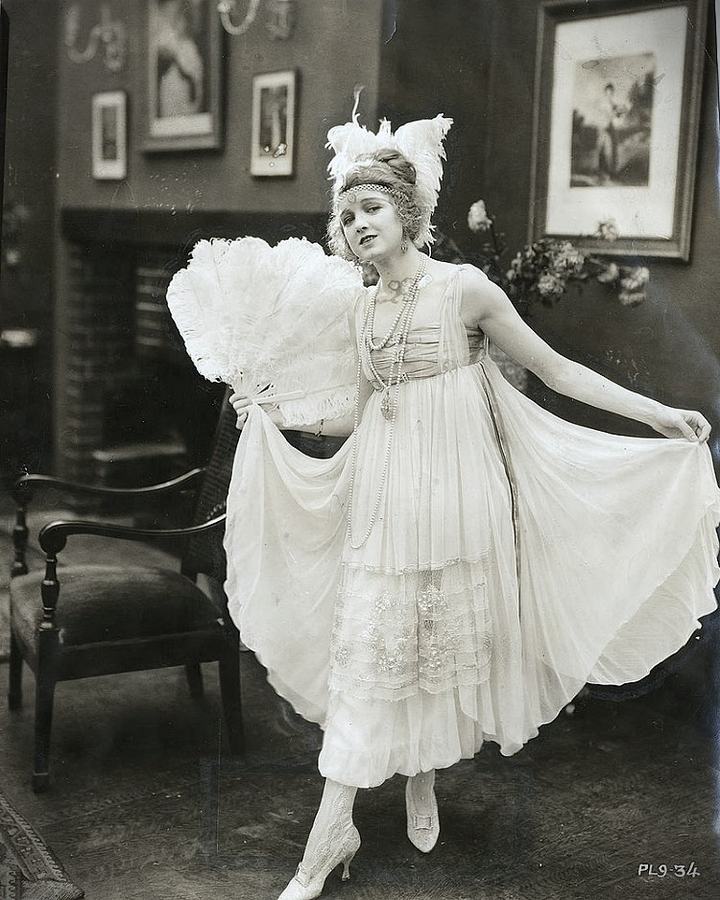
The primary source of Lady Theobald's exasperation, however, stems from her nephew, Captain Barold. A man of significant social standing and, evidently, an equally significant bump of conceit, Barold becomes exceedingly fond of Octavia. He sees her as a fascinating, if wild, creature to be tamed and, in his arrogance, believes he is bestowing a great favor upon her by offering his affections. What a delicious setup for a fall! Octavia, a woman who values genuine respect and equality, is having none of it. She decides to teach him a lesson, a masterstroke of subtle defiance that culminates in her public refusal of his proposal. This isn't just a rejection; it's a calculated strike against patriarchal condescension and inflated ego, a moment that must have sent ripples of satisfaction through contemporary audiences.
Just as Slowbridge is on the verge of collective apoplexy, Octavia's father returns, bearing news that only further solidifies his daughter's formidable standing: his mining stock has doubled, making him more than a millionaire. Accompanying him is Jack Belsays, an energetic American youth who, like Octavia, represents a refreshing, albeit foreign, type to the insular village. The ultimate surprise, the coup de grâce to Slowbridge's assumptions, is then revealed: Octavia has been engaged to Jack all along. Her actions, her spirited disregard for their conventions, were never an attempt to assimilate or intrude, but simply the authentic expression of a free spirit. She was never anxious to fasten herself upon English small-town society; she was merely passing through, leaving a trail of changed perspectives in her wake.
This twist is not just a clever plot device; it underscores the entire thematic thrust of the film. Octavia’s wealth and pre-existing engagement empower her to act without seeking approval. She could afford to be herself, unburdened by the need for social climbing or acceptance. It's a powerful statement on financial independence and personal autonomy, particularly for a female character of that era. Her actions weren't a plea for inclusion, but a demonstration of inherent self-worth.
The film culminates in a joyous double wedding, a testament to Octavia's influence and the eventual triumph of genuine affection over superficial status. First, Octavia and Jack are married in Miss Bassett's quaint villa, with young Poppleton, the curate, officiating. This modest ceremony, free from the pomp and circumstance that Lady Theobald would undoubtedly demand, perfectly encapsulates Octavia's unpretentious spirit. But her work isn't done. Through her good offices, another wedding soon follows: that of Lucia and the young manufacturer. Even Lady Theobald, the staunch defender of tradition, has finally come to realize that the manufacturer is fully worthy of respect and, more importantly, of her granddaughter's hand. It’s a beautiful, if somewhat grudging, concession that speaks volumes about the slow but sure erosion of her prejudices.
This resolution is deeply satisfying. It's not a complete overthrow of the old guard, but a gentle, persuasive shift. Octavia doesn't leave Slowbridge in ruins; she leaves it enlightened, a little more open-minded, and certainly more lively. The film beautifully illustrates how a single, vibrant personality can act as a catalyst for positive change, proving that sometimes, all it takes is a fresh perspective to shake up entrenched, outdated notions.
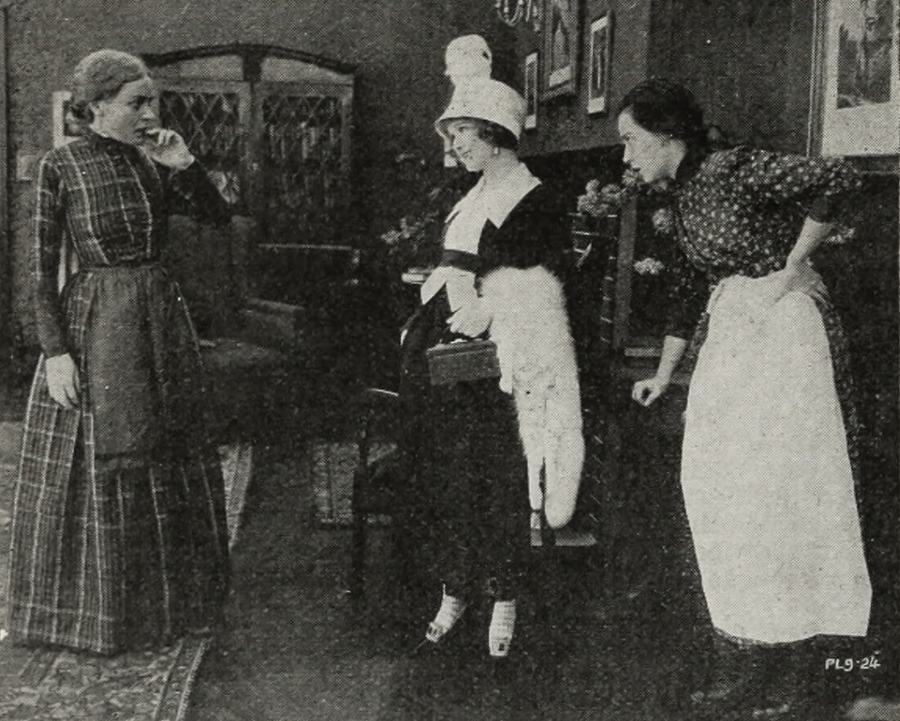
The enduring appeal of The Fair Barbarian lies in its astute exploration of themes that remain remarkably relevant. The culture clash between American dynamism and English tradition is a fascinating lens through which to examine evolving societal values. Octavia embodies the spirit of self-made wealth, individualism, and a refreshing lack of deference, clashing with Slowbridge's emphasis on inherited status, rigid social codes, and quiet conformity. This tension isn't just a source of humor; it’s a profound commentary on the merits of different worldviews.
Furthermore, the film offers a compelling look at class distinctions and the arbitrary nature of social hierarchy. Lady Theobald's disdain for the 'mere manufacturer' underscores a deeply ingrained prejudice against those who work with their hands or build their own fortunes, favoring instead the 'gentleman of leisure.' Octavia's actions, particularly her championing of Lucia's love, directly challenge this snobbery, advocating for love and character over class. It’s a powerful message that resonates with modern audiences who continue to grapple with similar societal biases.
Perhaps most significantly, The Fair Barbarian is a celebration of female agency. Octavia is a woman who knows her mind, isn't afraid to speak it, and actively shapes her own destiny and those around her. She refuses to be a passive object of affection or a pawn in social games. Her refusal of Captain Barold's proposal, her orchestrating of Lucia's romance, and her ultimate choice of an American partner all speak to a powerful, independent spirit. This portrayal of a strong, resourceful woman was undoubtedly inspiring in its time, and it continues to be so today. She is, in many ways, an early cinematic example of a woman who rocks the boat with grace and undeniable effectiveness.
While details of its specific cinematic execution might be elusive today, one can easily imagine the visual storytelling inherent in The Fair Barbarian. The contrast between Octavia's vibrant, perhaps boldly patterned, American dresses and the more subdued, traditional English attire would have been a visual shorthand for the cultural clash. The sets would likely emphasize the quaint, perhaps slightly dusty, charm of Slowbridge, juxtaposed with flashes of American modernity brought by Octavia's personal effects. The performances, particularly that of Elinor Hancock as Octavia and Josephine Crowell as Lady Theobald, would have relied heavily on expressive body language and facial expressions, crucial for conveying the comedic and dramatic nuances of the plot in a silent film era.
The pacing, too, would have been key. The initial scenes establishing Slowbridge's somnolence would then build to Octavia's arrival, accelerating the narrative momentum as her influence spreads. The comedic timing of Lady Theobald's reactions, the tender moments between Lucia and her manufacturer, and the subtle power play between Octavia and Captain Barold would all have been orchestrated to maximize their impact. It’s a narrative ripe for compelling visual interpretation, emphasizing the subtle shifts in power and perception as Octavia’s influence takes hold.
The Fair Barbarian is more than just a historical curiosity; it’s a captivating piece of social commentary wrapped in a charming romantic comedy. It reminds us that progress often comes not through grand revolutions, but through the quiet, persistent influence of individuals who dare to be different. Octavia, the eponymous 'fair barbarian,' isn't truly barbaric at all; she's simply fair in her judgments and unburdened by the artificial constraints that shackle those around her. Her story is a delightful testament to the power of authenticity and the refreshing impact of an outsider's perspective.
It’s a film that, even without the benefit of sound, speaks volumes about human nature, societal pressures, and the universal yearning for genuine connection. Its message, delivered with wit and warmth, continues to resonate: sometimes, the most civilized thing one can do is challenge the very conventions that claim to define civility. A truly enjoyable and thought-provoking experience, The Fair Barbarian stands as a charming reminder of cinema's enduring power to entertain, enlighten, and gently provoke.
IMDb —
1915
Community
Log in to comment.