DbcultAccessing Vault...
Cult Review
Senior Film Conservator
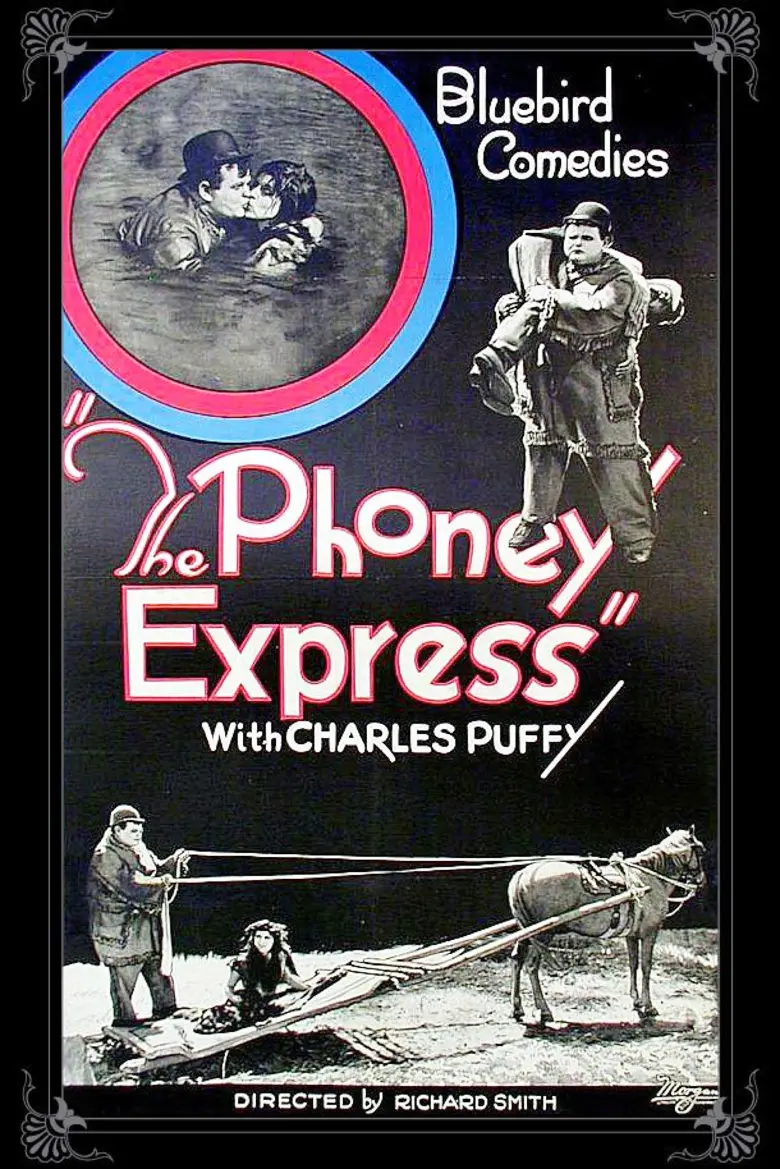
Is The Phoney Express worth your time in the modern era? Short answer: No, unless you are a dedicated film historian or a glutton for the most nonsensical corners of silent slapstick. This film is for the viewer who finds humor in the breakdown of logic; it is absolutely not for those seeking a coherent plot or any semblance of grounded storytelling.
This 1926 short is a product of its time, capturing the frantic, often violent energy of the mid-20s comedy scene. It doesn't ask for your emotional investment. It asks for your bewilderment. It is a film where physics go to die and where the 'hero' is more of a walking disaster than a savior. If you’ve seen His Jonah Day, you have some idea of the Puffy-Huszti energy, but this takes the absurdity to a different level of geographic and physical impossibility.
This film works because it embraces a total lack of consequence, allowing for visual gags that modern cinema would find too expensive or too stupid to execute. This film fails because it relies on tired racial caricatures and a structural looseness that makes its short runtime feel surprisingly long. You should watch it if you want to see the exact moment when silent comedy began to prioritize the 'gag' over the 'story' to a fault.
The premise of The Phoney Express is inherently ridiculous. Little Nell is traveling to Hollywood in a covered wagon. Think about that for a second. It is a meta-commentary on the industry itself—the idea that the path to fame is a literal western trek fraught with danger. But director Richard Smith doesn't linger on the satire. He moves straight to the carnage. The wagon is attacked, and the defense is played for laughs in a way that feels jarringly disconnected from the stakes.
Elsie Tarron plays Nell with the standard wide-eyed innocence of the era, but she is quickly sidelined by the arrival of Károly Huszár, known to audiences then as 'Puffy.' Puffy is the antithesis of the Western hero. Where a typical hero would ride a horse to the rescue, Puffy carries the horse. It’s a subversion that works because it is so fundamentally stupid. When he carries the nag across a stream only to be kicked back to the start, the film establishes its rhythm: progress is impossible, and effort is always rewarded with a bruise.
The centerpiece of the film’s middle act is the tomato cannon. In an attempt to repel the attackers, Puffy loads a piece of artillery with tomatoes. This is the kind of 'cartoon logic' that predates the actual golden age of animation. The gag doesn't just fail; it backfires with mathematical precision. By catching his foot in a rope, Puffy swings the cannon around, blasting one of his own defenders with a 'tomato surprise.'
This scene is a perfect example of the 'Rube Goldberg' style of comedy prevalent in the 1920s. It’s not about the punchline; it’s about the elaborate setup of the failure. Contrast this with the more grounded comedy found in A Hickory Hick. While both deal with rural or frontier themes, The Phoney Express feels like it was written by someone who had never seen a real horse or a real cannon. It is purely a product of the studio lot’s imagination.
Károly Huszár’s performance is a fascinating study in physical resilience. In the climax, he is filled with arrows. In any other genre, this would be a massacre. Here, the intertitles or the visual cues suggest his body is made of 'pulp.' The arrows don't penetrate; they just stick. He walks around like a human pincushion, entirely unbothered. It is a grotesque image if you think about it too hard, but the film doesn't give you time to think.
This 'invincible idiot' trope is something we see in various forms across the era, from the works of Buster Keaton to smaller shorts like Nerve Tonic. However, Puffy lacks Keaton’s grace or Lloyd’s charm. He is a blunt instrument of comedy. He wins not through skill, but through a total lack of awareness. When he walks off a precipice with Nell at the end, it’s not a suicide pact—it’s just a mistake. They land in the water, wet but happy. It is a resolution that feels earned only because the rest of the film has been so utterly divorced from reality.
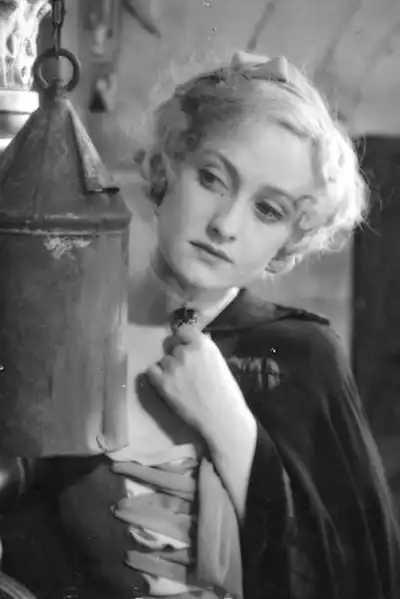
Richard Smith’s direction is functional at best. The pacing is a bit of a mess. The transition from the wagon attack to Puffy’s 'Phoney Express' ride feels like two different movies stitched together with a prayer. The cinematography is standard for 1926, lacking the experimental flair seen in European exports like Montmartre or the stylistic weight of Trilby.
However, there is a certain kinetic charm to the stunts. The horse-carrying gag required genuine physical effort, and the timing of the cannon swing suggests a well-rehearsed, if low-brow, production. The film doesn't have the emotional depth of something like Dombey and Son, but it isn't trying to. It is a ten-minute distraction that aims for the gut, not the heart. It hits the gut, but usually with a stale tomato.
If you are looking for a masterpiece of silent cinema, look elsewhere. The Phoney Express is a chaotic, often problematic, and entirely nonsensical short. It is worth watching only as a curiosity—a glimpse into what passed for 'high-concept' comedy in the mid-1920s. It represents a specific bridge between the rough-and-tumble slapstick of the 1910s and the more polished features that would follow in the late 20s like The Palm Beach Girl.
For the casual viewer, the racial stereotyping and the lack of a clear narrative arc will be major hurdles. For the enthusiast, Puffy’s performance offers a weirdly compelling look at a comedian who was popular in his time but has largely been forgotten by history. It is a loud, silent film. It screams for attention but has very little to say.
Pros:
- Genuinely bizarre visual gags that defy physics.
- A high-energy performance from Károly Huszár.
- Short enough to be consumed as a historical artifact without much pain.
Cons:
- Dated and offensive racial caricatures.
- The 'plot' is barely a suggestion.
- The ending feels abrupt and unearned, even for slapstick.
The Phoney Express is a frantic, messy, and occasionally hilarious piece of silent ephemera. It is not a good film by any modern metric, but it is a fascinating one. It shows a world where the only thing that mattered was the next laugh, no matter how cheap or illogical that laugh might be. It works as a fever dream. It fails as a story. In the end, it’s just a wet, happy accident of film history.

IMDb —
1928
Community
Log in to comment.