DbcultAccessing Vault...
Cult Review
Senior Film Conservator
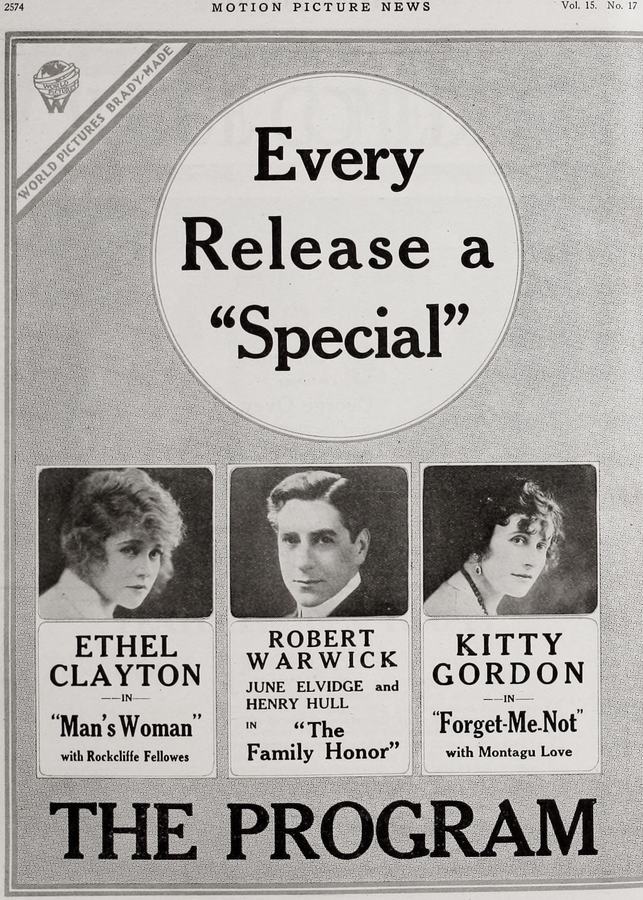
There's a certain gravitas that clings to the dramas of the early 20th century, a reflection of a society grappling with its own moral compass while navigating rapid change. 'The Family Honor', a cinematic artifact from 1917, is precisely one such narrative, a profound exploration of duty, temptation, and the often-fraught path to redemption. It’s a film that, even in its silent grandeur, speaks volumes about the enduring human condition, the pressures of societal expectation, and the transformative power of genuine affection.
At its core, this film, penned by Adrian Gil-Spear, presents us with the Wayne family – a bastion of American patriotism and impeccable repute. General Wayne, portrayed with stoic dignity by Alec B. Francis, embodies a generation's unwavering commitment to honor. His sons, Captain Stephen Wayne (Frank Beamish) and Anthony Wayne (Robert Warwick), represent two divergent paths. Stephen, the military man, is the embodiment of discipline and integrity, a stark contrast to Anthony, the sensitive portrait painter, whose artistic temperament makes him susceptible to the world's more intoxicating, and ultimately perilous, enchantments.
Anthony's initial engagement to Doris Leighton (June Elvidge), a woman of evident refinement and suitability, suggests a conventional, respectable future. Yet, the narrative takes a sharp turn with the introduction of Marcia Quesnay (Gerda Holmes), an actress whose magnetic allure proves irresistible. Marcia is not merely a character; she is a force of nature, an 'emotional actress and enchantress' who, wittingly or unwittingly, becomes the catalyst for Anthony's spectacular disgrace. His devotion to her eclipses his promising career, his family's expectations, and indeed, his own sense of self-preservation. It's a classic tale of infatuation leading to ruin, a common thread in narratives of the era, reminiscent of the destructive desires explored in films like The Lure of Heart's Desire, where unchecked passion often leads to tragic consequences.
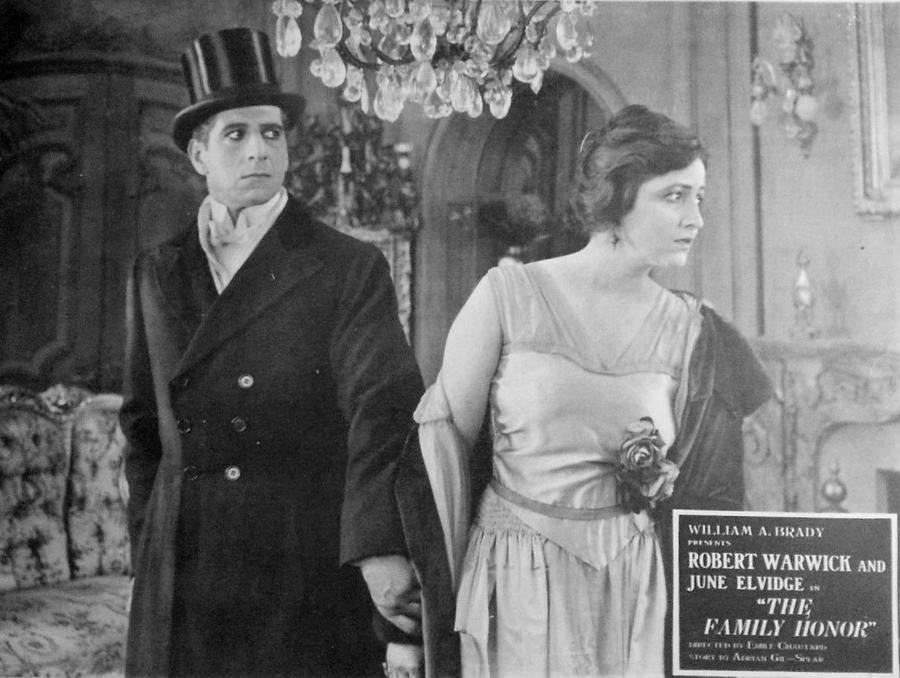
Robert Warwick's portrayal of Anthony is particularly poignant. He captures the essence of a man torn between societal expectation and personal desire, a soul adrift in the tumultuous waters of illicit love. We witness his descent, not as a sudden plunge, but as a gradual erosion of character, each demand from Marcia further chipping away at his once-promising future. This portrayal of a protagonist's moral decay is a powerful element, a theme echoed in films such as Satan Sanderson, where characters grapple with moral corruption and the arduous journey back to grace.
The true heart of 'The Family Honor' lies not just in Anthony's fall, but in Marcia Quesnay's remarkable transformation. Initially presented as the archetypal temptress, a figure of potential ruin, Marcia undergoes a profound spiritual awakening. It begins subtly, with Stephen Wayne's intervention. His initial encounter with her, an attempt to compel her to release Anthony, blossoms into a sincere, mutual affection. This burgeoning love, described as the 'first real love of her life,' acts as a crucible, refining her character and stripping away the layers of her 'butterfly life.'
Gerda Holmes delivers a nuanced performance, deftly navigating Marcia's evolution from a self-absorbed enchantress to a 'tender and self-sacrificing woman.' This arc is compelling because it challenges the audience's initial perceptions, subverting the traditional 'femme fatale' trope. Her decision to renounce her past, to return Anthony's gifts, and even to deliberately disillusion him by making him believe she is 'only a common woman,' showcases a formidable strength of character. It's a selfless act, designed to free Anthony from his destructive obsession, even at the cost of her own reputation. This theme of redemption through sacrifice is a potent one, resonating with the spiritual awakenings often explored in narratives like The Rosary, where characters find grace through profound personal change.
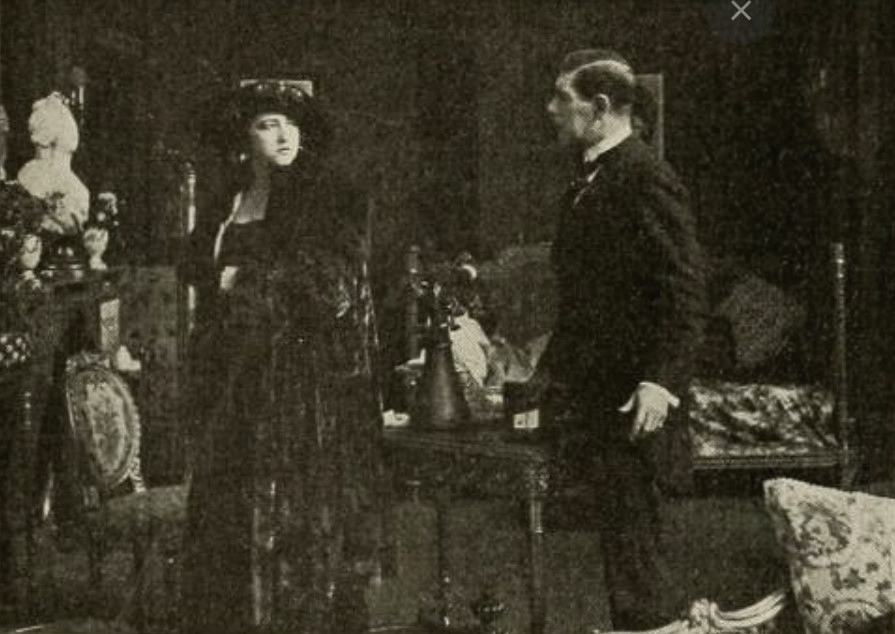
Just as Marcia begins her journey towards redemption, Anthony is drawn deeper into the abyss, manipulated by Eric Mainwaring (Henry Hull), an actor secretly infatuated with Marcia. Eric, a truly insidious figure, poisons Anthony's mind, convincing him that Marcia is a woman easily bought, not loved. This deception, coupled with Anthony's desperation, leads to the ultimate transgression: the theft of government funds from his father's safe, funds entrusted to the General by Stephen. It’s a betrayal that strikes at the very heart of the family's honor, a heinous act that threatens to shatter the Wayne legacy irrevocably.
The ensuing card game, orchestrated by Eric, sees Anthony cheated of the stolen money, leaving him penniless and utterly disgraced. This sequence is a masterclass in building tension, highlighting the rapid downward spiral of a man consumed by his vices and manipulated by malevolent forces. The film here touches upon themes of criminal manipulation and the consequences of moral weakness, albeit on a more intimate scale than the grand schemes of films like Fantomas: The Mysterious Finger Print, yet no less impactful for its personal devastation.
Stephen's discovery of the theft sets in motion the film's climactic sequence. His journey to Marcia's apartment, initially to confront her about her perceived influence over Anthony, becomes a timely rescue. Eric, emboldened by his ill-gotten gains, attempts to coerce Marcia into fleeing abroad with him. The confrontation between Stephen and Eric is tense and satisfying, with Stephen forcing Eric to 'disgorge the stolen funds' and retreat in fear of the authorities. Frank Beamish as Stephen delivers a performance of quiet strength, embodying the moral backbone of the family.
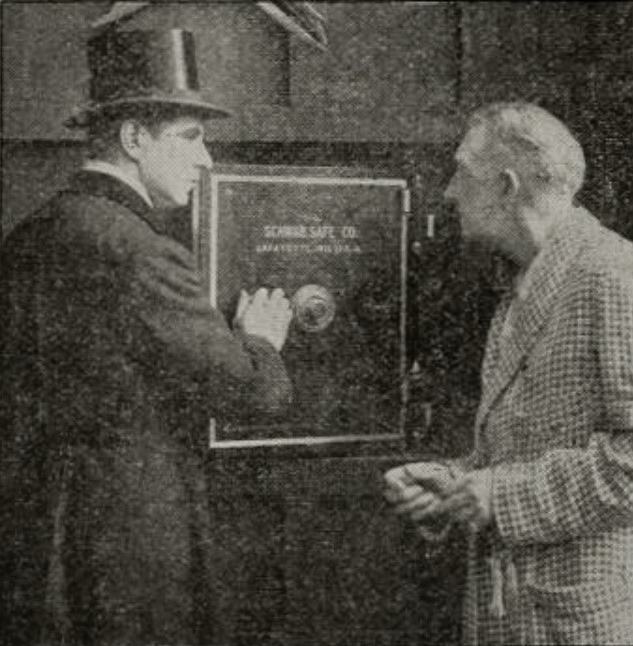
The morning after these dramatic events finds Anthony at his lowest ebb, an 'outcast and a thief,' contemplating suicide. His father, General Wayne, discovering the theft, delivers a chilling ultimatum, asserting that 'honorable death is better than a life of dishonor.' This stark pronouncement underscores the rigid moral code of the era, where family honor was paramount, even above life itself. This moral dilemma, where duty to family and societal expectations clash with personal tragedy, finds echoes in the profound moral quandaries explored in films like The Fifth Commandment, where characters are forced to make agonizing choices that test their very souls.
It is at this critical juncture that Stephen, accompanied by Marcia, intervenes, preventing the tragedy. In an act of unparalleled selflessness and fraternal love, Stephen fabricates a lie, claiming he was the one who took the money from the safe, substantiating his claim by producing the recovered funds. This selfless deception not only saves Anthony from suicide but also preserves his honor in the eyes of his father and Doris. It's a powerful moment of grace, demonstrating that true honor can sometimes be found not in rigid adherence to rules, but in compassion and sacrifice. Stephen's role here is akin to a mediator, bridging the chasm of despair and restoring familial harmony.
The film culminates in a general reconciliation, a healing of wounds that seemed irreparable. General Wayne, initially apprehensive upon seeing Marcia beside Stephen, fearing another son has been 'ensnared,' is disabused of his prejudice. Stephen, with quiet conviction, declares that they have all 'misjudged her,' revealing Marcia's true character and her intention to 'enhance the family honor by becoming his wife.' This final revelation is a testament to the power of love to transcend social judgment and to the capacity for individuals to grow and redeem themselves. It’s a beautiful resolution that elevates the narrative beyond mere melodrama, imbuing it with a timeless message of forgiveness and understanding.
'The Family Honor' is more than just a period piece; it's a poignant character study wrapped in a compelling moral drama. Its strengths lie in its intricate plot, the profound transformations of its characters, and the powerful performances that bring this silent narrative to vivid life. While some might view the rapid moral shifts as somewhat theatrical by modern standards, they were potent narrative tools for conveying clear moral messages in an era defined by evolving social norms.
The film's exploration of honor, shame, and redemption remains remarkably resonant. It reminds us that family legacies are not merely inherited but are actively forged through choices, sacrifices, and the willingness to see beyond surface appearances. It’s a testament to the enduring power of classic cinema to explore universal themes that continue to captivate and challenge audiences, inviting us to reflect on our own definitions of honor and the true cost of love and forgiveness. A truly captivating watch for anyone interested in the foundational narratives that shaped early filmmaking and continue to influence storytelling today. The performances, particularly from Gerda Holmes and Frank Beamish, elevate the material, transforming what could have been a simplistic morality play into a nuanced examination of human frailty and resilience. It's a quiet triumph, a film that deserves to be rediscovered and appreciated for its timeless artistry and profound emotional depth.
IMDb —
1923
Community
Log in to comment.