DbcultAccessing Vault...
Cult Review
Senior Film Conservator
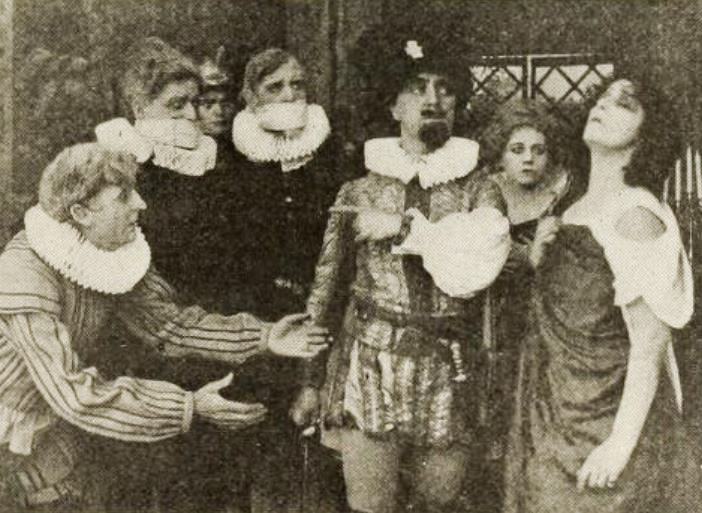
Paris, August 1572: a city corseted in silk and gunpowder. The Fatal Night—a one-reel miracle released in 1911—doesn’t merely depict the St. Bartholomew’s Day massacre; it exhales its charnel breath straight into your lungs. Constance Crawley’s Marie quivers like a taper in this hurricane of protocol and piety, her pupils reflecting first the sparkle of torchlight galas, then the crimson geyser that follows. Arthur Maude’s Raoul swaggers with rapier arrogance, yet the tremor in gloved fingers as he marks Marie’s door with a chalk cross betrays a man bargaining with his own soul. Their pas de deux—half abduction, half baptism—unfolds inside a capital that has overnight swapped Versailles perfume for copper stench.
Director Theodore Marston—never lavishly budgeted—relies on chiaroscuro so aggressive it borders on haemoglobin. Interiors are swallowed by cavernous shadow; exterior scenes flicker between pewter moon and guttering braziers, achieving a Rembrandt intensity rare for nickelodeon fare. Note the moment Raoul drags Marie over Pont-Neuf: the Seine below is merely a swath of black velvet, yet the camera tilts just enough to suggest abyssal depth. You glimpse the influence of Fantasma’s German expressionism two years prior, though Marston’s strokes are leaner, more predatory.
Crawley, often maligned as a mere mannequin of melodrama, here weaponizes stillness. Watch her pupils dilate when the wedding fanfare mutates into distant screams—no hand-wringing, no staggers, just an iris flicker that delivers more terror than pages of intertitles could capture. Maude, conversely, charts a volta-face from rake to reluctant redeemer without telegraphing the pivot. His body language slackens imperceptibly; the swagger becomes custodial, the grin softens into something perilously tender. Together they ignite a chemical reaction that feels spontaneous even a century later.
Scholars may scoff at the film’s compression of a three-day pogrom into a twenty-four-hour blood-orgy, yet the condensation serves narrative ferocity. The screenplay—penned anonymously, possibly by Marston himself—filters geopolitical chess through the keyhole of one woman’s anatomy. Marie’s forced nuptials become synecdoche for an entire faith cornered, converted, or cut down. Compare this microcosmic approach to The Battle of Trafalgar, which dilutes carnage across nautical sprawl; here every corpse is personal, every betrayal intimate.
Because celluloid is mute, the viewer becomes composer. You supply the clang of iron-shod boots, the hiss of torches, the guttural Latin of last rites. Contemporary exhibitors often accompanied the reel with a condensed Wagner prelude, but I recommend viewing it raw—let your pulse drum the overture. The absence of a score sharpens every visual incision: a white cross slashed across a door becomes a scar; a child’s marble rolling through a puddle of wine looks like a communion wafer dissolving in blood.
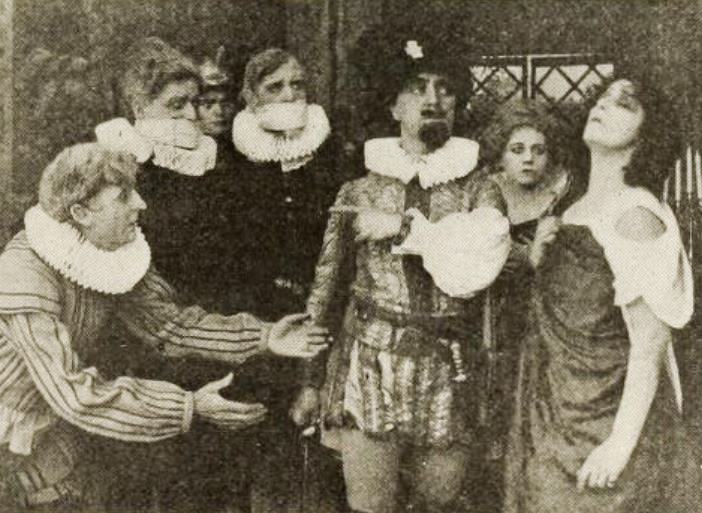
Make no mistake: this is a rape fantasy retrofitted into redemption arc. Marie’s agency is auctioned off in a single night, her body bartered for her clan’s survival. Yet the film refuses to wallow in victim tableau. By reel’s end she strides the ramparts beside Raoul, cloak billowing like a battle standard, eyes hardened into flint. The transformation is less Stockholm syndrome than strategic metamorphosis—a medieval don’t-get-mad-get-even. Feminist critics may bristle, but within the suffocating corset of 16th-century patriarchy, Marie’s negotiated surrender feels almost insurrectionist.
Catholic iconography is weaponized with fetishistic glee. Rosaries double as garrotes; cruciform shadows pin Huguenots to alley walls like insects in entomological display. The film anticipates Paradise Lost’s iconoclastic savagery, though it predates by six years. Meanwhile, Protestants are portrayed less as saints than as sitting ducks—naïve, book-drunk, woefully unprepared for knives that slice both parchment and flesh. Theological nuance is jettisoned in favor of visceral dread; doctrine becomes mere pigment in a vast abattoir mural.
The DNA of The Fatal Night can be traced through strands of later cinema. The bridal-bloodbath trajectory prefigures Tess of the Storm Country’s nuptial martyrdom; the claustrophobic nocturnal siege echoes through The Sin of a Woman. Even Griffith’s Orphans of the Storm owes a debt: the Parisian carnivalesque turned homicidal, aristocratic opulence collapsed into plebeian savagery.
Most extant prints derive from a 1923 Soviet kinofond reissue—Russian intertitles, French annotations, mangled beyond polyglot recognition. The Museum of Modern Film recently spliced a 2K restoration, grafting English cards sourced from a 1912 Pennsylvania censorship ledger. The result? A bruised beauty—scratches like sabre scars, nitrate shrinkage that warps cathedral spires into Expressionist lightning. Seek it on archival streaming services; brace yourself for a mere 14-minute runtime that nonetheless lingers like a 14-hour fever dream.
The Fatal Night is neither cautionary sermon nor historical syllabus; it is a cursed valentine pressed between the pages of Europe’s guilty conscience. It whispers that love can sprout in grave-soil if only because the alternative is oblivion. One hundred thirteen years after its premiere, its bells still reverberate—less a clang than a subcutaneous tremor reminding us that every city, every era, harbors a midnight when tolerance buckles and the crossed chalk-mark decides who breathes till dawn.
Grade: A- (for audacity), B+ (for historical fidelity), A (for lingering trauma).
IMDb 6.2
1927
Community
Log in to comment.