DbcultAccessing Vault...
5.6/10
Senior Film Conservator
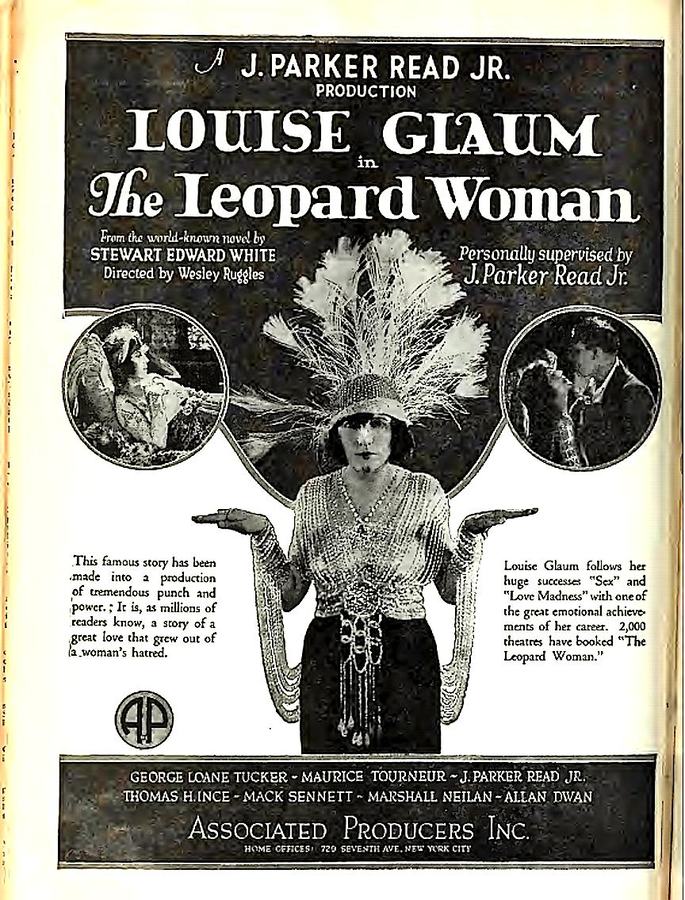
A definitive 5.6/10 rating for a film that redefined the boundaries of cult cinema. The Leopard Woman remains a cornerstone of transgressive art.
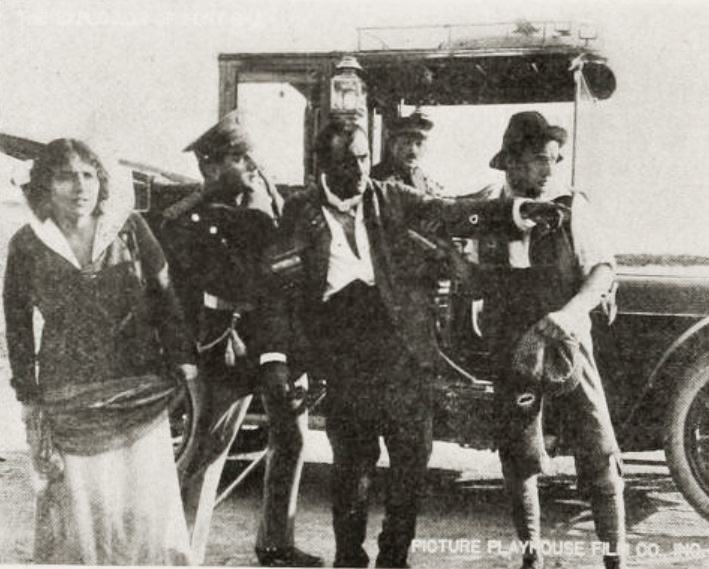
To witness The Leopard Woman (1920) in the modern era is to step into a time capsule of high-octane melodrama and burgeoning cinematic language. Directed by Wesley Ruggles and produced by J. Parker Read Jr., this film stands as a monumental testament to the 'Vamp' phenomenon that gripped early 20th-century audiences. Unlike the more grounded legal tensions found in Within the Law, this production leans into the surreal, the exotic, and the unapologetically theatrical. Louise Glaum, in a performance that oscillates between predatory stillness and explosive emotionality, defines an era where the face was the primary instrument of narrative progression.
Set against a backdrop of a highly stylized Africa—reconstructed with the peculiar artifice of early Hollywood—the film navigates the treacherous waters of international espionage. While contemporary viewers might find the geopolitical stakes somewhat archaic, the psychological interplay between the characters remains strikingly modern. Glaum’s character is not merely a villainess; she is a professional, a woman operating in a man’s world of maps and borders, using the only tools society has permitted her: her wit and her perceived lethality. In many ways, she shares the complex moral fiber of the protagonists in The Mortal Sin, where social survival mandates a certain degree of ethical flexibility.
The narrative trajectory of The Leopard Woman is deceptively simple: an English explorer, John Culbertson (House Peters), is on a mission to establish a protectorate in the African interior. The Leopard Woman is sent to stop him by any means necessary. However, the simplicity ends there. The film’s pacing mimics the arduous trek of the expedition itself—heavy with anticipation, punctuated by moments of sudden violence and revelation. The cinematography, handled with a keen eye for shadow and depth, creates a sense of claustrophobia despite the vastness of the setting. It lacks the pastoral serenity of Hemsöborna, opting instead for a visual palette that feels perpetually on the verge of a storm.
House Peters provides a sturdy, if somewhat rigid, foil to Glaum’s fluid energy. His Culbertson is the quintessential Victorian hero—stoic, driven, and perhaps a bit blind to the nuances of the environment he seeks to conquer. Their chemistry is built on a foundation of mutual suspicion, a dynamic that elevates the film above standard romantic fare. We see echoes of this high-stakes interpersonal conflict in Vengeance and the Girl, where personal vendettas cloud the clarity of the objective. In this jungle, the heat is not just atmospheric; it is an internal condition of the heart.
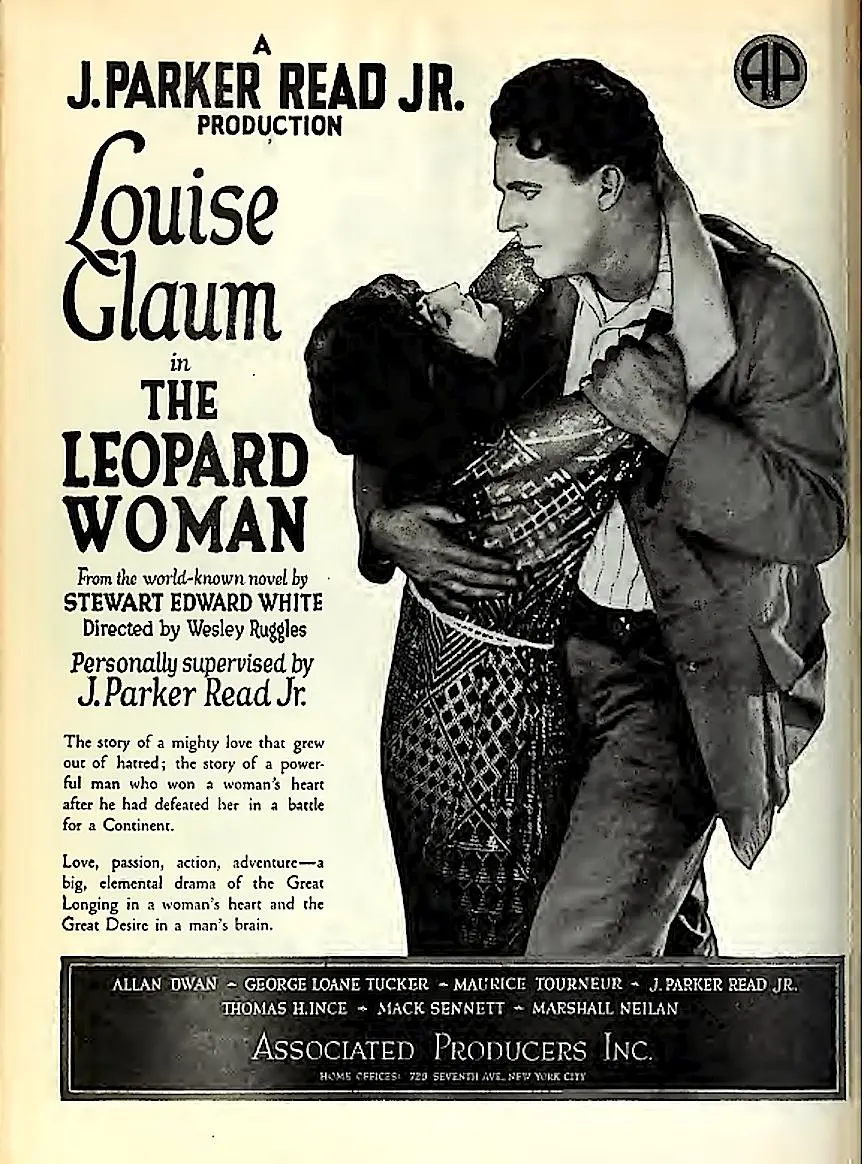
One cannot discuss The Leopard Woman without acknowledging the presence of Noble Johnson. As Chaké, Johnson brings a gravitas that often eclipses the primary leads. Johnson, a pioneer for Black actors in Hollywood, often played roles that transcended the reductive stereotypes of the time, even when cast as 'exotic' characters. His performance here is one of loyalty and quiet strength, providing a moral compass in a story otherwise populated by manipulators. The film’s treatment of the African setting is undeniably filtered through a colonial lens, yet there are moments of genuine ethnographic curiosity that distinguish it from more dismissive works like American Buds.
The supporting cast, including Alfred Hollingsworth and Cesare Gravina, populates the expedition with a variety of human frailties. The sense of a community in crisis is palpable. This isn't just a story about two people; it's a story about a collective movement through a hostile landscape. The logistical nightmares of the trek—thirst, fatigue, and the constant threat of the unknown—are rendered with a tactile grit that reminds one of the survivalist themes in 500 Pounds Reward.
Technically, the film is a marvel of its time. The use of tinting—sepia for the arid plains, deep blues for the nocturnal prowling of the leopard—adds a layer of psychological depth that monochrome alone could not achieve. The costuming of Louise Glaum is particularly noteworthy. Her gowns are not merely clothes; they are plumage. They signify her status as a creature of both high society and primal instinct. This duality is a recurring theme in silent cinema, often explored in films like Carmen, where the female protagonist's wardrobe is an extension of her volatile spirit.
The editing by H. Tipton Steck and Stanley C. Morse (who also served as writers) ensures that the tension never fully dissipates. There is a rhythmic quality to the cuts, particularly during the sequences where the Leopard Woman observes Culbertson from the shadows. It creates a voyeuristic tension that predates the psychological thrillers of the mid-century. While it may lack the whimsical charm of In the Good Old Days, it replaces it with a visceral, almost suffocating intensity. The film understands the power of the gaze—who is looking at whom, and what is being hidden in that look.
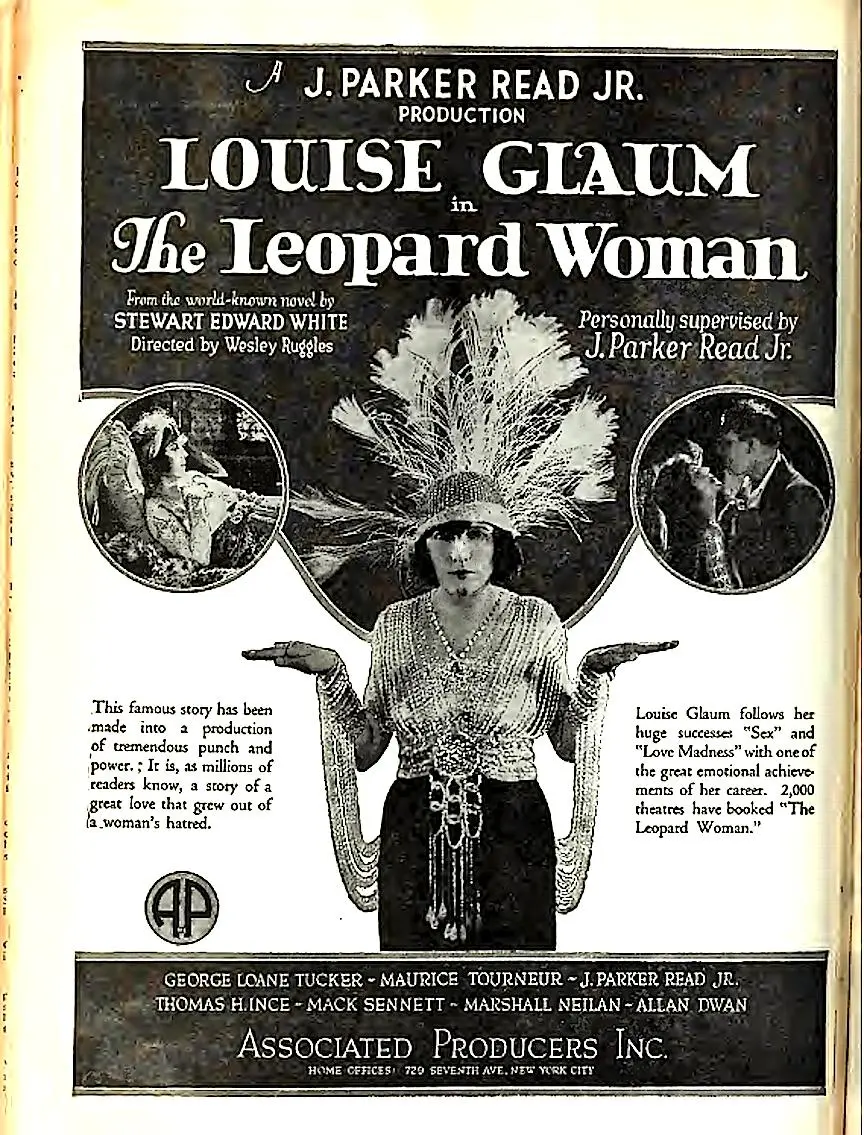
At its core, The Leopard Woman asks whether an individual can truly remain an instrument of the state when faced with the undeniable humanity of their enemy. Culbertson’s blindness—both literal and metaphorical at various points in the story—serves as a catalyst for the Leopard Woman’s internal transformation. Her mission is to destroy him, yet his vulnerability becomes her undoing. This trope of the 'redemptive power of love' is a staple of the era, seen in various forms in The Child of Destiny, but here it is handled with a darker, more cynical edge. The redemption isn't clean; it’s messy, born of fever and desperation.
The film also touches upon the concept of destiny. Are these characters merely pawns in a larger game of empires, or do they possess the agency to change their path? The fatalistic undertones of the script suggest that while they may choose their allegiances, they cannot escape the consequences of their nature. This thematic weight elevates the movie beyond a simple adventure flick, placing it in conversation with more philosophical works like The Isle of Life. It is a meditation on the masks we wear—the leopard skin, the explorer’s pith helmet—and the raw, frightened humans underneath them.
Reflecting on The Leopard Woman today requires a balanced perspective. We must acknowledge its role in perpetuating certain colonial fantasies while also celebrating its artistic achievements. Louise Glaum’s performance is a masterclass in silent acting; she communicates more with a slight narrowing of her eyes than many modern actors do with a ten-minute monologue. The film’s ambition—to tell an epic story of international intrigue in a hostile environment—was immense for 1920, and for the most part, it succeeds.
It stands in stark contrast to the lighthearted social satires of the time, such as Who's Who in Society, or the fable-like qualities of Feathertop. Instead, it offers a gritty, sweat-soaked, and emotionally turbulent experience. It reminds us that cinema, even in its infancy, was capable of exploring the darkest corners of the human psyche. The Leopard Woman is not just a character; she is a metaphor for the untameable aspects of the soul, much like the weaving of fate depicted in The Weavers of Life.
In the final analysis, this film is a vital piece of cinematic history. It captures a moment when Hollywood was beginning to realize its power to transport audiences to distant lands and into the hearts of complicated, morally grey protagonists. It is a story of hoops of steel—as seen in the resilience required in With Hoops of Steel—and the fragile threads of romance that can bind even the most disparate of enemies. Whether you are a scholar of silent film or a casual viewer looking for a glimpse into the past, The Leopard Woman offers a rich, rewarding, and visually stunning journey into the heart of darkness and the light of human connection. It remains as potent as a desert sun, as mysterious as the jungle night, and as captivating as the gaze of Louise Glaum herself.
Final Grade: A- | A seminal work of early psychological espionage.

IMDb 6.3
1932
Community
Log in to comment.