DbcultAccessing Vault...
Cult Review
Senior Film Conservator
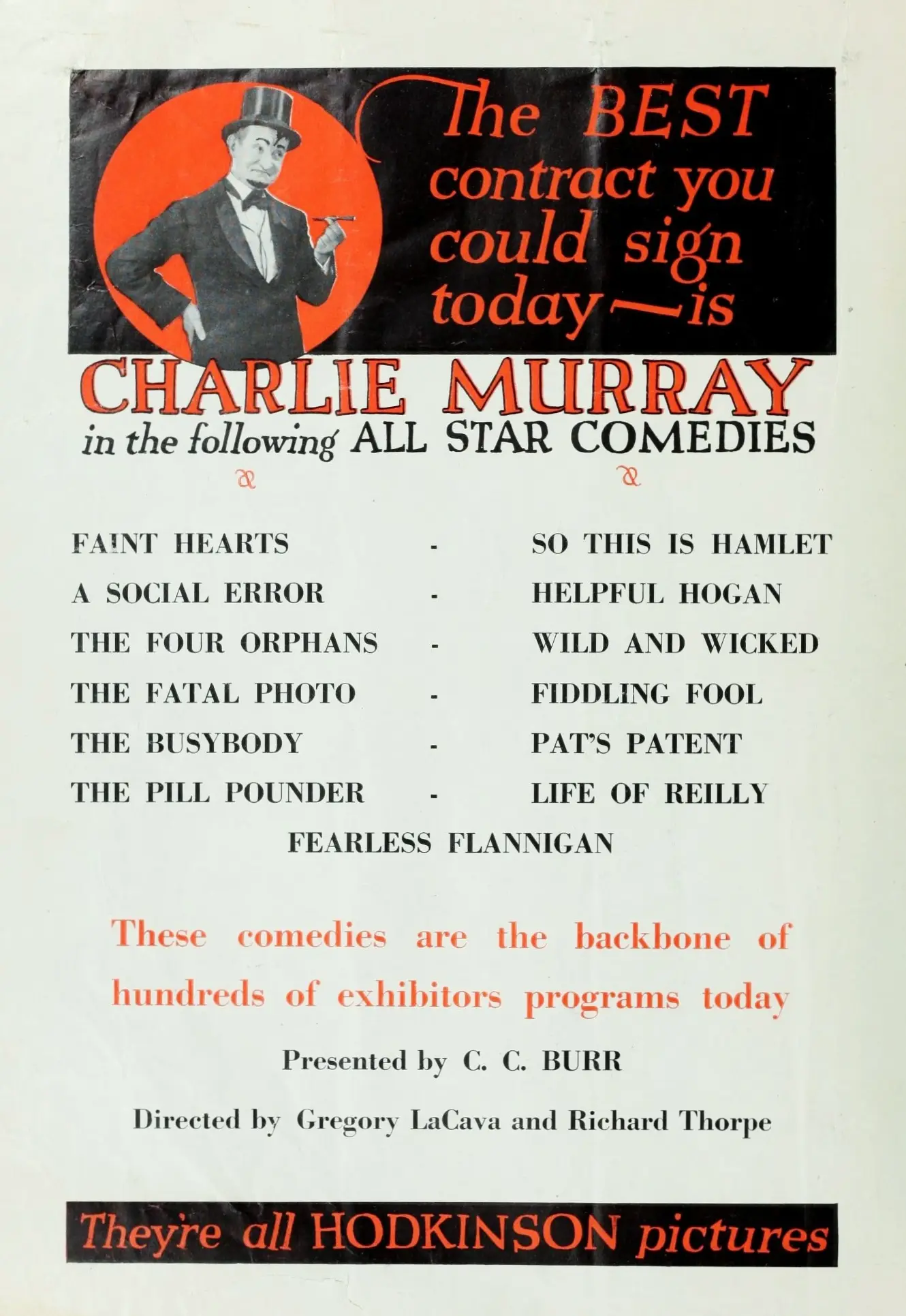
The cinematic landscape of the early 1920s was often a battleground between the burgeoning demands of modern industrial society and the lingering, pastoral innocence of the previous century. In The Fiddling Fool, we find a quintessential expression of this friction. Directed with a keen eye for the absurd, the film elevates a seemingly mundane premise—the filing of an income tax return—into a Herculean odyssey of frustration. Charles Murray, an actor whose face is a canvas of bewildered indignation, provides a performance that resonates even in our modern age of digital tax portals and algorithmic audits.
While many films of the era, such as Business Is Business, treated the acquisition of wealth with a certain reverent gravity, The Fiddling Fool takes a decidedly more cynical approach to the mechanics of finance. Murray’s character is not a titan of industry but a man drowning in the minutiae of the Internal Revenue Service. The visual gag of the 'tax form'—a sprawling, accordion-like beast of paper—serves as a physical manifestation of the state’s intrusion into the private home. There is a palpable sense of claustrophobia as the ledgers pile up, contrasting sharply with the open, airy sequences involving the titular musician.
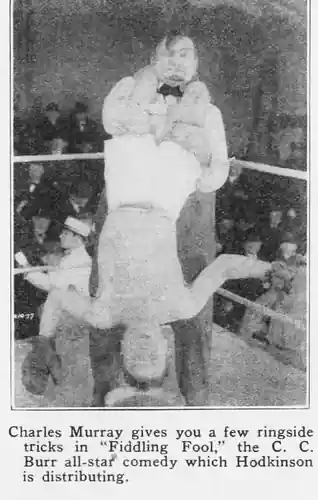
The brilliance of Murray’s performance lies in his kinetic energy. He doesn't merely read the forms; he battles them. He engages in a pugilistic dance with inkwells and blotting paper. It is a masterclass in silent storytelling, where the stakes are not life and death, but the preservation of one's sanity in the face of illogical mandates. This thematic preoccupation with the 'system' vs. the 'individual' is a recurring trope, yet rarely handled with such light-hearted dexterity.
Enter the 'Fiddling Fool,' played with a breezy, almost ethereal charm by Raymond McKee. In the rigid world of Murray’s patriarch, McKee is a chaotic element. He represents the Dionysian urge—the desire to abandon the ledger for the lyre (or in this case, the violin). His romance with the daughter, played by the luminous Kathleen Martyn, is not just a subplot; it is the ideological heart of the film. While the father is obsessed with what is 'owed' to the state, the daughter is focused on what is 'given' to the soul.
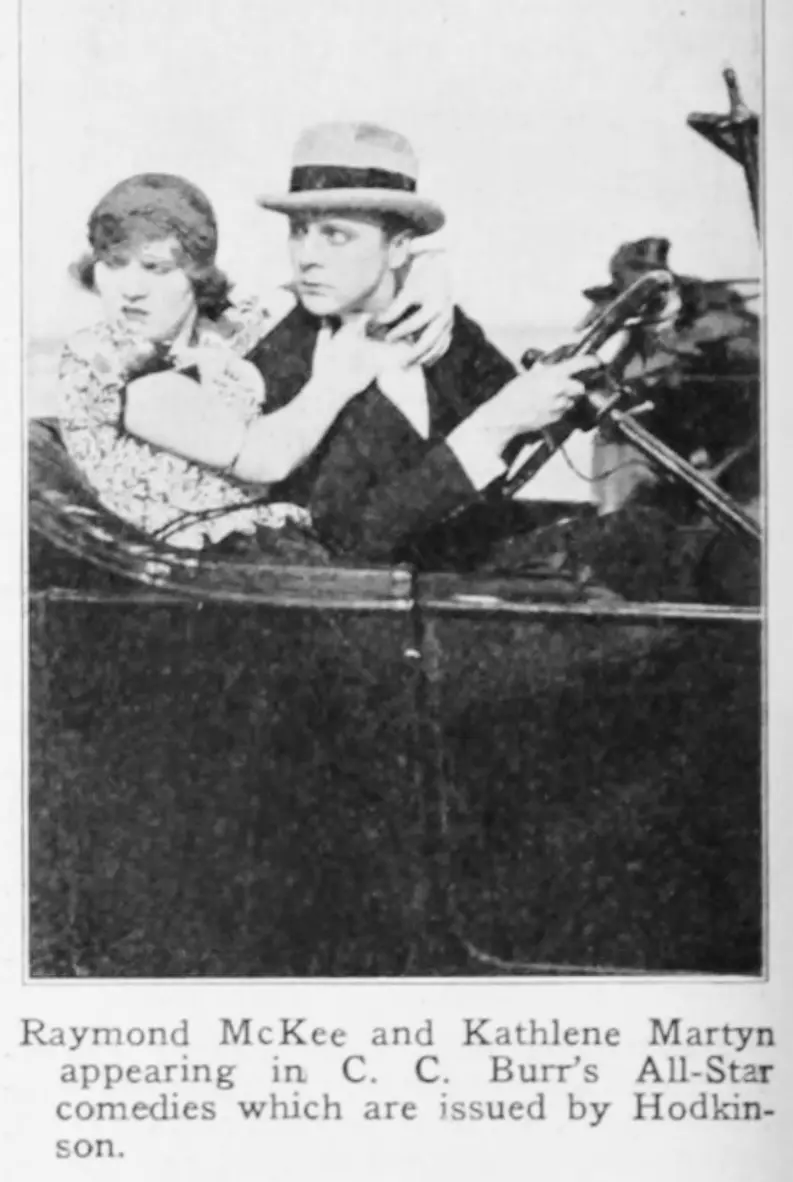
This dynamic mirrors the social tensions seen in Sisters, where family loyalty is tested by external romantic pressures. However, here the pressure is not just social, but economic. The fiddler is a 'fool' because he has no tax to pay; he has no income to speak of. He exists outside the system that is currently crushing Murray. This creates a fascinating subtext: is the musician truly the fool, or is the man who meticulously calculates his own financial demise the one we should pity?
The cinematography of The Fiddling Fool utilizes high-contrast lighting to delineate the two worlds. The interior scenes of the study are cramped, filled with shadows and sharp angles, reminiscent of the psychological weight found in A Butterfly on the Wheel. Conversely, the scenes where the fiddler performs are often set against softer backgrounds, using natural light to emphasize a sense of freedom. The camera lingers on the bow crossing the strings, a visual rhythm that replaces the need for synchronized sound.
We see a sophisticated use of the 'cut-away' to emphasize Murray’s internal monologue. When he looks at a tax line regarding 'deductions,' the film cuts to a dreamlike sequence of his money literally sprouting wings and flying out the window. This kind of visual metaphor was the vanguard of 1920s comedy, moving away from pure physical pratfalls into the realm of psychological satire. It shares a certain DNA with the suspenseful editing of Number 17, though applied here for levity rather than thrills.
To truly appreciate The Fiddling Fool, one must understand the American psyche in the wake of the 16th Amendment. The income tax was a relatively new and terrifying specter for the middle class. The film taps into a universal anxiety that was also explored in more dramatic tones in Fatal orgullo, where pride and financial standing lead to ruin. Murray’s character is a surrogate for every citizen who felt the world was becoming too complex to navigate without a law degree.
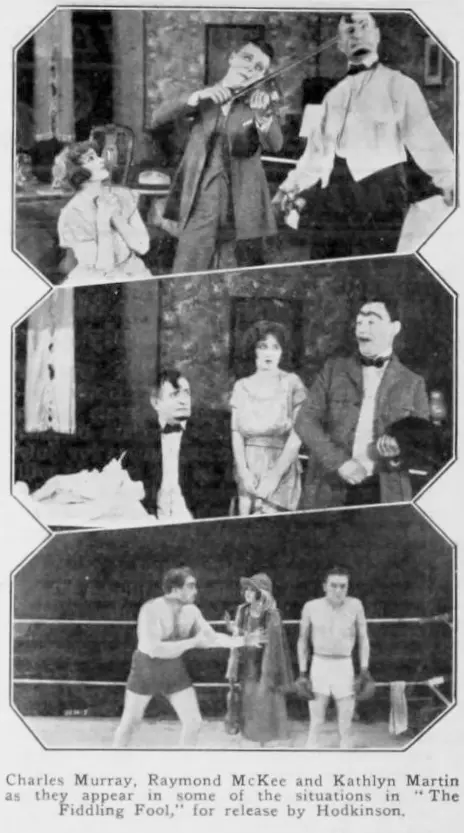
The 'Fiddling Fool' himself is a throwback to a more picaresque tradition. He is the wandering minstrel, the man who lives by his wits and his art. In a society increasingly obsessed with 'The Iron Trail' of progress and industry (see The Iron Trail), he is an anachronism. The film’s genius is in making this anachronism the hero. He doesn't solve the tax problem with money; he solves the family's misery with a song. It is a romantic, perhaps even naive, solution, but in the dark rooms of a silent cinema, it felt like a revolution.
Charles Murray often gets overshadowed by the titans like Chaplin or Keaton, but The Fiddling Fool proves his mettle as a character actor of the highest order. His ability to convey a specific type of 'middle-aged panic' is unparalleled. Unlike the 'Little Tramp' who exists on the fringes of society, Murray’s characters are usually deeply embedded in it, making their struggle against its constraints all the more relatable. His face, with its expressive eyebrows and downturned mouth, becomes a map of fiscal despair.
When compared to the stoic heroism found in Fighting for Gold, Murray’s heroism is of a different sort. It is the heroism of the domestic survivor. He isn't fighting bandits; he is fighting 'Schedule C.' This shift in stakes represents a maturing of the film medium, where the drama of the everyday is given the same cinematic weight as the drama of the frontier.
Kathleen Martyn’s role as the daughter provides the necessary emotional anchor. In many films of this period, like The House with the Golden Windows, the female lead is often a passive prize to be won. In The Fiddling Fool, Martyn exhibits a quiet agency. She is the bridge between the two men. She understands her father’s stress, but she refuses to let it stifle her joy. Her performance is subtle, relying on small gestures and lingering looks that convey a depth of feeling often lost in the more boisterous comedy sequences.
Her choice of the fiddler is a rejection of the 'safe' path. In the world of the 1920s, a musician was hardly a stable provider. By choosing him, she is making a radical statement about the value of happiness over security—a theme that echoes through the halls of cinema history, from Pique Dame to the modern indie dramedy. It is a testament to the film's writing that this romance feels earned rather than merely convenient.
As the film reaches its crescendo, the tax forms and the fiddle music collide in a chaotic finale that is as heart-warming as it is hilarious. The resolution doesn't involve a magical windfall of cash; instead, it involves a change in perspective. The father realizes that while the government may take a percentage of his earnings, they cannot tax the harmony of his home. This message of resilience is a powerful one, especially when viewed through the lens of other contemporary works like Defense or Tribute?, which dealt with larger nationalistic themes.
The Fiddling Fool remains a vital piece of silent cinema not because it is a grand epic, but because it is a precise one. It captures a specific moment in time—the birth of the modern taxpayer—and finds the universal humor in it. It reminds us that even when we are buried under the 'Mid-Channel' of life’s obligations (referencing Mid-Channel), there is always room for a little fiddling.
Final Thought: If you find yourself lost in the labyrinth of modern existence, look back to the 'Fool.' He might just have the tune you need to find your way out. Charles Murray and Raymond McKee create a duo for the ages, proving that while business is indeed business, art is the only thing that truly pays the bills of the heart.
IMDb —
1932
Community
Log in to comment.