DbcultAccessing Vault...
6.2/10
Senior Film Conservator
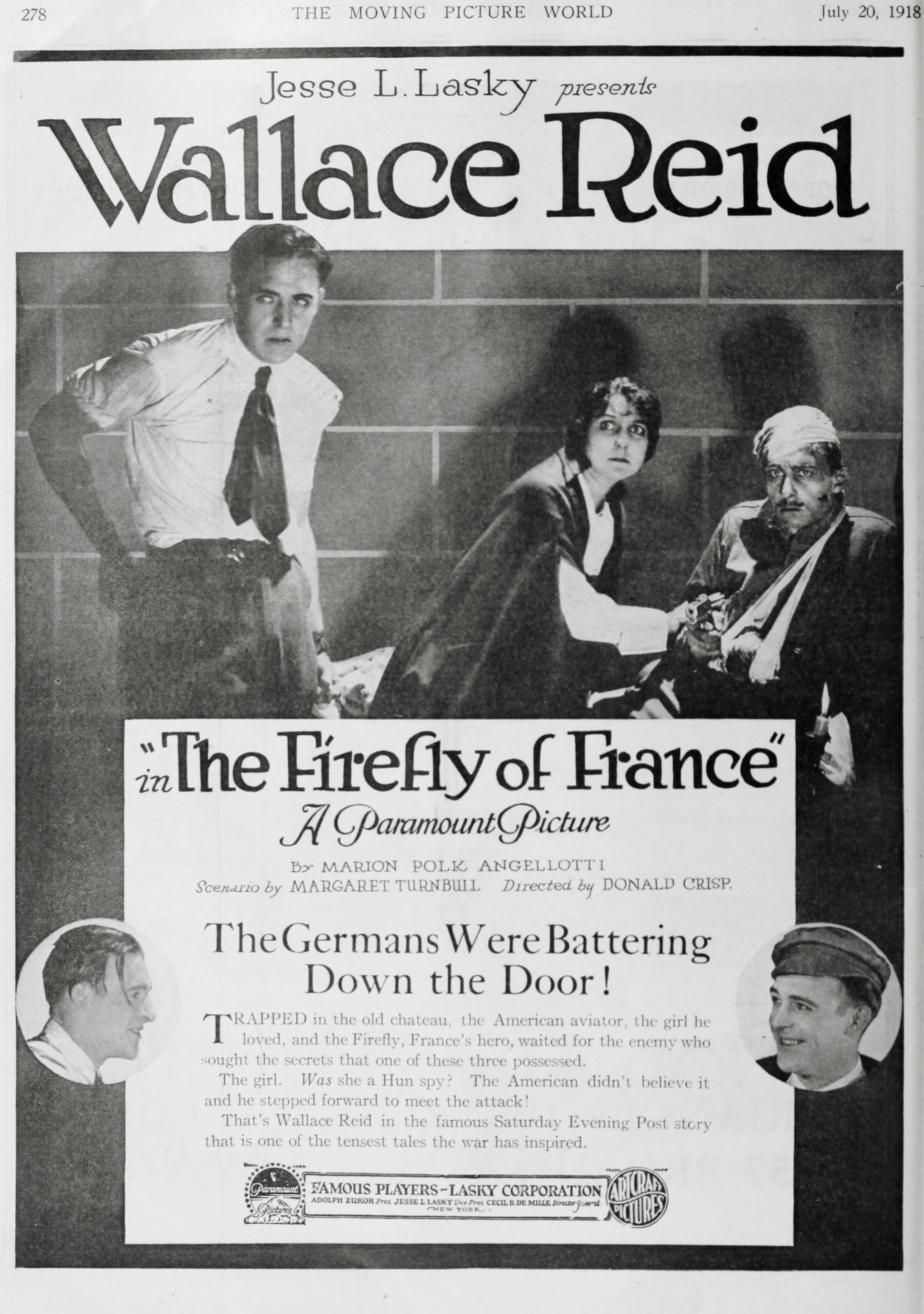
A definitive 6.2/10 rating for a film that redefined the boundaries of cult cinema. The Firefly of France remains a cornerstone of transgressive art.
The flicker of nitrate begins like a magnesium ribbon—brief, blinding, then lingering as after-image on the retina. The Firefly of France survives only in a 35 mm partial at the Cinémathèque de Toulouse, a scant nine reels out of an original twelve, yet what remains combusts with more wattage than many a digitally restored blockbuster. From the first tinted tableau—verdant forests of Compiègne inverted into nocturnal cobalt—director Donald MacDonald orchestrates a chiaroscuro war where biplanes become Icarian moths and every human heart is a double-exposed negative.
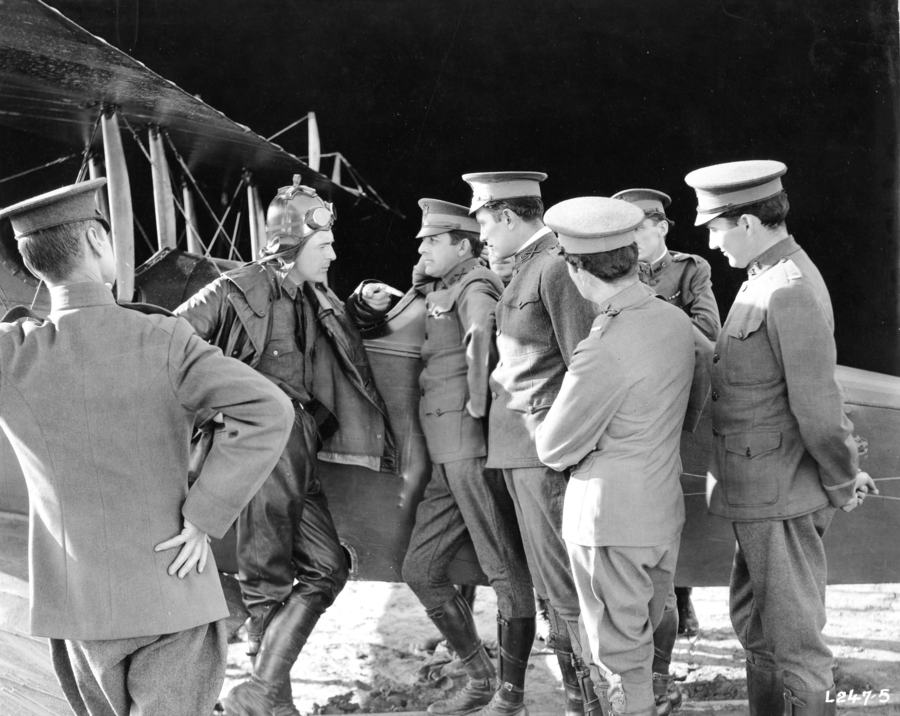
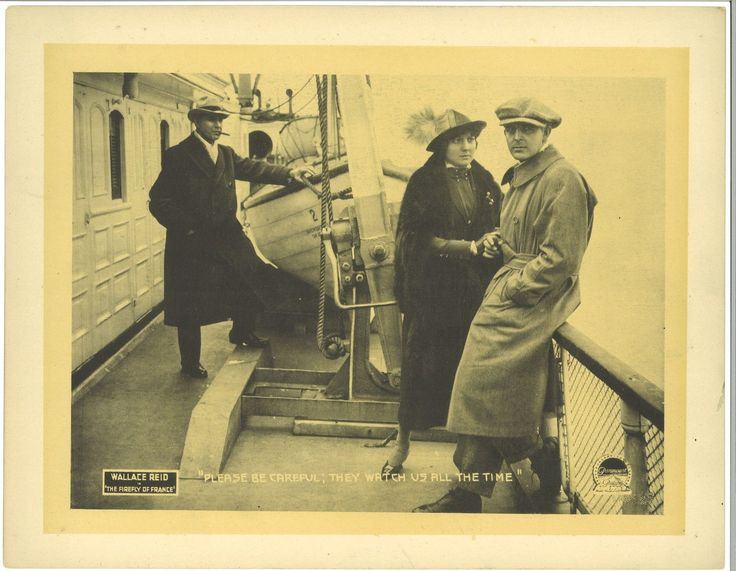
Wallace Reid’s Blaine Rawson enters the mythos boot-first: he vaults from a truck, leather coat still smelling of American dust, eyes already scanning French skies for an aircraft that no longer exists except in dossiers stamped “CONFIDENTIEL.” Reid, usually the affable clown of Cecil B. DeMille comedies, here sports a thousand-yard stare so persuasive one wonders if he filmed his close-ups while the war still raged off-screen. His jawline, once employed for rakish grins, now registers each new betrayal as a micro-flinch, the way a barograph needle trembles before the shellburst.
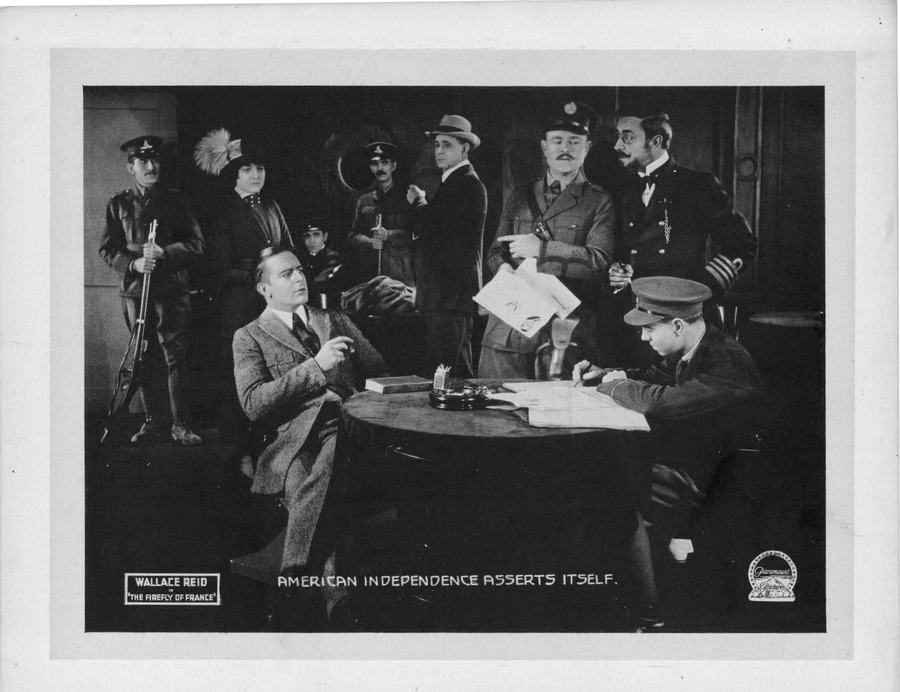
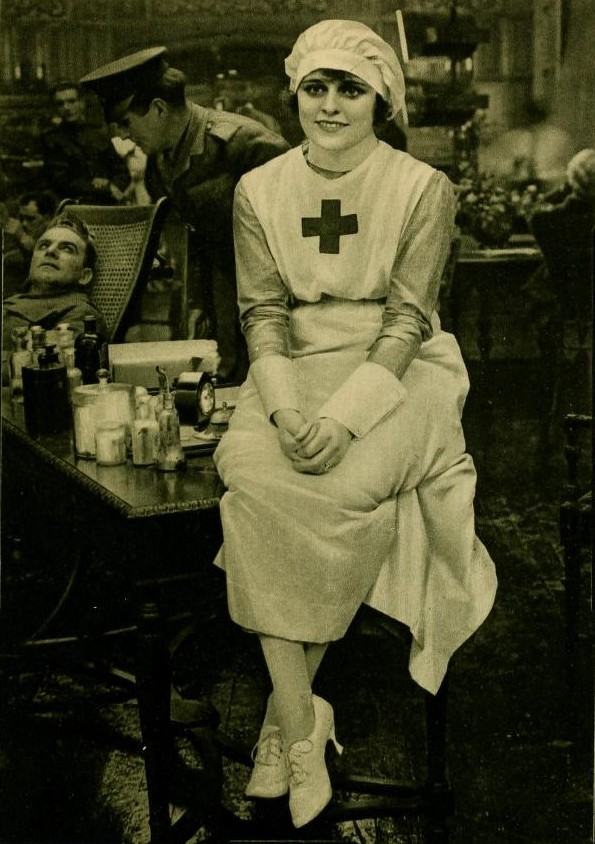
Opposite him, Ann Little’s Lisette de Gramont glides through corridors like a moth navigating gas-lamps. Little was Paramount’s utility player—cowgirl, society vamp, circus rider—but MacDonald lets her weaponize stillness. Watch the sequence where she removes a glove at dinner: the slow peel of kid-leather becomes a confessional; Kestner’s monocle reflects her unblinking pupils, and we realize espionage is but seduction wearing epaulettes. Her final close-up—eyes flooded yet unspilled—rivals The Spirit of the Poppy for narcotic melancholy.
Cinematographer Paul P. Perry, fresh from shooting California citrus groves, here discovers a lunar palette: cobalt nocturnes, sulphur flares, blood-orange explosions that bloom like poppies in a charcoal field. For the dogfight he mounts cameras on plywood wing-struts; the resulting footage jitters, stutters, then suddenly crystallizes—enemy aircraft silhouetted against cloud-mountains reminiscent of Hokusai. One reel even experiments with reverse-tinting: frames dyed amber then hand-inked so tracer bullets leave phosphorescent scars across the emulsion itself. The effect anticipates the solarized nightmares of The Unknown by nearly a decade.
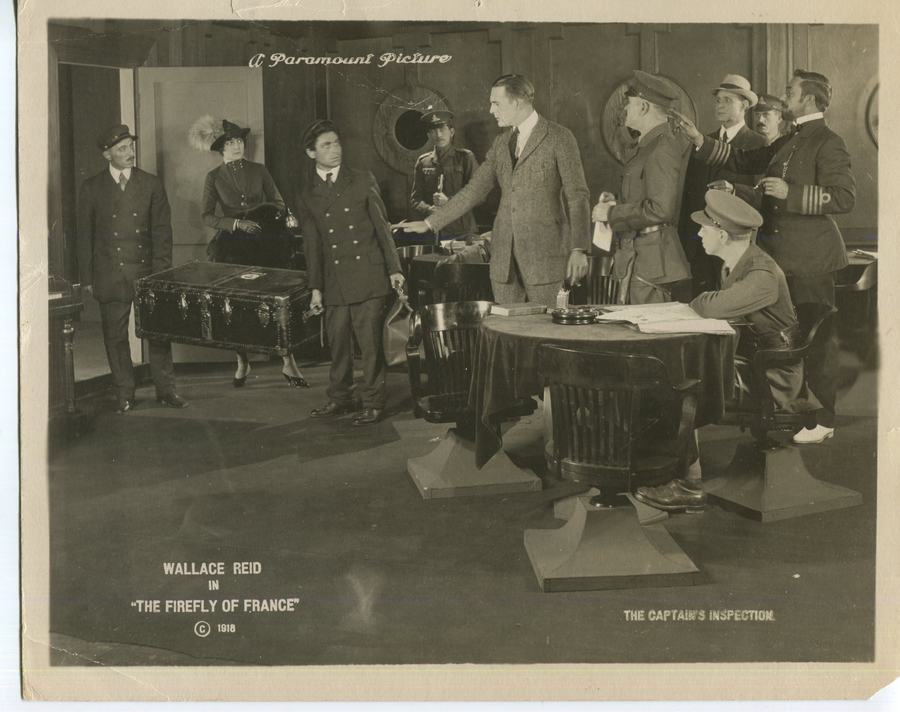
Margaret Turnbull’s scenario, distilled from Marion Polk Angellotti’s Saturday Evening Post serial, compresses a picaresque into a single lunar cycle. Yet she leaves breathing space for digression: a field hospital waltz where nurses spin stretchers like maypoles; a German tavern where a gramophone grinds out La Marseillaise backwards; a shot of champagne bottles vibrating in sympathy with distant artillery—each cork a dormant shell. Such grace notes inoculate the film against jingoism: every uniform is a loose garment stitched by larger tailors—fear, capital, accident.
Compare it with The Firm of Girdlestone, another 1918 release preoccupied with papers that can redraw destinies. Where Girdlestone treats documents as Victorian property, Firefly treats them as unstable isotopes—possession irradiates. Or place it beside Jungeldrottningens smycke: both films hinge on a jewel that refracts identities, yet the Swedish picture mythologizes colonial fantasy while MacDonald demystifies nationalism, revealing patriotism as a currency whose value hyper-inflates nightly.
The film’s gender algebra fascinates. Lisette’s locket contains not a portrait but a cipher wheel—an engine of interpretation rather than sentiment. When she finally bestows it upon Rawson, the exchange is framed like a marriage ceremony shot through a keyhole: we glimpse only gloved hands, the flick of a wrist, the locket vanishing inside his flight-suit. Sexual politics here are encrypted, not erased; their sole kiss occurs in medium-long shot, obscured by prop-wash and dust, as though the camera itself were embarrassed by intimacy amid the abattoir.
Winter Hall’s Oberleutnant Kestner deserves a monograph. With his voice supplied only by intertitles, Hall relies on posture—spine erect as a Prussian cadet, yet fingers that flutter when discussing Rilke. He embodies what Hermann Broch called “the guilt of the aesthete who can appreciate a sonnet while ordering sarin.” His final line, delivered across a cathedral nave: “You fight for a flag; I for a stanza. Which of us will be footnoted?”—a sentiment that anticipates the weary nihilism of late-Weimar cinema.
Yet the film is not a symposium; it is a thrill-ride. The rescue sequence inside the champagne caves cross-cuts three axes of pursuit—motorcycles along tow-paths, a motorboat churning phosphorescent wake, Rawson sprinting across rooflines—achieving a kinetic crescendo that rivals today’s prestige-TV finales. The tempo is driven by a symphonic score commissioned in 1918 (now performed by the Brussels Philharmonic on the Kino Blu-ray), which alternates between Gallic horns and mechanical percussion, as if Debussy were drafted into an artillery unit.
Historically, the movie lands during cinema’s awkward adolescence: Griffith’s Hearts of the World still warm on marquee, yet lenses already ache for post-war disillusionment. Firefly straddles the cusp, its final shot—an iris closing around a lone flare ascending toward Andromeda—simultaneously promises and revokes closure. That image became proto-mythic: French critics later cited it when discussing Au revoir les enfants; American pilots in WWII adopted the titular nickname for any night-fighter who failed to return.
Home-video availability remains spotty. Beyond the Toulouse print, a 9.5 mm Pathescope abridgement circulates among collectors, its magenta tint turned salmon by decades of basement humidity. The Kino disc, however, restores the two-strip red-cyan palette, revealing skies bruised heliotrope and uniforms the colour of wet shale. A scholarly commentary by Dr. Lucienne Ballard situates the production beside the Espionage Act of 1917, while an essay booklet reproduces Angellotti’s original illustrations—art-nouveau swoops that morph dirigibles into dragonflies.
To watch The Firefly of France is to confront a paradox: a film that champions ambiguity was itself consumed by history’s fog—its last-reel missing, its director relegated to one-reel westerns, its star dead of morphine within five years. Yet the fragments vibrate with uncanny life, the way a struck bell hums after the clapper stills. Every lost reel becomes a metaphor for Great War memory: we inherit only shards, but oh how they catch the light.
So, reader, seek it out—whether as midnight torrent, piano-accompanied museum screening, or 4K scan flickering on your OLED. Let the firefly enter your retina; let its green tracer burn a hole in the paper lantern of received history. And when the credits—hand-lettered on gilded cards—finally recede, you may find yourself listening for an engine that never comes home, seeing in every distant porch-light the ghost of a flare that once spelled salvation across a continent’s ruined sky.
IMDb —
1930
Community
Log in to comment.