DbcultAccessing Vault...
Cult Review
Senior Film Conservator
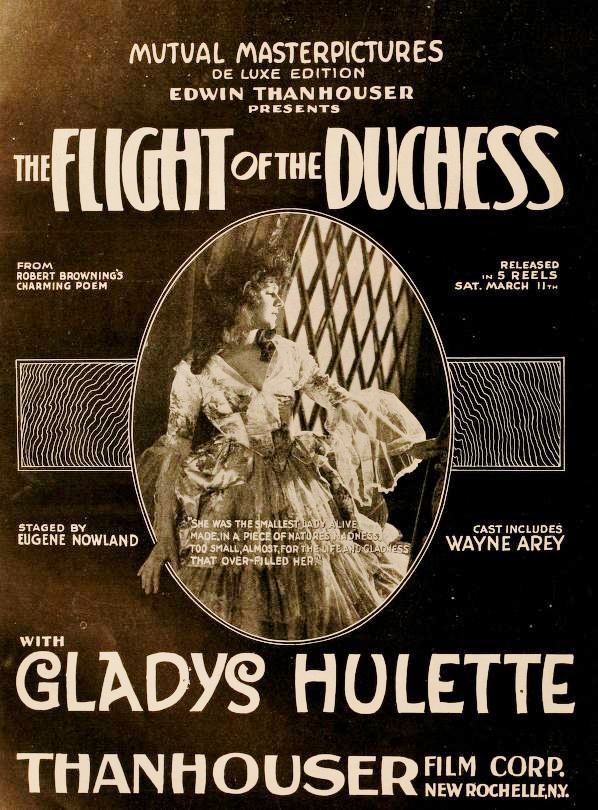
The first thing that strikes you is the shimmer: nitrate moonlight sliding across Oscar W. Forster’s cheekbones like liquid mercury, as if the camera itself were smitten. Forster, channeling a boy who refuses to exit the Middle Ages, moves through The Flight of the Duchess with the eerie grace of someone who has never heard an automobile backfire. His performance is not quaint; it is feral. Watch the way he fingers the tassels of a moth-eaten tapestry—every twitch announces a mind rewound five hundred years, a soul soldered to tapestries that outlasted the men who wove them.
Nellie Parker Spaulding’s widowed Duchess carries grief like an extra vertebra: upright, painful, oddly dignified. She glides across corridors cluttered with ancestral armor, candleflame waltzing across the copper breastplate of a long-dead ancestor. Spaulding never begs sympathy; instead she lets silence do the pleading. In the scene where she offers her son a tiny enameled reliquary containing her husband’s final hair clippings, her fingers tremble once—just once—yet the gesture floods the frame with more maternal dread than pages of dialogue could summon.
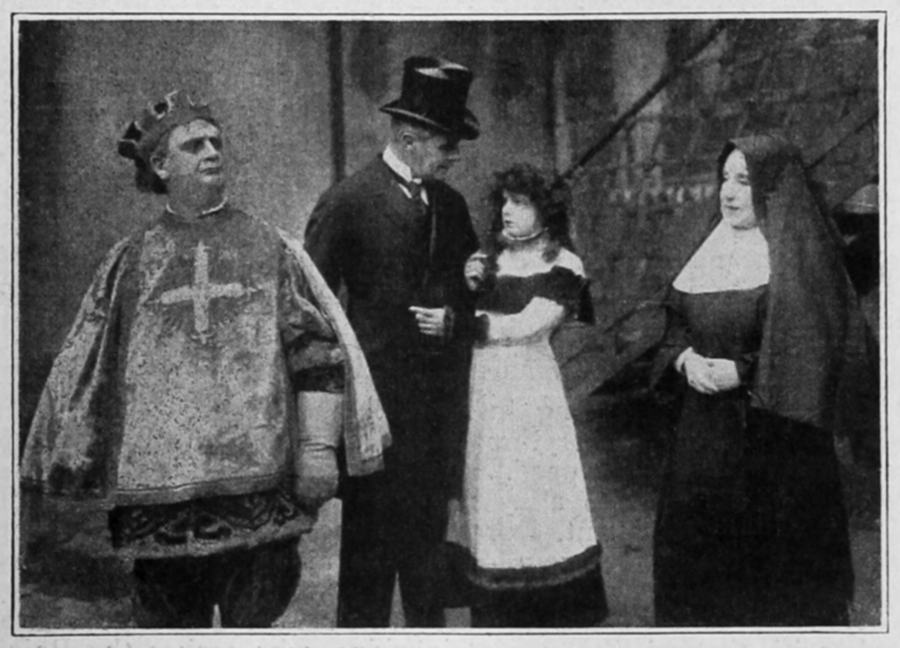
Enter Carolyn Lee’s modern girl, a whirl of cloche hats and bee-stung skepticism. Lee plays the interloper with vaudeville snap, but watch her pupils dilate when she realizes the joke has metastasized into something predatory. The shift is microscopic—an extra blink, a swallow that ripples down the throat like a skipped stone—yet it tilts the entire film from drawing-room farce into psychological thorn maze.
Director Virginia Tyler Hudson, armed with Robert Browning’s narrative skeleton, refuses dusty heritage clichés. Instead she grafts German-expressionist DNA onto English-country-house rot. Staircases twist like Möbius strips; doorframes yawn taller than cathedral arches, dwarfing the actors until they resemble chess pieces awaiting divine knuckle-flick. Cinematographer Robert Gray bathes night interiors in aquamarine nitrate glow, then splashes candlelight across faces until skin appears translucent, revealing the blue rivers of veins beneath—an early, inadvertent nod to Strike’s proletarian chiaroscuro.
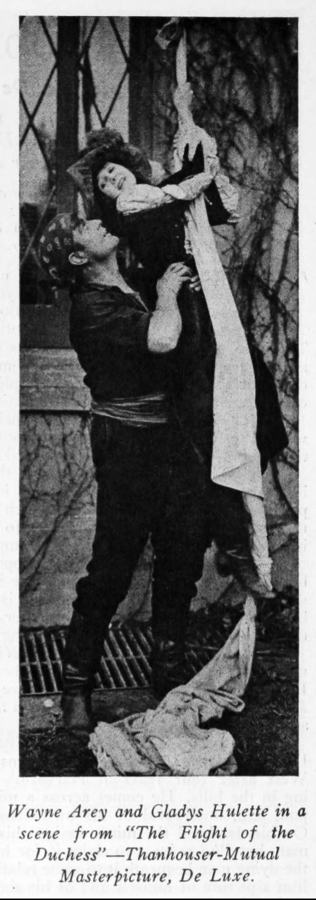
The palette is obsession itself: bruised purples for the Duchess’s mourning chambers, bile greens for the banquet hall where a roasted swan, feathers reattached, becomes a cadaverous centerpiece. Only the would-be bride’s initial wardrobe—cloche hat the yellow of fresh butter—offers respite, and even that hue soon corrodes into mustard under the castle’s fungal gloom.
Released months before Don Juan’s orchestral fanfare revolutionized screens, the film survives only in mute reels; yet its intertitles—lettered in faux-monastic uncial—throb with Browning’s pentameter. When the boy declares, “I will wear my father’s sword though it hang like a crucifix against my innocence,” the words hover in the air like incense. Modern scores appended by recent restorations (theremin, harpsichord, glitch electronics) can’t compete with the phantom soundtrack your own pulse provides: the creak of leather doublets, the hiss of a rushlight as it gutters, the imagined thud of a portcullis that no longer exists.
Browning’s poem hints at matriarchal sabotage; Hudson’s adaptation weaponizes femininity until it gleams like Damascene steel. The Duchess orchestrates an elaborate ventriloquism act: she mouths patriarchal codes while pulling the strings that garrote them. Her son’s medieval fantasy is both filial devotion and Oedipal time bomb; the girl’s mock submission becomes Trojan horse. In one devastating close-up, Spaulding watches the youngsters rehearse their vows. The corner of her mouth lifts—not quite a smile, not quite a grimace—acknowledging that the performance of obedience has always been the sharpest blade in a woman’s arsenal. Fans of Miss Petticoats will recognize the same tactical docility, though here the stakes are gothic rather than frontier.
Where Little Lord Fauntleroy sentimentalizes the collision of American spunk and British aristocracy, Flight weaponizes it. The maternal impulse that polishes little Cedie like a porcelain keepsake mutates here into something feral: a mother preserving lineage by feeding her offspring to the past. Likewise, while The Mystery of the Yellow Room locks women inside claustrophobic spaces to be decoded by male intellect, Hudson’s camera allows female subjectivity to haunt every stone; the house itself becomes a palimpsest of buried desires.
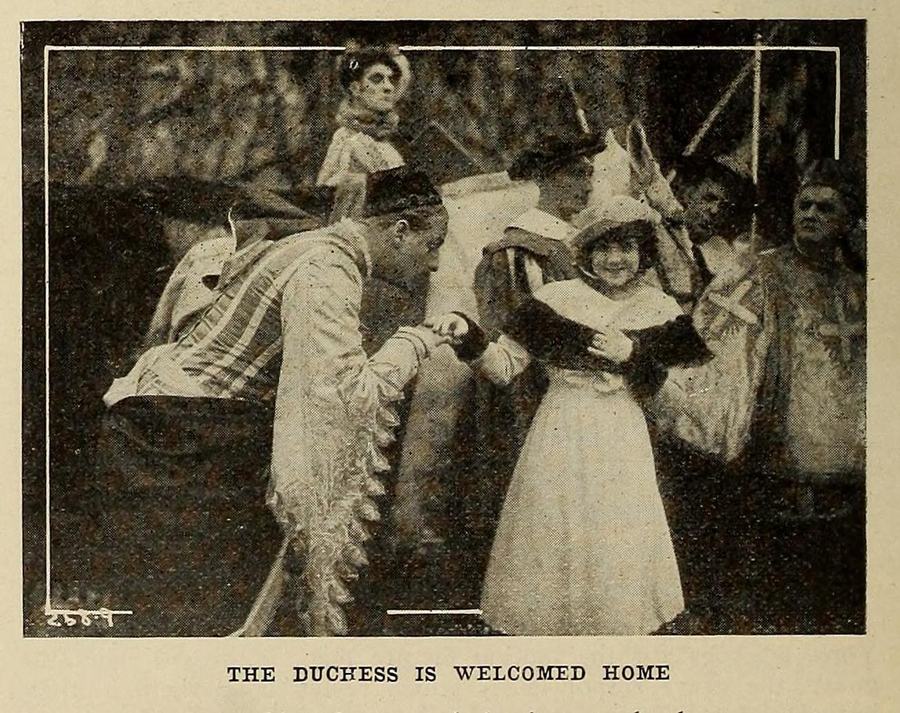
Gladys Hulette, cameoing as a scullery maid obsessed with chansons de geste, delivers a three-minute monologue—eyes wide as communion wafers—about a dream in which Lancelot’s sword sprouts roses. The moment is gratuitous on paper; on screen it detonates like a flare, exposing how every character, high or low, is imprisoned by narrative mirage. Barnett Parker’s cadaverous major-domo, face powdered to mortuary white, glides through corridors announcing dinner as if intoning last rites. Each syllable is a coffin nail.
The wedding sequence—shot in a deconsecrated abbey strewn with wilted poppies—unspools almost entirely in silhouette. Backlit by tar-dipped torches, the bridal procession becomes a shadow play: faces erased, identities reduced to moving profiles. When the girl, now swaddled in borrowed ermine, lifts her veil, the boy knight sees not the flapper but an illuminated miniature from a psalter. His ecstatic recognition collapses centuries in a single splice. The camera lingers on her pupils—two black keyholes—then smash-cuts to the Duchess in the organ loft, hand poised above a knife switch that will plunge the chapel into darkness. Cut to black. No fade-out, no moral ribbon. The film ends with the visual equivalent of a half-finished sigh.
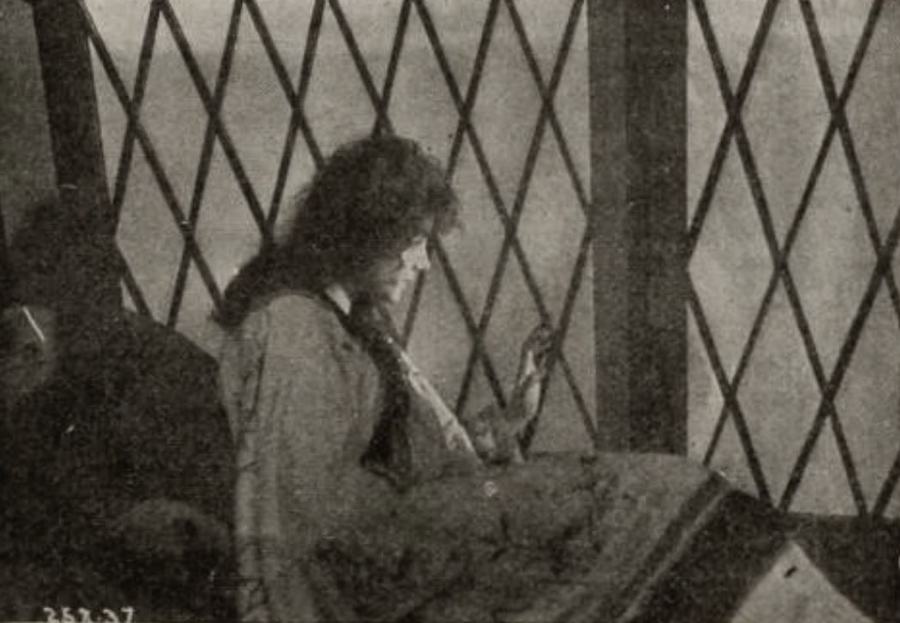
For decades Flight was a rumor—one brittle 35mm print screened once at the 1957 Venice then rumored lost in the 1965 Cineteca fire. A 2018 discovery in a Slovenian monastery—two reels mislabeled as devotional shorts—allowed archivists to reconstruct 87 % of the runtime using stills, shot continuity, and English censor cards. The resulting hybrid feels eerily faithful; the missing passages, rendered as tinted stills, make absence itself a character. Streaming on ArthouseShadows and Murnau+, the restoration arrives in 4K with optional commentary by feminist media historian Dr. Lila Soriani, who situates the film within the post-suffrage backlash against New Women.
Watch it beside Love and Hate to see how 1926 grappled with matrimony as bloodsport, or pair it with Hoodoo Ann for a double bill on orphan identities stitched from fairy-tale remnants. But best let it stand alone at twilight, curtains drawn, volume on the phantom setting. You will hear the rustle of taffeta that isn’t there, taste candle smoke that never was. And when the screen irises out, you may—like the Duchess—find yourself stranded between centuries, uncertain whether nostalgia is a blanket or a shroud.
Verdict: A fever dream too gorgeous to exorcise, The Flight of the Duchess proves silent cinema could be both time capsule and time machine—sometimes in the same frame.
IMDb —
1922
Community
Log in to comment.