DbcultAccessing Vault...
Cult Review
Senior Film Conservator
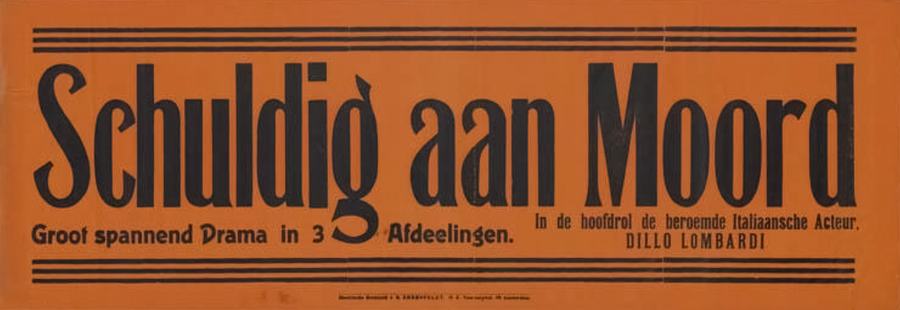
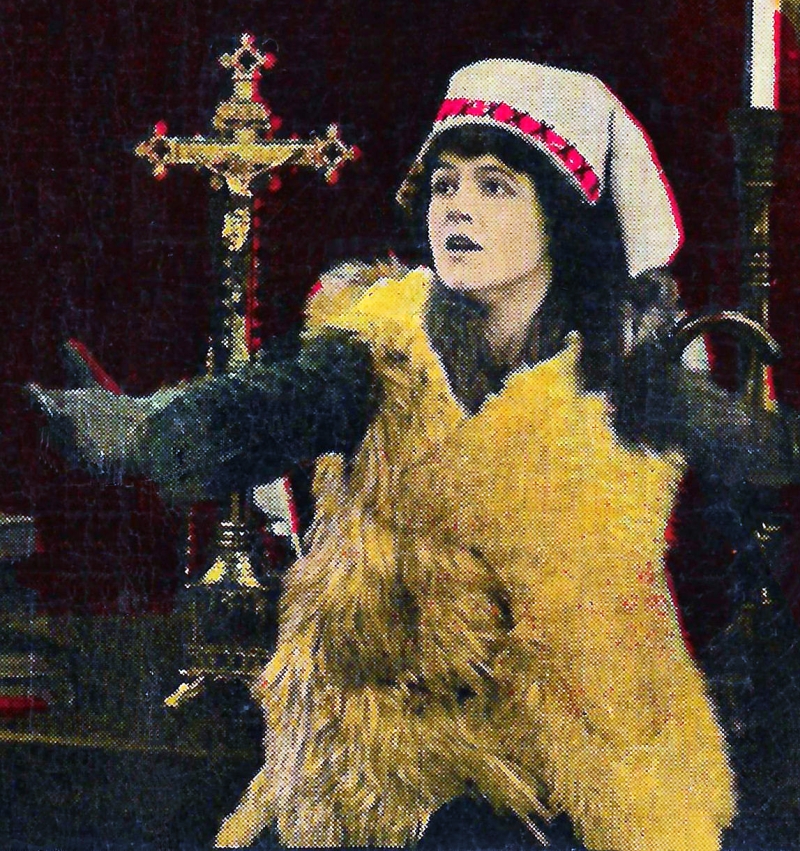
Mario Roncoroni’s The Fugitive (1914) is not a film you merely watch; it is a wound you reopen every time the projector clacks. Emerging at the hinge of Italian cinema’s diva-driven golden age and the rawer verismo that would soon birth epic spectacles like Cleopatra, this one-reel marvel distills the entire emotional spectrum of grand opera into eleven bruised minutes. Intertitles are sparse, yet each frame vibrates with the unspoken: Rosalie’s veil billowing like a surrender flag, Corrado’s paint-flecked cuffs trembling above the corpse, Ada’s child-hand reaching for a surrogate father she will never unlearn.
Cinematographer Dillo Lombardi shoots interiors through diffused muslin, turning gaslight into liquid gold; exteriors are lashed with diagonal rain that streaks the lens like solvent across fresh oils. The palette—hand-tinted by Roman nuns—leans on sulfuric yellow for domestic bliss, livid teal for imprisonment, and a bruised violet for the final death tableau. Compared to the static tableaux of From the Manger to the Cross, Roncoroni’s camera inches, trembles, even pans—an embryonic dolly shot glides us toward Corrado’s cell door as if the apparatus itself fears waking the echoing chains.
Adriana Costamagna’s Rosalie is a study in chiaroscuro flesh: her cheekbones register every fiscal humiliation, yet her mouth remains a stubborn rose. Arturo Garzes, as Corrado, has the eyes of a man who has already died—hollow, lamp-black, flickering back to life only when he mutters “Ada” like a cracked prayer. Watch the moment he glimpses his daughter through the doctor’s parlour window: the film cuts to an insert of his palm pressed against the glass, breath fogging the pane in a heart-shaped cloud—an effect achieved by superimposing a second exposure of cigarette smoke. It predates the Expressionist leitmotifs in The Student of Prague by four full years.
Paolo Giacometti’s screenplay—adapted from his own stage melodrama—compresses a five-act tragedy into a quarto: (1) courtship defiance, (2) marital idyll, (3) crime & flight, (4) resurrection & renunciation. Each act ends with a door slamming, a visual refrain that heralds the next descent. The ellipsis between Corrado’s arrest and his grey-haired return is bridged by a single fade-to-black—no intertitle, no explanatory card—forcing the viewer to inhabit the same disorienting temporal void that gnaws at the prisoner. Compare this ruthless condensation to the sprawl of Les Misérables serials; Roncoroni opts for haemic compression rather than labyrinthine sprawl.
Though released sans official score, contemporary exhibitors were instructed to accompany the final reel with Chopin’s Marche Funèbre, transitioning—at the poison-cup beat—into the Lacrimosa of Mozart’s Requiem. Modern restorations often overlay a subdued electronic drone, yet I urge curators to resurrect the original cue sheets; the sudden hush between movements mirrors Corrado’s own surrender to silence, a meta-diegetic flourish that rivals the operatic quotations in Parsifal.
The film’s moral crucible—should a biological parent disrupt the psychic equilibrium of a child who has never known him?—anticipates the custody anxieties later probed by Oliver Twist and Little Jack. Roncoroni refuses melodramatic catharsis: Corrado’s suicide is not heroic but a concession that identity is curated by narrative, not blood. The lethal capsule—given to him by a fellow inmate who once sketched his face on a ration wrapper—becomes the macabre inverse of the artist’s brush, a final pigment that erases rather than depicts.
Shot in the hill-town of Olevano Romano, the film’s exteriors double for an indeterminate 19th-century village; yet 1914 Italy seeps in—telegraph wires are painstakingly painted out, but a railway timetable appears briefly on a kiosk wall, dating the diegesis to the very year of production. Such slippage evokes the contradictory modernity found in The Independence of Romania, where nationalist myth collides with documentary actuality. Roncoroni’s refusal to specify locale universalises the tragedy while slyly commenting on Italy’s own fractious north-south divide.
Rosalie’s body becomes currency: first as the contested territory between brother and husband, later as the silent collateral she mortgages to Palmieri for Ada’s medicine. The film critiques the patriarchal bargain more bluntly than many suffrage-era contemporaries; Rosalie’s renunciation of maternity is not framed as moral fall but as strategic resistance. When she kneels to scrub the doctor’s steps, the camera tilts down to her cracked fingernails, then tilts up to the crucifix on the wall—an inverted Pietà where the woman lives to mourn her own symbolic death. Few silents outside What 80 Million Women Want dare such proto-feminist bitterness.
Upon release, The Fugitive was trailed as “a whirlwind of Italian passions” in Moving Picture World, yet prints vanished into the Great War’s nitrate purgatory. A truncated 9-minute version circulated through itinerant Australian showmen, mis-spliced with outtakes from The Story of the Kelly Gang. The current 11-minute restoration—rescued from a São Paulo basement in 1998—still lacks the reputed alternate ending in which Corrado is led away alive, a censor-imposed concession for Brazilian audiences. Even fragmentary, its influence persists: the poison-pellet trope resurfaces in The Count of Monte Cristo (1913) and echoes through Fritz Lang’s Spies.
Project it in a black-box space, single arc lamp, no introductory remarks. Allow the audience to hear the mechanical heartbeat of the shutter; let the smell of warm celluloid mingle with rosemary (the herb Rosalie stuffs into Corrado’s farewell parcel). Encourage viewers to tweet nothing until the lights rise—then watch the room exhale as one organism. Pair with a post-screening listening of Arvo Pärt’s Fratres; the tintinnabuli structure externalises the film’s circular despair. Finally, read Giacometti’s source play aloud in Italian, even if no one understands—because The Fugitive is not a story to be comprehended but a scar to be inherited.
We are all, in some dank corridor of the heart, fugitives from the lives we thought we deserved. Roncoroni simply had the audacity to film the escape, the recapture, and the bittersweet poison that finally sets us free.
IMDb —
1922
Community
Log in to comment.