DbcultAccessing Vault...
6.5/10
Senior Film Conservator
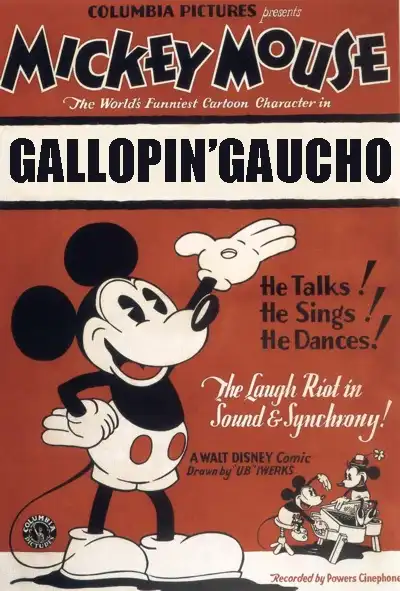
A definitive 6.5/10 rating for a film that redefined the boundaries of cult cinema. The Gallopin' Gaucho remains a cornerstone of transgressive art.
To put it plainly, no, not for most casual viewers. "The Gallopin' Gaucho" is a crucial piece of animation history, a silent black-and-white short from 1928 that served as one of Mickey Mouse's earliest on-screen appearances, predating the more famous Steamboat Willie. For animation historians, Disney completists, or those genuinely curious about the very genesis of character animation, it's an absolute must-see. However, if you're looking for compelling storytelling, sophisticated animation, or anything resembling modern entertainment value, you'll likely find its seven-minute runtime a charming but ultimately dry historical exercise. It’s a relic to be studied, not necessarily enjoyed in the same way contemporary animation is.
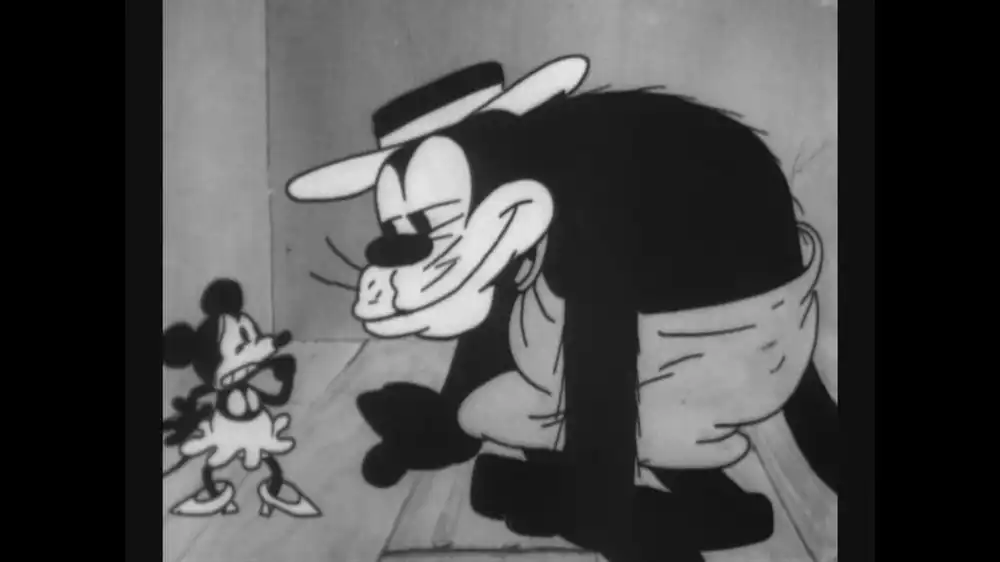
Watching "The Gallopin' Gaucho" today offers a fascinating look at how far Mickey Mouse has evolved. Here, Mickey isn't the wholesome, family-friendly icon we know. He's a rough-and-tumble, slightly mischievous, even aggressive character. His initial entrance, riding his horse into a cantina, is all swagger, a silhouette against the doorway before he dismounts with a flourish. This is a Mickey who kicks his ostrich into action and engages in a surprisingly brutal swordfight. It's a character with a discernible edge, a stark contrast to the sanitized version that would dominate later decades. Minnie Mouse, on the other hand, is already established as the damsel in distress, though she gets a lovely, animated moment during their tango where her skirt twirls with a surprising amount of fluidity for the time.
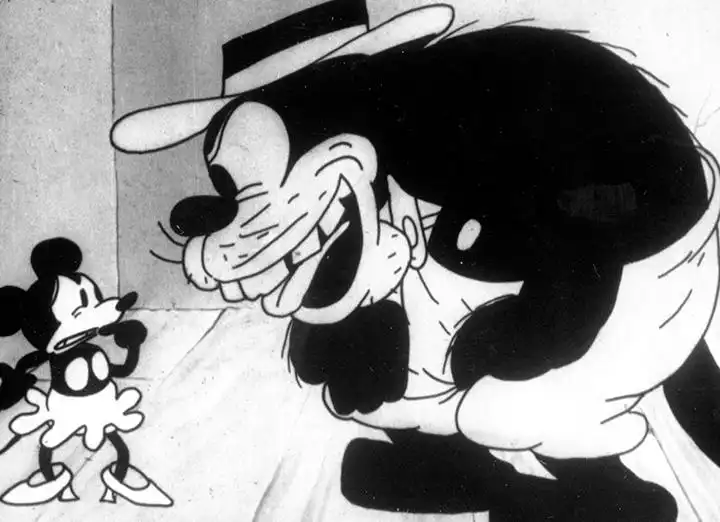
The film is credited with Walt Disney as 'Cast,' which in this context means he was the driving force behind the character's visual performance and personality. And it shows. Mickey's movements, though simple, convey a distinct attitude. His quick footwork during the tango, his determined (if often frustrated) expression during the chase, and his creative use of his tail during the swordfight all speak to an animator's understanding of how to imbue simple drawings with life. The villain, a generic big cat, is less developed, existing primarily as an obstacle. He snarls, he captures, and he's ultimately defeated with little fanfare, serving his purpose as a plot device more than a character.
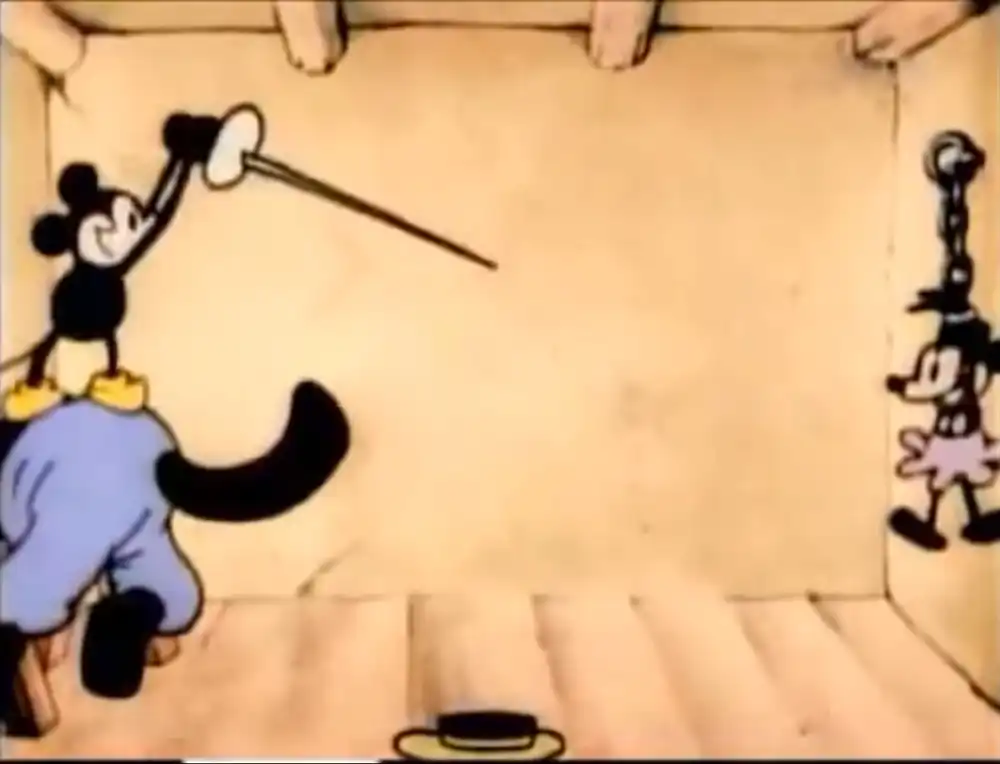
As a silent short, the pacing is relentlessly brisk, driven by action and visual gags. There’s no time for exposition; Mickey arrives, sees Minnie, dances, she's kidnapped, he chases, he fights, he wins. It’s a formula that would define many early cartoons. The tone is lighthearted adventure with a strong dose of slapstick violence. Mickey is thrown around, the villain takes a few comical tumbles, and the whole affair feels like a grand, if low-stakes, chase sequence. There's a particular charm in the way the cantina scene is set up – a few barrels, a simple bar, and the focus entirely on the characters' interactions, making the setting feel immediate despite its minimalism.
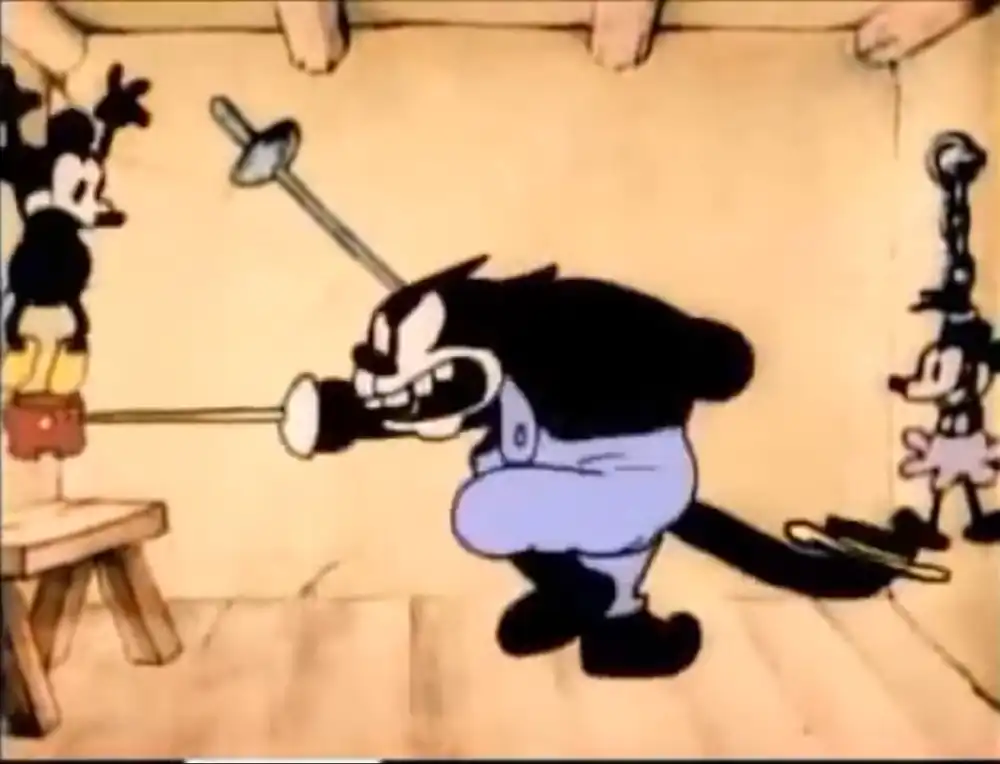
A standout element of the film's pacing and visual storytelling is the sequence involving the ostrich. This isn't just a mount; it's a character in itself. Animated with a wobbly, almost drunken gait, the ostrich is reluctant, stubborn, and often works against Mickey. The struggle to get it moving, Mickey's exasperated kicks, and the bird's sudden bursts of speed create some of the film's most genuinely amusing moments. The animation of its long, spindly legs and bobbing head is surprisingly expressive, conveying its tipsy resistance with clarity. This sequence, more than the fight itself, highlights the creative problem-solving and character interaction that Disney was already exploring.
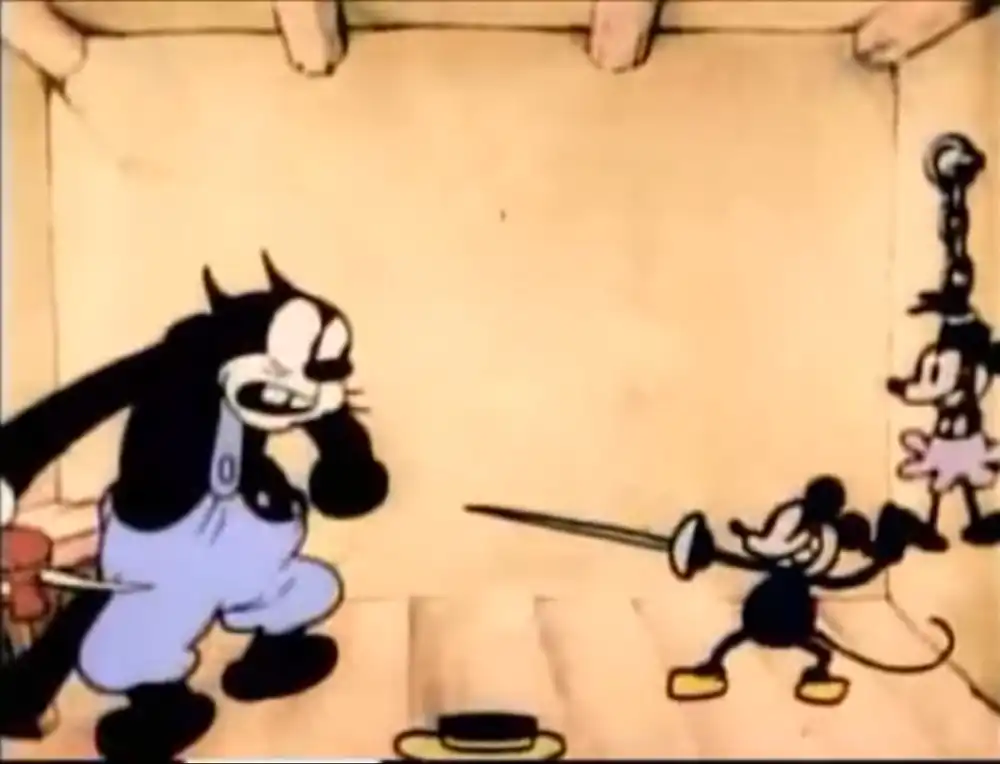
Visually, "The Gallopin' Gaucho" is a prime example of early rubber-hose animation. Characters' limbs are fluid and bendy, lacking anatomical realism but allowing for highly exaggerated movement. The backgrounds are sparse, almost utilitarian, serving only to define the location – the cantina, the open plains, the villain's hideout. There's little in the way of perspective or depth, with characters often moving across a flat plane. This simplicity, however, forces the animators to focus on the movement itself, making every gesture and action count.
One specific detail that stands out is the limited range of facial expressions. Mickey's mouth might open wide in a grin or a shout, but the nuanced emotional shifts seen in later animation are entirely absent. Emotion is conveyed through body language and exaggerated physical reactions. For instance, Minnie's distress is shown by her hands clasped together and her body recoiling, rather than a complex facial contortion. This is a hallmark of the era, where the challenge was simply to make characters move convincingly and tell a story through action alone. The lack of independent movement for Mickey's hat, often appearing fused to his head despite his vigorous movements, is another small but noticeable detail that marks the film as a product of its nascent animation techniques.
"The Gallopin' Gaucho" is a fascinating artifact, a testament to the foundational work that built an empire. It showcases the early, rough-and-tumble personality of Mickey Mouse and the inventive spirit of early animation. However, its value today is almost entirely academic. It's a silent film lacking the sophisticated narrative or visual polish that even other silent-era animations (like some Fleischer cartoons) sometimes achieved. For the vast majority of viewers, it will register as a curiosity, a brief glimpse into a bygone era of filmmaking. Watch it if you're a student of animation or a hardcore Disney fan, but don't expect to be entertained in the way you would by even a basic modern cartoon. It's a building block, an important step, but not a destination in itself.
IMDb —
1920
Community
Log in to comment.