DbcultAccessing Vault...
Cult Review
Senior Film Conservator
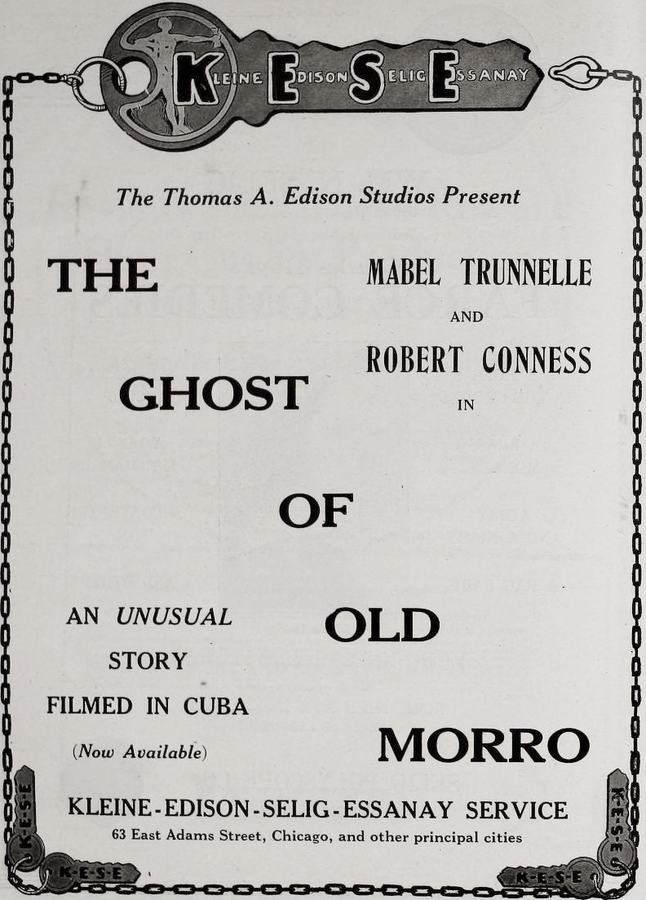
Step back into an era when cinematic narratives were often grand, operatic pronouncements on morality, fate, and the human condition. The Ghost of Old Morro, a compelling work penned by James Oppenheim, stands as a prime example of such storytelling, offering a potent brew of gothic melodrama, tragic romance, and supernatural dread. It's a film that, even decades removed from its initial exhibition, resonates with a profound sense of poetic justice and the cyclical nature of vengeance. This isn't merely a ghost story; it's a lament, a cautionary fable woven with threads of illicit love, misguided maternal devotion, and the inescapable consequences of one's darkest deeds.
At the heart of this somber narrative is Mother Morro, brought to life with formidable intensity by Mabel Trunnelle. Morro is no ordinary innkeeper; she’s a figure steeped in the murky ethics of a coastal underworld, her establishment a nexus for smugglers, her coffers fattened by protection money. Trunnelle embodies Morro not just as a villain, but as a woman whose moral compass has long since shattered, replaced by a ruthless pragmatism. Her initial act, the procurement of an innocent young girl for the base pleasures of Captain Jose, is the linchpin upon which the entire tragedy pivots. This transactional dehumanization, a stark betrayal of any semblance of maternal or even human empathy, immediately establishes Morro as an antagonist whose comeuppance feels almost predestined.
The father's subsequent curse, delivered with the raw anguish of a parent whose child has been cruelly exploited, hangs heavy over the proceedings. It’s a primal cry for justice that transcends mere words, imbuing the narrative with an almost mythic weight. This curse isn't just a plot device; it's a spiritual judgment, a foreshadowing of the profound unraveling that awaits Morro. Her character, initially defined by her avarice and control, begins a slow, agonizing transformation into a vessel for her own undoing. Trunnelle’s performance, particularly in the later stages, must have been a masterclass in conveying psychological fragmentation, illustrating the corrosive power of guilt and the terror of facing one's own monstrous reflection.
The narrative takes a truly Shakespearean turn with the introduction of Mercedes, Morro's convent-reared daughter, portrayed with delicate pathos by Dorothy Graham. Mercedes represents an antithesis to her mother's hardened cynicism—a beacon of purity, shielded from the sordid realities of Morro's world. Her tragic flaw, however, is a classic one: falling irrevocably in love with Captain Jose, the very man responsible for the initial transgression that set the curse in motion. Herbert Prior, as Captain Jose, must navigate the complexities of a character who is both a predatory figure and, in Mercedes' eyes, an object of genuine affection. This duality is crucial; Jose cannot be a one-dimensional villain if Mercedes’ sacrifice is to carry any emotional weight. His charm, however superficial, must be potent enough to ensnare a heart as innocent as Mercedes'.
The romance between Mercedes and Jose is fraught with dramatic irony, a ticking bomb waiting to detonate. It’s a relationship built on a foundation of hidden sin, an unwitting entanglement that draws the pure into the orbit of the corrupt. This dynamic echoes the tragic romantic entanglements seen in films like The Butterfly, where innocence is often compromised by external forces or dangerous attractions. Mercedes’ love for Jose is not merely infatuation; it becomes a catalyst for her own heroic, yet ultimately fatal, decision. Dorothy Graham’s portrayal would have had to convey this transition from sheltered innocence to defiant self-sacrifice, making her character’s ultimate fate all the more heart-wrenching. The film masterfully uses this forbidden love to amplify the stakes, ensuring that Morro’s quest for vengeance becomes a double-edged sword, cutting deepest into her own flesh and blood.
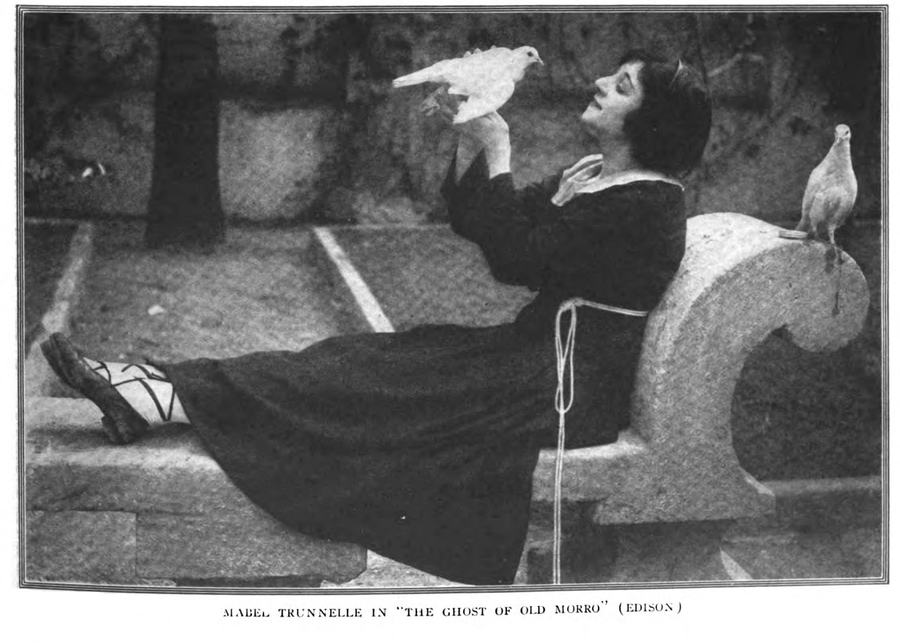
Mother Morro, upon discovering her daughter's affections for Jose, experiences a profound, albeit twisted, awakening. Her initial act of procuring the girl was driven by greed; her subsequent desire for vengeance against Jose is ostensibly for Mercedes' 'stolen innocence'—an ironic echo of the girl she herself delivered to him. This complex motivation, a blend of possessiveness, shame, and a warped sense of maternal protection, is what makes Morro a compelling, if monstrous, figure. She arranges for Amadio (perhaps played by Francisco Castillo or Robert Conness, contributing to the shadowy underbelly of the narrative) to eliminate Jose. This clandestine plot, a desperate attempt to right a wrong through another wrong, is the ultimate expression of her moral bankruptcy.
However, fate, or perhaps the curse itself, intervenes with a brutal elegance. Mercedes, overhearing the assassination plot, makes the ultimate sacrifice, offering her own life to save Jose's. This act of profound selflessness, a stark contrast to her mother’s self-serving machinations, elevates Mercedes to a tragic heroine. The moment of her sacrifice, undoubtedly a powerful visual sequence, would have underscored the immense moral chasm between mother and daughter. This kind of dramatic, self-sacrificial turn resonates with the intense melodrama found in films like Through Fire to Fortune, where characters face impossible choices with devastating consequences.
The climax is a devastating crescendo of grief and madness. When Morro learns that Mercedes’ body has been cast over the cliff, the news shatters her already fragile psyche. The loss of her beloved daughter, the very person she sought to 'protect' through her vengeful scheme, is the ultimate price. Her descent into demented despair, culminating in her own fatal plunge from the same precipice, is a searing image of karmic retribution. It’s a moment of profound psychological horror, where the external landscape mirrors the internal collapse of a soul. The cliff, a silent witness to two tragedies, becomes a potent symbol of irreversible loss and the precipitous fall from grace.
The film culminates not in resolution, but in an eternal haunting. On moonlit nights, the ghost of Mother Morro is said to stalk the ancient stones of Morro Castle. This spectral presence is not merely a cheap jump scare; it's the indelible mark of a soul consumed by guilt, regret, and the echoes of her own destructive choices. The haunting is a permanent scar on the landscape, a testament to the inescapable consequences of vengeance and the tragic waste of life. It elevates the film beyond a simple melodrama into a gothic horror, where psychological torment manifests as a tangible, spectral presence. This aspect of lingering guilt and spectral visitation brings to mind the chilling atmosphere of films like The Bells, where the past refuses to stay buried and torments the living.
The spectral Morro is a potent symbol. She is a prisoner of her own castle, a penitent figure condemned to relive her transgressions in an endless loop. Her ghost is a reminder that some wounds never heal, some acts are never truly forgiven, and some souls are destined to wander in a purgatorial state. The moonlight, often associated with romance and mystery, here illuminates a tragedy, casting long, mournful shadows over the castle’s history. It’s a powerful concluding image that solidifies the film’s place as a poignant exploration of the human capacity for both profound evil and devastating regret.
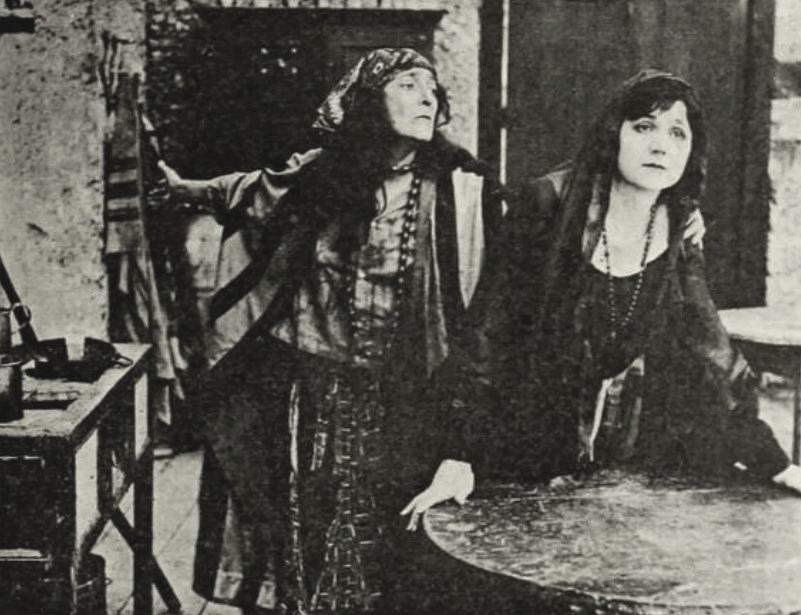
James Oppenheim, as the writer, meticulously constructs a narrative that is both emotionally charged and morally complex. His screenplay delves into the darker facets of human nature, exploring themes of avarice, corrupted maternal love, and the elusive nature of true justice. Oppenheim’s characters are not simplistic archetypes; they are individuals caught in a web of their own making, driven by passions and flaws that lead them down treacherous paths. The plot, with its intricate turns and devastating ironies, speaks to a keen understanding of dramatic structure and psychological realism, even within the melodramatic conventions of its era. This nuanced approach to character and consequence is what elevates The Ghost of Old Morro above mere sensationalism, making it a powerful morality play disguised as a gothic thriller.
The film’s exploration of societal underbellies and moral compromises, as seen in Mother Morro's illicit dealings, resonates with the thematic concerns found in works like The Social Pirates, which also delved into the shadowy figures operating outside conventional law. Oppenheim doesn't shy away from depicting the brutal consequences of such lives, painting a vivid picture of a world where honor is a luxury and survival is paramount. Yet, he also introduces the stark contrast of Mercedes' innocence, highlighting the vulnerability of purity in such a harsh environment. This juxtaposition of light and shadow, corruption and innocence, is a hallmark of strong dramatic writing, and Oppenheim executes it with impressive skill.
Beyond the central trio, the supporting cast plays a crucial role in grounding the narrative’s emotional weight. While specific roles might be less detailed in historical records, the collective impact of actors like Helen Strickland, Francisco Castillo, Robert Conness, Marie La Corio, and Bigelow Cooper would have contributed significantly to the film’s atmospheric depth. Marie La Corio, for instance, in the role of the innocent young girl, would have had to convey a profound vulnerability, making her exploitation all the more shocking and providing the necessary catalyst for the father’s curse. Francisco Castillo or Robert Conness, as the wronged father, would have delivered the initial, potent articulation of the curse, setting the stage for the film’s tragic trajectory.
The strength of the ensemble ensures that the world of Morro Castle feels lived-in, populated by characters whose actions, however small, contribute to the escalating tension and eventual catastrophe. Their presence helps to build the oppressive atmosphere of the inn, the desperate urgency of the smugglers, and the stark contrast between the innocent and the corrupt. Even minor characters, through their reactions and presence, can amplify the dramatic impact, drawing the audience deeper into the moral quagmire Oppenheim has so carefully constructed. In an era where performances often relied on broad gestures, the nuance brought by a capable ensemble could elevate a film from mere spectacle to enduring art.
The Ghost of Old Morro, at its core, is a profound meditation on vengeance and its self-destructive nature. Morro's desire for retribution, initially sparked by greed and later fueled by a warped sense of maternal protectiveness, ultimately consumes her. This cyclical destruction, where the avenger becomes the victim of their own machinations, is a universal theme, explored across cultures and centuries. It forces us to confront the question of whether any form of personal vengeance can ever truly bring peace or justice, or if it merely perpetuates a chain of suffering. The film suggests the latter, firmly planting its narrative in the tragic tradition.
Furthermore, the film offers a complex portrayal of motherhood. Morro’s love for Mercedes is undeniable, yet it is a love corrupted by her own moral failings and distorted by her possessive nature. It’s a love that, rather than nurturing, ultimately destroys. This exploration of the darker, more possessive aspects of maternal instinct makes the film particularly compelling, echoing the psychological depth found in narratives such as Hedda Gabler, where complex female protagonists grapple with their desires and societal roles, often leading to tragic outcomes. Mercedes, on the other hand, embodies a purer form of love, one willing to sacrifice everything for another, even a flawed lover. These contrasting maternal and filial loves provide the film with its enduring emotional power, making it more than just a ghost story, but a profound human drama.
In its entirety, The Ghost of Old Morro stands as a powerful testament to the storytelling capabilities of early cinema. It weaves a narrative rich in gothic atmosphere, moral ambiguity, and heart-wrenching tragedy. The film’s lasting impact lies not just in its spectral conclusion, but in its meticulous deconstruction of human failings—greed, lust, and a misguided pursuit of vengeance—that ultimately lead to an inescapable destiny. It reminds us that some actions carry consequences that echo through generations, leaving an indelible mark on both the living and, perhaps, the spectral realm. Morro Castle, with its moonlit ghost, becomes a monument to a cycle broken by death, yet forever preserved by the haunting memory of its inhabitants’ intertwined fates. It is a film that demands reflection, a chilling reminder of the prices paid when the heart succumbs to its darkest impulses.
IMDb —
1917
Community
Log in to comment.