DbcultAccessing Vault...
5.9/10
Senior Film Conservator
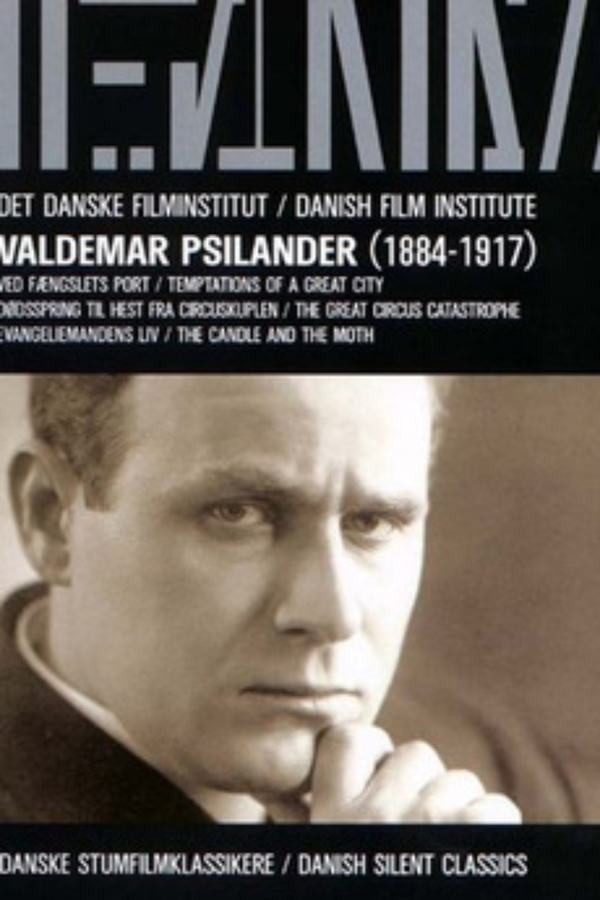
A definitive 5.9/10 rating for a film that redefined the boundaries of cult cinema. The Great Circus Catastrophe remains a cornerstone of transgressive art.
In the shimmering landscape of 1912 cinema, few production houses commanded the global prestige of Denmark’s Nordisk Film. It was an era where the silent screen was beginning to flex its narrative muscles, moving beyond mere vaudevillian vignettes toward the complex emotional architecture of the feature-length melodrama. The Great Circus Catastrophe (Danish: Den store Cirkuskatastrofe) stands as a quintessential artifact of this transition. Directed with a keen eye for the sensational, it captures a moment when the medium was obsessed with the precariousness of social standing and the visceral thrill of physical danger. Unlike the more religious epics of the time, such as From the Manger to the Cross, this film trades in the currency of contemporary anxiety and the crushing weight of poverty.
The narrative engine of the film is driven by the tragic figure of a Count—portrayed with a haunting, hollow-eyed intensity by Frederik Christensen. His character serves as a conduit for the audience's fears regarding class mobility. We find him not in the gilded halls of his ancestors, but in the suffocating grip of destitution. This is not the noble poverty often romanticized in films like Oliver Twist; rather, it is a sharp, humiliating descent into the abyss of the working poor. Christensen’s performance eschews the broad, pantomimic gestures common in earlier silents, opting instead for a restrained, internalised agony that mirrors the bleakness of his surroundings. When he is lured into the circus environment, it is not out of a sense of adventure, but as a final, desperate act of survival.
The circus itself is depicted not as a place of wonder, but as a predatory machine that feeds on the broken. It is a recurring motif in Danish cinema of this period, most notably seen in the works of Asta Nielsen, such as Den sorte drøm. In The Great Circus Catastrophe, the circus dome becomes a purgatorial space. The transition from the Count’s former life of leisure to the rigorous, bone-breaking demands of the aerialist is a profound commentary on the dehumanization of the individual within the industrial age’s entertainment complex.
One cannot discuss this film without addressing the technical audacity of its climax. The "Catastrophe" promised by the title is not a mere narrative flourish; it is a meticulously staged sequence that pushes the boundaries of early 20th-century filmmaking. While films like The Flying Circus explored similar themes of aerial danger, Kjerulf’s direction brings a sense of claustrophobic dread to the heights of the circus tent. The camera, though largely static by modern standards, is positioned to emphasize the terrifying verticality of the Count’s ordeal. There is a tangible sense of stakes here—a rawness that predates the polished artifice of later Hollywood productions.
The use of light and shadow within the circus dome creates a chiaroscuro effect that heightens the melodrama. As the Count ascends toward the roof, the distance between him and the audience below becomes a chasm of class and morality. He is a man performing his own execution for the amusement of those who would never have deigned to speak to him in his former life. This thematic resonance is similar to the social critiques found in Les misérables, yet it is delivered with the punchy, sensationalist energy of a tabloid headline.
To fully appreciate The Great Circus Catastrophe, one must view it through the lens of its contemporaries. In 1912, cinema was diversifying rapidly. On one hand, you had the historical and nationalistic fervor of 1812 and The Independence of Romania, which sought to define the identity of nations. On the other, films like Saved in Mid-Air were perfecting the "thriller" mechanics that would eventually dominate the medium. The Great Circus Catastrophe occupies a unique middle ground; it is both a character study of a broken man and a high-octane thriller designed to elicit gasps from the gallery.
The supporting cast, including Alma Hinding and Aage Hertel, provides a necessary grounding for the Count’s existential crisis. Hinding, in particular, brings a nuanced femininity to the screen that contrasts with the hyper-masculine environment of the circus. Her interactions with the Count suggest a world that could have been—a life of stability and affection that is ultimately sacrificed at the altar of the spectacle. This emotional weight differentiates the film from the more purely action-oriented works like The Story of the Kelly Gang, where the narrative is secondary to the excitement of the chase.
Alfred Kjerulf, the architect of this tragedy, was a master of the "sensational film" genre. His writing often explored the darker corners of the human psyche, frequently placing characters in situations of extreme duress to reveal their true nature. In The Great Circus Catastrophe, Kjerulf uses the circus as a metaphor for the volatility of the early 20th-century economy. Much like the precarious position of a trapeze artist, the social status of the European elite was beginning to wobble. The film’s preoccupation with a "destitute Count" is not accidental; it reflects a genuine cultural anxiety about the erosion of traditional hierarchies.
The dialogue—conveyed through intertitles—is surprisingly sparse, allowing the visual storytelling to carry the burden of the plot. This is a testament to the growing sophistication of the Danish film industry. While earlier films like Life and Passion of Christ relied on the audience’s prior knowledge of the story, Kjerulf creates an original narrative that demands the viewer's full attention to the visual cues on screen. The pacing is deliberate, building a sense of inevitable doom that mirrors the descent into the underworld found in Dante's Inferno.
Viewing the film today, one might be tempted to dismiss the special effects as primitive. However, within the context of 1912, the staging of the circus disaster was a feat of engineering. The production utilized real circus performers and high-wire equipment, lending an air of authenticity that is often missing from contemporary CGI-laden blockbusters. The physical presence of the actors—the way they grip the ropes, the sweat on their brows, the genuine fear in their eyes—creates a visceral connection with the audience. This commitment to realism was a hallmark of Nordisk Film, also seen in their controversial hit A Victim of the Mormons.
The film’s cinematography also experiments with depth of field. In several scenes, we see the foreground action framed against the bustling life of the circus in the background. This layering of the image adds a sense of scale and complexity, making the circus feel like a living, breathing entity rather than a static set. It’s a technique that would be further refined in later Danish masterpieces like Balletdanserinden, but its roots are clearly visible here.
Why does this film matter over a century later? Beyond its historical value as a piece of silent cinema, The Great Circus Catastrophe remains a potent exploration of the human condition under pressure. It asks difficult questions about the cost of entertainment and the fragility of our social identities. The Count’s journey from the heights of nobility to the heights of the circus dome is a circular tragedy; he ends up exactly where he started—looking down on the world—but this time, he is a prisoner of his own gravity.
The film also serves as a bridge between the theatrical traditions of the 19th century and the cinematic innovations of the 20th. It retains the moral clarity of the stage melodrama but executes it with a visual flair that is uniquely cinematic. For fans of the era, it is a fascinating companion piece to other 1912 releases like Les amours de la reine Élisabeth or the epic Cleopatra. While those films sought to immortalize historical figures, The Great Circus Catastrophe sought to capture the pulse of the present.
In conclusion, this is a film that rewards the patient viewer. It is a slow-burn tragedy that ignites into a spectacular finale, leaving behind a lingering sense of unease. It reminds us that the spectacle we consume often comes at a terrible price for those on stage. Whether you are a scholar of silent film or a casual viewer looking for a glimpse into the past, this Danish gem is a necessary addition to your cinematic lexicon. It is a harrowing, beautiful, and ultimately devastating piece of art that proves that even in the silent era, the screen could scream with emotion.
As we look back at the filmography of 1912, from the religious devotion of Pilgrim's Progress to the political intrigue of The Black Chancellor, The Great Circus Catastrophe remains a standout for its raw, unvarnished look at the intersection of class and cruelty. It is a reminder that the most dangerous place to be is not high up in the circus dome, but at the mercy of a world that has forgotten your name.
IMDb 5.3
1916
Community
Log in to comment.