DbcultAccessing Vault...
Cult Review
Senior Film Conservator
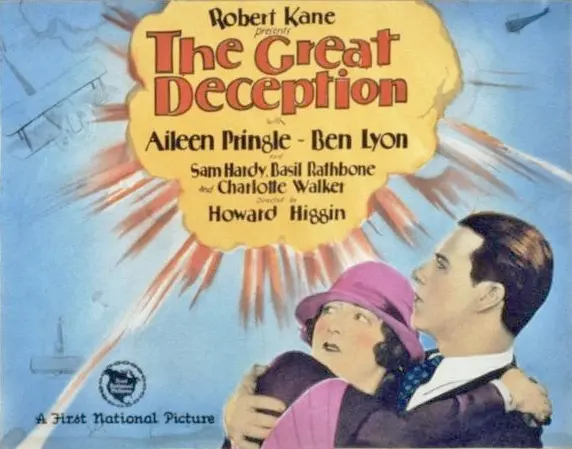
Is The Great Deception a film worth unearthing in the modern era? Short answer: yes, but with significant caveats that demand a particular kind of cinephile. This silent spy thriller is unequivocally for those with a deep appreciation for early cinema, historical context, and the foundational elements of genre storytelling. It is emphatically not for audiences seeking fast-paced action, contemporary narrative sophistication, or easily digestible plots without a willingness to engage with the unique language of silent film.
In the annals of early cinematic espionage, Paul Bern’s 1925 feature, The Great Deception, stands as a fascinating, if sometimes frustrating, artifact. It’s a film that promises a labyrinth of double-crosses and international intrigue, delivered through the expressive, often exaggerated, performances characteristic of the silent era. For those willing to adjust their expectations and immerse themselves in its unique rhythm, there are genuine thrills to be found. But make no mistake, this is a journey back in time, and it requires a certain patience.
Let’s get straight to it. This film works because it attempts a narrative complexity that was genuinely ambitious for its time, layering espionage and romance with a surprisingly cynical view of wartime loyalties. The core concept of a double agent caught between two nations, navigating personal affection and deadly duty, is inherently compelling. Furthermore, the early, menacing performance from Basil Rathbone as the suspicious Rizzio is an absolute standout, hinting at the iconic villains he would later embody.
This film fails because its pacing, a common challenge in silent cinema, can feel ponderous to modern eyes, often relying on lengthy title cards to convey crucial plot points rather than visual storytelling. Some of the plot contrivances, while par for the course in the era, stretch credulity even within the film’s own logic, making certain character decisions feel less earned. It’s a film that occasionally stumbles over its own intricate designs.
You should watch it if you are a dedicated student of film history, particularly interested in the evolution of the spy genre, or if you wish to witness the formative performances of legendary actors like Basil Rathbone and Aileen Pringle. It offers a valuable window into how suspense and drama were constructed before synchronized sound, demanding an active, interpretive viewing experience.
At its core, The Great Deception is a tale of shifting loyalties and perilous masquerades. Cyril Mansfield (Lucien Prival) isn't just a spy; he's a double agent, working for British intelligence while embedded within the German Secret Service. His mission: to feed disinformation, a concept surprisingly sophisticated for a 1925 film. This intricate premise immediately establishes a pervasive sense of distrust and danger, where every interaction could be a trap. The tension isn't just external, but internal, as Cyril grapples with the morality and personal cost of his deception.
The introduction of Lois (Aileen Pringle), an American caught unwittingly in this web, complicates Cyril's mission significantly. Her affection for Cyril is genuine, but her naivety becomes a dangerous liability, especially when another double agent, Rizzio (Basil Rathbone), enters the fray. Rizzio’s suspicion of Cyril isn't merely professional; it’s laced with personal rivalry for Lois’s affections, adding a potent layer of melodrama to the espionage. This love triangle, set against the backdrop of international conflict, is a classic silent film trope, but here it feels genuinely high-stakes.
The narrative escalates rapidly once Cyril, Handy, and Lois attempt their escape to Germany. The abduction of Lois by Rizzio via a U-boat is a wonderfully pulpy, almost Bond-esque moment, showcasing the film's ambition to incorporate then-modern technology into its spycraft. Lois's unwitting betrayal of Cyril, leading to their shared death sentence, is a pivotal turning point. It's a testament to the film's willingness to put its protagonists in seemingly inescapable peril, even if the resolution feels somewhat convenient. The plot, while occasionally simplistic in its execution, is undeniably rich in concept. It’s a blueprint for countless spy narratives that would follow, a testament to its foundational strength.
The true strength of any silent film lies in its actors' ability to convey emotion and intent without dialogue. The Great Deception largely succeeds on this front, thanks to its central players.
Aileen Pringle, a prominent star of the era, brings a captivating blend of fragility and resolve to Lois. Her wide, expressive eyes and often frantic gestures perfectly encapsulate the character's journey from naive American socialite to a woman caught in a life-or-death struggle. There's a particular scene where she realizes the gravity of her situation, her face contorting in a silent scream of despair, that is genuinely affecting. Pringle’s performance ensures that Lois is more than just a damsel in distress; she is a vulnerable human being trapped in circumstances beyond her control, a common theme in films like My Lady's Garter from the same period.
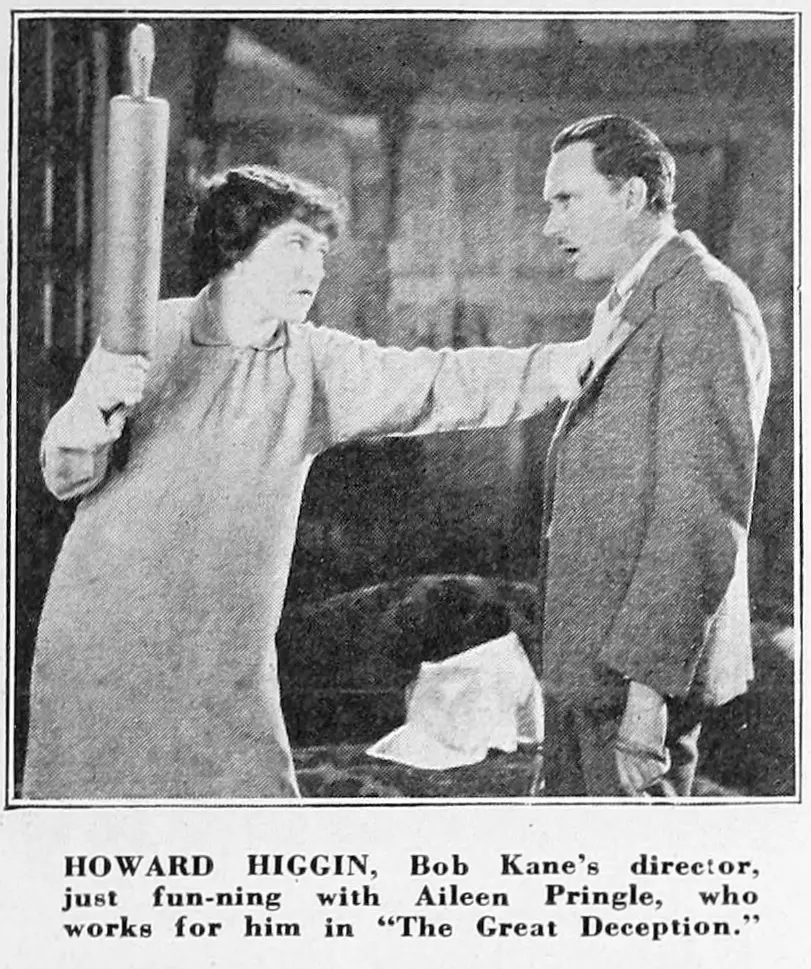
The undeniable highlight of the film is Basil Rathbone's turn as Rizzio. Even in this early role, predating his iconic performances as Sherlock Holmes and countless cinematic villains, Rathbone exudes a chilling menace. His subtle sneer, the way he carries himself – a coiled serpent in human form – immediately establishes Rizzio as a formidable, untrustworthy presence. He doesn't need dialogue to convey his sinister intent; a slight tilt of the head, a lingering gaze, or a predatory smile is enough. His physical presence dominates every scene he inhabits, foreshadowing the elegant yet terrifying antagonists he would master throughout his career. It’s a performance that transcends the limitations of silent film, proving that true screen presence is timeless.
Lucien Prival as Cyril Mansfield delivers a solid, if sometimes less flamboyant, performance. He portrays Cyril with a quiet intensity, conveying the burden of his double life through subtle shifts in his demeanor. His moments of tenderness with Lois are contrasted effectively with the steely resolve he displays when executing his spy duties. While perhaps overshadowed by Rathbone's theatricality, Prival’s understated approach grounds the film, making Cyril a believable, sympathetic protagonist navigating an incredibly dangerous world.
Paul Bern’s direction, while not groundbreaking, is competent and effective for the era. He understands how to build suspense through visual composition and the strategic use of close-ups. The film makes good use of its limited resources to create atmospheric settings, from the shadowy offices of the German Secret Service to the confined spaces of the U-boat. There’s a particular sequence aboard the U-boat where the tight framing and flickering light create a palpable sense of claustrophobia and impending doom, a smart decision that heightens the tension of Lois’s abduction.
The cinematography, though uncredited, often employs stark contrasts between light and shadow, particularly in scenes involving Rizzio, further emphasizing his villainous nature. While it lacks the groundbreaking artistry of a Murnau or a Griffith, the camera work is functional and serves the narrative well. It’s a testament to the collaborative, often anonymous, efforts that shaped early Hollywood. Compared to some of the more straightforward narratives of the time, such as The Princess of New York or The Pride of the Clan, The Great Deception shows a clear intent to use visual elements to enhance its genre.
Here’s where The Great Deception, like many films of its vintage, struggles to fully engage a contemporary audience. The pacing is deliberately slow, a characteristic of silent cinema that relied heavily on expository title cards to advance the plot and convey dialogue. While these cards are essential, they frequently interrupt the visual flow, breaking immersion and demanding a different kind of viewing engagement.
Modern viewers, accustomed to rapid-fire editing and constant auditory stimulation, may find these pauses jarring. There’s a sequence in the middle act, where Cyril and Lois are being held captive, that feels particularly drawn out, with multiple title cards explaining their predicament and Rizzio’s motivations. While necessary for understanding, it detracts from the immediate visual drama. This is a film that requires patience, a willingness to lean into its rhythm rather than fight against it. It’s not a flaw of the film itself, but rather a stylistic choice that marks it as a product of its time.
Yes, The Great Deception is absolutely worth watching today for specific audiences. It offers a fascinating glimpse into the nascent spy genre. It provides a unique opportunity to witness early performances from future legends. The film is a valuable historical document for understanding cinematic evolution. It is not for casual viewers seeking modern entertainment. It demands an appreciation for silent film conventions. This film works best as an academic exercise or for dedicated cinephiles.
One surprising observation about The Great Deception is its relatively nuanced portrayal of moral ambiguity, even for a film released shortly after World War I. While there are clear 'good' and 'bad' sides, Cyril's role as a double agent is explored with a certain gravitas, hinting at the psychological toll of such a life. It's not a black-and-white world, which feels quite modern. This film doesn't shy away from the idea that heroism can be messy, and loyalty is often a complex, shifting commodity.
I’d argue that the film's ending, while providing a satisfying escape, feels a little too neat. After such a build-up of peril, the final flight to freedom, while visually exciting, resolves the personal and political complexities perhaps too cleanly. One could debate whether a more tragic or ambiguous resolution might have elevated its artistic merit, making it resonate more deeply with the themes of deception it so painstakingly builds. But for a 1925 audience, a clear triumph was likely expected, if not demanded.
It works. But it’s flawed. The power of Basil Rathbone’s early performance alone makes it worth the effort of discovery, a true highlight in an otherwise uneven but ambitious piece of silent cinema.
The Great Deception is an intriguing, if imperfect, relic from the golden age of silent film. It offers a compelling, albeit slowly paced, narrative of espionage and romance, anchored by strong performances, particularly Basil Rathbone's early villainy. While it demands a certain level of patience and appreciation for its historical context, those willing to make the journey will find a rewarding glimpse into the foundations of the spy genre. It’s not a film for everyone, but for those it's made for, it’s an essential watch. It's a testament to the enduring power of a good story, even when told without a single spoken word.
IMDb 5.9
1914
Community
Log in to comment.