DbcultAccessing Vault...
Cult Review
Senior Film Conservator
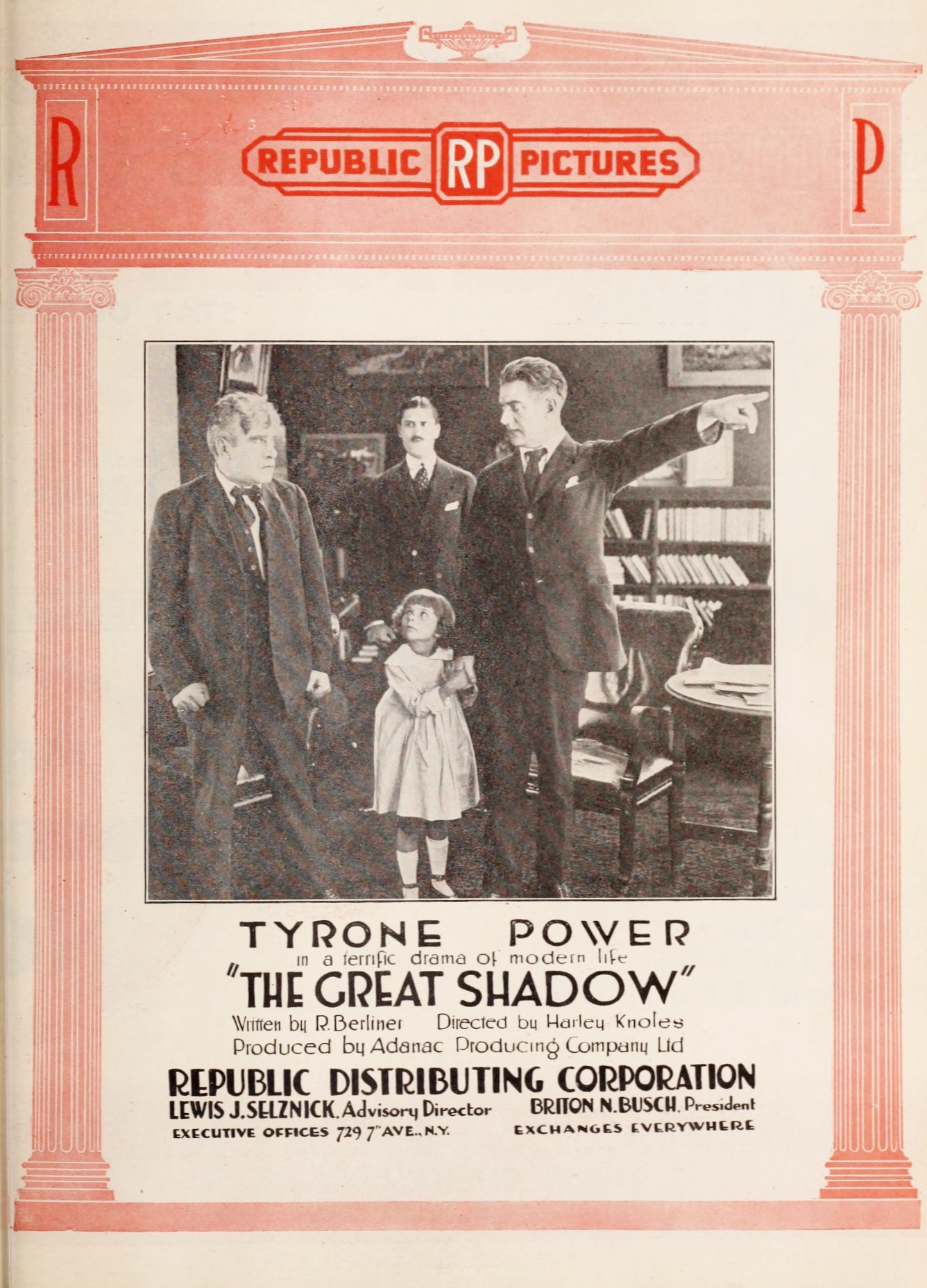
Released at the hinge of a jittery decade, The Great Shadow arrives like molten slag poured onto the national psyche. 1920 audiences, still tasting gunpowder from labor clashes and Red Raids, found themselves confronted by a film that refuses the balm of escapism. Instead it clamps their gaze onto flaming cauldrons, clanging presses, and the cadaverous grin of Klimoff—an ideological ghoul stalking the proletarian imagination. Director-editor Rudolph Berliner, with scenarist Eve Unsell, welds melodrama to agit-prop so seamlessly that every frame hisses with contemporaneity.
Cinematographer David Pidgeon carves chiaroscuro cathedrals inside the plant: locomotive steam becomes incense, tungsten lamps halo McDonald’s furrowed brow, while the camera glides across catwalks as if suspended from cranes. Compare this sooty grandeur to the more genteel tableaux of Anna Karenina or the lacquered exoticism of Madame Butterfly; here the aesthetic is rust, coal, and the incandescent drip of sweat. Shadows are not mere negative space—they are ideological battlefields swallowing men whole.
Eugene Hornboestel plays McDonald like a battered colossus, voiceless yet thunderous in pantomime. Watch the death scene: his shoulders buckle, the whites of his eyes flare, then the slow collapse—a controlled detonation of paternal identity. Opposite him, Louis Stern’s Klimoff slinks with serpentine detachment, cigarette ember winking like a tiny red star. Stern resists mustache-twirling; instead he radiates scholarly contempt, as though quoting Bakunin between frames. Dorothy Bernard, as McDonald’s wife, embodies the collateral damage of history, her silent scream frozen in a single iris close-up that rivals Fantomas’ most lurid thrills.
The film’s central strike sequence is orchestrated like a pagan rite. Whistles screech, men pour from factory maws, and machinery exhales its last piston thump. Berliner cross-cuts between the American plant and Petrograd barricades, implying a contagion of revolt. Yet his montage complicates easy propaganda: strikers trample their own livelihoods, horses rear in terror, and a child’s broken doll lies beside McDonald’s lifeless son—an equation of innocence lost on both sides. The sequence predates Eisenstein’s Strike by five years but matches it for visceral montage, minus the heroic uplift.
Because the picture is mute, every clang, hiss, and footfall exists only in the spectator’s skull. The absence of audible lamentation magnifies the trauma; we become complicit ventriloquists, supplying the boy’s final yelp, the mother’s shattered wail. Contemporary critics compared the experience to “holding one’s breath inside a coal seam,” and that asphyxiation still works a century on.
Berliner and Unsell refuse to crown either Capital or Labor. Klimoff’s Bolsheviks are opportunistic parasites, but the factory owners remain off-screen phantoms, their wealth implied only by the gilded offices glimpsed through frosted glass. McDonald’s unionism is pragmatic, rooted in shared beer and burial funds, not Marxist scripture. Thus the film navigates a centrist tightrope, landing on a truce that feels less like triumph than temporary exhaustion. That ambivalence scandalized radical journals, yet delighted studio accountants who understood that ambiguity courts all quadrants.
The fatal horse stampede is staged with brutal elegance: low angles distort the animals into locomotive juggernauts, their manes whipping like loose cables. The camera follows the child’s tumble with a vertiginous tilt, halting on a puddle reflecting the sky—heaven inverted in dirty water. One can trace this choreography to later urban calamities in Thrown to the Lions or even the kinetic peril of Marvelous Maciste, yet Berliner’s sequence remains more intimate, more sacrificial.
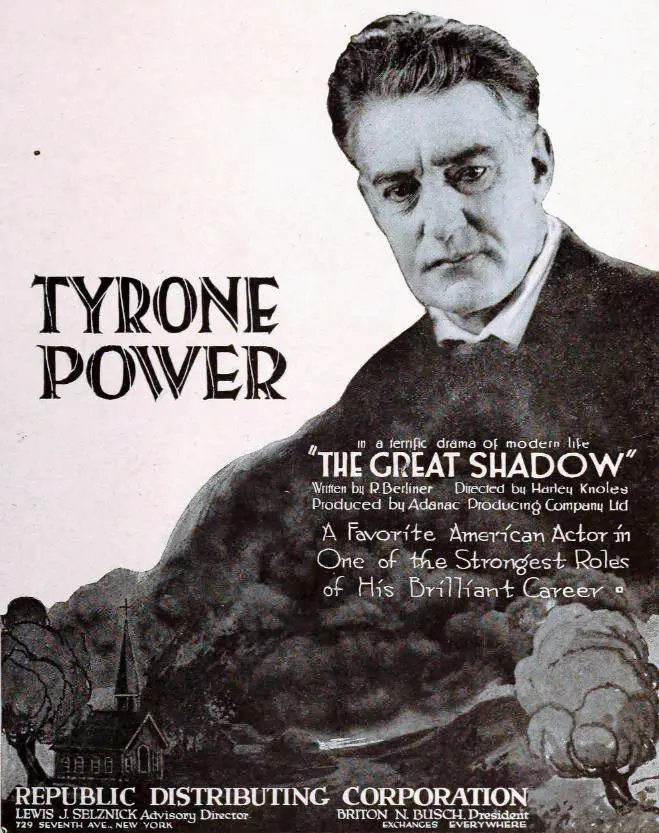
Women hover at the periphery, negotiating hunger against ideology. Bernard’s matriarch clutches her son’s cap as though it were a Eucharist; in a fleeting shot, a nameless striker’s wife breast-feeds an infant while her husband sharpens a pipe into a pike. The film whispers that revolutions are nursery rhymes croaked atop rubble.
Editors employed overlapping dissolves to compress weeks of negotiation into seconds, a tactic that prefigures the modern training montage. Yet each dissolve is tinted crimson or sickly amber, as though history itself bruises while we watch. The climactic armistice table is framed in a rigid two-shot reminiscent of courtroom sketches, the year-long treaty sealed with ink that looks suspiciously like drying blood.
Initial reviews split along partisan fault lines. The New York Herald praised its “tempered humanity,” while The Call denounced it as “a capitalist palliative wrapped in proletarian rags.” Modern scholars locate the film within the “Red Scare cycle,” alongside The Argyle Case and Too Many Millions, but few survive as complete as this. The Library of Congress restoration (2019) reinstated two missing reels, including a chilling tableau of strikers burning effigies of their own leaders—an auto-critique rare in 1920.
Where Her Shattered Idol domesticates social upheaval into drawing-room tiffs, The Great Shadow drags us into the forge. Conversely, Chernaya lyubov romanticizes revolutionary martyrdom; Berliner refuses roses over graves. The closest tonal cousin may be Hearts of Oak, though that film dilutes class conflict with nautical bravado.
Today, as gig-economy algorithms replace foremen and digital picket lines trend on phones, the film’s machinery of exploitation feels eerily ported into code. McDonald’s grief reads as any modern caregiver bargaining with faceless platforms. Klimoff’s viral pamphlets become meme swarms. The Great War has ended, yet the great shadow lengthens, proving history’s favorite encore is irony.
If you crave silent cinema merely for flappers and slapstick, steer clear. But if you savor ethical disquiet, shadow-play aesthetics, and the metallic taste of ideological deadlock, queue this restoration immediately. Watch it at midnight, volume off, city lights flickering like dying filaments. Listen to your own pulse fill the silence—there beats the film’s true score.
The 4K scan reveals cigarette burns used to cue scene transitions—ghost fingerprints of projectionists long dead. Tinting is restored to Berliner’s original specifications: amber for interiors, viridian for exteriors, crimson for riot sequences. The German intertitles (surviving print) are translated with idiomatic bite: “Bread or dynamite” replaces the blander “Food or fire.” Orchestral scores commissioned by Cinematheque Française favor percussion, evoking clanging hulls; however, solo piano accompaniment sharpens the film’s existential chill.
A century on, The Great Shadow remains a molten core of contradictions: agit-prop without agit-prop comfort, melodrama stripped of moral certainty, tragedy that refuses catharsis. It is neither pro-labor nor pro-capital; it is pro-implication, insisting spectators shoulder the weight of history’s unfinished sentence. Stream it, study it, argue with it—just don’t expect to leave unscorched.
IMDb 6.8
1934
Community
Log in to comment.