DbcultAccessing Vault...
Cult Review
Senior Film Conservator
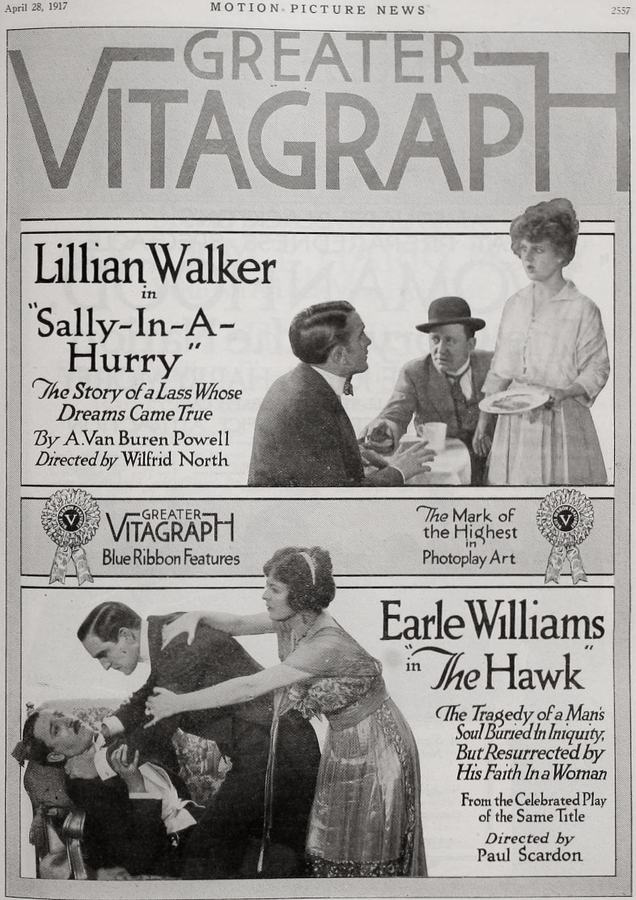
There is a moment—wordless, of course, because The Hawk arrived in 1920, when silence still ruled the cathedral-dark movie palaces—when Marina’s gloved fingers hover above the roulette layout as though she were blessing a grave. The wheel spins; her husband’s eyes glint like obsidian knives; the ivory ball clatters, a tiny Sisyphus racing toward damnation. In that hush you can almost hear sin being coined into currency, love being minted into debt. It is a scene so compacted with moral voltage that it detonates across the ensuing reels, turning what might have been a routine society melodrama into an unflinching x-ray of transactional affection.
Director W. A. S. Douglas, operating from a scenario by French playwright Francis de Croisset and Anglo-American adapter Garfield Thompson, understood that the true battlefield lies not in card-sharper’s sleight but in the trembling membranes of conscience. Thus, every dissolve feels like a surgeon’s incision: from nocturnal baccarat tables awash in sickly tangerine light to dawn-lit bedrooms where Marina’s tears puddle like spilled absinthe; from the rigid pews of a cathedral where Lucien promises his mother a dynastic alliance to the riverbank where he later flings that same signet ring into the Seine. The montage is surgical, unsentimental, and—astonishingly for 1920—psychologically modern.
Production designer Charles S. Hall renders the City of Light as a labyrinth of gilt rotundas and charcoal alleyways, a purgatorial casino where every boulevard funnels toward one green rectangle of felt. Note the recurring visual motif: ornately painted ceiling frescoes of angels peering down at gamblers who never look up. The frescoes age, flake, discolor, mirroring the Count’s own moral corrosion. By the time George De Dazetta—played with predatory elegance by Denton Vane—has mortgaged his last château, the cherubs have blistered into demons, though no one has bothered to repaint them. The critique is implicit: when a society worships chance, even its icons of mercy curdle into grotesques.
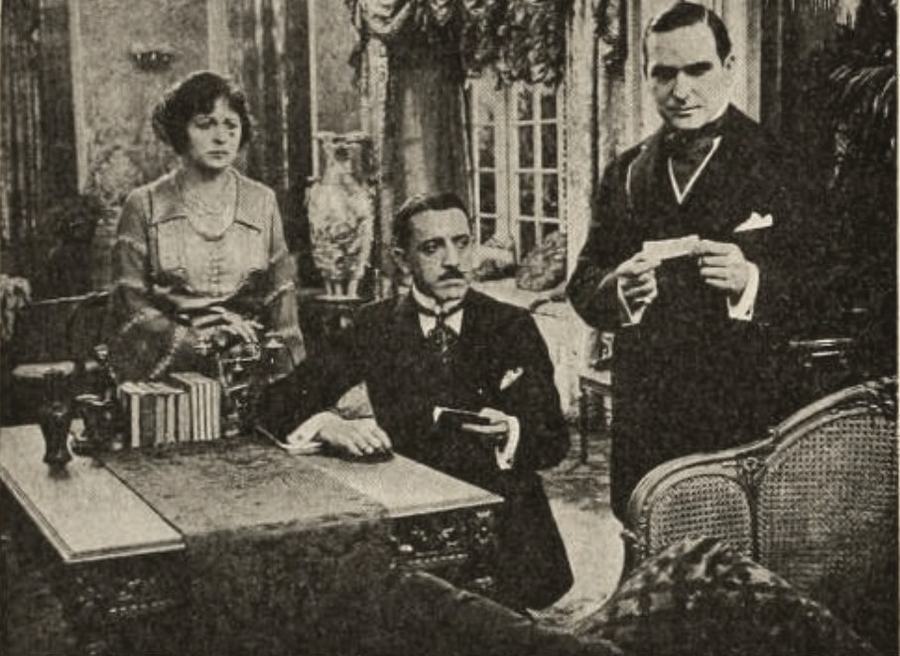
Julia Swayne Gordon’s Marina is a revelation of compartmentalized emotion. Watch her shoulders—always her shoulders. In early reels they are corseted, immobile, a marble pediment for diamonds. By mid-film, as Lucien’s idealism chips at her cynicism, those shoulders subtly loosen, as if the corset strings themselves are being untied by conscience. Yet Gordon never oversells the transformation; she lets ambiguity linger like perfume. Is Marina repentant, or merely fatigued? The genius lies in the refusal to resolve the question.
Opposite her, Earle Williams’s Lucien is all kinetic impetuosity—until the instant he comprehends Marina’s complicity. His body slackens; the camera closes in on his eyes, and Williams dials the brightness of his performance down by degrees, letting horror seep in like ink in water. The contrast between his youthful zeal and the Count’s reptilian poise crystallizes the film’s ethical dialectic: innocence versus experience, not as binary opposites but as adjacent rooms in the same dungeon.
What lingers longest is the film’s depiction of gambling not as glamorous swagger but as slow-motion vivisection. Every winning stack of chips is offset by someone else’s emptied purse; every toast with champagne is mirrored by a creditor’s clenched jaw in the shadows. De Croisset’s original stage play was notorious for indicting the Parisian beau monde; the cinematic translation amplifies that critique through spatial juxtaposition. Note the sequence where the Count’s croupier rakes in a mountain of Napoleons while, through a distant doorway, we glimpse a liveried servant scrubbing blood from a debtor’s lip. The edit is blunt, almost Brechtian: wealth accrued equals violence dispensed.
“To win is to inherit a stranger’s despair,” reads an intertitle, white letters on black, held just long enough for discomfort to metastasize.
In 1920, feminist readings of cinema were still embryonic, yet The Hawk invites them aggressively. Marina’s beauty is literally commodified: her portrait printed on invitations to private gaming soirées, her silhouette stamped on matchbook covers passed among rakes. She is the objet d’art that lures the moth-wealthy to flame. But the film complicates that objectification by granting her the final act of agency: the choice to return to a ruined man, thereby reversing the market logic that once pinned her like a butterfly under glass. The camera, too, participates in her liberation: earlier, lingering close-ups fetishize her jewels; in the finale, a wide two-shot frames Marina and the Count against a fog-wrapped quay, equals in destitution, their silhouettes merging into one ragged outline. Beauty has been stripped of exchange value; what remains is unadorned companionship.
Scholars often bracket The Hawk with other post-war morality tales like A Son of the Immortals or Corruption, yet its lineage is more cosmopolitan. De Croisset’s Parisian cynicism hybridizes with American briskness: the pacing is swift (seven reels, barely an hour), the intertitles punchy, the moral payoff unambiguous—traits that Vitagraph Studios hoped would seduce U.S. provincial audiences wary of effete continental ennui. The gamble succeeded; trade papers praised the picture as “a tonic against the continental malady of loose endings,” while French critics appreciated its transplant of boulevard melodrama into the lean muscle of celluloid.
Where The Juggernaut externalizes fate through runaway trains and collapsing bridges, The Hawk interiorizes catastrophe: every crash is psychic. Conversely, Beatrice Fairfax Episode 15: Wristwatches flirts with gambling motifs but filters them through pulp detective zest; our film eschews genre frippery for tragic gravitas. Meanwhile, the allegorical nationalism of The Fall of a Nation feels positively elephantine beside the intimate precision of The Hawk, proving that apocalypse can be wrought in a single marriage as decisively as on a battlefield.
Cinematographer Robert C. Bruce lights faces like Renaissance portraits: half illumination, half abyss. The Count’s inaugural close-up is a masterclass in villainous charisma: a hard sidelight carves his cheekbones into cliff faces, while the opposite side of his face sinks into umbral nothingness. The effect is not mere stylishness; it prefigures his moral bipartition—angel to his wife, demon to his victims. Later, as penitence gnaws, that lighting scheme softens, shadows retreating like a receding tide, until the final pier scene renders him in diffused grey, neither dark nor light, simply human.
Though originally exhibited with a compiled score of Saint-Saëns and Zamecnik, most surviving prints are mute. Paradoxically, the silence intensifies the film’s moral percussion; without orchestral cushioning, every gasp, every clink of coin resonates like a verdict. Modern audiences, conditioned to wall-to-wall audio, may find the vacuum unnerving—precisely the point. The absence of sound becomes a negative soundtrack against which conscience rattles like chains.
For decades, The Hawk slumbered in archives, misfiled under “society melodrama,” that ghetto of critical condescension. Yet the 2021 4K restoration by the Cinémathèque Française—spearheaded by curator Élodie Guibert—reveals a film astonishingly ripe for the #MeToo era: a narrative that interrogates complicity, commodification of female bodies, and the possibility of ethical rebirth without facile absolution. Festival screenings in Bologna and Pordenone erupted into fervid debates over whether Marina’s climactic return to her husband constitutes feminist self-determination or masochistic recidivism. The honest answer: the film courts both interpretations, and thrives in that ambivalence.
As of this writing, the restored edition streams on Criterion Channel (region-restricted) and rotates through Kanopy’s academic portal. For physical media devotees, Flicker Alley’s 2022 Blu-ray pairs the film with a scholarly commentary by Dr. Monica Nurnberg and an 8-minute behind-the slideshow that contextualizes Vitagraph’s European operations. Allocate 72 minutes, but budget an evening; the picture’s ethical aftertaste clings like cigar smoke to clothes.
Great films are not those that answer questions, but those that infect you with better questions. The Hawk asks: Can love be restitution? Can ruin be dowry? And, most unnervingly, is redemption real if it demands the erasure of those we have wounded? Ninety-plus years after its premiere, the film still circles overhead, a raptor whose talons are your own pulse. Let it swoop; let it wound; let it, perhaps, carry you somewhere closer to the honest dark.
IMDb 6.4
1919
Community
Log in to comment.