DbcultAccessing Vault...
Cult Review
Senior Film Conservator
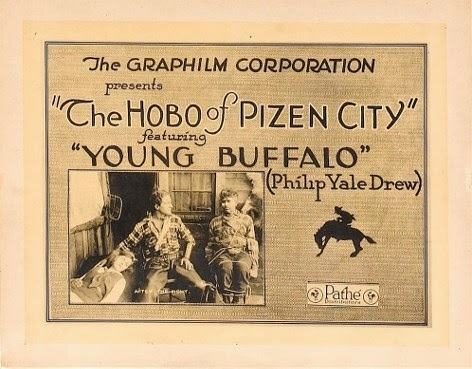
The first thing we see is absence: a horizon so barren it seems to swallow the very notion of arrival. Out of that void lurches a silhouette stitched from burlap and shadow—our hero, though the film withholds his name the way a card-sharp palms an ace. Pizen City materializes in the next splice, a clapboard oasis tilting toward its own extinction. Every plank, every hitching post bears the scar of a story already told, yet the hobo’s tread rewrites the ground beneath him. The camera, jittery with nickelodeon excitement, clings to his back as if afraid he might dissolve should we look him in the eye.
Costume here is scripture. The hobo’s coat—frayed, sun-bleached, smelling of sour whiskey and sage—functions as both armor and confession. When he peels it off inside the dim alcove of the assay office, the gesture feels obscene, like skinning a saint. Beneath: a vest of burgundy silk, improbably preserved, as though the man carried Versailles inside his rags. Director George Ridgwell lingers on this transfiguration with the patience of a priest at an exorcism; each button closed is a stanza, each cufflink a vow. The cut is abrupt—one moment a scarecrow, the next a dandy—yet the edit’s violence mirrors the west itself, where fortune pivots on the flip of a card or the glance of a woman.
Enter Elsie Fuller, her gaze a lit fuse. She is not the wilting petunia of later oaters but a self-willed comet, clutching spelling primers like psalms. Notice how Ridgwell frames her against the schoolhouse door: the threshold becomes a proscenium, the wood’s splinters haloing her in chiaroscuro. She has arrived from St. Louis with a crate of dictionaries and a determination to civilize a place that resists syllables. When her eyes lock with the newly minted gentleman, the soundtrack—though silent—seems to exhale a chord of glass bells. Their courtship is conducted in glances, half-smiles, the offering of a freshly sharpened pencil: objects as erotic as any embrace.
It is easy, in 2023, to mock the broad semaphore of silent acting, yet Drew refuses caricature. Watch the micro-tremor in his left cheek when the schoolteacher praises thrift; it is the flicker of a man remembering hunger. His gait, after the wardrobe alchemy, adopts a princeling swagger borrowed from magazine lithographs—knees too loose, cane twirling like a gambler’s coin—but the performance’s genius lies in what leaks through: the panic that silk cannot muffle, the reflexive hunch when a sheriff’s spurs clang. Drew lets the two identities coexist, overlapping transparencies, so that every flourish of gallantry carries the after-stink of the ditch.
Pizen City is no mere backdrop; it is a hydra wearing a corset of contradictions. The saloon’s mahogany glows like a cathedral, while behind it a Chinese launderer irons shirts in a room the size of a coffin. The cattle baron, Mr. Carver, swills brandy from crystal, but his boots are caked with the manure of stolen land. Ridgwell orchestrates these juxtapositions in wide tableau, letting the camera gorge on detail: a whore’s torn lace, a gambler’s ivory cufflinks carved into tiny skulls. Each insert is a whispered footnote to Manifest Destiny’s ledger of debt. Our hobo-turned-beau must navigate this labyrinth where every handshake smells of gun oil.
Conflict detonates when the schoolmarm’s ledger reveals Carver’s brand on stolen cattle. The baron demands recantation; she refuses. Enter the hobo—now calling himself Mr. Hart—offering to escort her to the territorial marshal. The duel is staged not with revolvers but with architecture: the pair ascend the half-built church steeple, a skeleton of pine against blood-orange sky. Vertigo infects every frame; planks creak like old bones. Carver’s men circle below, wolves in bowler hats. Ridgwell cross-cuts between the teacher’s trembling hand on a railing bible and Hart’s fingers closing over a derringer hidden in his hatband. The tension is feral, almost indecent. When the first shot fires, it is the steeple itself that bleeds, tar oozing from the wound as if the town’s sins have found corporeal form.
Victory arrives, but it tastes of rust. Carver staggers, clutching silk vest now blooming crimson. Hart descends the ladder, each rung a decade shed; by the time his boots meet dust, the coat has lost its immaculate press, wilted like a funeral lily. The schoolmarm offers her hand—no swoon, no hysterics—yet Ridgwell withholds the expected clinch. Instead he cuts to a medium shot: the couple framed against the rail line stretching east. A train whistle keens, both promise and theft. Hart’s eyes flicker—does he board, return to the road, or stay stitched inside the role he has borrowed? The iris closes before decision, leaving the audience stranded in that liminal gulp between heartbeats.
William Addison Lathrop’s intertitles—often disparaged in academic footnotes—deserve resurrection. “The west is a tailor that cuts men from whole cloth, then burns the scraps,” reads one, over an image of the hobo’s discarded rags curling in flame. Another: “She taught the alphabet to wolves; they learned to spell hunger.” These fragments function like haiku, distilling vast thematic tar into bitter pearls. Compare them to the verbose moralism of The Tree of Knowledge or the cosmopolitan cynicism in The Intrigue; Lathrop opts for gnomic compression, trusting the viewer to furnish the grotesque gallery between words.
Shot by Allen G. Siegler, the film’s surviving 35 mm print bears scars—scratches like lightning over a prairie—but these wounds amplify its mystique. Daylight exteriors bloom with over-exposure, turning skies into white furnaces against which figures stencil themselves in obsidian. Interiors swim in umber, faces caught in the act of becoming ghosts. Note the moment Hart studies his reflection in a cracked barroom mirror: Siegler racks focus so that the fracture splits the actor’s visage, a visual prophecy of identity cleaved. Compare this self-reflexivity to the maritime chiaroscuro of The Hell Ship; both trade in moral fragmentation, yet Pizen roots its schism in the mirror of social mobility itself.
Modern viewers, primed by revisionist westerns, might squint for feminist subversion—and the film obliges, partially. The schoolteacher never relinquishes ledger or chalk; even in the steeple’s shadow she recites multiplication tables like mantras against doom. Yet the narrative still pivots on male rescue, a concession to 1915 market law. One could argue that her true power lies in semiotic sabotage: by teaching children to spell justice she seeds insurrection in miniature minds. Still, the limitation rankles, especially when contrasted with the regal autonomy of The Woman God Forgot. Pizen flirts with matriarchal uprising but retreats at the river’s edge.
No original cue sheets survive, allowing each curator to haunt the reels anew. In the 2019 Pordenone premiere, a small ensemble sampled period parlor tunes, then detonated into free-jazz dissonance during the steeple duel—an anachronism that paradoxically restored the scene’s raw terror. The squall of saxophone became the howl of conscience, the hush of accordion the rattle of regret. Contemporary streamers often slap on generic honky-tonk piano, flattening nuance. Seek instead the restoration with live improvisation; only then does the film’s marrow warm.
Trace the hobo’s duality forward and you’ll glimpse Shane’s haunted gunfighter, Unforgiven’s reformed killer, even the tuxedoed bloodshed of John Wick. The DNA is there: the garment as rebirth, the impossibility of scouring stigma’s stink. Yet few successors capture the specifically economic dread that fuels Pizen—the terror that tomorrow’s meal hangs upon the whims of a card deck or a rancher’s wire fence. In an era of gig precarity, the film’s resonance sharpens; we are all hobos toggling between LinkedIn polish and thrift-store anxiety, praying the curtain never drops.
Compare it to Trailed by Three, where triplicate heroes dilute tension, or the drawing-room whimsy of Are You a Mason? whose mistaken identities serve only froth. Pizen weds romantic metamorphosis to material crisis, refusing to sever heart from purse-string. Even The Coming of the Law, though sharing legalistic showdowns, lacks the existential wardrobe swap that makes Pizen a parable of class fluidity in the republic of violence.
Turn off the lights, silence your phone—then silence it again, because this 63-minute fable demands the hush of a séance. Project it large, letting the film’s scars tower like buttes. Read Lathrop’s intertitles aloud before each scene; let the syllables linger, tasting of alkali. After the iris closes, sit in the dark a full minute, enough time for the west to reform its ghosts inside your ribs. Only then will you feel the slow tug of the rails calling you toward whatever borrowed coat you must wear tomorrow.
The Hobo of Pizen City is not merely a curio for completists of the oater genome; it is a celluloid essay on the terror of reinvention in a nation that fetishizes self-making while punishing poverty. Its seams show, its politics wobble, yet its emotional strike zone—love as both salvation and extortion—lands clean across a century. Seek it, stream it, champion its restoration. In the flicker of nitrate, you may glimpse your own reflection bifurcated by cracked mirror, wondering which version of you the dawn will demand.
IMDb —
1922
Community
Log in to comment.