DbcultAccessing Vault...
Cult Review
Senior Film Conservator
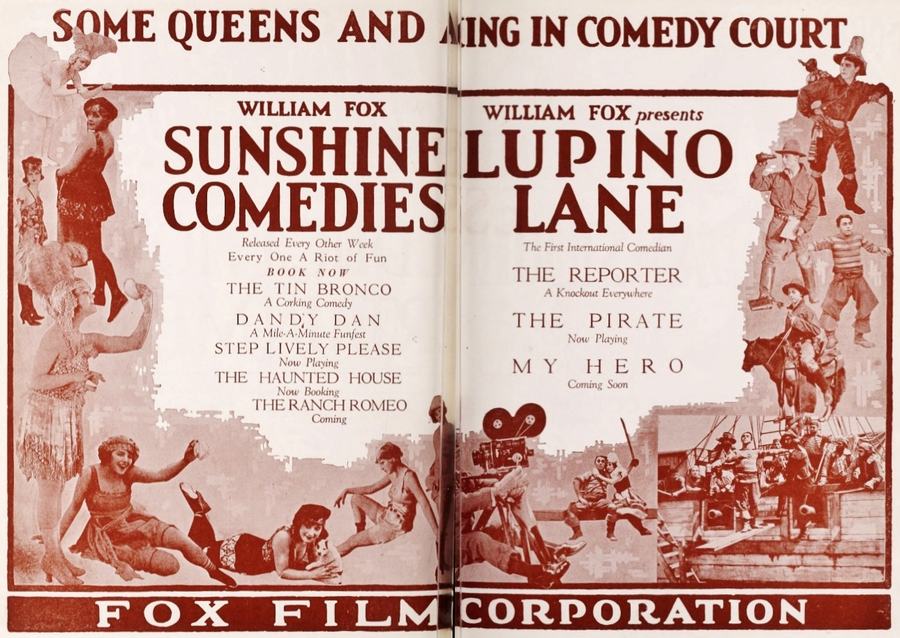
Ah, the silent era. A time when narratives were painted with broad strokes, emotions writ large, and the burgeoning marvels of technology often became the unwitting antagonists or comedic foils in cinematic tales. Among these fascinating relics, The Tin Bronco emerges as a charming, if somewhat overlooked, testament to this period. It’s a film that, despite its brevity and the simplicity of its premise, manages to capture a specific cultural moment with remarkable clarity and an infectious sense of humor. What unfolds is not merely a story of two ranchmen and a car, but a delightful exploration of aspiration, the allure of progress, and the inevitable, often hilarious, pitfalls that accompany the march of innovation.
At its heart, The Tin Bronco is a quintessential fish-out-of-water narrative, albeit one where the 'fish' are rugged Western ranchmen and the 'water' is the bewildering new ocean of automotive mechanics. Our protagonists, two earnest cowboys, find themselves seduced by the promise of the modern age. This isn't just any promise; it's the siren song of a 'Klassy Komplex' car, an advertisement for which has found its way into their correspondence course materials. Imagine the scene: dusty boots, Stetson hats, and the theoretical intricacies of an internal combustion engine. The juxtaposition is inherently comedic, a testament to the era's rapid societal shifts where the frontier was still very much alive, yet the hum of the engine was beginning to drown out the clip-clop of hooves.
The film masterfully sets up this initial premise. These men, accustomed to the straightforward mechanics of horses and lassos, view the 'tin broncho' with a mixture of awe and naive confidence. The operating instructions, as presented in the advertisement, are likely simplified to the point of absurdity, creating an immediate dramatic irony that the audience can appreciate. They believe mastery is within reach, a mere matter of following a few simple steps. This belief forms the bedrock of the ensuing chaos, a chaos not born of malice, but of a prank. Their 'mischievous fellows'—a term that perfectly encapsulates the good-natured yet disruptive spirit of the era's comedies—decide to tamper with the levers, altering the numbers and, by extension, the intended functions. This single act of playful sabotage transforms a simple lesson in motoring into a calamitous, laugh-out-loud spectacle of mechanical rebellion.
While the film's plot is undeniably charming, its success largely hinges on the performance of its lead, John McDermott. In an age where exaggerated gestures and facial expressions were the lingua franca of cinematic storytelling, McDermott delivers a portrayal that, while adhering to the conventions of the time, also hints at a nuanced understanding of his character's predicament. He embodies the earnestness of the ranchman, his initial excitement palpable, his subsequent bewilderment and frustration increasingly comical. McDermott's ability to convey a spectrum of emotions—from hopeful anticipation to utter mechanical despair—without uttering a single word is a testament to his prowess as a silent film actor.
His physical comedy, in particular, is a highlight. As the 'tin broncho' lurches, sputters, and defies all logical control due to the tampered levers, McDermott's reactions are priceless. He doesn't just react; he *experiences* the car's rebellion. His flailing limbs, wide-eyed confusion, and desperate attempts to regain control are not merely slapstick; they reflect a universal human struggle against an uncooperative machine. This makes his character relatable, even a century later. One could draw parallels to the innocent, often bewildered protagonists in films like The Brute Breaker, where a character's good intentions or simple nature are pitted against complex, often absurd, circumstances. McDermott's performance anchors the film, preventing it from devolving into mere farce and instead elevating it to a genuinely amusing commentary on the human condition in the face of technological advancement.
Beyond the surface-level comedy, The Tin Bronco offers a fascinating glimpse into the cultural anxieties and excitements surrounding the advent of the automobile. The 'Klassy Komplex' car, with its promise of simplicity and efficiency, represents the irresistible pull of modernity. Yet, the film subtly critiques this uncritical embrace. The very 'simplicity' of its operation becomes its undoing when confronted with human mischief. This isn't a condemnation of technology itself, but rather a playful cautionary tale about human fallibility—both in the design of user interfaces and the mischievous nature of human interaction.
The prank itself is also noteworthy. It’s a classic example of silent film humor, where physical gags and misunderstandings drive the narrative. The 'mischievous fellows' aren't villains; they're agents of chaos, their actions designed to elicit laughter rather than genuine harm. This brand of humor, often seen in films like The Bill Poster where everyday situations are turned upside down by unexpected events, relies on the audience's shared understanding of social norms and the delight in seeing them subverted. The changing of the numbers on the levers is a simple yet profoundly effective comedic device, creating a world where logic is twisted, and cause-and-effect become hilariously unpredictable.
Despite the technical limitations of early cinema, The Tin Bronco showcases a rudimentary yet effective approach to visual storytelling. The camera work, while static by modern standards, effectively frames the action, allowing the audience to fully appreciate the physical comedy. The use of intertitles, sparse but impactful, guides the narrative without bogging it down, a hallmark of well-executed silent film. The setting itself, the rugged Western landscape, provides a stark and compelling backdrop for the introduction of such a modern contraption. The dusty roads and open plains contrast sharply with the sleek (for its time) lines of the 'Klassy Komplex,' amplifying the film's central thematic tension.
While The Tin Bronco might not possess the grand dramatic sweep of epics like The Chosen Prince, or the Friendship of David and Jonathan, or the psychological depth of later silent masterpieces such as The Whispering Chorus, its significance lies in its contribution to the burgeoning genre of comedic realism. It depicts ordinary people grappling with extraordinary (for them) circumstances, a theme that resonates across various silent films. The innocence of its protagonists, similar to the characters often found in films exploring societal transitions like The Waifs or the romantic naivete of First Love, makes their struggles with the 'tin broncho' all the more endearing.
The film's focus on a mechanical object as the source of chaos also places it within a tradition that would evolve significantly throughout cinematic history, from early industrial shorts to later, more complex 'man vs. machine' narratives. Its humor, rooted in misunderstanding and the subversion of expectations, is a foundational element of comedic storytelling. One can see echoes of this playful disruption in films that explore the quirks of human interaction and the unexpected turns of fate, even if they operate in vastly different narrative spaces, such as The Three Pals, where camaraderie often leads to amusing predicaments, or the more dramatic confrontations in The Lion Killers, albeit with a much lighter tone.
Moreover, The Tin Bronco reminds us that humor is often found at the intersection of human ambition and sheer, unadulterated bad luck (or, in this case, deliberate pranksterism). It doesn't aim for profound social commentary, but rather for genuine, unpretentious laughter. In an era that was rapidly redefining entertainment, such films were crucial in establishing cinema's potential as a medium for lighthearted escapism. It's a snapshot of a world teetering on the brink of profound change, viewed through the lens of a good-natured joke.
In conclusion, The Tin Bronco is more than just a historical curiosity; it's a delightful piece of silent cinema that continues to charm with its simple premise and effective execution. John McDermott's performance is a standout, embodying the innocent spirit of an era grappling with rapid technological change. The film's humor, rooted in a classic prank and the resulting mechanical chaos, remains surprisingly fresh and engaging. For anyone interested in the foundational elements of cinematic comedy, the social history embedded within early films, or simply in need of a good, old-fashioned laugh, The Tin Bronco is an absolute must-see. It serves as a gentle reminder that sometimes, the greatest comedies arise from the simplest of misunderstandings and the most well-intentioned of pranks, proving that even a 'tin broncho' can lead to a wild, unforgettable ride.
IMDb —
1919
Community
Log in to comment.