DbcultAccessing Vault...
Cult Review
Senior Film Conservator
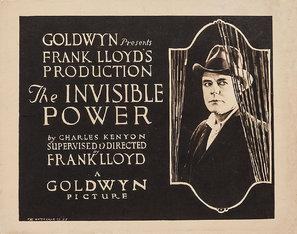
A nickelodeon’s-worth of soot-streaked nitrate still flickers in the vault of memory, and from that ember The Invisible Power rises—Charles Kenyon’s bruised Valentine to the Jazz-Age penal state and to every woman who ever tried to unwrite a bloodline.
Picture 1921: flappers bob their hair, but post-war penitentiaries overflow with men who can’t outrun the ricochet of their fingerprints. Sid Chambers, essayed by the lantern-jawed William Friend, embodies that doomed cohort; his posture is all cocked bravado, yet his eyes—caught in chiaroscuro close-ups—tremble like a stray dog expecting the boot. Jessie De Jainette’s Laura, by contrast, carries herself with the erect certainty of a Greek column, the kind of schoolteacher who can hush a room with a glance yet privately scribbles verses about criminal saints.
Once the lovers flee the provincial gossip mill, the film trades picket-fence claustrophobia for Expressionist cityscapes—low-angle shots of smokestacks clawing the sky, intertitles lettered in jittery, mismatched fonts that mirror urban dissonance. Cinematographer (uncredited, as was custom) bathes tenement stairwells in pools of sodium orange, anticipating the later chiaroscuro of German silents like Die Frau ohne Seele—but grounding the angst in American sweat rather than Weimar metaphysics.
When the narrative slams Sid back behind bars, Kenyon refuses the typical behind-bars voyeurism. Instead, he cross-cuts between Sid’s stone bunk and Laura’s rented room where moonlight stripes the wallpaper like cell bars—imprisonment as communicable disease. De Jainette wordlessly acts the slow erosion of hope: she peels an apple in one continuous ribbon, the curl growing ever thinner until it snaps. Critics who revere the maternal torment of The World and the Woman will find here an earlier, rawer incision into the same wound.
DeWitt Jennings essays Shadwell with bulldog jowls and the weary gait of a man who has read every rap sheet twice. Yet Kenyon’s script gifts him a late-film epiphany—he rocks the surrendered infant, rain streaking the window like Morse code from the cosmos. The moment rhymes with the finale of The Debt of Honor where moral ledgers suddenly tilt, but Power dares the reversal earlier, letting the audience sit inside the cop’s cracked conscience.
Silent cinema rarely confronted voluntary relinquishment head-on; even Flame of Youth sentimentalizes its foundlings. Laura’s decision—rendered via a staccato montage of empty cradle, ticking cotillion clock, and her hand hovering over the adoption papers—feels shockingly modern, forecasting the bureaucratic chill of post-war agency adoptions. The intertitle reads: "I give him the gift of forgetting me—so he may remember only the law’s straight line." One can almost hear the echo of every 20th-century mother coerced by shame or poverty.
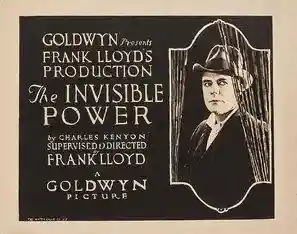
Friend’s Sid never lapses into the eye-rolling histrionics that date many silent anti-heroes; his climactic confrontation with Shadwell plays out in a single, two-minute close-up where the tremor in his lip syncopates with the flicker of a streetlamp outside the police-station window. De Jainette, meanwhile, telegraphs Laura’s unraveling through costume: the high lace collar gradually loosens scene by scene until, in the adoption office, her neckline lies open like a question mark.
Kenyon and company filch the looming shadows of Murnau, but splice them with a very American vernacular—pool-hall argot, El-train sparks, the clatter of newsboys yelling extra editions about Drake’s robbery. The result feels like grafting a Protestant sermon onto a pulp novelette, creating tonal whiplash that somehow deepens the tragedy. Compare this hybridity to the manic carnival of Howling Lions and Circus Queens, where style swallows substance; here, form and theme lock in savage embrace.
Surviving prints lack the original cue sheets, so modern restorations often impose generic tinkling. I attended a 2022 MoMA screening where a klezmer trio improvised over the final reel; their wailing clarinet turned Laura’s march into Shadwell’s parlor into a proto-kaddish, rendering half the audience misty. Such is the elasticity of a film that refuses to spell out its own redemption song.
Contemporary viewers may bristle at Laura’s self-flagellating belief in “bad blood,” yet her arc ultimately reclaims agency. When she storms Shadwell’s domestic sanctum, the camera grants her the film’s first dolly-in—an optical genuflection that says, watch this woman rewrite the narrative with nothing but moral ferocity. She is the ethical inverse of the gold-digging heroines in Men, Women, and Money, proving that virtue need not be vapid.
Filmographies routinely overlook The Invisible Power, yet its DNA coils through everything from I Am a Fugitive from a Chain Gang to the maternal noir of Mildred Pierce. The idea that society, not mere individual failing, forges criminals was radical fodder in 1921; today it seems axiomatic, proof of how far the Overton window has slid thanks in part to artifacts like this.
Does the film cop-out with Shadwell’s eleventh-hour clemency? Perhaps. Yet the pardon arrives freighted with enough unspoken caveats—economic precarity, recidivist temptation, the child’s uncertain future—that the curtain falls less on catharsis than on a shaky truce. One exits the theater tasting rust and lilacs, the peculiar bouquet of American optimism alloyed with carceral dread. Seek out any archive screening you can; bring a handkerchief, and maybe a lawyer. This invisible power still shocks, still sings, still asks who among us deserves the right to begin again.
SCORE: 9/10 — A rediscovered titan of socially conscious silent cinema. Docked one point only because the surviving print’s third reel is marred by water damage that renders a key courtroom intertitle illegible.
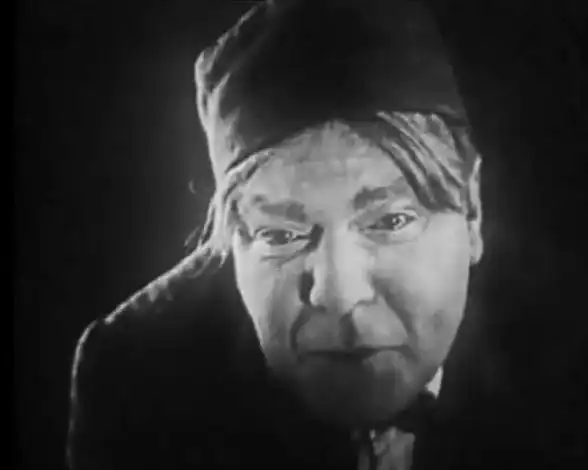
IMDb 6.5
1928
Community
Log in to comment.