DbcultAccessing Vault...
Cult Review
Senior Film Conservator
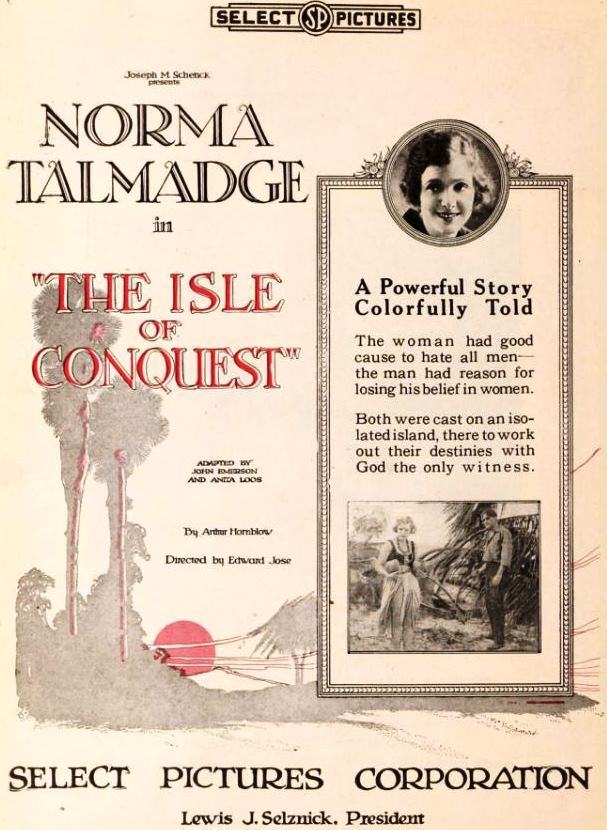
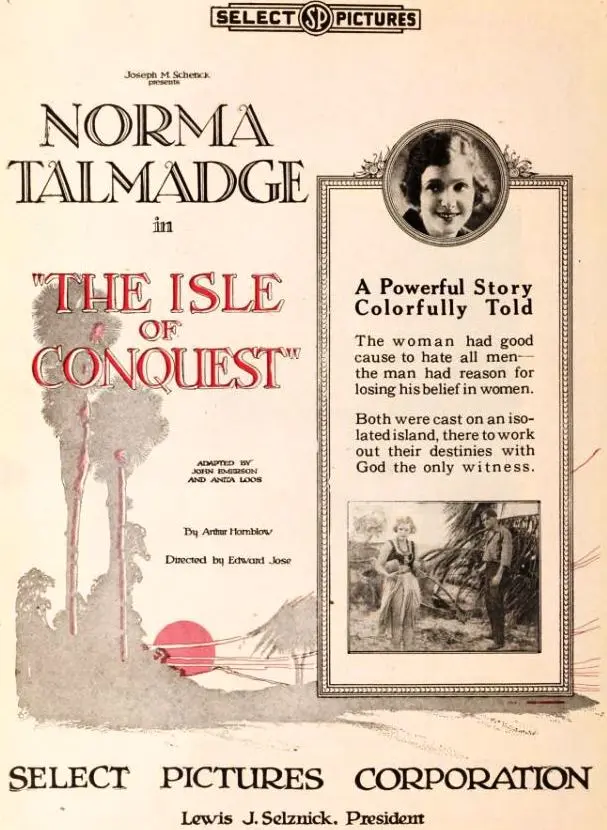
Step into the shimmering, sepia-toned world of 1919, where the grand narratives of human emotion were conveyed not through spoken words, but through the eloquent gestures, profound gazes, and dramatic intertitles of silent cinema. Among the myriad cinematic offerings of that pivotal year, The Isle of Conquest emerges as a particularly fascinating artifact, a testament to the era's storytelling prowess and its enduring fascination with the transformative power of isolation and unexpected connection. Directed with a keen eye for both spectacle and intimate psychology, this film, starring the luminous Norma Talmadge, invites us to ponder the very foundations of attraction and aversion, stripped bare by the relentless forces of nature.
At its core, The Isle of Conquest is a tale of two deeply disillusioned souls, flung together by fate's cruel hand, forced to confront not only the harsh realities of survival but also their own entrenched biases against the opposite sex. Norma Talmadge, a titan of the silent screen, portrays the protagonist, a woman trapped in the gilded cage of an unhappy marriage to a thoroughly despicable blackguard. Her world, one of superficial grandeur and emotional starvation, is abruptly shattered by a catastrophic shipwreck, a dramatic upheaval that serves as both an ending and a beginning. Washed ashore on a desolate, uninhabited island, her sole companion in this new, terrifying existence is a young man, portrayed by the earnest Gareth Hughes, himself nursing the fresh wounds of a bitter jilting. Both arrive on this primordial stage brimming with a cynical contempt for men and women, respectively, their hearts armored against further pain. The island, therefore, becomes more than just a place of survival; it transforms into a crucible, a psychological arena where their hardened ideologies are put to the ultimate test.
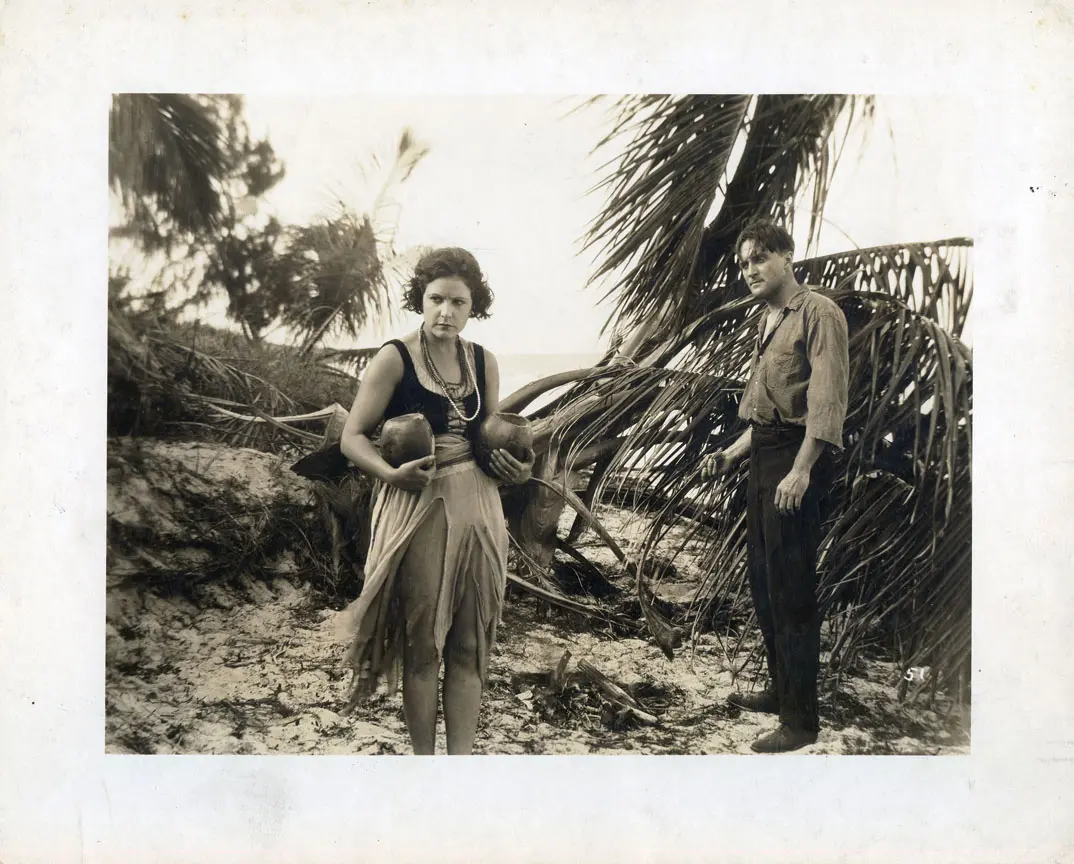
The narrative arc, penned by the collaborative talents of Arthur Hornblow, Anita Loos, and John Emerson, is deceptively simple yet profoundly resonant. It charts the slow, arduous journey from mutual disdain to an undeniable, primal attraction. Initially, our shipwrecked duo maintains a frosty distance, their interactions punctuated by suspicion and thinly veiled hostility. The woman, accustomed to the comforts and constraints of high society, struggles with the raw demands of the wilderness, while the man, though more adept at practical survival, grapples with the emotional baggage of his past. The writers skillfully employ the isolated setting to strip away the artifice of civilization, forcing the characters to reveal their true selves. This raw vulnerability is key; it’s not just about building a shelter or finding food, but about dismantling the emotional fortresses they’ve painstakingly constructed. The island, with its indifferent beauty and unforgiving challenges, becomes a silent therapist, gently but firmly prying open their guarded hearts.
The film delves deep into themes of societal critique, particularly regarding the institution of marriage and the expectations placed upon women in the early 20th century. Our heroine's initial unhappiness is a poignant commentary on the often-loveless unions of convenience or status, a theme subtly echoed in films like The Married Virgin, which also explored the complexities and dissatisfactions within marital bonds, albeit through a different lens. Here, the shipwreck represents a liberation, a violent severing of chains that bound her to a life of quiet desperation. On the island, she is free to redefine herself, to exist outside the patriarchal gaze that often characterized the era's social structures. The man, too, undergoes a similar metamorphosis, shedding the bitterness of his past betrayal and learning to see the woman not as a representation of all perfidious femininity, but as an individual, a fellow survivor, and eventually, a companion.

The gradual thawing of their icy relationship is depicted with remarkable subtlety. It's not an instantaneous spark, but a slow burn, fueled by shared hardship, moments of unexpected kindness, and the sheer, undeniable force of human need for connection. The film understands that love, in its purest form, often blossoms in the absence of societal pressures and preconceived notions. It's in the quiet moments of shared meals, the collaborative efforts to build a fire, the unspoken understanding forged in the face of danger, that their initial animosity transforms into something tender and profound. This exploration of primal connection, devoid of the usual romantic tropes, gives the film a surprisingly modern sensibility, allowing its emotional beats to resonate even with contemporary audiences.
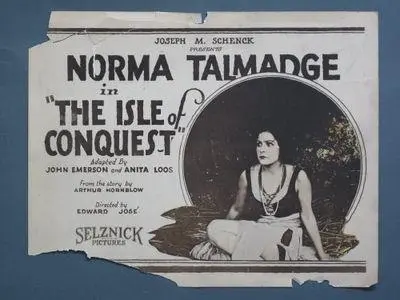
Norma Talmadge's performance is, as expected, a tour de force. Her ability to convey complex inner turmoil, fierce independence, and burgeoning tenderness through expression alone is simply breathtaking. She doesn't just act the part; she embodies the journey of a woman rediscovering her agency and her capacity for love. Her initial haughtiness, her struggle with the wild, her moments of despair, and her eventual surrender to affection are all rendered with exquisite precision. Talmadge, known for her dramatic roles, brings a compelling gravitas to the character, making her transformation utterly believable. She was a master of the close-up, and here, her eyes speak volumes, conveying entire paragraphs of emotion without a single intertitle. One can feel the weight of her past, the burden of her unhappy marriage, and the slow, exhilarating release she experiences on the island.

Gareth Hughes, while perhaps less celebrated today than Talmadge, delivers a performance that perfectly complements hers. His portrayal of the jilted young man is nuanced, showcasing his initial cynicism and underlying vulnerability. He isn't a caricature of male bitterness; rather, he's a man wounded, struggling to reconcile his ideals with his painful experiences. The chemistry between Talmadge and Hughes is palpable, evolving from cautious antagonism to a deep, unspoken bond. Their scenes together are a masterclass in non-verbal communication, a delicate dance of glances, hesitations, and tentative touches that speak volumes about their burgeoning connection. The supporting cast, including Wyndham Standing as the detestable husband, Merceita Esmond, and Natalie Talmadge, though having less screen time, contribute effectively to the narrative's emotional landscape, grounding the story in its societal context before the characters are cast adrift.
The direction of The Isle of Conquest is remarkably assured, making excellent use of its dramatic setting. The cinematography captures both the brutal indifference and the stunning beauty of the isolated island, transforming it into a character in its own right. Wide shots emphasize the characters' vulnerability against the vastness of nature, while tighter frames focus on their internal struggles and the subtle shifts in their relationship. The visual storytelling is paramount, conveying the passage of time, the changing seasons, and the gradual softening of the protagonists' hearts through light, shadow, and the changing landscape. The storm sequence, in particular, is a marvel of early cinematic spectacle, effectively setting the stage for the dramatic shift in their lives. The choice of location, likely a carefully constructed set or a remote coastal area, feels authentic, lending an air of verisimilitude to their predicament.
The film's pacing is deliberate, allowing the audience to truly inhabit the isolated world of the characters. There’s a beautiful slowness to their transformation, reflecting the unhurried rhythm of life on an uninhabited island. This measured approach allows for a deeper exploration of their psychological states, a luxury often sacrificed in more fast-paced narratives. The visual metaphors are also striking: the wreckage of the ship symbolizing the destruction of their old lives, the pristine, untamed island representing a new beginning, and the encroaching jungle mirroring the wild, untamed emotions they begin to experience. It’s a testament to the filmmakers' vision that they could evoke such powerful themes without the aid of spoken dialogue, relying instead on the universal language of imagery and human expression.
The screenplay by Arthur Hornblow, Anita Loos, and John Emerson is a triumph of character-driven storytelling. They take a familiar premise – two strangers stranded on an island – and imbue it with profound psychological depth. The dialogue, though absent audibly, is masterfully conveyed through intertitles that are both succinct and evocative, often carrying a poetic quality. The evolution of the characters from hardened cynics to tender lovers is meticulously plotted, avoiding clichés and embracing the messy, often contradictory nature of human emotion. The writers understand that true connection isn't born of convenience but forged in the fires of shared experience and mutual respect. The initial hatred each character harbors for the opposite sex isn't simply a plot device; it's a deeply ingrained defense mechanism, a scar from past hurts that needs to be carefully, slowly, unpicked.
The film's exploration of gender roles and expectations is particularly noteworthy for its time. It challenges the conventional romantic narratives by presenting characters who are initially repulsed by the very idea of love, let alone love with someone from the gender they despise. This subversion of expectations makes their eventual bond all the more compelling and authentic. It’s a testament to the power of human connection transcending superficial differences and deeply held prejudices. The island acts as a great equalizer, stripping away social status and gendered roles, forcing them to interact as pure individuals, dependent on each other for survival and companionship. This raw, unfiltered interaction is what ultimately allows them to see beyond their initial biases and truly connect.
Released in 1919, The Isle of Conquest arrived at a fascinating juncture in cinematic history. The industry was rapidly maturing, moving beyond mere novelty to sophisticated narrative art. It was also a period of immense social change, with the aftermath of World War I challenging traditional norms and giving rise to new perspectives on love, freedom, and individual agency. The film, in its own way, reflects these shifts, presenting a story of personal liberation and the rejection of stifling societal conventions. While not as overtly political as some contemporary works, its underlying message of finding authenticity outside of established structures resonates strongly with the spirit of the era.
Comparing it to other films of the period, one might find thematic parallels in how relationships are tested or transformed. For instance, The More Excellent Way, another drama from a similar time, might explore different facets of marital strife or the search for genuine connection, but The Isle of Conquest stands out due to its extreme premise of isolation. This radical removal from society provides a unique laboratory for human behavior, allowing the film to explore fundamental questions about human nature without the noise of civilization. It's a testament to the enduring power of silent film to convey complex ideas and emotions with such eloquence and visual poetry. The film's legacy lies not just in its engaging plot or stellar performances, but in its profound commentary on what it truly means to be human, stripped of all pretense.
In conclusion, The Isle of Conquest remains a compelling watch for anyone interested in silent cinema, the evolution of romantic narratives, or simply a beautifully told story of transformation. Norma Talmadge, with her unparalleled screen presence, elevates the material, making her character's journey from jaded socialite to loving survivor utterly captivating. It reminds us that sometimes, it takes being utterly lost to truly find oneself, and that love, in its most unexpected forms, can bloom even in the most desolate of landscapes. It’s a powerful narrative about shedding the skins of past hurts and embracing the possibility of a new beginning, proving that the human heart, much like nature itself, possesses an astonishing capacity for renewal. This film is more than just a relic; it's a vibrant, emotionally resonant piece of art that continues to speak to the universal human experience of finding connection amidst chaos, and hope in the face of despair.
The artistry of the early 20th century cinema, exemplified by films like this, often surprises with its depth and sophistication. While contemporary blockbusters rely on special effects and booming soundtracks, The Isle of Conquest relies on the raw power of human emotion and the expressive capabilities of its stars. It’s a delicate balance, one that is achieved here with remarkable grace and impact. The enduring appeal of the film lies in its timeless themes: the struggle against adversity, the healing power of nature, and the unpredictable path to love. It’s a cinematic journey that invites introspection, reminding us that sometimes, the most profound discoveries are made when we are furthest from everything familiar, adrift on an ocean of uncertainty, and reliant only on the nascent stirrings of our own hearts.
If you haven't yet experienced the silent era's dramatic prowess, The Isle of Conquest offers an excellent entry point, showcasing how potent storytelling can be even without a single spoken word. It’s a testament to the universal language of cinema and the enduring legacy of stars like Norma Talmadge, whose performances transcend the technological limitations of their time to deliver narratives that still resonate with power and beauty today. Truly a conquest of the heart, both for its characters and its audience.
IMDb —
1927
Community
Log in to comment.