DbcultAccessing Vault...
6.2/10
Senior Film Conservator
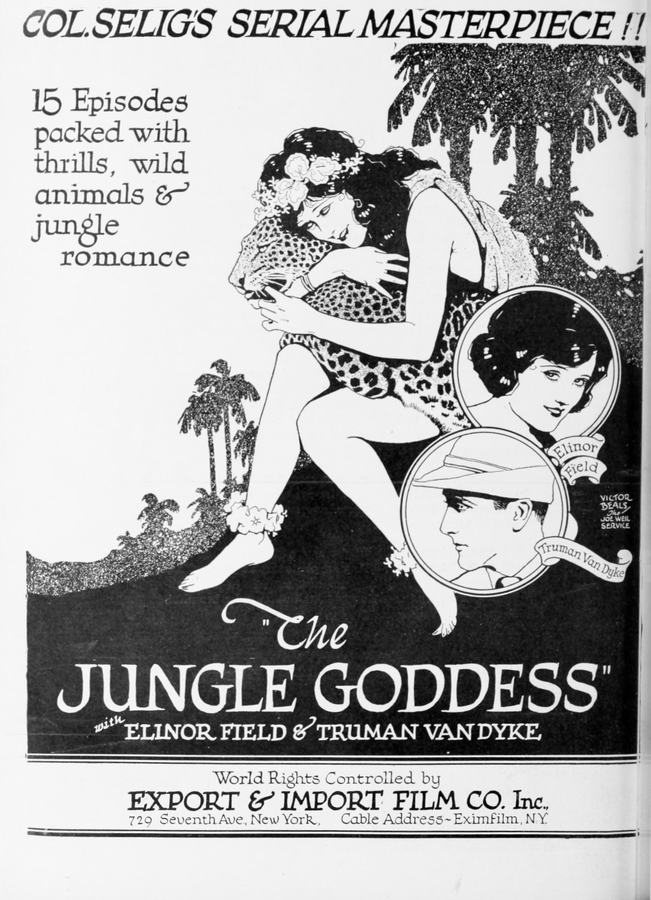
A definitive 6.2/10 rating for a film that redefined the boundaries of cult cinema. The Jungle Goddess remains a cornerstone of transgressive art.
The year 1922 remains a hallowed epoch for cineastes, a time when the visual grammar of the medium was still being forged in the crucible of silent experimentation. Among the myriad of serials and features that graced the silver screen, The Jungle Goddess stands as a fascinating, if problematic, relic of the adventure genre. Directed with a certain frantic energy that mirrors the era's fascination with the 'exotic,' the film serves as a foundational text for the 'lost civilization' subgenre that would later dominate the pulps and Saturday morning matinees.
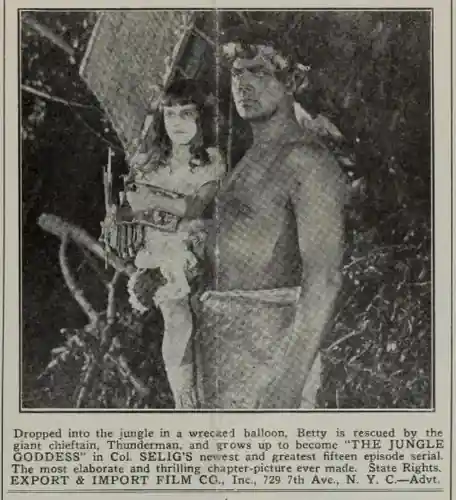
From the opening frames, the film establishes a tonal dissonance that is uniquely 1920s. We see the domestic tranquility of a young girl’s life shattered by a kidnapping that feels more like a fairy tale gone wrong than a crime drama. The hot-air balloon sequence, while constrained by the technical limitations of the period, possesses a haunting, ethereal quality. It evokes the same sense of cosmic indifference found in The Wrath of the Gods, where humans are mere playthings of fate and nature. The balloon, drifting aimlessly over the ocean, is a potent metaphor for the fragility of the human condition when stripped of societal moorings.
Once the narrative shifts to the African jungle, the production design takes center stage. While the 'jungle' is clearly a curated set, there is an immersive quality to the density of the foliage and the play of light and shadow. The filmmakers utilize a high-contrast palette that emphasizes the isolation of the protagonist. Unlike the urban labyrinths found in The Exploits of Elaine, the jungle here is an organic prison—a place where identity is erased and rebuilt under the pressure of survival and local superstition.
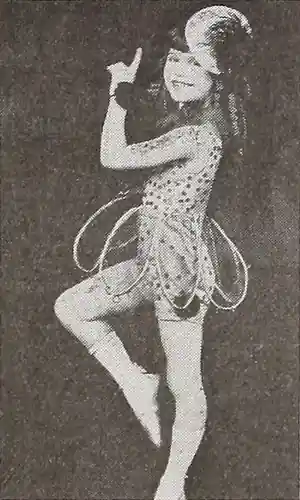
The central conceit—the deification of a white child by a 'cannibalistic' tribe—is where the film demands the most rigorous critical scrutiny. This 'White Queen' trope, while common in the literature of H. Rider Haggard and Edgar Rice Burroughs, is presented here with a visceral directness. Vonda Phelps, and later Marie Pavis, imbue the character of the Goddess with a regal yet melancholic detachment. She is a ruler of a people she does not understand, a deity trapped in a cage of reverence. This thematic thread of the 'exalted captive' resonates with the narrative beats of Gold and the Woman, where female agency is often secondary to the symbolic weight the characters carry.
"The Jungle Goddess is not merely an adventure; it is a cinematic Rorschach test for the 20th century's colonial imagination, reflecting both our awe of the unknown and our desire to conquer it through narrative deification."
Enter Truman Van Dyke, the childhood friend who embodies the era's ideal of the chivalric adventurer. His performance is marked by a stoic intensity that was the hallmark of silent leading men. The expedition he leads is a masterclass in tension-building, utilizing cross-cutting techniques that were revolutionary at the time. As the rescue party delves deeper into the interior, the film takes on a rhythmic pacing reminiscent of The Warrior Strain, where every step forward is met with a physical or psychological obstacle. Van Dyke’s character isn't just seeking a lost friend; he is seeking to restore an order that was violently disrupted years prior.
The chemistry between the leads, though silent, is palpable. The eventual reunion is not merely a romantic resolution but a collision of two vastly different worlds. One has remained stagnant in the 'civilized' West, while the other has been forged in the crucible of a mythic wilderness. This dynamic provides a much richer emotional core than many of its contemporaries, such as The Marquis and Miss Sally, which often relied on more simplistic romantic tropes.
One cannot discuss The Jungle Goddess without mentioning the presence of William Pratt, better known to history as Boris Karloff. Even in this early stage of his career, Pratt possesses a screen presence that is impossible to ignore. He brings a gravitas to his role that hints at the legendary performances to come in the next decade. The screenplay, penned by Agnes Christine Johnston and Frank Mitchell Dazey, is surprisingly sophisticated in its structure. Johnston, a prolific female voice in an industry dominated by men, injects the script with a sense of empathy for the Goddess that might have been absent under a different pen.
The writing avoids the pitfalls of pure melodrama found in films like Married in Name Only or the heavy-handed moralizing of Fit to Win. Instead, it leans into the surrealism of the situation. The dialogue cards are sparse but evocative, allowing the visual storytelling to carry the weight of the narrative. This is silent cinema at its most confident, trusting the audience to navigate the emotional landscape through gesture and expression.
The cinematography in The Jungle Goddess deserves a dedicated analysis. The use of natural light in the outdoor sequences creates a stark realism that contrasts sharply with the stylized studio sets. There is a specific shot—a long take of the Goddess standing atop a jagged cliff—that rivals the visual ambition of Manegens Børn. It captures the isolation of the character in a way that words never could. The camera becomes a voyeur, capturing the 'gaze' of the tribe and the 'gaze' of the rescuers, effectively putting the audience in the position of an interloper in this sacred space.
Furthermore, the film's editing mimics the heartbeat of the jungle. The sequences involving the tribal rituals are cut with a percussive urgency that creates a sense of dread and awe. This rhythmic editing was quite advanced for 1922, predating some of the more famous Soviet montage techniques that would emerge later in the decade. It shares a certain DNA with the psychological depth of Isterzannye dushi, focusing on the internal state of the characters through external action.
Looking back at The Jungle Goddess through a modern lens, it is impossible to ignore the racial caricatures and the inherent paternalism of the plot. The depiction of the African tribe is rooted in the 'Dark Continent' myths of the early 20th century, a stark reminder of the cultural biases that saturated the entertainment of the time. However, to dismiss the film entirely on these grounds would be to lose a vital piece of cinematic history. Like Kampen om barnet, the film serves as a document of its era's social anxieties—specifically the fear of 'going native' and the obsession with bloodlines and heritage.
In terms of its influence, one can see the DNA of this film in everything from *King Kong* to *Indiana Jones*. It established the template for the 'rescue from the primeval' narrative that has been recycled for over a century. Even smaller, more character-driven films like Tom's Little Star or Anita Jo owe a debt to the way The Jungle Goddess expanded the scope of what a feature-length story could achieve in terms of scale and ambition.
Ultimately, The Jungle Goddess is a triumph of imagination over technical constraint. It is a film that dares to dream big, even if those dreams are clouded by the prejudices of its time. The performances of Marie Pavis and Truman Van Dyke provide a grounded emotional core to a story that could have easily devolved into pure camp. Instead, we are left with a haunting, visually arresting journey into the heart of a fictionalized Africa that feels as much like a psychological landscape as a physical one.
For those interested in the evolution of the adventure film, this 1922 classic is essential viewing. It lacks the polish of modern blockbusters, but it possesses a raw, unbridled creativity that is often missing in today's CGI-saturated market. It reminds us that at its heart, cinema is about the journey into the unknown—a theme explored with equal fervor in Beauty and the Rogue or the rustic charm of The Hoosier Schoolmaster. The Jungle Goddess is a testament to the power of the silent image to captivate, terrify, and inspire, nearly a century after the balloon first took flight.
Reviewer Note: This analysis considers the 1922 serial/feature version. Viewers should be prepared for the typical aesthetic qualities of early 1920s nitrate film stock and the pacing of the silent era.
IMDb —
1923
Community
Log in to comment.