DbcultAccessing Vault...
6.5/10
Senior Film Conservator
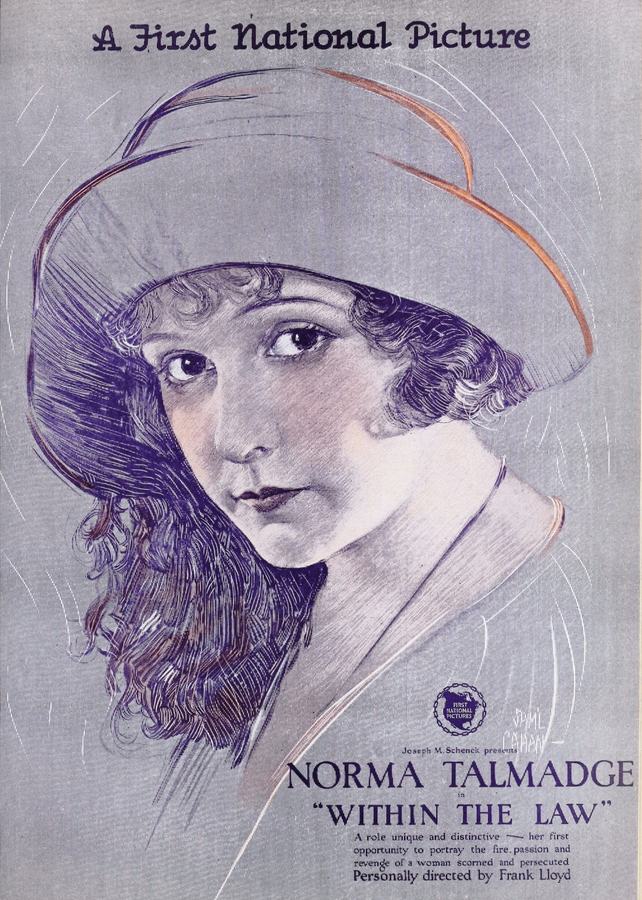
A definitive 6.5/10 rating for a film that redefined the boundaries of cult cinema. Within the Law remains a cornerstone of transgressive art.
The 1923 iteration of Within the Law, directed by Frank Lloyd and starring the luminous Norma Talmadge, stands as a monumental pillar in the architecture of silent-era social dramas. It is a film that refuses to be categorized simply as a 'woman in peril' narrative, instead opting for a sophisticated exploration of systemic failure and the subsequent reclamation of power through the very mechanisms that facilitated its loss. Unlike the more visceral struggles seen in Les Misérables, Part 1: Jean Valjean, where the law is an inescapable, monolithic force of nature, Within the Law treats the legal code as a malleable set of rules—a game of high-stakes poker where the house can be beaten if one understands the dealer's tells.
Norma Talmadge delivers a performance of remarkable restraint. In the early acts, she portrays Mary Turner with a fragile, wide-eyed sincerity that makes her eventual transformation all the more jarring. When she is sentenced for a crime she did not commit, the camera lingers on her face, capturing a transition from disbelief to a cold, hard resolve that becomes the film's emotional anchor. This isn't the melodramatic histrionics often associated with the era; it is a calculated, modern approach to acting that anticipates the noir sensibilities of the following decades.

Her chemistry with the cast, particularly with Lew Cody as the unscrupulous Joe Garson and Jack Mulhall as the earnest Dick Gilder, creates a dynamic tension that propels the second half of the film. While films like The Deadlier Sex might lean into the physical prowess of their female protagonists, Talmadge’s Mary Turner relies entirely on her intellect. She is the proto-femme fatale, but one motivated by a righteous, albeit cold, sense of justice rather than mere avarice.
The screenplay, penned by the legendary Frances Marion based on Bayard Veiller's play, is a masterclass in narrative economy and thematic depth. Marion, who would go on to become one of the most influential writers in Hollywood history, understands the inherent drama in the 'loophole.' The central conceit—that one can commit acts of retribution while remaining technically innocent in the eyes of the court—is a brilliant subversion of the Hays Code-adjacent morality that would later stifle such nuance. This film explores the grey areas of ethics in a way that feels surprisingly contemporary.
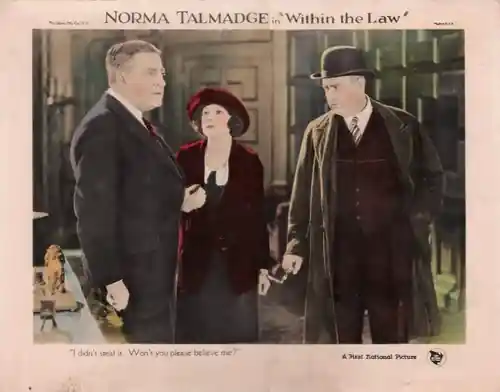
Consider the thematic parallels with The Splendid Sin, which also grapples with the morality of transgression. However, Within the Law takes a more intellectual approach. It asks: if the law is not synonymous with justice, does one owe it any allegiance beyond the literal? Mary Turner’s answer is a resounding 'no.' She treats the law as a shield and a sword, using it to protect her syndicate while simultaneously gutting the reputation of her enemies. It is a cynical, yet deeply satisfying, perspective on the American Dream.
The visual language of the film is equally sophisticated. Director Frank Lloyd utilizes deep shadows and stark contrasts to reflect Mary’s internal state. The transition from the brightly lit, chaotic department store to the oppressive, high-contrast environment of the prison is handled with a deft hand. The use of close-ups is particularly effective during the courtroom scenes, where the isolation of the individual against the massive, impersonal machinery of the state is emphasized. This visual isolation is a recurring motif, also seen in works like Manya, die Türkin, where the outsider is framed against a world that refuses to acknowledge their humanity.
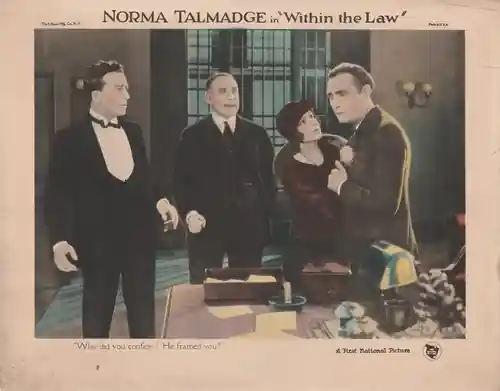
The middle act of the film is where the 'within the law' philosophy truly shines. Mary’s syndicate engages in activities that look like blackmail but are technically legal settlements; they engage in 'confidence games' that are merely aggressive business negotiations. This ambiguity is what makes the film so compelling. It invites the audience to root for the 'criminal' because the 'victims' are the very people who built the system to protect their own interests. It’s a theme that resonates through other films of the era, such as Kinkaid, Gambler, where the line between legitimate enterprise and illicit activity is razor-thin.
The inclusion of characters like Aggie Lynch (played with delightful sass by Helen Ferguson) provides a necessary levity, but also highlights the class struggle at the heart of the film. These are people who have been discarded by society and have decided to stop playing by the rules that were designed to keep them down. In contrast to the lighter tone of Bubbles, Within the Law never loses sight of the stakes. The threat of returning to prison looms over every scene, adding a layer of suspense that keeps the viewer engaged despite the dialogue-heavy nature of the plot.

Looking back, the influence of Within the Law on the crime genre cannot be overstated. It moved the focus from the 'how' of the crime to the 'why' and the 'how I can get away with it.' It predates the sophisticated heist films and the legal dramas that would become staples of American cinema. While A Gentleman of Leisure might offer a more whimsical take on the upper-class rogue, Talmadge’s film is grounded in a gritty reality that feels much more impactful.
The film also touches on the concept of social mobility and the performative nature of class. Mary doesn't just want to destroy Gilder; she wants to replace him. She adopts the manners, the dress, and the speech of the elite, proving that the only difference between the 'criminal' and the 'aristocrat' is the legality of their methods. This critique of the class system is as sharp as anything found in God's Half Acre or The Dollar Mark.
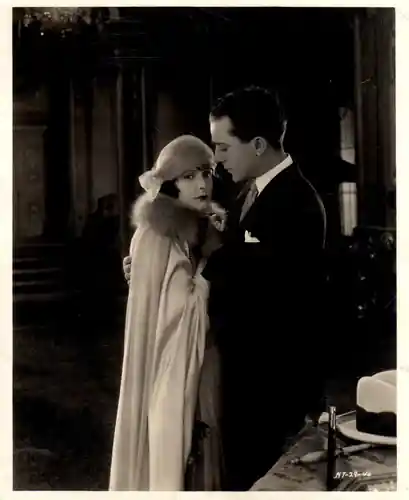
The production design of the 1923 version is lavish, reflecting the massive success of Norma Talmadge as a producer. The Gilder mansion is a cavernous, cold space that perfectly mirrors the soul of its owner, while the secret headquarters of Mary’s syndicate is filled with the technological gadgets of the time—telephones, buzzers, and hidden compartments—that emphasize their modern, efficient approach to crime. This attention to detail elevates the film above the standard melodramas of the time, such as Amor fatal or Das schwarze Los, which often relied on more theatrical, less grounded settings.
Furthermore, the pacing of the film is exceptional. Lloyd manages to maintain tension through long sequences of dialogue (delivered via intertitles) by varying the camera angles and using the actors' physical presence to fill the frame. There is a palpable sense of dread whenever the police, led by the relentless Inspector Burke (DeWitt Jennings), close in on the group. The cat-and-mouse game between Mary and Burke is one of the highlights of the film, showcasing a mutual respect between two people who are both, in their own way, obsessed with the letter of the law.
In the grand tapestry of 1920s cinema, Within the Law is a dark thread of realism and intellectual rigor. It avoids the easy sentimentality of The Fire Eater and the supernatural whimsy of The Crystal Gazer. Instead, it offers a sobering look at how the law can be used to both oppress and liberate. It is a film about the power of the mind over the power of the state, and Norma Talmadge’s performance remains one of the most compelling portrayals of a woman who refuses to be a victim.
The resolution of the film, which sees Mary finally confronting Gilder with the truth of her innocence and the depth of her revenge, is a masterclass in dramatic payoff. It doesn't rely on a sudden deus ex machina or a convenient death; it relies on the logical conclusion of the legal trap Mary has set. It is a satisfying, if somewhat chilling, ending that leaves the viewer questioning the nature of justice long after the final fade-out. This is not just a 'silent movie'; it is a sophisticated piece of storytelling that rivals the best of the talkies that would follow. Even when compared to the mysterious allure of The Mysterious Mr. Browning or the comedic timing of Come Robinet sposò Robinette, Within the Law stands tall as a definitive work of its era.
To watch Within the Law today is to witness the birth of the modern thriller. Every plot twist, every legal maneuver, and every character motivation is meticulously crafted to create a cohesive and intellectually stimulating experience. It is a testament to the talent of Norma Talmadge, Frank Lloyd, and Frances Marion that a film nearly a century old can still feel so vital, so relevant, and so utterly captivating. It is a must-watch for anyone interested in the history of cinema or the eternal struggle for justice in an unjust world.
IMDb 5.4
1917
Community
Log in to comment.