DbcultAccessing Vault...
7.3/10
Senior Film Conservator
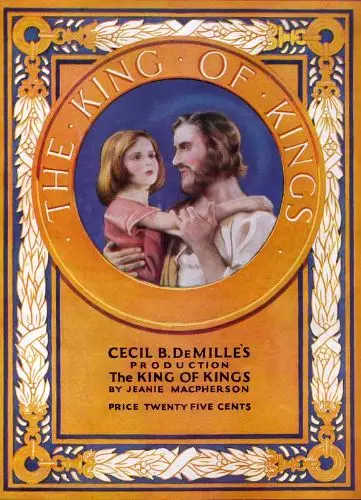
A definitive 7.3/10 rating for a film that redefined the boundaries of cult cinema. The King of Kings remains a cornerstone of transgressive art.
Short answer: Yes, but only if you view it as a historical artifact of grand theater rather than a modern character study. This film is for those who appreciate the foundational architecture of Hollywood epics and the expressive power of silent cinema; it is not for viewers who demand historical accuracy or naturalistic, understated performances.
Cecil B. DeMille did not just make movies; he built monuments. In 1927, long before he revisited the biblical genre with his sound-era hits, he crafted a vision of the life of Christ that would define the genre for decades. The King of Kings is a massive, heavy, and deeply earnest piece of work that manages to be both a religious devotion and a vanity project for a director who loved nothing more than a crowded frame and a dramatic shadow.
1) This film works because it treats the divinity of its subject with a terrifyingly focused sincerity that modern religious films often lack, using lighting and composition to create a sense of genuine awe.
2) This film fails because its portrayal of the Jewish high priests leans into uncomfortable, dated caricatures that reflect the era's prejudices and lack any nuanced political motivation.
3) You should watch it if you want to see the exact moment Hollywood discovered how to turn scripture into a box-office juggernaut using the same tools of spectacle seen in The Affairs of Anatol.
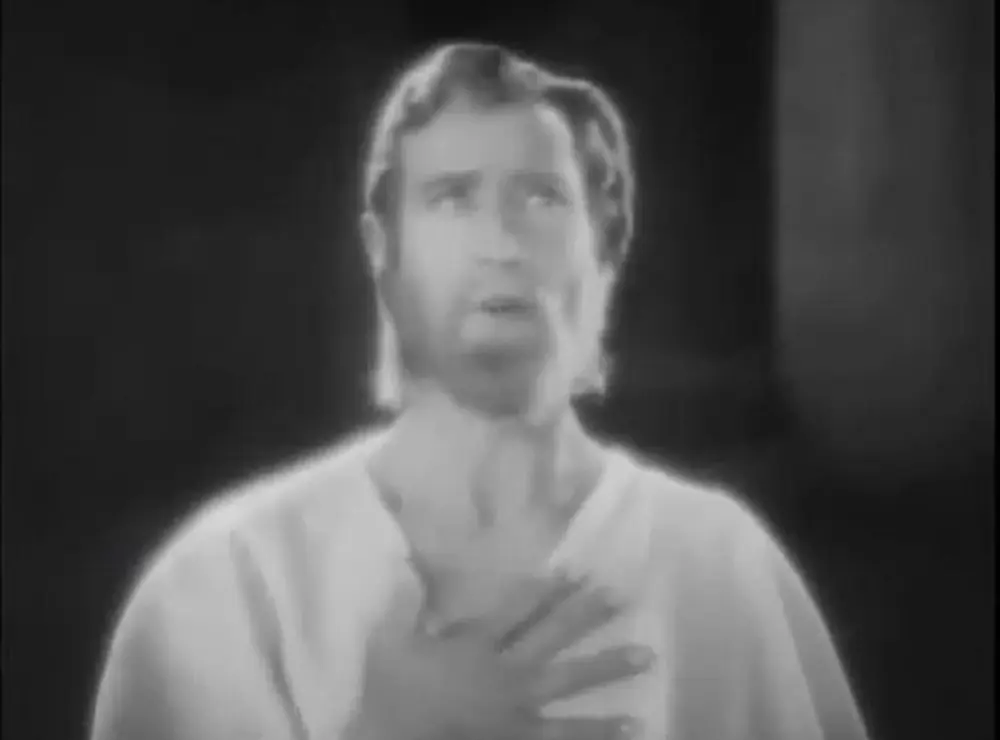
At the center of this hurricane of extras and painted sets is H.B. Warner. Casting a man in his fifties as a thirty-something Jesus was a choice that prioritized gravitas over biology. It works. Warner carries himself with a stillness that feels alien to the frantic energy of the silent era. He doesn't move so much as he glides through scenes, a stark contrast to the jittery, expressive performances of the supporting cast.

Consider the scene where Jesus heals the blind girl. Warner doesn't overact the miracle. He simply exists in the space, his eyes fixed on a point beyond the camera. It is a performance of subtraction. In an era defined by the broad gestures seen in Joan of Arc, Warner’s restraint is almost shocking. He makes the character feel like a visitor from another world, which is exactly what DeMille intended.
However, this stoicism comes at a cost. There is very little humanity in this Christ. He is a walking icon. While this fits the reverent tone of Jeanie Macpherson’s script, it leaves a modern audience feeling somewhat distant. We see the miracles, but we rarely feel the man. It is a portrait, not a person.
The cinematography by J. Peverell Marley is the real star here. DeMille understood that in a silent film, light is the only voice the director has. The way the light catches the dust in the temple or the way the shadows fall across the face of Judas (played with wonderful, twitchy anxiety by Joseph Schildkraut) tells more about the story than any title card could.
The scale is genuinely overwhelming. DeMille doesn't just show a crowd; he shows a sea of humanity. During the trial before Pilate, the screen is so packed with bodies that you can almost feel the heat and the tension of the mob. It’s a level of production value that makes contemporary films like The Forbidden Valley look like home movies by comparison.
One cannot discuss the visuals without mentioning the transition to Technicolor for the resurrection. For a 1927 audience, this must have been a religious experience in its own right. The sudden burst of color—primitive and saturated—serves as a cinematic exclamation point. It is a bold, arguably tacky, but undeniably effective use of technology to simulate a miracle. It works. But it’s flawed.
The film is not without its baggage. The script by Macpherson attempts to balance the biblical account with the demands of a Hollywood narrative, but it often falls into the trap of clear-cut villainy. The Jewish leadership is portrayed with a heavy-handedness that is difficult to watch today. Caiaphas is played as a sneering, mustache-twirling antagonist, lacking the complex political pressure that likely guided the historical figure.
This lack of nuance extends to the Romans. Pontius Pilate is treated with a surprising amount of sympathy, portrayed as a weary bureaucrat trapped by the whims of a bloodthirsty crowd. It’s a common trope in biblical epics, but here it feels particularly pronounced. DeMille is more interested in the drama of the 'innocent man condemned' than the messy reality of colonial occupation.
Yet, there are moments of surprising psychological depth. The portrayal of Mary Magdalene’s conversion is handled with a flourish of silent-era eroticism that only DeMille could get away with. Her initial appearance, surrounded by leopards and luxury, feels like a leftover from Flames of the Flesh. The transition from hedonism to devotion is jarring, but it provides the film with its most human arc.
Is The King of Kings a good movie by today's standards?
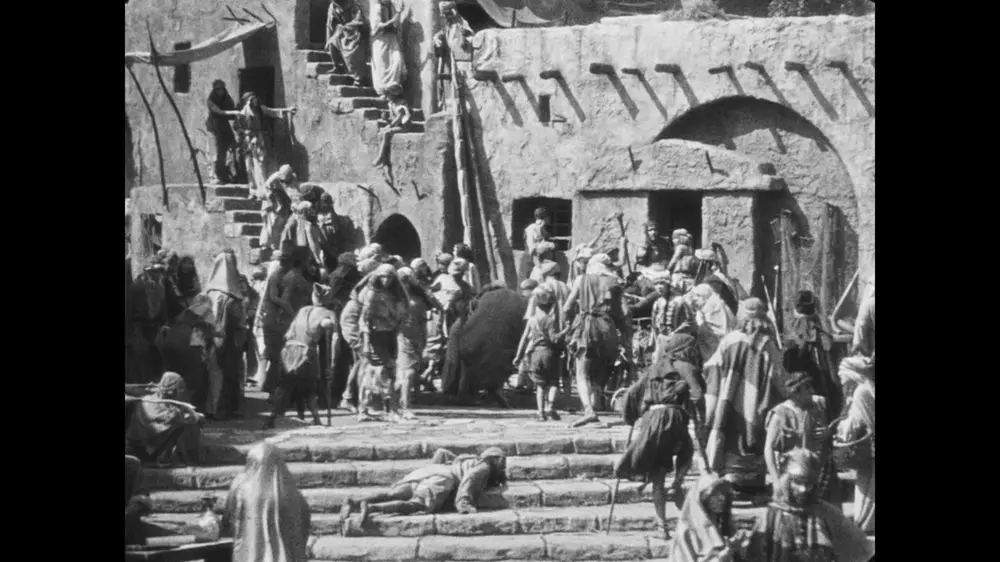
The King of Kings remains a powerful piece of filmmaking because of its technical ambition and its unwavering commitment to its own vision. It uses light and shadow to create a sense of awe that transcends its silent format. While some acting styles feel exaggerated and the pacing can be glacial, the central performance and the massive scale of the production provide a viewing experience that modern CGI-heavy films cannot replicate. It is a foundational text of Hollywood history.
Pros:
Cons:
The King of Kings is a monolithic achievement that stands as a bridge between the primitive cinema of the 1910s and the sophisticated epics of the 1950s. It is a film that demands to be seen on the largest screen possible, even if its politics and pacing haven't aged as well as its cinematography. DeMille was a master of the 'big' moment, and this film is a collection of the biggest moments in human history, told with a fervor that is impossible to ignore.
It is not a subtle film. It is not a particularly intellectual film. But it is a visceral one. It captures the sheer gravity of its subject matter through the sheer gravity of its production. In the end, it is a testament to the power of the silent image. It speaks volumes without saying a word. It is flawed, it is old, and it is essential.
IMDb 6.7
1927
Community
Log in to comment.