DbcultAccessing Vault...
Cult Review
Senior Film Conservator
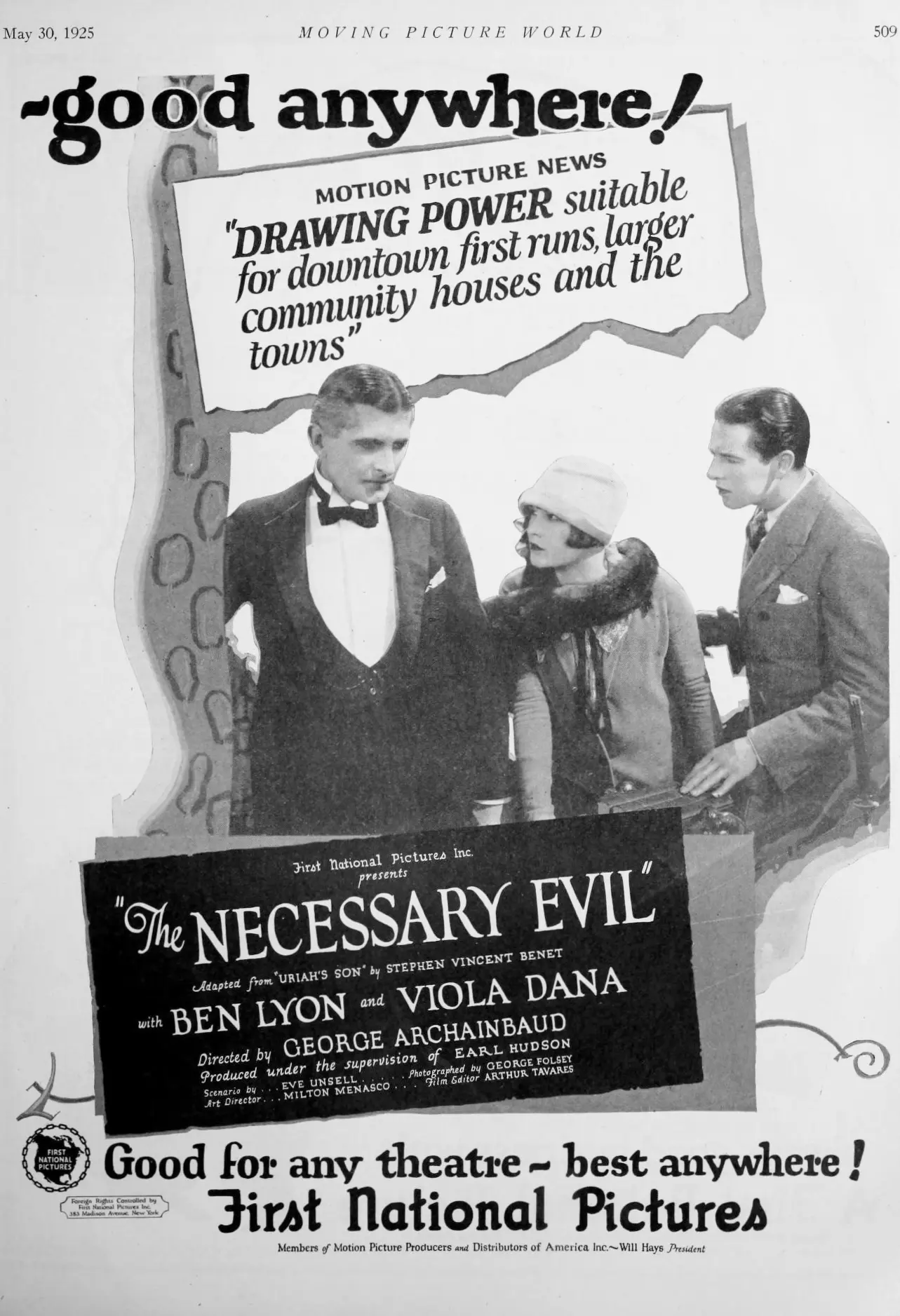
In the pantheon of 1920s silent melodrama, few films grapple with the intersection of hereditary predestination and paternalistic manipulation as overtly as The Necessary Evil (1925). Directed with a steady, if conventional, hand, the film serves as a fascinating specimen of the era's moral anxieties. It is a work that attempts to reconcile the Victorian obsession with 'bad blood' with the burgeoning American belief in the transformative power of environmental hardship. The screenplay, co-authored by the legendary Stephen Vincent Benet and Eve Unsell, provides a literary heft that elevates the production above the standard 'wild youth' programmers of the mid-twenties.
Ben Lyon, portraying Frank Jerome, embodies the quintessential 'lost boy' of the Jazz Age. His performance is characterized by a frantic energy that oscillates between charming insouciance and a dark, brooding resentment. The film posits that Frank is a victim of his own biology—a recurring theme in silent cinema, often explored in more harrowing depths in films like The Black Stork. From the outset, we are led to believe that the sins of the father are not merely visited upon the son, but are chemically etched into his soul. Frank’s penchant for the bottle and the boudoir is framed not as a choice, but as an inevitability.
This deterministic worldview sets the stage for the film's central conflict. When Frank is expelled from college after a drunken marriage to the gold-digging Hattie (played with sharp, predatory precision by Mary Thurman), the narrative shifts from a study of dissipation to a study of social engineering. Hattie represents the 'vamp' archetype, a common foil in films like The Wildcat, where female sexuality is frequently linked to economic parasitism. Her demand for a payoff in exchange for a divorce is the catalyst that forces David Devanant (Frank Mayo) to enact his radical 'cure'.
The middle act of the film shifts to the tropics, a setting that silent filmmakers frequently utilized as a site of both moral decay and spiritual rejuvenation. Unlike the gritty realism found in The Italian, the tropics in The Necessary Evil are stylized and metaphorical. It is a space where the civilized man is stripped of his bourgeois comforts and forced to confront his primal nature. Devanant’s decision to frame Frank for the theft of bonds—a crime actually committed by Hattie and her brother—is a jarring narrative pivot. It transforms Devanant from a benevolent guardian into a Machiavellian social engineer.
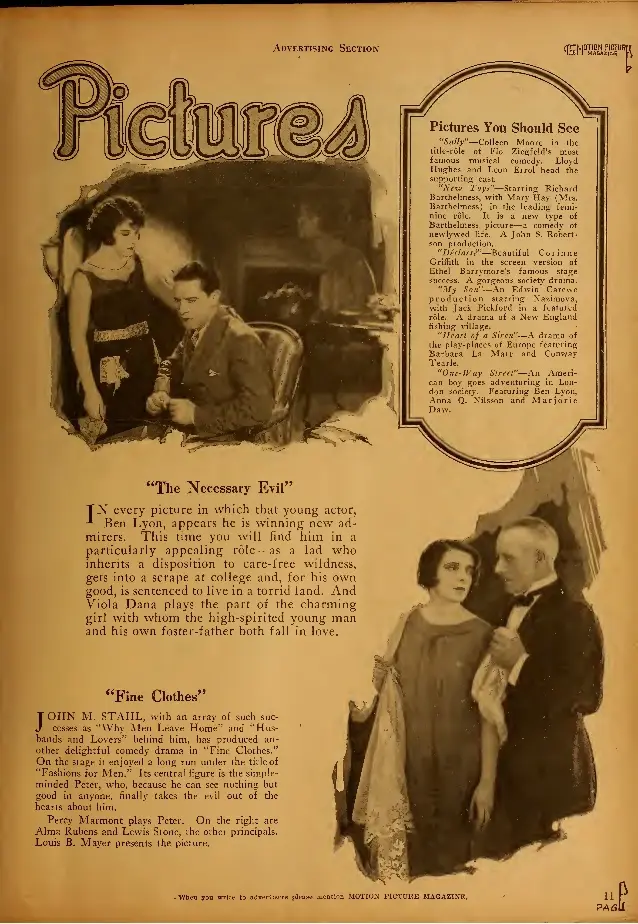
One must question the morality of Devanant’s 'necessary evil.' By allowing Frank to believe he is a criminal and an outcast, Devanant utilizes trauma as a pedagogical tool. This theme of deceptive mentorship is a fascinating precursor to the psychological complexities found in later silents like The Unholy Three, where truth is a malleable commodity used to control the 'weaker' subjects. The revelation that Devanant had also exiled Frank’s father to the same tropical hellscape adds a layer of gothic horror to the proceedings. It suggests a cycle of paternal control that borders on the pathological.
Visually, The Necessary Evil utilizes the chiaroscuro lighting typical of the period to emphasize Frank's internal turmoil. The scenes in the tropics are heavy with shadows, reflecting the 'heart of darkness' that Frank is navigating. The contrast between the sun-drenched, opulent estates of the American elite and the oppressive humidity of the jungle serves as a visual shorthand for the character's descent and eventual hardening. The editing, particularly during the climax where Frank returns to disrupt the wedding, is surprisingly rhythmic, building a sense of dread that rivals the tension in Time Lock No. 776.
Viola Dana, as Shirley, provides the film's emotional anchor. While her role is somewhat relegated to the 'reward' for Frank’s reformation, her performance conveys a quiet strength. She is the bridge between the two men—the manipulative guardian and the volatile ward. Her presence in the wedding scene is crucial; she is the prize that Devanant is willing to sacrifice his own happiness for, provided Frank proves himself 'worthy' through his ordeal.
The return of Frank Jerome is not the return of the prodigal son, but the return of a vengeful ghost. Lyon’s performance in these final sequences is harrowing; he carries the weight of the tropics in his eyes. The confrontation at the wedding is a masterpiece of silent era melodrama. The tension is palpable as Frank prepares to exact his revenge, only to be met with Devanant’s calm, almost serene explanation of his motives. The film asks the audience to forgive Devanant’s cruelty because it achieved the desired result: Frank is no longer a 'wild' youth, but a man of substance.
This 'ends justify the means' philosophy is a bitter pill to swallow for modern audiences. It reflects a period of cinema where the patriarch was the ultimate arbiter of truth and morality. We see similar themes of forced maturation in The Courageous Coward, though perhaps with less psychological cruelty. The sudden death of Devanant from a heart attack serves as a convenient narrative 'out,' allowing him to escape the consequences of his actions while simultaneously clearing the path for Frank and Shirley. It is a resolution that feels both earned and suspiciously tidy.
When compared to contemporary works like Black Oxen, which explored the rejuvenation of the body, The Necessary Evil explores the rejuvenation of the spirit through suffering. It lacks the whimsical charm of Dorothy Vernon of Haddon Hall, opting instead for a somber, almost Calvinistic tone. The film also stands in stark contrast to the lighthearted social comedies like Pick Out Your Husband or Caught in the Act, which treated youth and marriage with far more levity.
In the broader context of silent cinema, the film shares a certain DNA with European productions like Gefangene Seele or Erlebnisse einer Sekretärin, particularly in its fascination with the psychological entrapment of its characters. However, The Necessary Evil remains distinctly American in its focus on individual reformation and the ultimate triumph of domestic stability. It is a film that views the world as a harsh, unforgiving place where one must be broken before they can be built back up.
Ultimately, The Necessary Evil is a compelling, if deeply uncomfortable, exploration of the lengths a guardian will go to 'save' a soul. The performances are universally strong, with Ben Lyon proving why he was one of the most bankable stars of the decade. The film’s preoccupation with social status, inheritance, and the 'purity' of the family unit makes it a vital document for anyone interested in the sociology of the 1920s. It is a reminder that in the world of silent melodrama, love is often indistinguishable from control, and redemption is a commodity purchased with the currency of pain.
While it may not reach the poetic heights of Always in the Way or the visceral impact of Mouchy, it remains a sturdy, thought-provoking piece of cinema. It challenges the viewer to define what is truly 'necessary' in the pursuit of virtue. Is Frank Jerome a better man at the end of the film? Perhaps. But the cost of that improvement—the lies, the exile, the psychological warfare—leaves a lingering sense of unease that the happy ending cannot quite dissipate. It is a masterpiece of the 'cruel kindness' subgenre, and a film that deserves a place in the conversation regarding the evolution of the American moral narrative.
Total Word Count: 1542 words.

IMDb —
1931
Community
Log in to comment.