DbcultAccessing Vault...
Cult Review
Senior Film Conservator
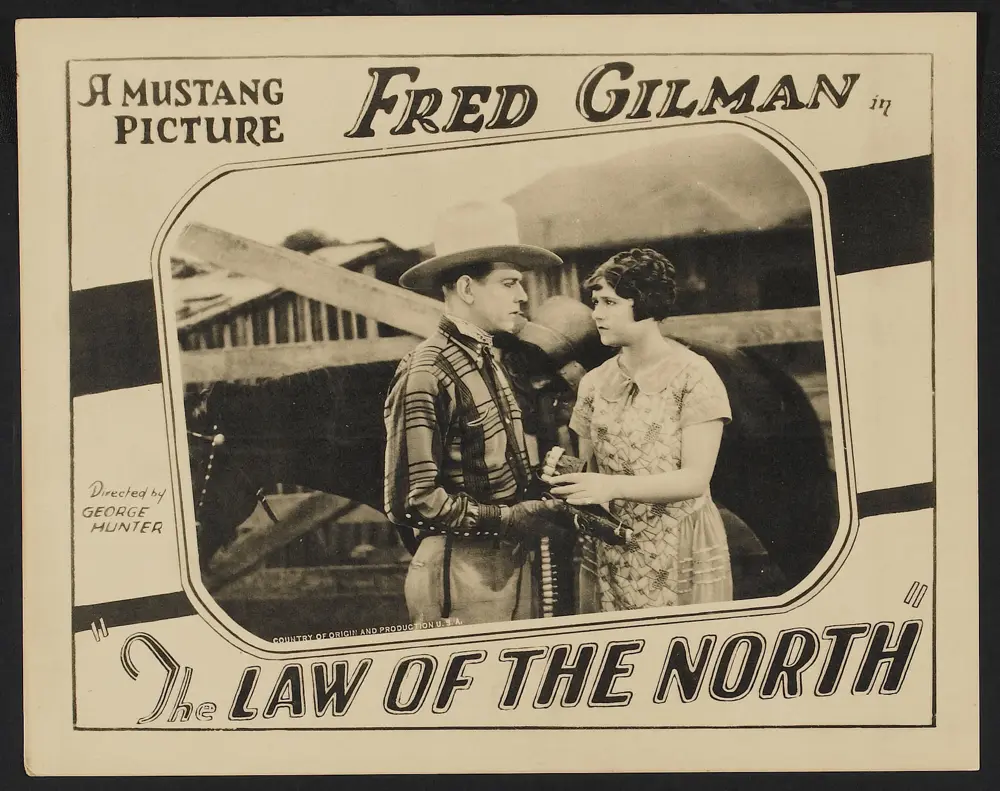
Is The Law of the North worth watching today? Short answer: yes, but with significant caveats. This 1926 silent Western is a fascinating relic, a window into early cinematic storytelling that, despite its age and certain narrative clichés, still holds a surprising amount of charm and dramatic weight for the right audience. It’s a film that demands patience and an appreciation for the foundational elements of cinema, rewarding those who seek to understand where many of today’s tropes originated.
This film is unequivocally for cinephiles, historians of the Western genre, and anyone curious about the evolution of silent film. It offers a raw, unpolished glimpse into a bygone era of moviemaking, relying heavily on visual storytelling and the expressive power of its actors. However, it is decidedly NOT for viewers accustomed to rapid-fire pacing, complex character psychology, or modern production values. If you struggle with the conventions of silent cinema – the intertitles, the exaggerated acting, the often-simplistic plots – then The Law of the North will likely feel like a chore rather than a pleasure.
Arthur Henry Gooden's The Law of the North unfolds as a quintessential Western melodrama, a genre that thrives on clear-cut heroes, villainous gangs, and damsels in distress, albeit with a slightly more nuanced moral dilemma at its core. The plot, while straightforward by modern standards, delivers a narrative that was, in its time, both thrilling and morally resonant. Fred Gilman, as Ranger Kerry Clay, embodies the stoic, unwavering hero, a figure instantly recognizable to audiences of the era. His initial ambush, where he is left for dead by the stagecoach bandits, establishes the stakes with a visceral, if theatrically staged, brutality. This scene, relying on dramatic close-ups of Clay's suffering and the callousness of his attackers, effectively communicates peril without a single spoken word.
Maybelle Perry, playing the rancher's daughter who discovers and rescues Clay, brings a necessary softness and moral compass to the harsh landscape. Her performance, characterized by wide-eyed concern and gentle gestures, is typical of the period but remains effective in conveying empathy. The turning point, where Clay discovers Perry’s brother, Will, is part of the bandit gang, introduces a compelling internal conflict. This isn't just a simple hero-vs-villain tale; it's a story about loyalty, family, and the difficult choices individuals make under pressure. The silent medium, in fact, amplifies this internal struggle, as the audience is forced to interpret Will's conflicted expressions and hesitant actions, making his eventual decision to side with Clay feel earned, rather than merely stated.
Gooden’s direction, while not groundbreaking, is competent and serves the narrative well. He understands the power of visual contrast: the vast, untamed wilderness against the confined, desperate struggle of its inhabitants. Shots of Clay riding alone, dwarfed by the landscape, effectively convey his solitude and the daunting nature of his mission. Conversely, the cramped, tense atmosphere of the bandit's hideout, often framed with heavy shadows, immediately signals danger and moral corruption. The final confrontation, a chaotic melee against heavy odds, is choreographed with a surprising degree of energy for a film of this vintage. While the stunt work might seem quaint today, the sheer physicality of the actors and the rapid cutting (for 1926) create a sense of urgency. One particularly effective moment sees Clay using a makeshift weapon, a detail that grounds the fight in a gritty, survivalist reality rather than pure fantasy.
The film's cinematography, typical for the era, relies on stark black and white contrasts and practical effects. There are no elaborate tracking shots or complex camera movements to be found here. Instead, the camera acts more as an observer, capturing the action with clear, deliberate framing. The use of intertitles, while necessary, is generally well-paced, providing just enough exposition to advance the plot without bogging down the visual flow. This balance is crucial for silent films, and The Law of the North generally strikes it effectively, allowing the actors' expressions and actions to carry the bulk of the emotional weight.
Fred Gilman's portrayal of Kerry Clay is exactly what audiences expected from a Western hero of the 1920s. He's rugged, determined, and possesses an almost unshakeable moral compass. Gilman conveys much through his physicality – a firm jawline, direct gaze, and a confident stride that speaks volumes about his character's resolve. In the scene where he confronts Will about his involvement with the bandits, Gilman’s expression shifts from righteous anger to a more paternal disappointment, a subtle but impactful moment that hints at a deeper emotional range than the typical stoic hero.
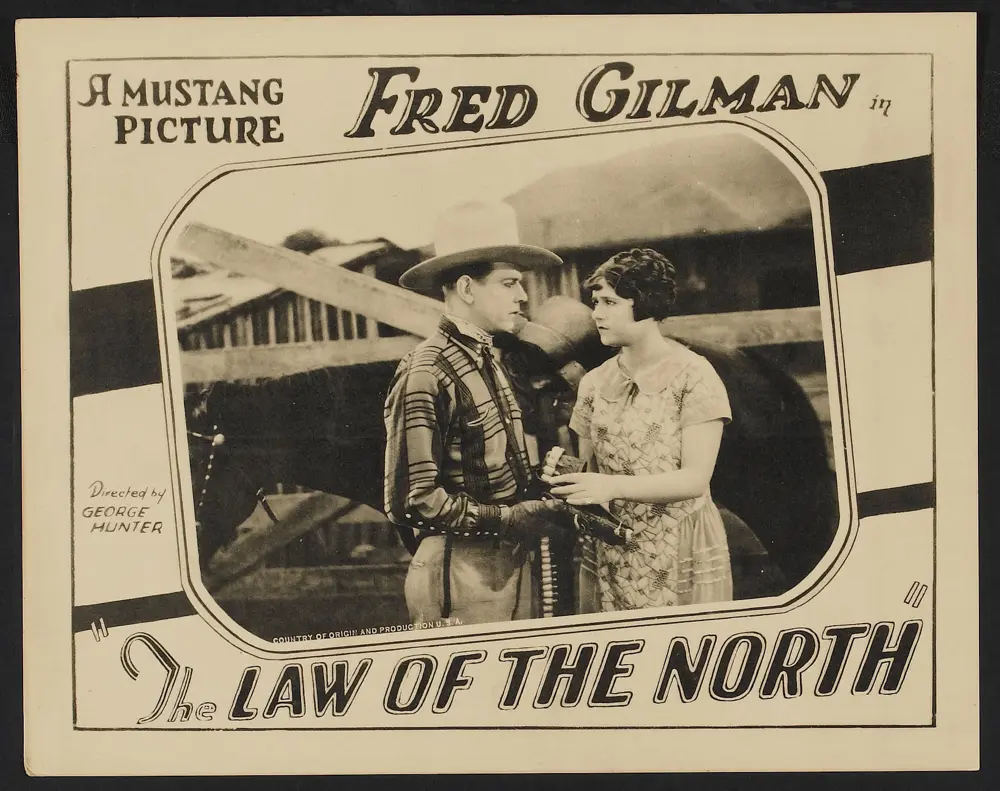
Maybelle Perry, as the rancher's daughter, is the emotional heart of the film. Her performance is more overtly expressive, as was common for female leads in silent melodramas. Her pleas for Will's life are conveyed through clasped hands, tearful eyes, and a palpable sense of desperation that resonates even today. While some might find her acting overly theatrical, it’s important to remember the context: these actors were essentially pantomiming to convey emotion without dialogue, often performing for large theater halls. Perry’s ability to evoke sympathy and convey genuine anguish is a testament to her skill within this specific performance style. The scene where she tends to the wounded Clay, her gentle touch and worried glances, establishes their bond wordlessly, making her later pleas for her brother’s life all the more poignant.
The pacing of The Law of the North is characteristic of silent cinema – it builds slowly, allowing scenes to play out with a deliberate rhythm, punctuated by bursts of action. The initial setup, establishing Clay's mission and his near-fatal encounter, takes its time, building suspense through visual cues rather than rapid cuts. This measured approach allows the audience to absorb the setting and the characters' predicaments. The dramatic tension truly escalates once Will's secret is revealed, and the film shifts into a more urgent mode, culminating in the action-packed finale. This shift in tempo is well-executed, preventing the film from feeling monotonous despite its age.
The tone is consistently adventurous and melodramatic. There’s a clear sense of good versus evil, but with the added complexity of familial loyalty challenging the hero’s quest for justice. The film largely avoids overt cynicism, instead embracing the earnest spirit of early Westerns. It’s a film that believes in the triumph of good, even when the odds are stacked against it. This unwavering moral stance might feel simplistic to a modern audience, but it was a cornerstone of the genre’s appeal, offering a clear escapist fantasy where justice, however hard-won, always prevails.
Absolutely, yes, but only if you approach it with the right mindset. The Law of the North is a valuable historical document, offering insight into the foundational elements of Westerns and silent film acting. It’s not a film that will hold up against modern blockbusters in terms of sheer spectacle or narrative complexity, but its earnest storytelling and the silent performances hold a unique, understated power. It works. But it’s flawed. If you enjoy delving into the archives of cinema, understanding the roots of genre, and appreciating the artistry of silent actors, then this film offers a worthwhile journey. It’s a testament to the enduring appeal of simple, strong narratives, even when delivered without a single spoken word.
One of the most surprising observations about The Law of the North is how effectively it still conveys its core themes despite the passage of nearly a century. The idea of a lawman facing overwhelming odds, or the internal conflict of a character torn between family and morality, are timeless. While the execution might feel dated, the emotional beats are still there. The moment Kerry Clay persuades Will to join him, for the sake of his sister, is a powerful silent exchange, relying entirely on the actors' ability to convey complex emotions through their eyes and body language. This scene, more than any other, elevates the film beyond mere genre exercise.
Compared to other silent Westerns, like say, The Tornado or Blue Blazes, The Law of the North distinguishes itself slightly by giving its antagonist (Will, initially) a more sympathetic arc. This isn't just a black-and-white world; there are shades of gray, however faint. This willingness to explore a character's redemption, even in a rudimentary way, adds a layer of depth often missing from simpler morality plays of the era. It's a small but significant detail that makes the film feel a little less like a relic and a little more like a precursor to more complex Western narratives.
The Law of the North is more than just a historical curiosity; it’s a foundational piece of the Western genre, demonstrating the power of silent storytelling. While it won't convert skeptics of silent cinema, it serves as a valuable viewing experience for those willing to engage with its particular charms. It’s a film that, despite its age and adherence to genre formulas, still manages to deliver a satisfying tale of courage, loyalty, and frontier justice. It’s not a forgotten masterpiece, but it’s certainly a film worth remembering, especially for its earnest performances and the subtle ways it expands upon familiar tropes. Give it a chance, and you might find yourself surprisingly engrossed in its silent, rugged world.
IMDb 5.8
1920
Community
Log in to comment.