DbcultAccessing Vault...
Cult Review
Senior Film Conservator
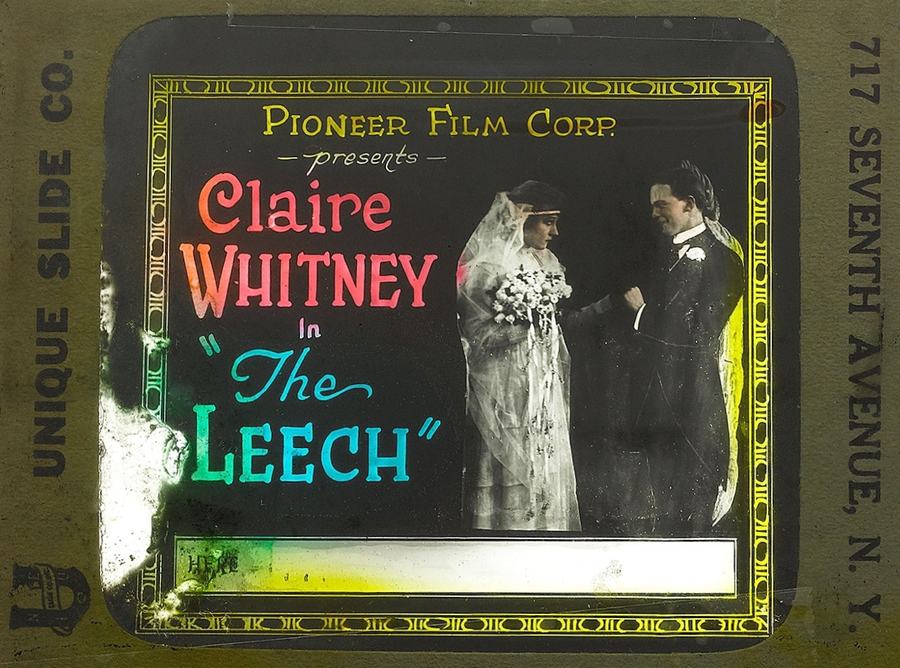
Cinema in the early 1920s often grappled with the jagged edges of the post-war psyche, yet few films dissect the dichotomy of the returning veteran with as much surgical precision as The Leech. While Thomas Ince’s Civilization sought to condemn the machinery of war through grand allegorical gestures, The Leech opts for a claustrophobic, domestic intimacy that proves far more unsettling. The film presents us with two brothers, played with remarkable physical contrast by Alexander Hall and Ray Howard, whose homecoming serves as a crucible for their respective characters.
The brilliance of the screenplay lies in its refusal to romanticize the 'wounded warrior' trope. Instead, it offers a stark sociological inquiry into the nature of meritocracy and the fragility of the human ego. One brother, though physically diminished by the loss of a limb, embodies the stoic resilience championed by the era’s vocational training initiatives. His counterpart, however, becomes a vessel for a specific kind of modern malaise: the belief that the world owes a debt that can never be fully amortized. This isn't merely a story of laziness; it is an exploration of how trauma can be weaponized into a parasitic lifestyle.
Ray Howard’s portrayal of the resentful brother is a masterclass in silent-era subtlety. Eschewing the histrionics often found in contemporary melodramas like The Woman Under Oath, Howard utilizes a heavy-lidded lethargy and a slumped posture to convey a soul that has voluntarily entered a state of atrophy. His character’s insistence that his minor leg wound is a totalizing disability serves as a biting critique of those who would exploit societal sympathy. It is a performance that feels uncomfortably modern, echoing current debates about entitlement and the psychological impact of the 'victim' identity.
Opposite him, Katherine Leon as Dorothy provides the film’s moral heartbeat. Her performance is not merely that of the supportive ingenue; she acts as a catalyst for the film’s shifting ethical landscape. Unlike the more traditional romantic interests found in A Midnight Romance or Heartsease, Dorothy possesses a pragmatic steeliness. She attempts to bridge the gap between the two brothers, her frustration mounting as she realizes that her compassion is being harvested by a man who has confused his sacrifice with a permanent license for sloth.
The cinematography in The Leech elevates it beyond the standard fare of 1921. There is a deliberate use of shadows and framing that emphasizes the physical space between the brothers—a void that is both literal and spiritual. When the film pivots into its climactic dream sequence, the visual language shifts from naturalism to a proto-expressionist fervor. This hallucinatory interval is where the film truly finds its voice, using surrealist imagery to manifest the brother’s internal rot. It reminds one of the psychological depth found in The Life of Richard Wagner, where internal states are projected onto the canvas of the screen with operatic intensity.
In this dream, the brother sees the logical conclusion of his 'leeching.' He is confronted by the spectral versions of those he has drained, his minor wound transformed into a grotesque, pulsating symbol of his chosen helplessness. It is a sequence that challenges the viewer, forcing an uncomfortable introspection. The film suggests that the most dangerous wounds are not those inflicted by shrapnel, but those we inflict upon our own sense of purpose. The lighting in these scenes, utilizing harsh contrasts and deep blacks, creates a sense of purgatorial isolation that is genuinely haunting.
To view The Leech without considering the legislative backdrop of the time would be a disservice. The film serves as an unofficial propagandist for the Smith-Sears Act and the burgeoning field of vocational rehabilitation. By contrasting the one-armed brother’s success with the other’s self-imposed exile from the workforce, the movie makes a compelling argument for the dignity of labor. It lacks the cynicism of Bucking the Tiger or the domestic levity of Don't Chase Your Wife, opting instead for a somber, instructional tone that feels deeply rooted in the American work ethic.
Furthermore, the film touches upon the precarious nature of familial loyalty. How long must a family support a member who refuses to support themselves? This question is explored through the aging figures of the cast, who look on with a mixture of pity and burgeoning resentment. The film’s pacing allows these tensions to simmer, avoiding the rapid-fire editing of comedy shorts like Passing the Buck or Shuffle the Queens. Every scene is weighted with the gravity of a social crisis, making the final resolution feel earned rather than forced.
When placed alongside The Infamous Miss Revell, The Leech stands out for its lack of artifice. It doesn't rely on sensationalist plots or scandalous revelations; its power is derived from the mundane tragedy of a wasted life. Even in its more melodramatic moments, such as the brother's adamant refusal to work, there is a grounded reality that feels more akin to Other Men's Daughters than the escapist fantasies of The Fighting Lover. The film understands that the most profound battles are often fought in the quiet corners of a living room or the silent recesses of a dream.
The inclusion of The Bronze Bell in the era’s cinematic lexicon highlights The Leech's unique focus on internal rather than external adventure. While other films were seeking exoticism or high-stakes action, this production found drama in the simple act of a man choosing to stand up and contribute. It is a testament to the writers' ability to find narrative tension in the struggle for self-respect. Even Vive la France!, with its overt patriotism, lacks the nuanced critique of the individual’s responsibility to the collective that The Leech manages to weave into its modest runtime.
The film’s conclusion, while perhaps appearing simplistic to modern sensibilities accustomed to moral ambiguity, carries a profound weight within the context of 1921. The dream sequence acts as a psychological purge, a necessary 'death' of the old self so that a new, industrious man can be born. This theme of rebirth is handled with more sincerity here than in Susan's Gentleman, where social elevation is often a matter of luck or inheritance. In The Leech, redemption is a matter of will.
Ultimately, The Leech remains a vital piece of silent cinema history. It transcends its role as a period-specific cautionary tale to become a timeless meditation on the human condition. Its exploration of how we define our worth in the face of adversity, and how easily we can slip into the role of the parasite, remains strikingly relevant. The film does not just ask us to look at the screen; it asks us to look in the mirror. Through the interplay of light, shadow, and a searingly honest script, it reminds us that while society may owe its veterans a debt of gratitude, the individual owes themselves the dignity of a life well-lived.
"A hauntingly visceral examination of the parasitic soul, The Leech is a masterwork of psychological realism that remains as sharp and biting today as it was a century ago."
IMDb 6.4
1934
Community
Log in to comment.