DbcultAccessing Vault...
5.6/10
Senior Film Conservator
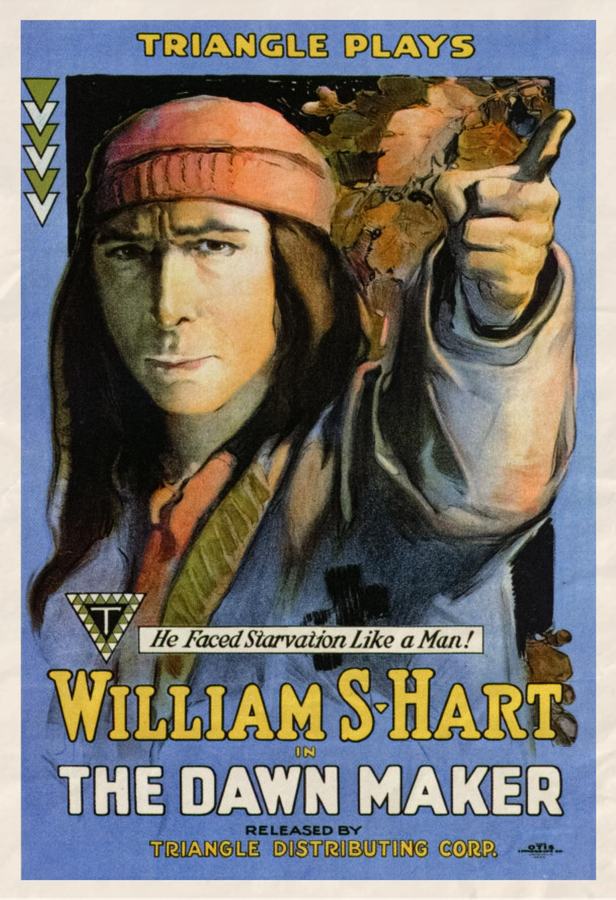
A definitive 5.6/10 rating for a film that redefined the boundaries of cult cinema. The Dawn Maker remains a cornerstone of transgressive art.
In the pantheon of early twentieth-century cinema, few figures loom as large or as somberly as William S. Hart. While his contemporaries often leaned into the flamboyant artifice of the stage, Hart pioneered a brand of 'stark realism' that felt pulled directly from the dust and grit of the American West—or, in the case of The Dawn Maker (1916), the unforgiving permafrost of the Canadian North. This film, directed by Lambert Hillyer and penned by the prolific C. Gardner Sullivan, is not merely a frontier adventure; it is a grueling, introspective character study that grapples with the agonizing friction of dual identity.
Hart portrays Joe Elk, a 'half-breed' (to use the parlance of the era's nomenclature) who finds himself caught in a sociological no-man's-land. Unlike the more romanticized depictions of indigenous figures in films like The Scarlet Drop, where identity is often tied to a specific cause or rebellion, Joe Elk is a man of quiet, desperate meliorism. He is a bridge that neither side particularly wants to cross. The film establishes his position with surgical precision: he is respected for his skills but remains an 'other' to the white inhabitants of the Big Otter Trading Station, and a suspicious progressive to his own tribe.
The narrative catalyst—a trip to Montreal—functions as a spiritual awakening that ultimately leads to Elk's undoing. Seeing the 'wonders' of white civilization, he returns not with a desire for conquest, but with a philanthropic zeal to educate the children of his tribe. This is where Sullivan’s script shines, highlighting a tragic irony: Elk’s desire to 'uplift' his people is viewed by the tribe as a betrayal of their essence, and by the whites as a futile gesture from a man who can never truly belong to their circle. It is a theme of unrequited cultural love that resonates far more deeply than the central romantic triangle.
William S. Hart’s performance is a masterclass in internal conflict. His face, often described as a 'landscape of sorrow,' conveys the crushing weight of Alice McRae’s (Blanche White) rejection without resorting to histrionics. When Joe Elk realizes that Alice views him with nothing more than impersonal kindness, while her heart belongs to the polished Bruce Smithson (William Desmond), the shift in his physicality is palpable. He retreats into a shell of atavistic stoicism, a transformation that mirrors the harshness of the environment surrounding him.
This unrequited love is a recurring motif in Hart's filmography, often seen in works like A Woman's Fool, but here it is amplified by the racial dynamics. The film doesn't shy away from the inherent cruelty of the social hierarchy. Joe Elk is a man who builds a schoolhouse with his own hands, only to have it stand as a lonely monument to a dream that neither society is ready to inhabit. The visual metaphor of the empty schoolhouse is one of the most poignant images in silent cinema, representing the failure of cultural synthesis.
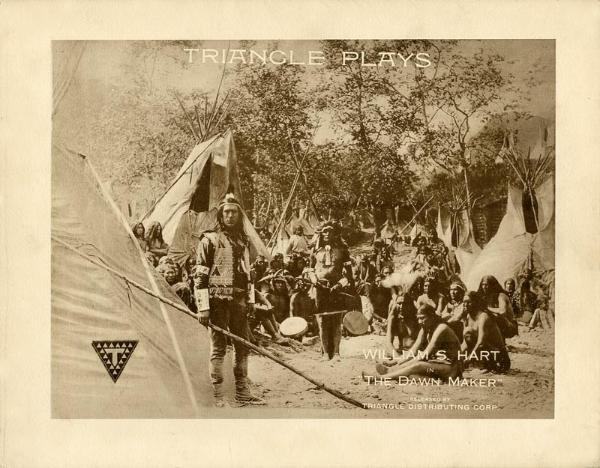
The final act of The Dawn Maker shifts from a social drama to a visceral survival thriller. When a blizzard descends, Sullivan’s narrative strips the characters down to their primal elements. The tribe’s decision to rob the company storehouse and leave the factor to starve is depicted not with cartoonish villainy, but as a desperate act of survival that forces Joe Elk into a final, agonizing choice. His decision to protect Alice and Smithson—the very man who possesses everything Elk desired—elevates the film into the realm of high tragedy.
The cinematography during the blizzard sequences is remarkably evocative for 1916. The use of practical effects and location shooting creates a sense of oppressive cold that the audience can almost feel. As Elk leads the pair through the white-out, secretly depriving himself of food to ensure their survival, the film reaches a spiritual crescendo. This is the 'Dawn Maker' of the title: a man who must perish in the darkness of the old world to light the way for a future he will never see. It is a sacrifice that echoes the selfless protagonists found in The Price or the moral quandaries of The Painted Lie.
Lambert Hillyer’s direction is disciplined, focusing on the vastness of the landscape to emphasize the characters' isolation. The framing often places Joe Elk against massive horizons, making him appear both like a titan of the earth and a speck in the face of destiny. This visual language is far more sophisticated than the theatrical staging seen in contemporary imports like Le Scandale or the often-static compositions of The Fatal Card.
The editing, too, deserves commendation. The cross-cutting between the starving party in the snow and the relative safety they are struggling toward builds a tension that is almost modern in its execution. We see the physical degradation of Hart’s character—the sunken eyes, the labored movements—which serves as a stark contrast to the more melodramatic performances found in Hungry Heart or The Price She Paid. Hart’s commitment to 'the real' was his greatest asset, and it is on full display here.
From a contemporary perspective, the 'half-breed' trope is undeniably problematic, yet The Dawn Maker treats Joe Elk with a level of dignity and psychological complexity that was rare for its time. He is not the 'savage' needing to be tamed, nor is he the 'noble savage' of pure myth. He is a modern man trapped in an ancient conflict. His tragedy is not his heritage, but the world's inability to reconcile his two halves. In this sense, the film shares a thematic DNA with American Methods, which also explored the clash between traditional values and the relentless march of 'progress.'
The film’s conclusion—where Elk’s ideals are finally adopted by the whites after his death—is bittersweet. It suggests that Joe Elk had to be martyred before his message could be heard. This 'redemption through death' is a staple of the Hart persona, often referred to as the 'Good Bad Man' archetype. However, in The Dawn Maker, Joe Elk was never truly 'bad'; he was merely misunderstood, making his demise feel less like a cosmic balancing of scales and more like a profound social failure.
When placed alongside other 1916 releases, The Dawn Maker stands out for its atmospheric gloom. While Somewhere in France dealt with the immediate horrors of the Great War, and Das Rätsel von Bangalor offered exoticized mystery, Hart’s film grounded itself in the visceral reality of the North American experience. It lacks the drawing-room artifice of In the Hollow of Her Hand or the urban grit of The Yellow Traffic, opting instead for a spiritual, almost elemental conflict.
Even compared to Hart's own work like The Impersonation or the historical sweep of To Have and to Hold, The Dawn Maker feels more intimate and more devastating. It is a film about the silence of the snow and the silence of a heart that knows it will never be understood. It is a testament to C. Gardner Sullivan’s ability to weave complex sociological threads into what could have been a standard 'North-Western' programmer.
Ultimately, The Dawn Maker is a haunting experience. It captures a specific moment in cinematic history when the Western was evolving from simple morality plays into complex explorations of the human condition. William S. Hart’s Joe Elk remains one of the most tragic figures of the silent era—a man who gave everything to a world that gave him nothing but a cold grave in the snow. For those seeking to understand the roots of cinematic realism and the enduring power of the sacrificial hero, this film is essential viewing. It is a bleak, beautiful, and deeply human work that remains as chilly and affecting today as it was over a century ago.
A masterpiece of silent-era pathos, The Dawn Maker is a somber reminder that the brightest dawns are often preceded by the darkest, coldest nights.
IMDb —
1927
Community
Log in to comment.