DbcultAccessing Vault...
7.7/10
Senior Film Conservator
A definitive 7.7/10 rating for a film that redefined the boundaries of cult cinema. Aladdin remains a cornerstone of transgressive art.
A dog trained to devour trousers shouldn’t feel like prophecy, yet this 1920 curio snaps at modern gig-economy ethics with uncanny fangs.
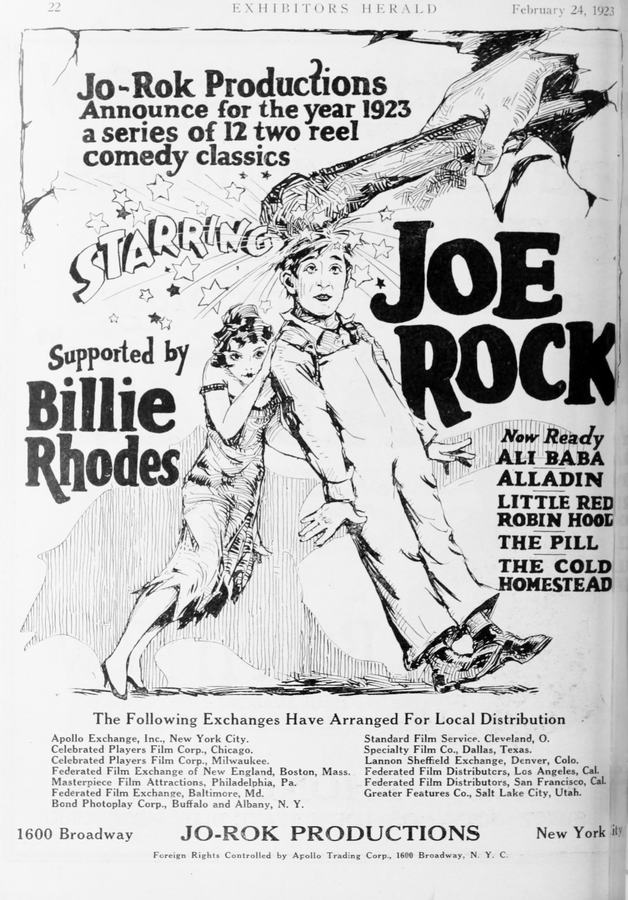
In the liminal hush between two world wars, Joe Rock’s Aladdin surfaces like a half-remembered fever: a one-reel distortion of the Arabian Nights filtered through the sweat of a nascent Hollywood studio system still high on its own bootleg gin. The plot—ostensibly a slapdash love triangle—writhes beneath a tarp of social caricature; every snip of the tailor’s shears is a referendum on manufactured demand, every canine bite a sardonic echo of planned obsolescence. Try explaining to your local barista that a silent short from 1920 essentially predicted fast-fashion anxiety and watch the foam curdle.
Visually, the picture is a mongrel itself—part German-expressionist silhouette, part Keystone pratfall. Cinematographer George Rizard (unfamous, unjustly) bathes the dungeon sequence in aquamarine gel, so the prince’s conjured demons glow like sea-lit piranhas swimming through obsidian air. The effect predates Caligari by months, yet history shelved it as kiddie fantasia. History, as always, was drunk.
Our nameless protagonist begins where most noir mugs end: scheming in poverty. Instead of a revolver he wields a thimble; instead of femme fatales, a terrier with an appetite for gabardine. The gag economy here is literal—each torn seam mints coin—making the film a pocket Marxist parable wrapped in slapstick. Watch how Rock stages the first scam: a long shot holds on the tailor’s face, eyes flicking like mercury as the dog bolts toward a top-hatted swell. The edit refuses to show the bite; we see only the aftermath—fabric fluttering like shot birds—forcing us to imagine violence as consumers, complicit.
Compare that to the tailor’s later arc once the lamp releases its industrial-strength deus-ex machina. Riches metastasize into drapery of gold lamé; extras orbit him like synchronized currencies. Yet the camera tilts ever so slightly, creating a diagonal horizon that whispers something’s off. The mise-en-scène predicts the wealth-gap vertigo of The War Correspondents and even the domestic suffocation in Miss Lulu Bett, only compressed into 24 minutes of anarchic mime.
Played by Frank Alexander beneath kohl that could charbroil stereotypes, the prince oscillates between fop and sadist. One moment he’s twirling a rose; the next he’s lowering the tailor into a pit where shadows sprout horns. The performance is too grotesque to be mere exotic wallpaper, too calculated to ignore. Contemporary critics (read: white Midwestern dailies) dismissed it as harmless hokum, but modern retinas catch the echo of minstrel panic. The film cannily weaponizes audience expectation: every Arabesque flourish primes us for humiliation, then flips the script when the prince becomes the spurned lover—an emasculated cog in his own pleasure apparatus.
That dungeon set—think aquatic Bosch—owes its sinuous architecture to the same cardboard Expressionism that Menschen flirted with a year later. Yet where Menschen spiritualized angst, Aladdin lampoons commodified magic: rub a lamp, outsource courage, swipe right on destiny.
Billie Rhodes embodies the contested beloved with a wink that could auction empires. She enters astride a literal hobby-horse, flanked by market stalls hawking love potions—an early visual pun on objectification. Notice how the film never grants her a name; she is the Girl as commodity, yet Rhodes’ kinetic eyebrows carve out micro-rebellions. In a medium that often treated women as trussed damsels, her laughter detonates like shrapnel, slicing through male posturing. When she ultimately chooses the tailor, the gesture feels less romantic than curatorial—she collects the least broken artifact in a gallery of ego.
Still, one leaves unsettled: agency arrives only after two men have bet their masculinity on her flesh. The film knows this; its final shot lingers on her face, smile evaporating into a 50-50 cocktail of triumph and dread, as if realizing that escape from one marketplace lands her in another.
The lamp itself is a rusted Chekhovian Chekhov—introduced as set dressing, then weaponized via jump-cut. Once stroked, the narrative explodes into triple-exposure fireworks, herky-jerky sphinxes, and a flying carpet stitched from obvious burlap that hovers via fishing wire. Rather than hide the artifice, Rock spotlights seams, daring us to scoff; in doing so, he anticipates the Brechtian alienation that Der papierene Peter would later academicize. The gag isn’t the magic; it’s our Pavlovian craving for it.
This sequence also slyly critiques Hollywood’s own wish-fulfillment factory. The tailor’s first wish—escape—mirrors the audience’s desire for narrative rescue, yet the ensuing chaos lampoons studio contrivance: plots spun from smoke, romance conjured by committee, stars dangled like marionettes. In 1920, such self-interrogation was heretical; today it plays like prophecy.
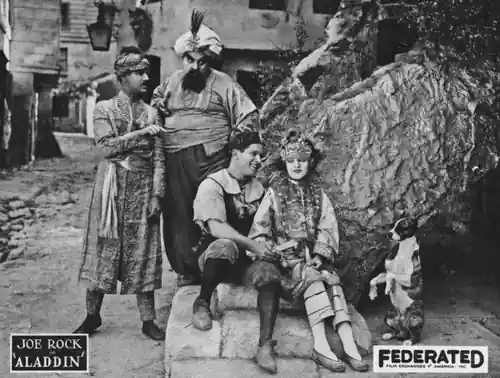
Aladdin toggles tonal gears with whiplash bravado. A custard-pie chase through bazaars morphs—via iris-out—into a crucifixion silhouette. The score on the surviving print (a 1994 piano re-score) tries to smooth the dissonance with jaunty stride-piano, but the images resist comfort. One intertitle card reads: “He sewed wallets from the skin of night.” It’s part noir, part incantation, entirely unhinged.
Compare this elasticity to the rigid moral binaries of Nobody’s Kid or the drawing-room quips in The Code of Marcia Gray. Where those films genuflect to propriety, Aladdin moonlights as vandal.
Let us not ignore the dog—an unbilled terrier whose real-life name studio records list as Trix. The animal’s choreography is so precise it feels eerie: timed leaps, fabric-shredding pauses, even a wink at the lens. Trix operates as both enforcer and underclass, the four-legged muscle for capital. When the prince’s guards finally muzzle him, the image resonates like a lockout at the gates of industry. The tailor’s anguish isn’t for the pet; it’s for lost revenue. Thus, interspecies exploitation becomes a cracked mirror for human labor, predating the ethical questions that The Sheep o’ Leavenworth would graze a decade later.
For decades, Aladdin was presumed lost—one more casualty of nitrate bonfires and studio indifference. Then in 1987, a truncated 9.5mm Pathéscope surfaced in a Devon attic, spliced with backyard birthday footage. The juxtaposition—children blowing candles, immediately followed by the tailor screaming in a demon pit—cements the film’s argument that spectacle and domesticity are conjoined twins. Digital restoration by the EYE Institute in 2019 repainted the cyan dungeon hues, allowing contemporary viewers to witness what 1920 audiences saw: a nightmare in Technicolor’s fetus.
Streaming rips on questionable platforms still circulate a 240p grayscale dupe. Seek the 2K; the sea-blue demons deserve to swim, not smudge.
Joe Rock—producer-star—plays the tailor like Chaplin’s tramp if the tramp sold opioids on the side. His eyebrows conduct symphonies of desperation; his limbs appear double-jointed only when embarrassment demands. Opposite him, Frank Alexander channels Roscoe Arbuckle’s menace but swaps joviality for perfumed menace, a volatile blend that prefigures the corpulent cruelty in Masked Ball.
Lydia Yeamans Titus, as the girl’s busybody aunt, steals every frame she haunts. With a single sniff, she weaponizes propriety; with a side-eye, she exposes the plot’s testosterone folly. It’s a supporting role that performs the film’s moral laundry in real time.
Viewed without accompaniment, the film’s internal rhythm emerges: the staccato of the dog’s paws, the caesuras between intertitles, the crescendo of lantern smoke that eats the frame. Modern audiences often forget that silent cinema was never meant to be silent; it courts hallucination. Supply your own lo-fi playlist—think Delphi-era harp through cassette warble—and the dungeon sequence acquires the texture of a séance.
Bits of Aladdin’s DNA recombine in surprising offspring. The fabric-ripping scam anticipates the clothing-industry exposé in The Gown of Destiny; the morphing set design echoes through A Scream in Society’s surreal parlors. Even the canine-as-capital device resurfaces—albeit wagging a more moralistic tail—in Bare Knuckles.
Critics who relegate silent shorts to curio status miss the gene-splice agility on display here. Aladdin is not a stumbling ancestor; it’s a jester that foresaw the talkie cliff and moonwalked off the edge, laughing.
By the time the tailor ascends the palace balcony—arms bloodied by effort, not sorcery—the film has already indicted us for wanting tidy resolutions. The closing iris contracts not on a kiss but on the girl’s twitching smile, half victory, half invoice. Outside the frame, 1920 is gearing up to roar; inside, a dog whimpers off-screen, unemployed at last.
Seek this mischievous spook of a film. Let it bite your assumptions, tear holes in your nostalgia, and leave you shivering in the bright promise of a lamp that grants everything except absolution.
IMDb 4
1929
Community
Log in to comment.