DbcultAccessing Vault...
Cult Review
Senior Film Conservator
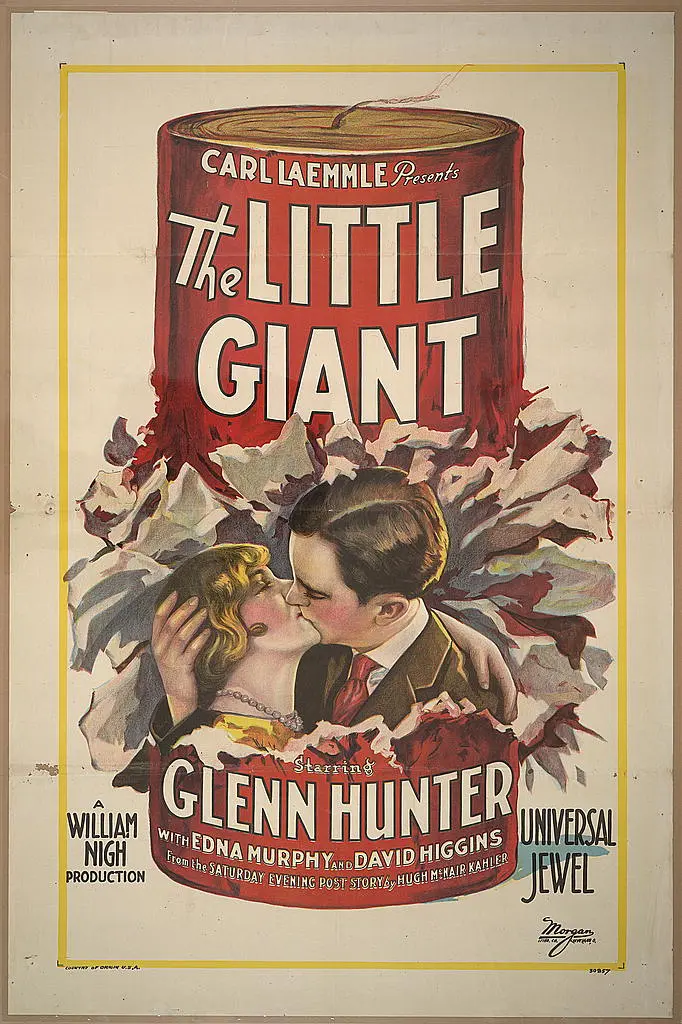
Is The Little Giant a lost masterpiece of the silent era or a quaint relic of industrial propaganda? Short answer: It is a surprisingly sharp corporate satire that offers more than just slapstick, though its pacing occasionally stumbles. This film is for the dedicated historian of 1920s cinema and those who enjoy the 'scrappy underdog' trope, but it is certainly not for viewers who require the high-octane visual effects of modern blockbusters.
At its core, the film explores the friction between old-world grit and new-world greed. Elmer Clinton (Glenn Hunter) represents the former, having been sharpened by the nomadic lifestyle of his Uncle Clem. When he enters the world of washing machine sales, he doesn't just bring a product; he brings a philosophy. This setup allows for a fascinating look at the 1926 business landscape, which feels eerily similar to today's tech-disruption narratives. It works. But it’s flawed.
1) This film works because it grounds its corporate conflict in the very real, very tangible shift from manual labor to domestic automation, personified by the washing machine.
2) This film fails because the character of Royce Enfield is a one-note villain whose motivations for destroying his own father’s company feel thinly sketched and occasionally illogical.
3) You should watch it if you are a fan of Glenn Hunter’s unique brand of earnestness or if you want to see how early cinema handled the 'office politics' subgenre long before The Apartment or Office Space.
The narrative engine of The Little Giant is the rivalry between Elmer and Royce. While Elmer is out in the field, Royce is in the shadows. A specific moment that highlights this tension occurs when Royce intercepts a stack of orders obtained by Uncle Clem. The way director William Nigh frames this—using tight shots on the physical papers—emphasizes the fragility of Elmer’s success. In an age before digital tracking, a few stolen envelopes could literally end a career. It is a primitive form of data theft that still resonates.
Glenn Hunter’s performance as Elmer is a study in restrained optimism. Unlike the hyper-energetic leads in The Show-Off, Hunter plays Elmer with a quiet dignity. He isn't a loud-mouthed huckster; he’s a man who genuinely believes in the product he’s selling. This makes the eventual betrayal by Royce feel more personal. When Elmer finally 'whips' Royce in the climactic fight, it isn't just a physical victory; it’s a rejection of the lazy, entitled upper class that Royce represents.
William Nigh, a veteran of the era, brings a workmanlike efficiency to the film. There are no avant-garde flourishes here, unlike what you might see in Der lebende Leichnam. Instead, Nigh focuses on clarity and spatial awareness. The factory floor scenes are particularly well-staged, showcasing the scale of the Enfield operation. The cinematography by Hal Mohr (uncredited but influential) uses lighting to differentiate between the dusty, sun-drenched world of the peddler and the sterile, shadowy offices of the corporation.
Consider the scene where Uncle Clem is out peddling while Elmer is in the boardroom. The cross-cutting between these two worlds is a bit heavy-handed, but it effectively communicates the film’s central thesis: that the 'little' man is the giant who actually keeps the gears of industry turning. This is a common theme in 1920s cinema, also seen in films like The Pinch Hitter, where the underdog’s value is only recognized through a moment of crisis.
Yes, The Little Giant is worth watching if you have an interest in the evolution of the American workplace comedy. It provides a rare glimpse into the early marketing of domestic appliances and the social mobility of the 1920s. While it lacks the high-concept drama of Camille, its groundedness is its strength. It is a simple story told with conviction.
One of the more debatable aspects of the film is its tone. Is it a comedy? A drama? An industrial advertisement? The answer is all three. This hybrid nature makes it a bit of a tonal mess, but an honest one. The scenes involving Uncle Clem are played for light laughs, while the boardroom scenes are played with the gravity of a Shakespearean tragedy. This jarring shift can be seen in other films of the period, such as The Bachelor Daddy, which struggled to balance domestic humor with social commentary.
The pacing in the second act is where the film truly tests the viewer's patience. The subplot involving the intercepted orders drags on longer than necessary. We see Royce hiding the mail, Elmer looking for the mail, and Clem wondering why the mail hasn't arrived. It’s repetitive. However, the payoff—the physical fight—is surprisingly brutal for a film of this ilk. Elmer doesn't just win; he asserts his dominance over a class that looked down on him. It’s a moment of pure, unadulterated catharsis.
Edna Murphy as the love interest provides a necessary emotional anchor, though her role is largely reactive. It’s a shame she wasn't given more to do, as her screen presence is undeniable. On the other hand, Leonard Meeker as Royce is perfectly punchable. He embodies the 'fail-son' archetype with a sneering arrogance that makes his eventual downfall all the more satisfying. This dynamic is a precursor to the corporate villains we see in modern cinema, proving that the 'rich kid vs. hard worker' trope is truly timeless.
"The washing machine isn't just a prop in this film; it's a symbol of a changing world where the peddler's cart is being replaced by the factory line."
In comparison to other films like Every Man for Himself, The Little Giant feels more focused on the internal politics of a single company. It’s a smaller story, but it feels more intimate. The stakes aren't the fate of the world; they are the fate of a man’s reputation and his uncle’s livelihood. In many ways, that makes it more relatable than the grander melodramas of the time.
The Little Giant is a solid, three-star effort that manages to be more than the sum of its parts. It is a film about the dignity of work and the corruption of entitlement. While it won't change your life, it will certainly provide a thoughtful afternoon of viewing for anyone interested in the roots of the American corporate narrative. It’s a scrappy, flawed, and ultimately charming piece of cinema that deserves a spot in the conversation about 1920s social comedies. Don't expect a revolution; expect a well-made, honest story about a man, his uncle, and a very important washing machine.
IMDb 4.8
1934
Community
Log in to comment.