DbcultAccessing Vault...
Cult Review
Senior Film Conservator
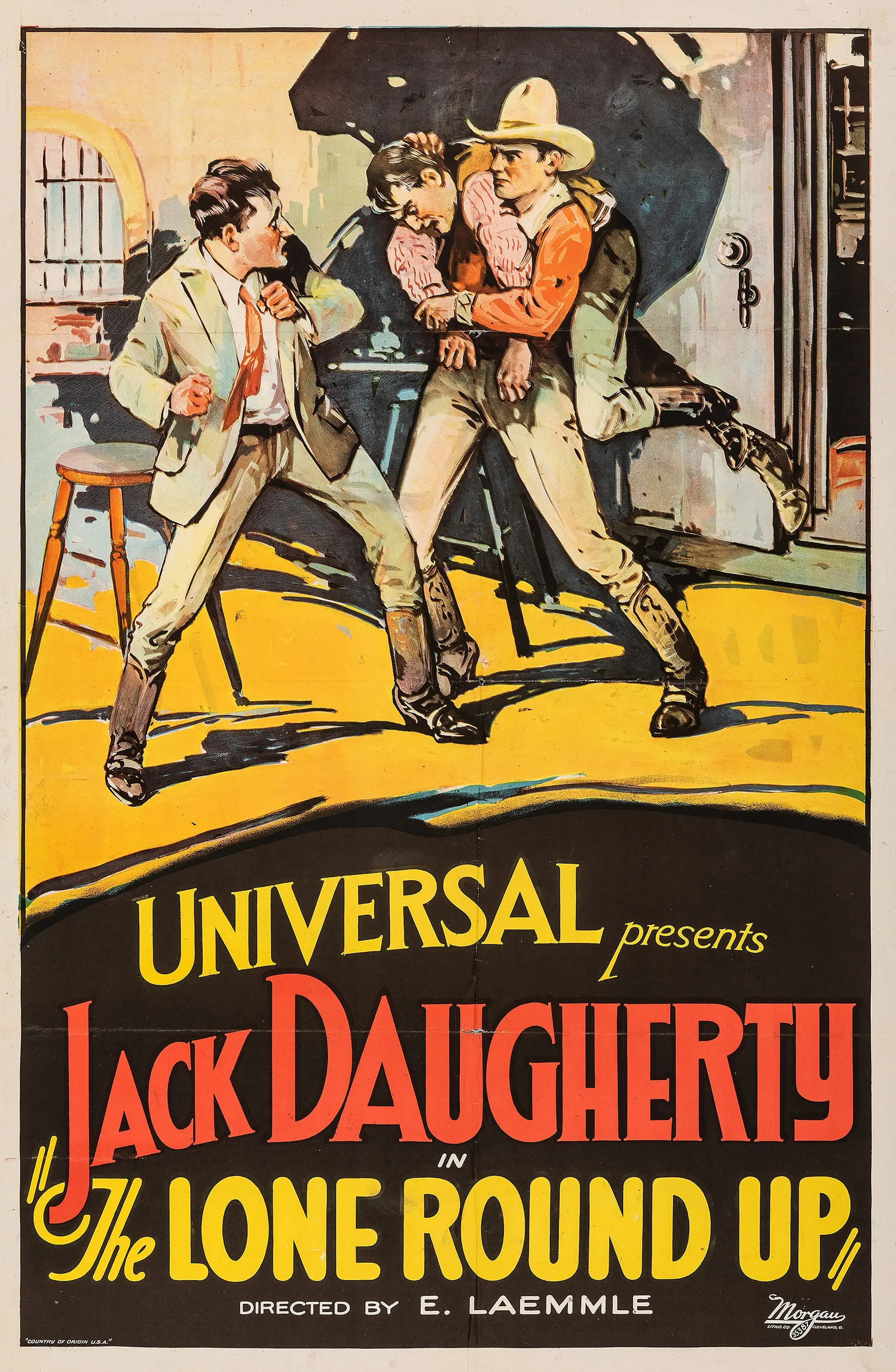
In the annals of early cinematic storytelling, particularly within the nascent yet ever-captivating genre of the Western, certain narratives emerge with an enduring simplicity and a profound resonance. Arthur Henry Gooden's 'The Lone Round-Up' stands as a testament to this foundational era, a film that, despite its vintage, still manages to articulate a timeless saga of virtue, villainy, and vigilant justice. It’s a compelling glimpse into a world where moral lines were drawn with stark clarity, and heroism often manifested through sheer grit and an unwavering sense of duty. The film doesn't merely present a plot; it unfurls a tapestry of human nature against the rugged, unforgiving backdrop of the American frontier, a setting that has always served as both stage and character in countless cinematic endeavors.
The narrative commences not with a bang, but with the genteel rustle of silk and the murmur of polite conversation, a stark contrast to the rough-and-tumble expectations of a Western. We are introduced to a bustling Western town, seemingly prospering under the stewardship of its leading citizen, a respected bank president. This figure of local authority hosts a grand social event, a dance, to celebrate the return of his daughter, a young woman of refined sensibilities, having just completed her education in the sophisticated milieu of the big metropolis. Her presence, a beacon of urban elegance in a frontier town, immediately sets a tone of cultural juxtaposition. It’s a moment designed to establish the film’s initial equilibrium, a sense of community and prosperity that is, inevitably, destined for disruption. This kind of setup, where an established social order is about to be tested, is a classic dramatic device, often seen in films that explore the tension between civilization and the wild, much like the societal pressures explored in later dramas such as The Right to Happiness, albeit with a different contextual focus.
Into this carefully constructed social fabric steps a newcomer, the recently appointed treasurer of the bank. His arrival, initially unremarkable, soon takes on a sinister hue as he begins to court the debutante with an intensity that borders on the predatory. His motives, as the audience quickly discerns, are far from honorable, driven by a calculating ambition rather than genuine affection. This character embodies the insidious threat that often lurks beneath a veneer of respectability, a common antagonist in stories where trust is a valuable, yet fragile, commodity. This particular brand of duplicity, where a seemingly trustworthy individual harbors dark intentions, often forms the backbone of thrillers and dramas, echoing the kind of subtle menace found in narratives like The Devil's Double, though the contexts are vastly different. Simultaneously, we are introduced to Daugherty, portrayed with compelling integrity by Jack Dougherty. As the chief of the local cattlemen, Daugherty represents the authentic spirit of the West – honest, forthright, and deeply connected to the land and its people. His relationship with the daughter is one of long-standing, unpretentious friendship, a genuine bond that stands in stark contrast to the treasurer's superficial overtures. Dougherty’s presence anchors the film in a sense of rugged honesty, setting him up as the moral compass of the tale.
The plot's true machinations begin to unravel as the treasurer, revealing his true colors, engineers a daring bank robbery. In a masterstroke of villainy, he manipulates the unsuspecting daughter, convincing her to accompany him to the bank, thereby unwittingly opening the door for his band of thieves. This act of betrayal is particularly galling, exploiting innocence and trust for nefarious gain. It's a moment that irrevocably shatters the town's peace and exposes the vulnerability of its institutions. The tension escalates dramatically here, as the film pivots from social drama to outright crime thriller. The vulnerability of financial institutions and the cleverness of their subversion is a theme that resonates across genres and eras, often explored in films such as Tainted Money, where the very fabric of monetary trust is undermined.
Daugherty, ever vigilant and possessing an innate sense of justice, has, by this point, begun to trail the suspicious treasurer. His instincts prove correct, but his intervention comes at a steep price. In a brutal confrontation, he is knocked unconscious, a pivotal moment that leaves him incapacitated and vulnerable. The villain, seizing this opportune moment, deftly turns suspicion onto the fallen hero, framing Daugherty for the very crime he himself orchestrated. This false accusation plunges Daugherty into a profound personal crisis, transforming him from a respected community leader into a wrongly accused fugitive. The injustice is palpable, a classic narrative device designed to elicit strong empathy for the protagonist. This trope of the wrongfully accused hero, forced to clear their name while evading capture, is a powerful and enduring one, found in countless thrillers and dramas, from the intricate legal battles of The Tenth Case to the more action-oriented escapes in films like The West~Bound Limited, where the chase itself becomes a central element of the narrative.
Imprisoned under false pretenses, Daugherty's resolve only hardens. He engineers a daring escape from jail, driven by a dual motivation: to clear his name and, more importantly, to rescue the young woman whom he knows to be in peril. His escape marks a significant shift in the narrative, from a story of betrayal to one of relentless pursuit and ultimate redemption. The film here fully embraces the thrilling elements of the Western, with Daugherty becoming the quintessential lone rider, driven by a powerful moral imperative. His journey isn't just a physical one across the rugged terrain, but an emotional one, fueled by a deep sense of loyalty and a burning desire for justice. Jack Dougherty imbues his character with a stoic determination, conveying much through his expressions and physicality, a necessity in the silent film era.
What follows is a relentless chase, as Daugherty tracks the bandits into the wilderness. But the story holds a surprising turn: the debutante herself, far from being a passive victim, has displayed remarkable courage and initiative. She has embarked on her own perilous journey, attempting to trail her captors, demonstrating a spirit of resilience that belies her metropolitan upbringing. Eileen Sedgwick's portrayal of the daughter manages to convey both her initial vulnerability and her burgeoning strength, making her more than just a damsel in distress. This element adds a layer of depth to the narrative, showcasing female agency even within the often patriarchal confines of the Western genre. While not as overtly rebellious as some later heroines, her proactive pursuit of justice is commendable and foreshadows the evolving roles for women in cinema.
The climax of 'The Lone Round-Up' is a thrilling crescendo of action and resolution. Daugherty, through sheer force of will and a profound understanding of the rugged landscape, manages to track down the bandits. What ensues is a spectacular rescue, not just of the girl, but also a decisive confrontation that leads to the capture of the entire criminal contingent. The film delivers on its promise of justice, as the stolen loot is recovered, and the villains are brought to account. The restoration of order, both moral and material, is complete. This kind of definitive resolution, where good triumphs unequivocally over evil, was a hallmark of early Westerns, providing audiences with a satisfying sense of closure and reaffirming fundamental moral principles. The film doesn’t linger on ambiguity; it celebrates the clear victory of the righteous.
Arthur Henry Gooden's writing for 'The Lone Round-Up' is noteworthy for its clear narrative progression and its efficient characterization, particularly given the constraints of silent film. The plot moves with a purposeful momentum, each event building logically upon the last, driving the audience forward with anticipation. The use of visual storytelling, a cornerstone of silent cinema, is paramount here. The expressions of Jack Dougherty, the vulnerability and eventual resolve of Eileen Sedgwick, and the sneering villainy of the treasurer are all conveyed through nuanced gestures, body language, and the stark contrasts of light and shadow. The film relies heavily on these visual cues to communicate emotion and intent, a skill that separates the enduring works of the era from the forgettable. The pacing, while perhaps deliberate by modern standards, allows for a full appreciation of the escalating stakes and the arduous journey of its hero. It’s a masterclass in how to tell a complex story without spoken dialogue, relying instead on the universal language of human drama.
The thematic undercurrents of 'The Lone Round-Up' are as rich as the Western landscape it depicts. It explores the perennial conflict between civilization and the wild, the corrupting influence of avarice, and the enduring power of loyalty and friendship. Daugherty embodies the spirit of the old West – rugged, honest, and fiercely protective of his community. The treasurer, on the other hand, represents a new kind of threat, one that operates not with brute force but with cunning deception, a reflection of societal anxieties about changing values. The daughter, caught between these two worlds – the refined metropolis and the untamed frontier – ultimately finds her strength in the latter, proving that true character is forged in adversity. This exploration of moral fortitude against the backdrop of a changing world is a theme that recurs in many classic narratives, including those exploring personal journeys and societal shifts, such as The Seekers, where characters grapple with their place in a challenging environment.
While 'The Lone Round-Up' might not possess the grand scale or the intricate psychological depth of later Western epics, it excels in its straightforward, heartfelt delivery of a classic tale. It's a film that resonates because it taps into universal human experiences: the pain of betrayal, the thrill of the chase, and the profound satisfaction of justice served. Jack Dougherty's stoic yet charismatic performance as the wrongfully accused hero is particularly compelling, cementing his place as a memorable figure in early Western cinema. His character’s journey from respected cattleman to framed fugitive and then triumphant rescuer is the emotional core of the film, guiding the audience through its twists and turns with an unwavering moral compass. Eileen Sedgwick, though playing a character who requires rescue, also manages to convey a spirited independence that makes her more than a mere plot device.
The lasting appeal of 'The Lone Round-Up,' and indeed many films from this period, lies in their ability to distill complex human dramas into their purest forms. Stripped of dialogue, the visual language becomes paramount, forcing filmmakers to communicate through action, expression, and the careful composition of shots. This artistic discipline often results in a more visceral and immediate emotional impact. The film, like its contemporaries, serves as a vital historical document, offering insight not only into the cinematic techniques of its time but also into the cultural values and archetypes that captivated audiences. It's a reminder of the enduring power of simple, well-told stories, where the battle between good and evil is clear, and the hero's journey is a beacon of hope and resilience. For those interested in the foundational elements of American storytelling, particularly within the Western genre, 'The Lone Round-Up' offers a compelling and valuable experience, a foundational narrative that continues to echo in countless films that followed.
In an era when cinema was still finding its voice, 'The Lone Round-Up' speaks volumes through its silent eloquence. It’s a narrative that, while perhaps familiar in its broad strokes, is executed with a clarity and conviction that elevates it beyond mere genre fare. The interplay of betrayal and loyalty, the tension of the chase, and the ultimate triumph of justice are all handled with a directness that is both refreshing and deeply satisfying. It's a film that reminds us of the power of individual courage in the face of overwhelming odds and the fundamental human desire for truth and fairness. Gooden’s vision, brought to life by the committed performances of Dougherty and Sedgwick, ensures that this early Western remains a compelling watch, not just as a historical artifact, but as a vibrant piece of storytelling that continues to captivate. Its legacy lies in its unadorned honesty and its unwavering belief in the hero’s path, a path that, in the rugged world of the Western, always leads to a rightful conclusion.
The setting itself, a nameless Western town, becomes almost a character in its own right, representing the fragile veneer of civilization perpetually threatened by the lawlessness of the frontier. The contrast between the debutante's polished upbringing and the raw, untamed environment she finds herself in is a powerful visual metaphor for the film's central conflict. This dichotomy is a recurring motif in Westerns, where the expansion of society often clashes with the wild, untamed spirit of the land. The film effectively uses its landscape to underscore the isolation and danger inherent in Daugherty's pursuit, making his eventual success all the more impactful. The visual storytelling, even without the benefit of sound, expertly conveys the vastness of the plains and the intimate struggles of its characters, a technique perhaps refined in other genre pieces like A Regiment of Two, which also leverages its setting to amplify its narrative.
Ultimately, 'The Lone Round-Up' is more than just a historical curiosity; it is a vibrant example of early cinematic prowess and a foundational piece of the Western genre. Its enduring appeal lies in its clear moral compass, its compelling characters, and its thrilling narrative arc. For fans of classic cinema, and particularly those with an appreciation for the silent era's unique storytelling techniques, this film offers a richly rewarding experience. It's a reminder that sometimes, the most potent stories are told with the simplest of tools, relying on the universal language of human emotion and action. The film captures a moment in time, both in cinematic history and in the romanticized history of the American West, leaving a lasting impression of heroism and the triumph of good over insidious evil. It stands proudly alongside other notable works from its period, like The Bottom of the Well, in demonstrating the robust narrative capabilities of early film, solidifying its place as a significant contribution to the burgeoning art form.
IMDb —
1918
Community
Log in to comment.