DbcultAccessing Vault...
6.8/10
Senior Film Conservator
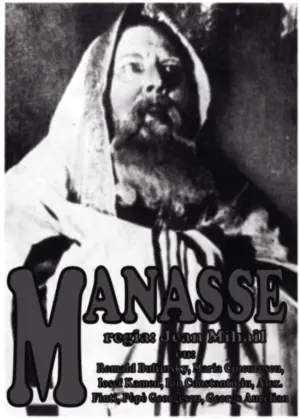
A definitive 6.8/10 rating for a film that redefined the boundaries of cult cinema. Manasse remains a cornerstone of transgressive art.
In the pantheon of early European cinema, few works resonate with the somber, enduring gravity of Jean Mihail’s Manasse. Released in 1925, this silent masterpiece remains a startlingly relevant meditation on the fragility of cultural insularity. While contemporary audiences might initially perceive the film through the sepia-toned lens of nostalgia, a closer inspection reveals a work of fierce intellectual rigor and emotional complexity. It is not merely a chronicle of religious intolerance; it is an architectural study of the walls we build around our souls and the agonizing process of tearing them down.
The film opens by immersing the viewer in the rhythmic, ritualistic life of a Moldovan Jewish community. Here, time seems to have stagnated, preserved in the amber of liturgy and ancient law. Iosef Kamen, in a performance of staggering physical presence, portrays Manasse as a man who is less an individual and more a monument to a vanishing world. His every gesture is heavy with the weight of centuries, a characteristic that mirrors the legalistic gravity found in The Majesty of the Law. Manasse is the guardian of the threshold, his very existence dedicated to maintaining the purity of his lineage against the perceived contamination of the outside world.
The cinematography by Tudor Posmantir utilizes the limited technology of the era to create a chiaroscuro effect that mirrors the internal conflicts of the characters. The synagogue scenes are bathed in a reverent, yet oppressive darkness, where the light of the candles struggles against the encroaching shadows of modernity. This visual language evokes a sense of spiritual claustrophobia, reminiscent of the thematic tensions explored in The Betrothed, where individual agency is frequently sacrificed at the altar of societal expectation and historical destiny.
The equilibrium of this closed society is shattered not by an external force, but by the internal awakening of the youth. Lelia, played with a luminous vulnerability by Dorina Demetrescu, represents the bridge between two irreconcilable worlds. Her romance with Matei Frunză (George Aurelian) is portrayed not as a mere whim of passion, but as an existential necessity—a reaching out for a broader human experience that the shtetl cannot provide. This romantic arc serves as the film’s narrative engine, propelling it into territories of social critique that were remarkably daring for 1920s Romania.
Unlike the more melodramatic approach found in Eyes of Youth, where personal transformation is often individualistic, Manasse frames Lelia’s choice as a communal crisis. Her love for a Christian is seen as a betrayal of the collective memory, a severing of the thread that connects the present to the ancestral past. The film expertly captures the vitriol of the community, the way in which neighbors become judges, and the synagogue becomes a courtroom. The intolerance depicted here is not a cartoonish villainy, but a profound, terrified reaction to the threat of erasure.
In analyzing the generational divide, one cannot help but draw parallels to The Third Generation. Both films deal with the fallout of inherited trauma and the struggle of the young to define themselves against the backdrop of their parents' failures or rigidities. However, Manasse adds a layer of theological complexity that is uniquely Eastern European. The conflict is not just about lifestyle; it is about the very nature of salvation and the definition of the 'other.'
The film’s exploration of ethnic and religious friction also brings to mind the urban tensions of Little Italy, though Mihail’s work is far more somber and less inclined toward a tidy resolution. There is a palpable sense of dread that permeates the second act, as if the director is warning the audience that some bridges, once crossed, can never be rebuilt. The stakes in Manasse are cosmic, involving the perceived damnation of a soul and the dissolution of a heritage.
The cast of Manasse delivers performances that transcend the often-exaggerated pantomime of the silent era. Alexandru Finti and Maria Ciucurescu provide nuanced supporting turns that flesh out the social hierarchy of the town. There is a scene involving a community meeting that is particularly striking for its rhythmic editing and the expressive power of the faces involved. It reminds one of the intensity found in The Danger Line, where the unspoken word carries more weight than any dialogue ever could.
Iosef Kamen’s portrayal of the title character remains the film’s gravitational center. His descent from a position of absolute moral authority to one of broken, bewildered isolation is a masterclass in psychological realism. As he watches his granddaughter drift away, his face becomes a landscape of grief, reflecting the same kind of existential abandonment found in The Little Girl That He Forgot. Yet, Kamen imbues Manasse with a stubborn dignity that makes his eventual defeat all the more tragic.
"Manasse is not merely a film; it is a historical document of the soul’s struggle against the confines of the sacred."
Technically, the film was a marvel for its time and place. Romania’s film industry was in its infancy, yet Mihail managed to produce a work that rivaled the sophistication of German Expressionism or the Soviet montage movement. The use of location shooting in the Moldovan provincial towns adds an authenticity that studio-bound productions of the time, such as The Seven Swans, often lacked. The dust on the streets, the texture of the old stone buildings, and the genuine atmosphere of the marketplace contribute to a sense of lived-in reality that heightens the drama.
The editing, while perhaps slow by modern standards, is deliberate and effective. It builds tension through accumulation rather than shock. We see the slow accumulation of whispers, the way a look of disapproval travels from one elder to another, creating a web of social pressure that feels genuinely suffocating. This technique is also evident in Whispers, where the invisible forces of gossip and reputation dictate the characters' fates.
At its core, Manasse is about the inevitable death of the old world. The film does not celebrate this death with a simple-minded progressivism; instead, it mourns the loss of the certainties that tradition provided. Matei, the Christian lawyer, is not presented as a savior, but as a representative of a different kind of order—one based on civil law and individual rights rather than divine decree. This shift from the religious to the secular mirrors the thematic concerns of Real Adventure, where the protagonist must navigate a world where the old rules of engagement no longer apply.
The change of mentality brought about by the new generation is portrayed as both a liberation and a tragedy. Lelia gains her freedom, but she loses her home. Manasse retains his faith, but he loses his family. This zero-sum game of cultural evolution is what gives the film its lasting power. It refuses to offer easy comfort. Even the ending, which seeks some form of reconciliation, is tinged with a profound sadness. It is a resolution that acknowledges the scars left by the conflict, much like the ending of The Brand of Lopez, where the past continues to haunt the present.
To fully appreciate Manasse, one must consider the historical context of its production. In 1920s Romania, the Jewish question was a subject of intense national debate. By choosing to adapt Ronetti Roman's play, Mihail was stepping into a political minefield. The film’s empathetic portrayal of Jewish characters was a radical act in a period marked by rising nationalist and anti-Semitic sentiments. It stands in stark contrast to the more caricatured representations of the era, offering instead a deeply humanized look at a community under pressure.
In this regard, the film shares a spiritual kinship with A kuruzsló, which also dealt with the fringes of society and the clash between traditional belief and modern reason. However, Manasse is more grounded in the specificities of its cultural milieu. It doesn't just use the Jewish setting as a backdrop; it engages with the specific theological and social nuances of that world, from the importance of the Sabbath to the intricate laws of marriage.
Mihail frequently employs visual metaphors to reinforce his themes. The recurring image of the gate—both the gate to the family home and the gate to the town—serves as a symbol of the boundaries the characters must navigate. When Lelia leaves her grandfather’s house, the act is filmed with a sense of finality that suggests an expulsion from Eden. This use of symbolic space is reminiscent of the way the railway serves as a harbinger of change in The West~Bound Limited, though in Manasse, the movement is more intimate and psychological.
Furthermore, the film's focus on the 'new generations' is not just a plot point but a stylistic choice. The scenes involving the young lovers are shot with a different energy—the camera is more fluid, the lighting more naturalistic. This contrast highlights the stagnation of the older generation, whose scenes are often static and formally composed. This stylistic dichotomy effectively illustrates the 'change of mentality' mentioned in the film's premise, showing rather than just telling the audience how the world is shifting.
Nearly a century after its release, Manasse remains a towering achievement. It is a film that demands to be watched with an open heart and a critical mind. It challenges the viewer to examine their own prejudices and to consider what they are willing to sacrifice for the sake of tradition or progress. In its quiet, flickering images, we find a mirror of our own contemporary struggles with identity, belonging, and the difficult work of empathy.
The film’s exploration of the personal cost of social change is as relevant today as it was in 1925. Whether it is the struggle for religious freedom, the fight against racial prejudice, or the simple desire to love whom one chooses, the themes of Manasse are universal. It is a testament to the power of cinema that a story about a small town in Moldova can still speak so clearly to the global human experience. Like Naked Hearts or Charge It to Me, it strips away the artifice of its era to reveal the raw, pulsing heart of humanity beneath. It is, quite simply, essential viewing for anyone who believes in the transformative power of art.
In the final analysis, Jean Mihail did not just make a film about a Jewish patriarch; he made a film about the human condition. He captured that fleeting moment when the past and the future collide, and in the sparks of that collision, he found something eternal. Manasse is a haunting, beautiful, and profoundly challenging work that deserves a place of honor in the history of world cinema.

IMDb 7.2
1928
Community
Log in to comment.