DbcultAccessing Vault...
6.9/10
Senior Film Conservator
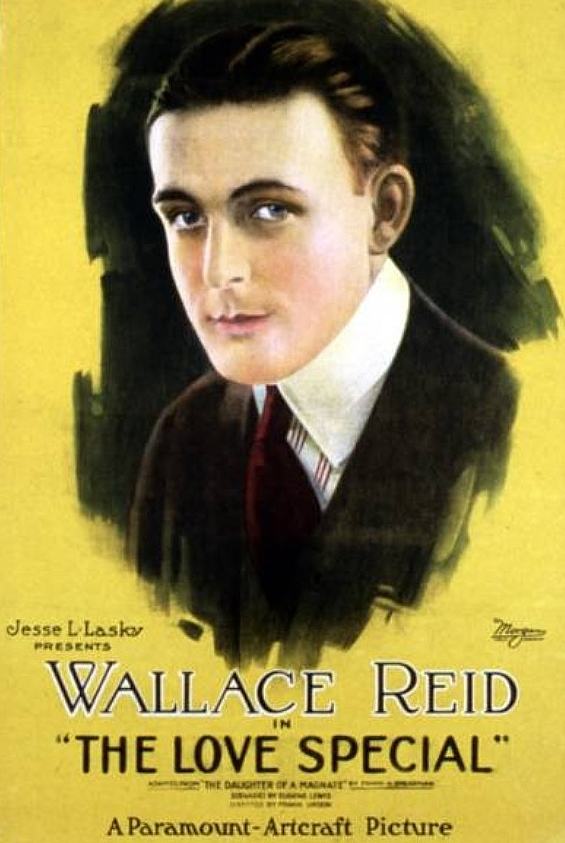
A definitive 6.9/10 rating for a film that redefined the boundaries of cult cinema. The Love Special remains a cornerstone of transgressive art.
The Love Special (1923) is a cinematic artifact that marries the rugged grandeur of early 20th-century Western expansion with the intimate, often turbulent drama of human relationships. Directed with a deft hand by Frank H. Spearman and Eugene B. Lewis, this silent film—though now a century old—resonates with a modern sensibility, dissecting the corrosive influence of corporate greed and the redemptive power of love. The film’s plot, while ostensibly a period piece, functions as a piercing allegory for the ethical dilemmas of industrialization, rendered with the stark visual language of silent cinema.
At its core, The Love Special is a story of duality. The juxtaposition of the vast, indifferent American frontier and the claustrophobic world of boardroom machinations creates a tension that drives the narrative. Jim Glover (William Gaden), the protagonist, is a figure of quiet competence, his character embodying the ethos of the everyman navigating a world increasingly shaped by the ambitions of the powerful. His role as a civil engineer for a railroad company positions him at the intersection of progress and exploitation, a theme that echoes through the film’s secondary characters and subplots.
President Gage (Ernest Butterworth), the railroad tycoon, represents the archetype of the industrialist whose vision is clouded by the pursuit of expansion. His directive to Jim—to secure an option on Zeka Logan’s property—is not merely a business transaction but a symbolic act of control over the land and its people. This transaction sets in motion a chain of events that exposes the moral bankruptcy of those in power. Harrison (Lloyd Whitlock), Gage’s rival director, embodies the parasitic underbelly of corporate politics; his plan to bribe Laura (Agnes Ayres) with the property is a grotesque inversion of love, reducing human connection to a transactional currency.
Laura’s character arc is the film’s emotional keystone. Her decision to brave a blizzard to confront her father—a man compromised by his own ambitions—transcends mere plot device. It becomes a metaphor for the resilience of the human spirit in the face of systemic corruption. The blizzard itself, rendered with a haunting beauty by the film’s cinematographers, is both a physical and narrative obstacle. Its icy expanse mirrors the emotional chasm between Laura and her father, yet it also serves as the crucible in which their relationship is reforged. Her eventual embrace with Jim Glover is not just a romantic climax but a thematic resolution: love, here, is portrayed as a force capable of thawing the frozen hearts of those willing to confront their complicity in societal decay.
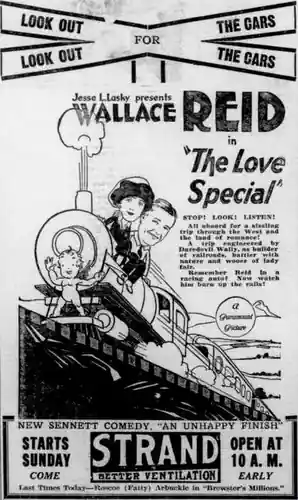
What elevates The Love Special from a conventional melodrama is its mastery of visual storytelling. The film’s use of chiaroscuro lighting—particularly in scenes depicting Harrison’s backroom dealings—casts moral ambiguity in stark relief. Shadows stretch across characters’ faces like the weight of their secrets, while the stark, unadorned sets of the railroad offices evoke a sense of institutional sterility. The absence of spoken dialogue allows the film to rely on expressionistic close-ups and dynamic editing, techniques that were revolutionary in the early 1920s. The blizzard sequence, shot with a sense of urgency and claustrophobia, is a standout technical achievement, its swirling snowflakes and frigid tones creating an immersive atmosphere that borders on the transcendental.
Historically, The Love Special must be contextualized within the broader cultural anxieties of the 1920s. The post-WWI era saw a surge in films critiquing industrial capitalism, reflecting public disillusionment with the unchecked power of corporations. The film’s portrayal of Gage and Harrison as morally ambiguous figures aligns with this trend, offering a rare critique of the very system that funded its production. Yet, the film avoids didacticism by grounding its themes in personal drama. The romantic subplot between Laura and Jim, while conventional by today’s standards, adds a human dimension that prevents the narrative from becoming a dry polemic.
William Gaden’s portrayal of Jim Glover is a masterclass in understated acting. His restrained delivery—necessitated by the conventions of silent film—conveys a depth of emotion through micro-expressions and deliberate physicality. Agnes Ayres, as Laura, brings a vulnerability that contrasts sharply with the stoicism of the male characters, her performance a reminder of the silent era’s ability to convey complex inner lives without the crutch of dialogue. Ernest Butterworth’s Gage is a nuanced exploration of paternal authority, his character’s gradual moral compromise rendered with a tragic inevitability.
The film’s legacy is inextricably tied to its contemporaries. Its themes of corporate avarice and ethical compromise find parallels in later works such as The Price of Silence and Vendetta, though The Love Special distinguishes itself through its focus on the personal cost of systemic corruption. The blizzard sequence, in particular, owes a stylistic debt to Rose of Nome’s harrowing Arctic scenes, yet it stands as a more intimate and emotionally resonant spectacle.
While The Love Special may lack the narrative complexity of modern cinema, its emotional core and thematic depth ensure its relevance. It is a film that challenges the viewer to consider the cost of progress and the fragility of human connections in an age of mechanization. The final scene, with Laura and Jim standing at the edge of a freshly laid railroad track, is a quiet but powerful coda. The tracks, symbols of both opportunity and destruction, stretch into the horizon, a visual metaphor for the enduring tension between ambition and morality. In this light, The Love Special remains not just a relic of the silent era but a timeless meditation on the human condition.
IMDb —
1923
Community
Log in to comment.