DbcultAccessing Vault...
Cult Review
Senior Film Conservator
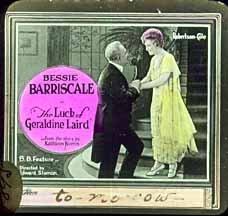
The Luck of Geraldine Laird is a cinematic tapestry that intricately explores the complexities of marriage, ambition, and redemption, set against the backdrop of a rapidly changing world. As the film unfolds, we are introduced to Geraldine Laird, a woman torn between her devotion to her husband and her desire for autonomy. Her decision to reside with her mother, rather than with her husband Dean, serves as a catalyst for the events that transpire, as Dean's discontentment with their living arrangement simmers beneath the surface.
The arrival of Kennedy Bond, a literary agent with a keen eye for talent, sets in motion a chain of events that will forever alter the trajectory of Geraldine's life. As Bond recognizes Laird's latent talent for playwriting, Geraldine is compelled to follow her husband to New York, where she becomes embroiled in a world of theatre and performance. Her chance encounter with a theatrical manager, who is captivated by her impersonations of the illustrious actress Sarah Bernhardt, marks a turning point in her journey, as she begins to forge a new path, one that is distinct from her role as a wife.
As Geraldine's star rises in the theatrical world, she is forced to confront the harsh realities of her marriage and the ambitions that have driven her husband. The film's portrayal of Laird, a man struggling to come to terms with his own failures, serves as a poignant reminder of the fragility of the human spirit. His encounters with Geraldine, now a celebrated theatrical star, are imbued with a sense of pathos, as the couple is compelled to confront the choices they have made and the consequences that have ensued.
Throughout the film, the cinematography is noteworthy, with a muted color palette that serves to underscore the sense of melancholy that pervades the narrative. The use of dark orange hues, particularly in the scenes depicting Geraldine's early struggles, adds a sense of depth and warmth to the film, while the yellow tones that dominate the theatrical sequences serve to underscore the sense of excitement and possibility that defines this world. The sea blue hues that permeate the film's later scenes, meanwhile, serve as a poignant reminder of the sense of calm and resolution that Geraldine ultimately achieves.
In comparison to other films of the era, such as The Luck of Geraldine Laird stands out for its nuanced portrayal of marriage and ambition. While films like Milestones of Life and Back to the Kitchen offer more conventional explorations of these themes, The Luck of Geraldine Laird is distinguished by its willingness to challenge societal norms and expectations. The film's exploration of Geraldine's journey, meanwhile, is reminiscent of The Silent Mystery, which also features a strong female protagonist navigating a complex web of relationships and ambitions.
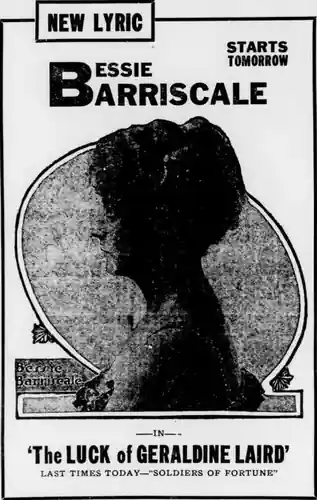
The supporting cast, which includes Nanine Wright, Rosita Marstini, and Jeanne Carpenter, delivers performances that are at once nuanced and engaging. The chemistry between the leads, meanwhile, is palpable, as they bring to life the complexities and contradictions of their characters. The screenplay, penned by Harvey Gates and Kathleen Norris, is a masterful exploration of the human condition, one that eschews easy answers and instead presents a richly textured portrait of a woman navigating the challenges of her life.
As the film draws to a close, we are left with a sense of hope and renewal, as Geraldine and Laird are reconciled, their love rekindled by the trials they have faced. The Luck of Geraldine Laird is a film that will resonate with audiences, a powerful exploration of the human experience that reminds us of the importance of perseverance, forgiveness, and the unwavering power of love. With its richly nuanced performances, masterful cinematography, and thought-provoking screenplay, this film is a must-see for anyone interested in the art of storytelling. By exploring the complexities of marriage, ambition, and redemption, The Luck of Geraldine Laird offers a cinematic experience that is at once deeply moving and profoundly thought-provoking.
In terms of its historical context, The Luck of Geraldine Laird is a film that reflects the societal norms and expectations of its time. The film's portrayal of women's roles in society, for example, is characteristic of the era in which it was made. However, the film also challenges these norms, presenting a strong and independent female protagonist who is determined to forge her own path in life. This tension between convention and innovation is a hallmark of the film, and it serves to underscore the sense of complexity and nuance that defines the narrative.
The film's use of symbolism is also noteworthy, as it adds a layer of depth and meaning to the narrative. The character of Geraldine, for example, can be seen as a symbol of the independent woman, who is determined to make her own way in the world. The theatrical world, meanwhile, serves as a symbol of the possibilities and opportunities that are available to those who are willing to take risks and pursue their dreams. By exploring these symbols and themes, the film offers a richly nuanced and thought-provoking cinematic experience that will resonate with audiences long after the credits have rolled.
In conclusion, The Luck of Geraldine Laird is a film that is not to be missed. With its masterful performances, nuanced screenplay, and thought-provoking themes, it is a cinematic experience that will leave audiences moved and inspired. By exploring the complexities of marriage, ambition, and redemption, the film offers a powerful exploration of the human condition, one that reminds us of the importance of perseverance, forgiveness, and the unwavering power of love. As a work of cinematic art, The Luck of Geraldine Laird is a testament to the power of storytelling, and it serves as a reminder of the enduring importance of film as a medium for exploring the human experience.
IMDb —
1921
Community
Log in to comment.