DbcultAccessing Vault...
3.3/10
Senior Film Conservator
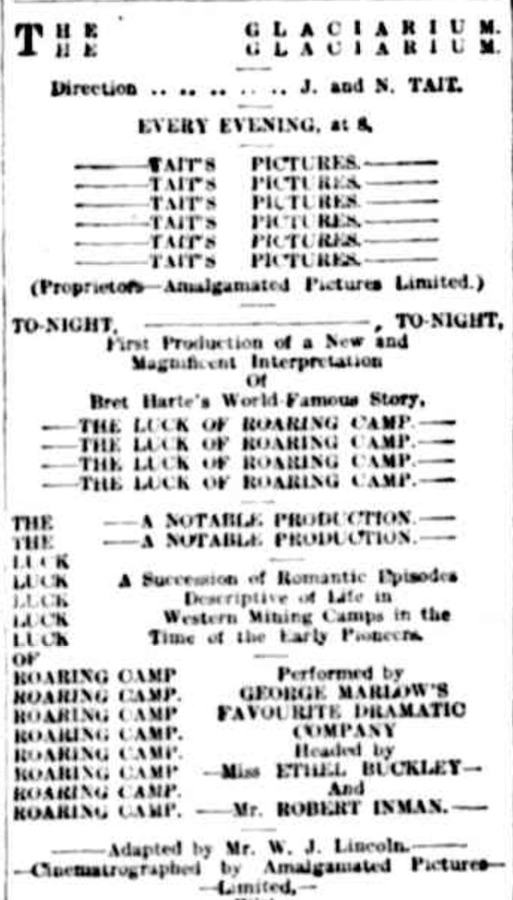
A definitive 3.3/10 rating for a film that redefined the boundaries of cult cinema. The Luck of Roaring Camp remains a cornerstone of transgressive art.
In the nascent days of cinematic storytelling, when the flickering images on screen were still finding their voice, certain films emerged that dared to capture the raw, untamed spirit of an era. 'The Luck of Roaring Camp' stands as one such audacious endeavor, a vivid snapshot of the California Gold Rush, a period synonymous with both boundless opportunity and stark, brutal reality. Directed with a nascent understanding of dramatic tension and brought to life by the emerging talents of John Cosgrove, Ethel Buckley, and Robert Inman, this film is more than a mere historical curiosity; it is a compelling narrative that grapples with themes of injustice, mob mentality, and the enduring power of human connection, all set against a backdrop of a wilderness still largely unbridled.
The allure of gold, an almost mythical promise of instant fortune, drew countless souls to California in the mid-19th century. These were desperate men and women, driven by dreams, escaping pasts, or simply seeking a new beginning. The landscape they inhabited was as wild as their ambitions, a place where established legal frameworks were often distant echoes, and justice was frequently meted out with a swiftness that bordered on summary execution. It is into this volatile milieu that 'The Luck of Roaring Camp' thrusts its protagonist, Will Gordin, portrayed with a compelling blend of vulnerability and defiance by John Cosgrove. His predicament – a false accusation of murder – immediately plunges the audience into a high-stakes drama, where the thin veneer of civilization threatens to crack under the weight of communal suspicion and outrage.
The core of the film's narrative, adapted from the literary works of Bret Harte and W.J. Lincoln by writer Mark Blow, is a classic race against time. Gordin, a man caught in the wrong place at the wrong time, or perhaps a victim of circumstance and prejudice, faces the ultimate penalty: a lynching. This particular form of vigilante justice, a dark stain on American history, is depicted with an unsettling realism, showcasing the terrifying power of an enraged collective. The film doesn't shy away from the brutality of the situation, allowing the viewer to feel the palpable fear and desperation that must have permeated such an event. It’s a stark reminder of the fragile nature of justice when passion overrides reason.
However, the narrative isn't solely a descent into despair. It introduces a powerful counterpoint in the form of Gordin's girlfriend, whose name, regrettably, is not specified in the available records but whose presence is nonetheless monumental. Portrayed by Ethel Buckley, her character embodies courage, loyalty, and an almost superhuman resolve. Her ride to the rescue is the film's climactic pulse, a desperate gallop across the unforgiving terrain, symbolizing the individual's fight against overwhelming odds. This heroic intervention elevates the film from a simple tale of woe to a testament to unwavering love and the refusal to surrender to fate. It's a trope that would become a cornerstone of the burgeoning Western genre, but here, it feels fresh, urgent, and deeply personal.
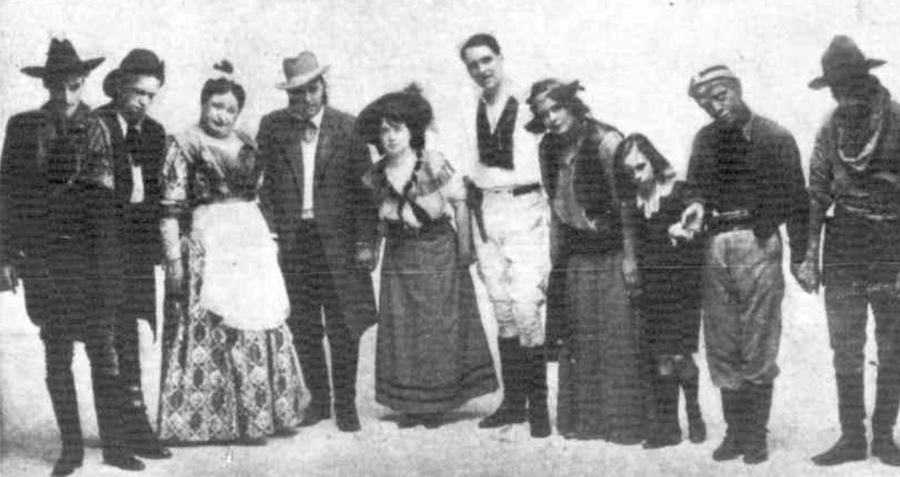
The performances, particularly by Cosgrove and Buckley, are noteworthy for their era. Early cinema often relied on exaggerated gestures and theatrical expressions, a carryover from the stage. Yet, within these conventions, there are glimmers of genuine emotional depth. Cosgrove’s portrayal of Gordin likely conveyed the terror and injustice through his physical demeanor and facial expressions, given the silent nature of the film. Buckley, as the rescuer, must have projected fierce determination and urgency, her ride becoming a visual metaphor for her character's indomitable spirit. Robert Inman, and the rest of the supporting cast, would have contributed to the atmosphere of the Gold Rush camp, portraying the volatile crowd, the stern arbiters of frontier justice, and the general rough-and-tumble nature of the community.
It’s fascinating to consider how these actors, operating without spoken dialogue, managed to communicate such complex emotions and propel a narrative forward. Their artistry lay in their ability to use their bodies and expressions to tell the story, a skill that distinguished early film actors. The dynamic between the accused and his savior would have been central, a poignant illustration of human connection against a backdrop of societal breakdown. This early form of dramatic acting laid the groundwork for the more nuanced performances that would emerge as cinema evolved.
To fully appreciate 'The Luck of Roaring Camp,' one must contextualize it within the broader cinematic landscape of its time. The early 1900s were a period of immense experimentation and innovation in film. Many productions were still actualities, capturing real-life events or simple staged scenes. Films like The Corbett-Fitzsimmons Fight or Reproduction of the Corbett and Fitzsimmons Fight, for instance, focused on documenting or recreating sporting events, emphasizing spectacle over intricate narrative. Similarly, films like May Day Parade or 69th Regiment Passing in Review captured public events, serving almost as moving newspapers. In contrast, 'The Luck of Roaring Camp' made a significant leap towards complex, character-driven storytelling.
While religious epics such as Life and Passion of Christ or S. Lubin's Passion Play offered grand narratives, 'The Luck of Roaring Camp' grounded its drama in a distinctly American historical setting and a secular conflict. It foreshadowed the rise of the Western as a dominant genre, establishing many of its enduring tropes: the rugged frontier, the struggle for justice, the heroic individual, and the dramatic rescue. Its commitment to a coherent plot and character development marked it as a forward-thinking piece of cinema, moving beyond simple vignettes or staged theatrical reproductions like those of Hamlet or Faust, which were often filmed stage plays.
The source material for 'The Luck of Roaring Camp' is critical to its enduring appeal. Bret Harte was a master of the short story, particularly those set in the American West during the Gold Rush. His tales were renowned for their vivid characterizations, local color, and often sentimental yet morally complex narratives. W.J. Lincoln, another notable writer of the era, likely contributed to shaping the dramatic contours of the story for the screen. The adaptation by Mark Blow, therefore, had a rich literary foundation to build upon, allowing for a narrative that resonated with audiences who were familiar with, or fascinated by, the romanticized yet harsh realities of the frontier.
The film's exploration of themes like the arbitrary nature of justice in an underdeveloped society, the tension between individual rights and communal hysteria, and the redemptive power of love and courage, are all hallmarks of Harte's literary work. Translating these complex ideas into a visual medium, especially in an era without synchronized sound, was a significant artistic challenge. The filmmakers had to rely on visual cues, dramatic pacing, and the expressive capabilities of their actors to convey the depth and nuance of the original story. This early effort demonstrates a sophisticated understanding of adaptation, recognizing the essence of the source material and finding cinematic equivalents for its narrative power.
From a technical standpoint, 'The Luck of Roaring Camp' would have faced the myriad limitations of early cinema. Cameras were static, film stock was primitive, and editing techniques were still in their infancy. Yet, these limitations often spurred creativity. The director likely employed deep staging to capture the breadth of the Gold Rush camp, using the natural light of the outdoors to lend authenticity to the setting. The rapid horse ride of the girlfriend would have been a visually dynamic sequence, a thrilling departure from the more static scenes common at the time. The blocking of the actors, particularly during the lynch mob scene, would have been crucial in conveying the escalating tension and the sheer number of people involved.
The film's impact would also have been greatly enhanced by the live musical accompaniment, a standard practice in silent film exhibition. A skilled pianist or orchestra could elevate the drama, underscore the tension of the chase, and amplify the emotional resonance of the rescue. The absence of dialogue meant that visual storytelling had to be paramount, and the filmmakers clearly understood the power of iconic imagery – the accused man, the gathering crowd, the solitary rider against a vast landscape – to communicate their narrative.
Ultimately, 'The Luck of Roaring Camp' emerges as a significant, albeit early, contribution to American cinema. It showcases the burgeoning potential of film to tell complex, emotionally resonant stories rooted in historical contexts. It’s a testament to the pioneering spirit of its cast and crew, who, with rudimentary tools, crafted a narrative that still speaks to universal themes of justice, loyalty, and the human struggle against adversity. For anyone interested in the evolution of film, particularly the genesis of the Western genre and the development of narrative techniques, this film offers invaluable insights.
Beyond its historical importance, the film possesses a raw, visceral energy that belies its age. The dramatic stakes are high, the characters are archetypal yet relatable, and the resolution, though perhaps predictable by modern standards, would have been deeply satisfying to contemporary audiences. It reminds us that even in the earliest days of cinema, filmmakers were striving to create immersive experiences, to transport viewers to different worlds, and to engage them in stories that reflected the triumphs and tribulations of the human condition. 'The Luck of Roaring Camp' is not merely a relic; it is a vibrant, compelling piece of early filmmaking that continues to resonate with its timeless themes and its audacious spirit.
In an era marked by short, often fragmented films, 'The Luck of Roaring Camp' presents a remarkably coherent and engaging narrative arc. It’s a film that demands appreciation for its ambition and its execution within the technological and artistic constraints of its period. It stands as a compelling argument for the power of narrative cinema, demonstrating that even without the sophisticated techniques of later decades, a powerful story, well-told, could captivate and move an audience. This film, therefore, is not just a glimpse into the past, but a vibrant example of the enduring magic of the moving image.
IMDb —
1916
Community
Log in to comment.