DbcultAccessing Vault...
5.8/10
Senior Film Conservator
A definitive 5.8/10 rating for a film that redefined the boundaries of cult cinema. The Majesty of the Law remains a cornerstone of transgressive art.
A gavel cracks like winter ice across the soundtrack of silence; the screen, tinted cobalt, holds the afterimage of familial bloodsport.
Julia Crawford Ivers’ The Majesty of the Law (1915) arrives as a lacquered time-capsule of American Puritan dread, yet its emotional valence vibrates with a frequency that feels almost radioactive today. Imagine a melodrama that has gorged itself on Sophoclean irony, then fasted on the austere Calvinism of a small-town Sabbath; what remains is a narrative so lean it seems carved from whalebone, yet so morally swollen it threatens to burst the corset of its own five-reel body.
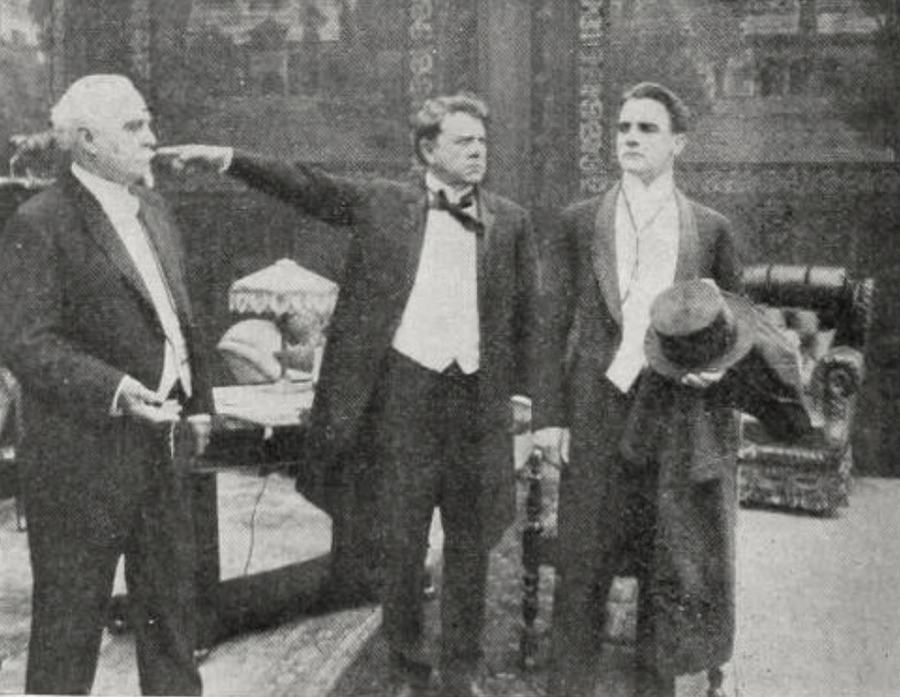
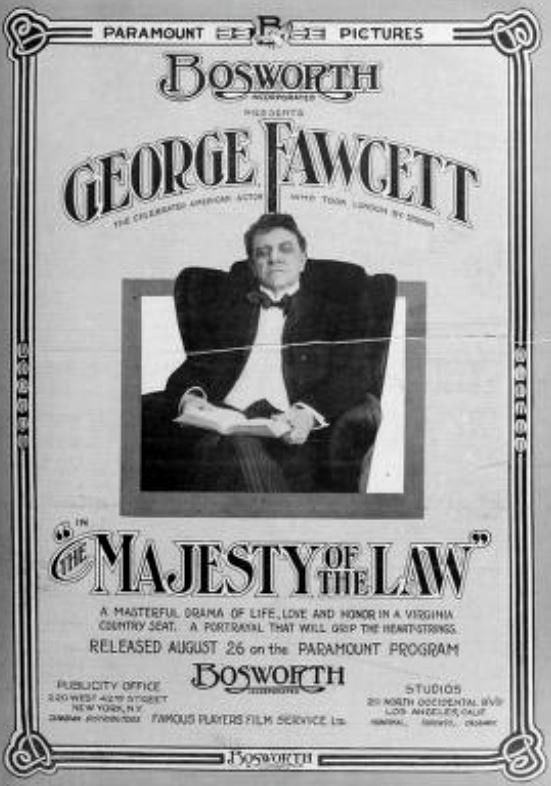
Judge Randolph Kent—played by George Fawcett with the rigid rectitude of a New England obelisk—embodies jurisprudential monolithism. His cheekbones could sentence you; his starched collar is a penal code.
Opposite him, John Oaker’s young Kent radiates the matinee shimmer of the prelapsarian favorite son: hair pomaded into moral perfection, smile bright enough to bleach reputations. Their dyad is the film’s centrifugal force: a father whose moral absolutism is matched only by a son whose absolutism lies in self-erasure. The camera, tethered to early-static tableaux, nevertheless stages their collision through chiaroscuro diagonals: father looms from bench-high shadows while son, below, dissolves into backlit penumbra.
The stolen diamonds function less as plunder than as metaphysical shrapnel, scattering guilt across every ballroom gown and three-piece suit. When the necklace surfaces in young Kent’s pocket, the moment is filmed in an insert shot so intimate the jewels seem sewn into the celluloid itself—each facet catching slivers of accusatory candlelight. Ivers refuses to fetishize wealth; instead she renders the gems radioactive, their sparkle a Geiger counter for social hypocrisy.
Two concentric rings of loyalty squeeze the protagonist: an engagement ring pledged to Myrtle Stedman’s Evelyn Monroe, and a lifeline thrown by Charles Ruggles’ wiry bank clerk, himself a pariah. The screenplay’s genius lies in how these loyalties are not sequential but simultaneous, forcing young Kent into a Möbius strip of culpability. By accepting guilt for both the jewel thief (Evelyn’s brother, an off-screen libertine) and the embezzler (his benefactor), he becomes a societal sin-eater, ingesting contagion so the town may remain antiseptic.
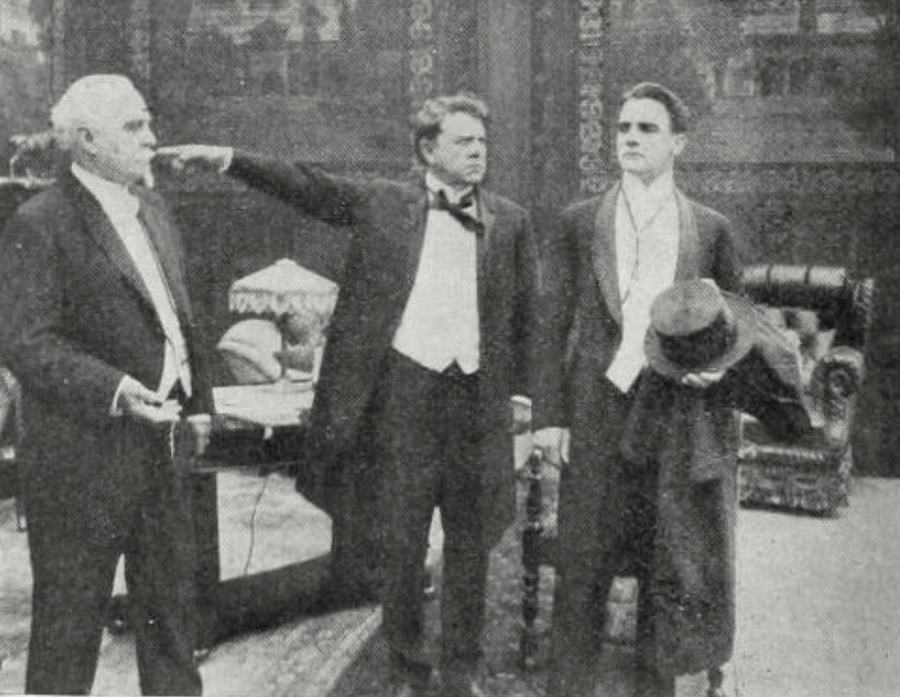
Notice the courtroom montage: intercut affidavits swirl like ravens; a dissolve superimposes the father’s face over the state seal—justice and paternity fused into a single terrifying sigil.
When Judge Kent pronounces the statutory decade, the film abandons piano accompaniment in some prints; exhibitors were advised to let the reel click unadorned, as if the machinery itself were meting out years. The silence is theological: an Old-Testament father offering his Isaac not to God but to the civic altar. Ten years becomes an inverted Decalogue—each year a negative commandment: thou shalt not be loved, thou shalt not be believed.
Truth erupts not through detective work but through a letter delivered on the cusp of the prison yard—a temporal razor-edge that converts tragedy into tragic irony. The father’s knees buckle in a doorway, a reverse Pietà: the magistrate collapses while the convict stands upright, morally taller than any courtroom he will never enter again. This single long shot, framed at a Dutch angle, tilts the moral universe off its axis; justice becomes a relativity experiment.
Critics often yoke this film to Les Misérables, Part 2: Fantine for its carceral martyrdom, yet the closer cognate may be Carl Theodor Dreyer’s later Master of the House in its scalpel-like dissection of patriarchal pride. Unlike Was She Justified?—where moral reversal arrives via flamboyant deus-ex-machina—The Majesty of the Law inscribes absolution onto the very flesh of the family unit, scarring it forever.
Because the camera cannot track, performances must ventriloquize emotion through micro-gesture. Watch Jane Wolfe’s Evelyn in the reception parlor: her fan snaps shut one rib at a time, a metallic caterpillar of dread inching toward recognition. Or Herbert Standing’s defense attorney, whose blink rate syncopates with the jury’s nods, a metronome of futility. Thespian minimalism here predates European art-house austerity by a full decade, proving that silence can be louder than any talkie monologue.
Though monochromatic, surviving prints carry hand-stenciled accents: amber flares for ballroom decadence, sickly sea-blue nocturnes for prison corridors. These chromatic choices are not ornamental; they constitute a Morse code of virtue. When young Kent descends the courthouse steps toward the patrol wagon, the frame is bathed in iodine-brown—sepia as moral gangrene.
Modern viewers, marinated in anti-hero serials, may smirk at the ostensible naïveté of self-sacrifice. Yet in an era of algorithmic judgment—where cancellation is delivered at the speed of a trending hashtag—the film’s interrogation of swift condemnation feels prophetic. The townsfolk who pivot from adoration to vitriol in a single news-cycle anticipate Twitter mobs by a century. The father’s refusal to recuse himself prefigures our own faith in institutions to police themselves while remaining blind to their embedded biases.
Contemporary exhibitors often paired the picture with variations on “The Vacant Chair” or “Adagio Pathétique,” milking each tear duct. Yet archival logs reveal that in certain midwestern venues, the film played to hushed houses—no orchestra, only the susurrus of audience guilt. That austere option is the one I recommend for present-day restorations; let the audible flicker of celluloid become the heartbeat of remorse.
While the plot pivots on male honor, female characters function as the subterranean wiring that keeps the moral grid humming. Evelyn Monroe’s brother remains off-screen, a lacuna filled only by her horrified gaze; the theft is literally visualized through her eyes. Similarly, the bank clerk’s sister—barely mentioned in intertitles—supplies the affective glue that persuades Kent to shoulder embezzlement charges. The film thus anticipates feminist critiques of melodrama in which women bear the burden of redeeming male narrative agency.
One exits this film gasping not at the cruelty of fate but at the deliberate foreclosure of forgiveness. Even after exoneration, the father’s tears fall into a void; the son’s decade remains irrevocable. In this refusal to restore the status quo, The Majesty of the Law vaults from melodrama into the terrain of existential parable. Time itself becomes the villain—irreversible, unappealable—while the law, once majestically impartial, now stands as a monument to irredeemable loss.
Like many Paramount prestige productions of the mid-teens, the original negative was consigned to the pyre of 1940s silver reclamation. What survives is a 35mm nitrate print discovered in a deconsecrated church in Lima, Ohio—water-stained, chemically blistered, yet retaining enough pictorial information to reconstruct the narrative arc. Digital 4K scanning has stabilized the image without plasticizing its patina of decay; scratches remain as scars testifying to cinema’s own judicial ordeal.
For cineastes who revere Det gamle Købmandshjem for its ethical chill or Die Landstraße for its expressionist fatalism, The Majesty of the Law offers an American counterpart that is no less philosophically stringent. It is a film that indicts not merely its characters but its spectators, reminding us that every time we clamor for swift justice we risk hammering the gavel on our own fallibility. See it, wrestle with it, and emerge chastened—because the law’s majesty lies not in its power to punish, but in its chilling reflection of our limitless capacity to misread the hearts of others.

IMDb —
1923
Community
Log in to comment.