DbcultAccessing Vault...
5.2/10
Senior Film Conservator
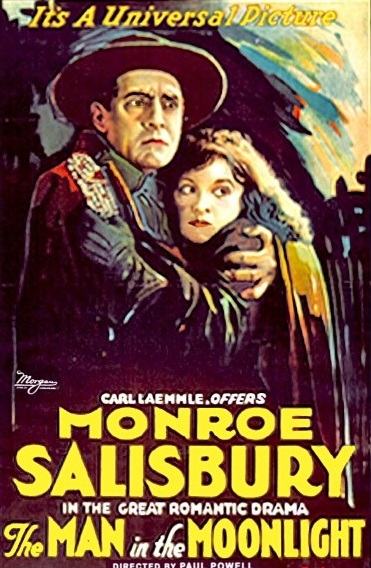
A definitive 5.2/10 rating for a film that redefined the boundaries of cult cinema. The Man in the Moonlight remains a cornerstone of transgressive art.
There's a certain ethereal magic to silent cinema, a language spoken not through dialogue, but through the profound eloquence of gesture, expression, and the stark interplay of light and shadow. The Man in the Moonlight, a 1917 offering penned by Elliott J. Clawson, is a prime example of this artistry, a narrative steeped in the romantic fatalism and moral ambiguities that defined much of the era's storytelling. It's a film that, even a century later, manages to resonate with its raw emotional core and its unapologetic exploration of human frailty and resilience. This isn't just a simple tale of law and order; it's a deep dive into the human heart, where allegiances are tested, and the lines between hero and villain blur under the unforgiving gaze of fate.
The film opens on what should be a joyous occasion: the wedding of Sergeant O'Farrell, a pillar of the Royal Mounted Police, and Rosine Delorme, the charming daughter of a local innkeeper. The setting, presumably a rustic Canadian outpost, suggests a community where life is hard-won but traditions are upheld. However, this idyllic scene is swiftly shattered by the arrival of two strangers, uninvited and unsettling, their presence a harbinger of the chaos to come. This immediate disruption sets a tone of unease, a dramatic tension that will only escalate. The narrative quickly pivots from nascent domesticity to urgent pursuit when O'Farrell receives news that Rosine's wayward brother, Louis, has escaped prison, not alone, but with the infamous outlaw Rossingnol. This development is the fulcrum upon which the entire plot turns, forcing O'Farrell to postpone his wedding, trading marital bliss for the grim duty of the chase. It's a classic setup, reminiscent of other silent dramas where personal desires clash with professional obligations, much like the relentless pursuit seen in The Sunset Trail, where the vastness of the landscape often mirrors the internal struggles of its characters.
One of these mysterious strangers, a figure of compelling, almost dangerous charm, soon confronts Rosine alone. This interaction is pivotal, showcasing the film's exploration of moral ambiguity. He convinces her to guide him to a secluded cabin at the ominous Passage Du Mort, promising that Louis awaits there. The audience, privy to the earlier revelation, immediately senses the deception, creating a delicious layer of dramatic irony. When they arrive to find the cabin empty, the stranger sheds his disguise, revealing himself to be none other than Rossingnol, the devil-may-care outlaw. William Stowell, in the role of Rossingnol, delivers a performance that must have captivated audiences, projecting an aura of danger mixed with a certain roguish appeal. He's not merely a villain; he's a complex figure whose actions, while criminal, stem from a place of desperate freedom. The ensuing struggle, culminating in Rosine's fainting spell, is a testament to the heightened melodrama of the era, where physical confrontations often served as powerful shorthand for emotional turmoil. Rossingnol, rather than abandoning her, carries Rosine to a bed and attempts to hypnotize her—a plot device that, while perhaps quaint by modern standards, speaks to the then-popular fascination with mind control and psychological manipulation, echoing the mystical elements sometimes found in films like The Bells.
The arrival of Louis, wounded and desperate, interrupts Rossingnol's hypnotic attempt. Louis's warning—that the mounted police are closing in—shifts the dynamic entirely. Here, the film offers a glimpse into Rossingnol's unexpected humanity. Instead of using Rosine as a shield or abandoning Louis, he instructs Louis to take Rosine and hide in the bushes, awaiting a signal shot before making a dash for the border. This act of self-sacrifice, or at least self-preservation tempered by a sense of responsibility for Louis and Rosine, complicates his portrayal. He is not simply a black-hatted villain; he possesses a code, however twisted, that dictates his actions. This scene is critical in developing Rossingnol beyond a one-dimensional antagonist, placing him squarely in the tradition of compelling anti-heroes who populate tales of the wild frontier, much like the morally ambiguous figures in The Undertow or The Frame-Up. His decision, made under immense pressure, underscores the raw, instinctual choices often forced upon those living on the fringes of society.
The climax is both swift and heartbreaking. Rossingnol is shot, dying in the arms of his sweetheart, who, unbeknownst to him, had followed him to the cabin. This sudden appearance of another woman in Rossingnol's life adds another layer of tragic complexity, highlighting the personal cost of his outlaw existence. His death, while perhaps inevitable, carries a profound emotional weight, transforming him from a simple criminal into a tragic figure. The film's resolution sees O'Farrell, seemingly disillusioned by the brutal realities of his duty and perhaps the realization of Rossingnol's complex humanity, resign from the Royal Mounted Police. He then joins Rosine and Louis in the United States, seeking a new life free from the constraints and tragedies of the Canadian wilderness. This ending is particularly poignant, suggesting a profound shift in O'Farrell's worldview. It's not a triumphant capture, but a quiet, almost melancholic retreat, hinting at the moral compromises and existential weariness that can accompany a life dedicated to the law. This echoes the thematic depth found in films that question societal norms and individual freedom, much like Forbidden, where characters often grapple with the consequences of their choices against a backdrop of rigid expectations.
Colleen Moore, as Rosine Delorme, embodies the innocence and vulnerability central to the narrative. Her reactions, from initial apprehension to fear and eventual complicity, are crucial in conveying the emotional weight of her predicament. Silent film acting demanded an extraordinary command of facial expression and body language, and Moore, even in this early role, demonstrates a capacity for nuanced portrayal that would define her later career. Alfred Allen's Sergeant O'Farrell is the stoic embodiment of duty, his rigid adherence to the law contrasting sharply with Rossingnol's untamed spirit. The conflict between these two men isn't just a physical chase; it's a clash of ideologies, a battle between civilization and the wild. Stowell's Rossingnol, the titular 'man in the moonlight,' is the film's beating heart, a character who, despite his transgressions, commands a degree of audience sympathy. His charisma, his desperation, and his ultimate sacrifice elevate the film beyond a simple crime drama.
Elliott J. Clawson, primarily known as a prolific writer, crafts a screenplay that is both tightly plotted and emotionally expansive. The visual storytelling, a hallmark of silent cinema, would have relied heavily on intertitles to convey dialogue and exposition, but the true narrative power lies in the compositions, the use of natural landscapes, and the actors' performances. The 'moonlight' in the title isn't merely atmospheric; it's symbolic, hinting at hidden motives, clandestine meetings, and the shadowy morality that pervades the story. The Canadian wilderness itself acts as a character, vast and indifferent, a perfect backdrop for a tale of pursuit and survival. The cinematography, even without the benefit of sound, would have utilized dramatic lighting to emphasize the stark choices faced by the characters, creating a visual poetry that speaks volumes. This emphasis on setting and visual mood can be compared to the atmospheric tension in films like Zelyonyy pauk or the rugged beauty captured in The American Consul, where the environment is integral to the narrative's texture.
At its core, The Man in the Moonlight grapples with enduring themes. Love, in its various forms—the expected love between Rosine and O'Farrell, the familial bond between Rosine and Louis, and the tragic, unspoken devotion of Rossingnol's sweetheart—drives much of the action. Loyalty is tested, not just between partners, but between siblings and to one's chosen path. Rosine's loyalty to her brother leads her into dangerous waters, forcing her to make choices that betray her fiancé. O'Farrell's loyalty to his badge is unwavering, until the very end, where he chooses a different kind of loyalty: to a future, perhaps, with Rosine and Louis, free from the strictures of his past life. The concept of redemption, while not overtly stated, is subtly explored through Rossingnol's final actions and O'Farrell's ultimate decision to abandon his commission. It suggests that true absolution might lie not in punishment or strict adherence to the law, but in the pursuit of peace and a new beginning. This nuanced approach to morality is a common thread in silent dramas, allowing for complex character arcs that transcend simple good-versus-evil dichotomies, much like the internal struggles depicted in Fior di male or The Song of Songs, where societal pressures and personal desires often collide with devastating consequences.
Viewing The Man in the Moonlight today offers a window into the narrative sophistication and emotional depth that silent films achieved. Despite the technological limitations, these films often possessed a raw power, relying entirely on visual storytelling and the emotive capabilities of their performers. Clawson's script, brought to life by the cast, creates a compelling drama that speaks to universal human experiences: the desire for freedom, the binds of duty, the complexities of love, and the search for a place to belong. The film's ultimate resolution, with O'Farrell abandoning his post, is a bold statement, reflecting a societal questioning of authority and the allure of self-determination. It suggests that true justice, or at least true peace, might lie beyond the rigid confines of institutional law. This theme, of individuals forging their own path in the face of adversity, is a resonant one, seen in various forms throughout cinematic history, from the daring escapes in The Grim Game to the independent spirit of characters in The Hazards of Helen. The enduring power of The Man in the Moonlight lies in its ability to transport us to a different era, yet still provoke thought about the timeless struggles that define the human condition.
The film's exploration of morality is particularly striking. Rossingnol, the outlaw, is not a caricature of evil. His actions, while criminal, are often driven by a desperate need for freedom, a desire to live outside the constraints of society. His attempt to hypnotize Rosine, while unsettling, is ultimately interrupted, and his subsequent decision to protect Louis and Rosine, even at his own peril, paints him in a more sympathetic light. This nuanced portrayal challenges the audience to look beyond simple labels, to understand the motivations that drive individuals to desperate acts. It's a reminder that often, the 'villain' is a product of circumstance, or a figure whose values simply clash with the prevailing order. The final image of O'Farrell, once a symbol of law and order, choosing to leave that life behind and embrace an uncertain future in the United States with Rosine and Louis, is a powerful commentary on the personal cost of upholding strict justice. It's a conclusion that eschews conventional triumph for a more introspective, perhaps even melancholic, understanding of human nature and the pursuit of happiness. This kind of thoughtful introspection, often conveyed through subtle visual cues and the emotional weight of the actors' expressions, is a hallmark of the best silent films, allowing for a depth of interpretation that transcends the absence of spoken words. Much like the complex psychological landscapes in A fekete szivárvány or the moral quandaries presented in The Mantle of Charity, Clawson's narrative refuses easy answers, instead inviting viewers to ponder the intricate tapestry of human choice and consequence. It’s a testament to the enduring power of classic cinema to explore profound existential questions without uttering a single word, relying instead on the universal language of emotion and visual narrative.
In its entirety, The Man in the Moonlight stands as a compelling artifact of early cinema, a testament to the storytelling prowess of its era. It's a film that, through its dramatic plot twists, its exploration of complex characters, and its evocative atmosphere, manages to leave a lasting impression. It reminds us that the human heart, with all its contradictions and yearnings, remains the most fertile ground for compelling narratives, regardless of whether those narratives are accompanied by a full orchestral score or simply the rhythmic whir of a projector. The film's quiet, yet profound, ending—the abandonment of one life for the uncertain promise of another—is a powerful statement on the search for personal freedom and redemption, a theme that resonates deeply even today. It's a film that asks us to consider the 'man in the moonlight' not just as an outlaw, but as a symbol of the untamed spirit, the hidden desires, and the moral complexities that lie beneath the surface of every human story.
IMDb —
1926
Community
Log in to comment.