DbcultAccessing Vault...
Cult Review
Senior Film Conservator
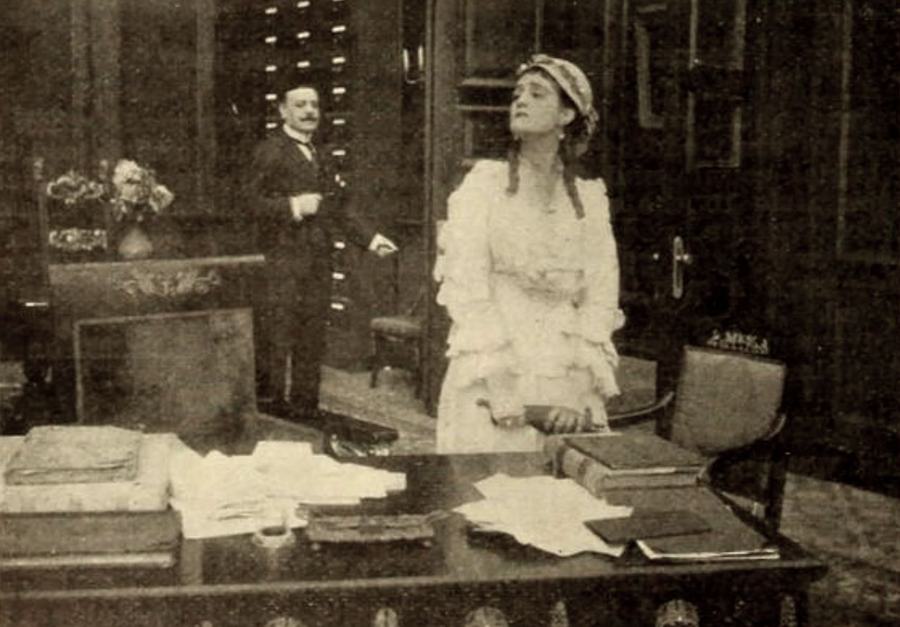
Silent cinema, often dismissed by the uninitiated as a primitive form, frequently delivered narratives of astonishing complexity and emotional depth, proving itself a master of visual storytelling long before synchronized sound became the norm. Jules Mary's evocative tale, brought to life on screen as "The Man of Shame", stands as a testament to this era's capacity for intricate melodrama and profound human drama. This isn't merely a film; it's a meticulously woven tapestry of fate, moral compromise, and the relentless pursuit of justice, painting a vivid portrait of a man ensnared by circumstance and the machinations of his enemies. From its opening moments, the film establishes a tone of high stakes and irreversible consequences, drawing the viewer into a world where a single act of defiance can unravel an entire life.
At the heart of this tumultuous narrative lies Roger, portrayed with a compelling blend of gallantry and vulnerability by Wilton Lackaye. His journey begins not with heroic deeds, but with a fateful card game and an ensuing duel against Luvesan, a pivotal moment that casts a long, ominous shadow over the remainder of his existence. The duel, born of a seemingly trivial quarrel, leaves Luvesan maimed – two fingers lost – and consumes him with a singular, corrosive desire for retribution. Luvesan, brought to life with chilling intensity, transforms into a figure of pure, unadulterated vengeance, his very being defined by the grudge he bears against Roger. This initial conflict is more than just a plot device; it's a profound exploration of how an act of honor, however misguided, can unleash a torrent of malevolence, irrevocably altering the course of multiple lives. The film's early scenes quickly establish the high stakes of reputation and personal affront in this societal context, reminiscent of the dramatic codes explored in The School for Scandal, albeit with far more lethal consequences. Roger's subsequent ostracization by his brother officers underscores the rigid societal norms of the period, where perceived slights could lead to profound isolation.
Roger's retreat to Paris introduces him to Julia, an adventuress whose enigmatic charm and beauty, embodied by Rosemary Theby, prove irresistible. Their burgeoning romance is steeped in passion, yet it is tragically curtailed by the cruel hand of fate. Roger, called to the front, finds his life saved by the heroic Lucien de Noirville, only to discover, upon his return, that Julia is Lucien's wife. This revelation is a masterstroke of dramatic irony, forcing Roger into an agonizing ethical dilemma. His unwavering sense of duty and gratitude to Lucien compels him to sever ties with Julia, a decision that, while honorable, ignites a bitter resentment within her. Julia's character arc is particularly fascinating; she is not merely a villainess but a woman driven by a complex cocktail of love, pride, and desperation. Her scorned affections transform into a dangerous obsession, making her a volatile force, a human catalyst for the tragedy that unfolds. This intricate web of love, duty, and betrayal echoes the moral quandaries found in films like When Fate Leads Trump, where personal choices have far-reaching, often devastating, consequences.
Seeking solace from the emotional turbulence, Roger retreats to his uncle's country home, where he finds love anew with Marie, played by Katherine Mendel. Their union and the subsequent birth of their daughter, Suzanne, represent a period of idyllic, if precarious, happiness. Roger transforms into a devoted husband and father, seemingly leaving his past woes behind. However, the tendrils of past transgressions and avarice are long and insidious. Julia, unable to relinquish her hold, makes several attempts to win Roger back, her failures only fueling her desperation. Concurrently, Luvesan, the embodiment of persistent malice, begins his insidious campaign to ruin Roger's burgeoning banking career. He subtly sows seeds of doubt about Roger's bank's solvency in the mind of a wealthy client, Gerbier. This financial sabotage, a chilling precursor to modern corporate espionage, is meticulously orchestrated, demonstrating a depth of villainy that transcends mere personal vendetta. The juxtaposition of Roger's domestic bliss with the encroaching threats from both Julia and Luvesan creates an unbearable tension, a ticking clock counting down to inevitable disaster. The film masterfully portrays how external pressures can erode even the most stable foundations, a theme explored with different cultural nuances in Europäisches Sklavenleben.
The confluence of Julia's desperation and Luvesan's machinations proves catastrophic. Julia, facing arrest for her debts, pleads with Roger for an advance of 100,000 francs. More for Lucien's honor than for her own sake, Roger provides the loan, unknowingly plunging his bank into difficulties. When Gerbier, swayed by Luvesan's rumors, demands his trust fund, Roger cannot pay. This financial crisis sets the stage for Luvesan's most heinous act: a planned robbery at Gerbier's home that tragically escalates into murder. The chilling scene where the innocent five-year-old Suzanne witnesses the old man's struggle and death from a balcony is profoundly disturbing, a silent scream that reverberates through the narrative. The subsequent trial is a masterclass in cinematic injustice. Circumstantial evidence, including letters found on Gerbier asking for more time, points damningly to Roger. Lucien, despite being gravely ill, heroically defends Roger, but the shock of learning Julia sent Roger the money proves too much, and he dies. The child, Suzanne, called to testify, remains silent, believing she is protecting her father, further solidifying the case against him. Marie, too ill to appear, cannot offer her perspective. Thus, Roger is unjustly condemned to life imprisonment, a stark illustration of how truth can be obscured by circumstance and manipulation. The legal drama here, though silent, carries the weight and tension of modern courtroom thrillers, perhaps even foreshadowing the intricate legal battles seen in films like The District Attorney.
Even in the darkest hour, hope flickers. Marie, visiting Roger in jail, observes Luvesan lurking nearby and is struck by his uncanny resemblance to her husband. This seemingly minor detail becomes the keystone of her revelation: Luvesan is the true murderer. Her intuitive leap, born of love and desperation, is a powerful moment, shifting the narrative from despair to a fervent quest for vindication. Meanwhile, Roger's old political friend, Tristot, orchestrates a midnight escape, arranging for Roger to flee the country with Marie and Suzanne. But Roger, upon learning of Marie's discovery, refuses to abandon his fight. His resolve to stay and prove his innocence, rather than live as an escaped convict, speaks volumes about his character and his unyielding commitment to justice. This decision sets in motion a dangerous cat-and-mouse game, with Luvesan, ever vigilant, putting the police on Roger's trail. The tension here is palpable, reminiscent of the thrilling escapes and relentless pursuits found in serials like Les Vampires or the intricate criminal plots of The Master Key.
The film hurtles towards its breathtaking climax. Roger, overhearing a crucial conversation between Luvesan and Julia, summons Julia to his hiding place, hoping to extract a confession. Julia, still harboring remnants of her old affection, believes he wishes to rekindle their romance. The confrontation is raw and emotionally charged; Roger's relentless pursuit of truth finally breaks her, and she confesses everything. But Luvesan, ever the hunter, tracks Roger, arriving ahead of the police, revolver in hand. In a moment of supreme self-sacrifice and redemptive love, Julia, fearing for Roger's life, throws herself between the men, grabbing at the gun. It discharges, striking her just as the police burst in. With her dying breath, Julia vindicates Roger, accusing Luvesan and laying bare the full extent of his villainy. Luvesan's attempt to flee is futile; he is apprehended, his reign of terror brought to an end. Julia's death, tragic yet ultimately cleansing, allows for Roger's full exoneration and his poignant return to his family. This powerful resolution, while violent, offers a catharsis earned through immense suffering. The dramatic tension and the final reveal are executed with a precision that would impress even modern audiences, echoing the satisfying unmasking of villains in thrillers such as Across the Pacific or the moral reckoning in Conscience.
The success of "The Man of Shame" owes much to its dedicated cast and the clear vision of its creators, Jules Mary and Maie B. Havey. Wilton Lackaye as Roger conveys a powerful sense of quiet dignity and unwavering moral fiber, even when his character is at his lowest ebb. Katherine Mendel's Marie is a beacon of strength and intelligence, her performance anchoring the film's emotional core. Rosemary Theby's Julia is a fascinating study in nuanced villainy, her internal struggles palpable even without dialogue. The silent film era demanded a particular physicality and expressiveness, and the cast delivers, translating complex emotions and motivations through gesture, facial expression, and body language. The direction, while perhaps adhering to some of the stylistic conventions of its time, effectively builds suspense and maintains a brisk pace for such an intricate plot. The use of close-ups to emphasize emotional states and the skillful staging of action sequences, particularly the duel and the final confrontation, demonstrate a keen understanding of cinematic language. The film's ability to maintain a high level of engagement across such a sprawling narrative is a testament to its robust script and dedicated execution.
"The Man of Shame" is more than just a historical curiosity; it is a compelling piece of classic cinema that explores enduring themes of honor, justice, revenge, and the complexities of human relationships. Its intricate plot, rich characterizations, and profound emotional resonance ensure its place among the notable dramas of its period. The film serves as a powerful reminder of the silent era's narrative sophistication and its capacity to engage audiences without the crutch of spoken dialogue. It's a film that demands attentive viewing, rewarding the patient observer with a deeply satisfying, albeit heartbreaking, journey through the human condition. Comparing its layered villainy to the more overt criminal masterminds in Fantômas: In the Shadow of the Guillotine or the dark psychological games in Satana, one finds a unique blend of personal vendetta and calculated destruction. The film's exploration of reputation and its devastating loss also finds echoes in the social dramas like Das Modell. For those seeking a profound and gripping cinematic experience that transcends time, "The Man of Shame" offers an unforgettable journey into the depths of human passion and the relentless pursuit of truth.

IMDb 5
1926
Community
Log in to comment.