DbcultAccessing Vault...
5.8/10
Senior Film Conservator
A definitive 5.8/10 rating for a film that redefined the boundaries of cult cinema. The March of the Machines remains a cornerstone of transgressive art.
Is The March of the Machines worth watching today? Short answer: yes, but with significant caveats. This isn't a film for casual viewers seeking narrative comfort; it's a profound, if demanding, experience tailored specifically for those with a deep appreciation for experimental cinema, industrial aesthetics, and the very foundations of avant-garde filmmaking.
For a mainstream audience accustomed to the narrative structures of films like Wine, Women, and Song or The Splendid Sinner, it will likely feel alienating, a relic of a bygone era. However, for cinephiles, historians of film, and anyone interested in the raw power of visual rhythm, Eugene Deslav’s The March of the Machines review uncovers a work of surprising, enduring relevance.
It forces you to consider the unseen beauty and brutal efficiency of the industrial world, stripped of human interaction. This is pure, unadulterated visual poetry, relentless in its focus, and utterly uncompromising in its artistic intent. It is stark. It is relentless.
Let’s be clear: this film works because it commits entirely to its singular vision. Deslav doesn't waver, doesn't compromise, and doesn't attempt to soften the edges of his mechanical subjects. He finds a brutalist beauty in the repetitive, the percussive, the sheer force of industry, elevating the mundane to the monumental.
Conversely, this film fails because its very strength — its unwavering focus — can be its greatest barrier to entry. There is no traditional plot, no character arc, no emotional hook in the conventional sense. It demands patience and a willingness to engage with form over narrative, which is not for everyone seeking the escapism of a typical feature like Homer Comes Home.
You should watch it if you are fascinated by the history of cinema, particularly the experimental movements of the early 20th century, or if you find artistic merit in the abstract, the rhythmic, and the industrial. It’s a foundational text for understanding how film can transcend storytelling to become pure kinetic art.
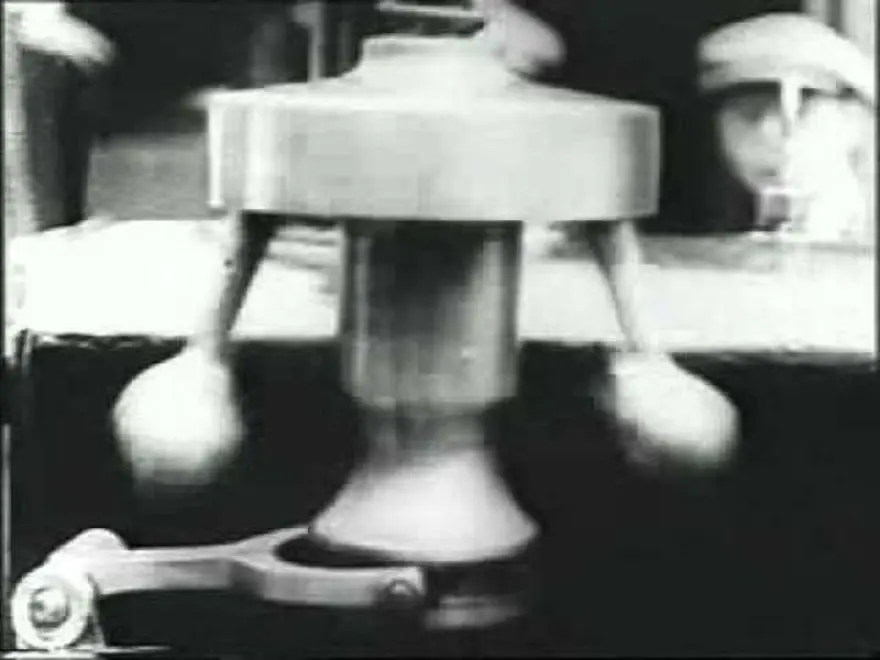
Deslav’s directorial hand is evident in every frame of The March of the Machines. With no human cast to guide, his 'actors' are the gears, pistons, conveyor belts, and presses of a nameless factory. The genius lies in his ability to imbue these inanimate objects with a sense of purpose, almost a personality, through precise cinematography and masterful editing. There’s a palpable sense of the machines performing, not just operating.
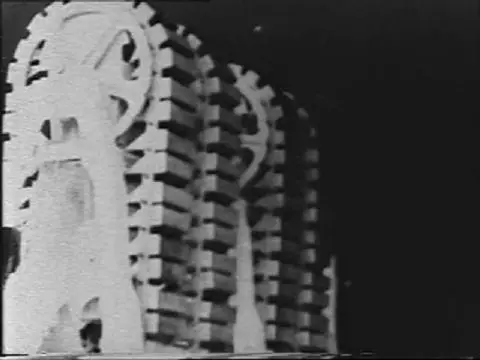
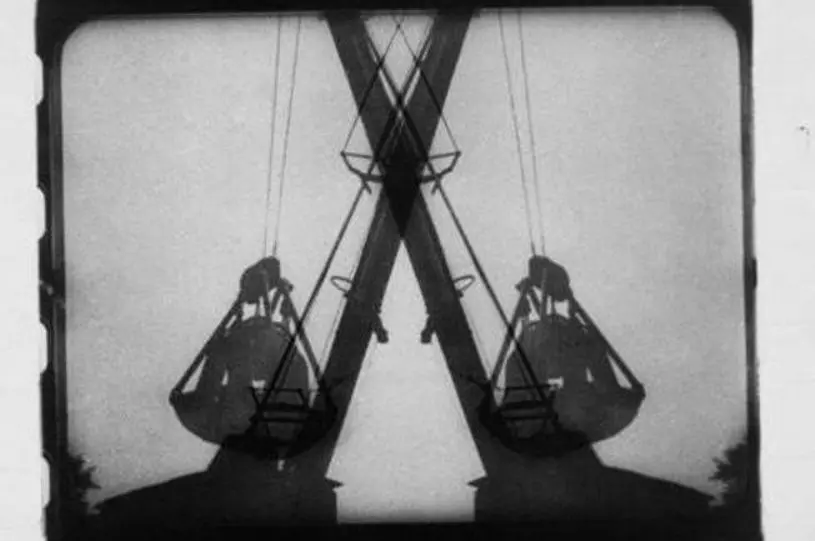
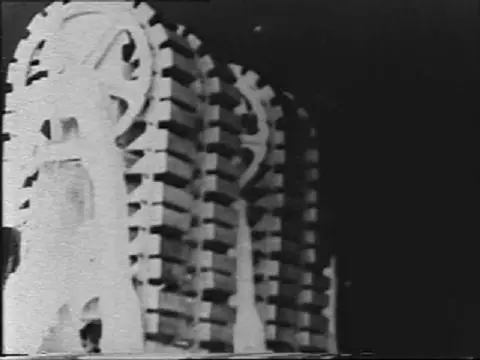
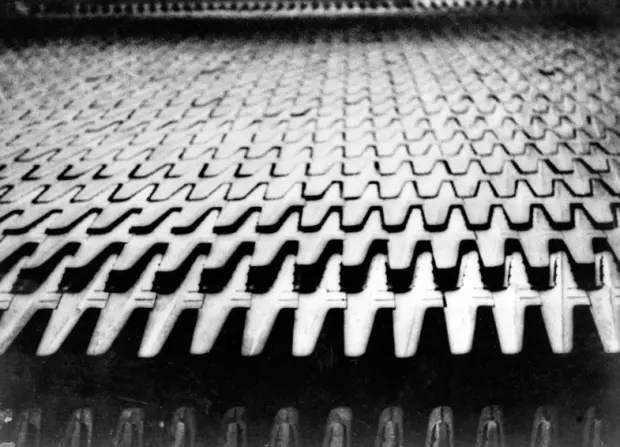
The cinematography is a masterclass in industrial abstraction. Deslav employs a variety of angles, from wide shots that capture the overwhelming scale of the factory floor to extreme close-ups that isolate the intricate dance of individual components. We see the rhythmic churn of a large flywheel, its momentum a hypnotic blur, contrasted with the sharp, precise punch of a hydraulic press. These aren't just documentary observations; they are carefully composed shots designed to highlight form, movement, and the interplay of light on metal.
Consider the recurring motif of vertical and horizontal lines created by the machinery itself. Deslav frames these elements to create a grid-like structure, emphasizing order and control. The camera often tracks along conveyor belts, mirroring the relentless forward motion, or pans slowly across a bank of engines, each beat of their operation contributing to the overall rhythm. This meticulous attention to visual composition elevates the mechanical to the sculptural.
But it is the editing that truly defines the film’s titular 'marching feel.' Deslav utilizes rapid cuts, often on action, to create a percussive rhythm. The duration of each shot is carefully calibrated, short enough to maintain momentum, yet long enough to register the specific action. This isn’t the jarring, disorienting montage of some contemporaries; instead, it’s a deliberate, almost musical cadence. A shot of a piston descending is immediately followed by another ascending, creating a visual call-and-response that mimics a drumbeat. It is an almost primal rhythm, deeply ingrained in the human experience.
The tone is one of detached observation, yet imbued with a profound respect for the power and precision of industry. There's no overt moralizing, no romanticization. It's simply 'what is,' presented with an artistic gaze that finds beauty in the relentless efficiency of the modern world. This approach stands in stark contrast to more conventional narratives of the era, such as The Dawn of a Tomorrow, which relied on human drama.
Eugene Deslav, though not as widely celebrated as some of his avant-garde peers, carved out a unique niche in experimental cinema. The March of the Machines is a testament to his belief in cinema’s capacity to transcend narrative and explore pure form. He wasn't interested in telling a story about the workers or the products; he was interested in the essence of the machine itself.
His work can be seen in the lineage of the 'city symphony' films, though here, the 'city' is compressed into the factory, and its 'symphony' is purely mechanical. Like Dziga Vertov’s Man with a Movie Camera, Deslav uses the camera as an active participant, an instrument of observation and reinterpretation. However, where Vertov celebrated human activity within the urban landscape, Deslav isolates the mechanical, almost as if to suggest its burgeoning autonomy.
The film also resonates with the artistic movements of the early 20th century, particularly Futurism and Constructivism. The Futurists, with their fascination for speed, technology, and the dynamism of modern life, would have found much to admire in Deslav's portrayal of industrial power. The film's aesthetic, stripped of ornamentation and focused on functional beauty, aligns perfectly with Constructivist ideals.
Deslav, in essence, performs as the film’s central consciousness. He is the observer, the orchestrator, and the interpreter. His decision to credit himself as the sole cast member, an unusual choice for a film entirely devoid of human presence on screen, underscores his role as the singular artistic force shaping the machines’ 'performance.' It asserts the filmmaker's complete control over the cinematic reality presented.
This approach was radical. In an era where cinema was rapidly solidifying its role as a narrative medium, Deslav, much like others exploring the boundaries of the medium, pushed against convention. He forced audiences to confront film not as a window to a story, but as a canvas for abstract expression, much like the architectural studies seen in O Novo Palácio da Câmara dos Deputados, but with a kinetic, rhythmic twist.
While seemingly a straightforward depiction of machinery, The March of the Machines is rich with thematic undertones. The 'marching feel' suggests not only rhythm but also progress, inevitability, and perhaps even a subtle hint of militarism. It evokes the relentless, unyielding advance of industrialization that characterized the early 20th century, a force that reshaped societies and human experience.
One could interpret the film as a meditation on the relationship between humanity and technology. By removing humans from the frame, Deslav compels us to see the machines as entities unto themselves, their movements purposeful and self-sufficient. This raises questions about agency and control: are these machines merely tools, or do they possess an inherent, almost sentient, power that dictates the rhythm of modern life?
The film also explores the concept of beauty in utility. In a world increasingly dominated by the manufactured, Deslav challenges us to find aesthetic value in the functional, the repetitive, and the powerful. The gleam of polished steel, the precision of interlocking parts, the sheer force of a piston – these elements, often overlooked, become the focus of artistic contemplation. It’s a compelling argument for the poetry of the mechanical.
Furthermore, the film serves as a historical document, albeit an artistic one. It captures the industrial landscape of its time, providing a window into the factories that powered the era. Yet, it transcends simple documentation by imbuing these scenes with an abstract, almost timeless quality. The machines, though specific to their period, become archetypes of mechanical action, their 'march' echoing through decades.
My unconventional observation is this: for a film so devoid of human presence, it is profoundly human. It taps into our innate desire for rhythm, for pattern, for order. It reflects our own industrial drive, our relentless pursuit of progress, and our often-complex relationship with the tools we create. It's a mirror held up to the mechanical heart of our own civilization.
The pacing of The March of the Machines is deliberate and consistent, adhering strictly to its rhythmic premise. There are no sudden narrative shifts or dramatic crescendos. Instead, the film builds its effect through accumulation and repetition, much like a minimalist musical composition.
This sustained rhythm can be both hypnotic and challenging. For viewers accustomed to the dynamic narrative arcs of films like Extravagance or The Chorus Girl's Romance, the lack of traditional plot can feel like a void. The film demands a different kind of engagement, one that focuses on sensory experience and abstract interpretation rather than plot progression.
The tone, as mentioned, is observational and objective, yet it manages to evoke a sense of awe and sometimes even unease. The sheer power of the machines, their unceasing operation, can feel overwhelming. It's a testament to Deslav's skill that he can elicit such varied responses without a single human expression or dialogue.
Engagement with the film is an active process. You don't just watch it; you experience its rhythm, you feel its pulse. It compels you to find meaning in the abstract, to discern patterns, and to project your own interpretations onto the relentless ballet of steel. This is not passive entertainment; it is an invitation to artistic contemplation.

For those willing to meet it on its own terms, the experience can be deeply rewarding. It’s a cleansing of the cinematic palate, a reminder of film’s fundamental power as a visual and rhythmic medium, unburdened by the conventions that would soon dominate the industry. It’s a raw, pure distillation of cinema at its most experimental.
Yes, The March of the Machines is absolutely worth watching, but with a specific mindset. It is not for everyone, nor is it intended to be. This is a film for the discerning cinephile, the student of film history, and anyone with an interest in experimental art.
It offers a unique window into the early avant-garde movement. It demonstrates how filmmakers pushed boundaries. It challenges traditional notions of what cinema can be. It is a vital piece of cinematic heritage that continues to inspire and provoke thought. Its influence, though subtle, can be traced through various forms of industrial art and experimental film that followed.
This film works as a powerful testament to the aesthetic potential of the mechanical world, proving that beauty and rhythm can be found in the most unexpected places. It is a stark reminder that art doesn't always need a story; sometimes, it just needs a vision. It is an essential viewing for understanding the foundations of non-narrative filmmaking.
The March of the Machines is not a film you passively consume; it is a film you actively engage with, wrestle with, and ultimately, if you're open to it, are rewarded by. Eugene Deslav’s short is an audacious, uncompromising piece of cinema that stripped away every narrative crutch to reveal the raw, rhythmic power of the moving image. It is a bold statement, a mechanical symphony, and a crucial historical document of cinematic experimentation.
While it undoubtedly stands as a challenging viewing experience for many, its value for those interested in the history and potential of film is immeasurable. It works. But it’s flawed. It’s a testament to the idea that art doesn't always need to entertain in the conventional sense; sometimes, its purpose is to provoke, to analyze, and to present the world anew. For its sheer audacity and its profound influence on visual rhythm, it earns a strong recommendation for the adventurous cinephile.

IMDb —
1935
Community
Log in to comment.