DbcultAccessing Vault...
Cult Review
Senior Film Conservator
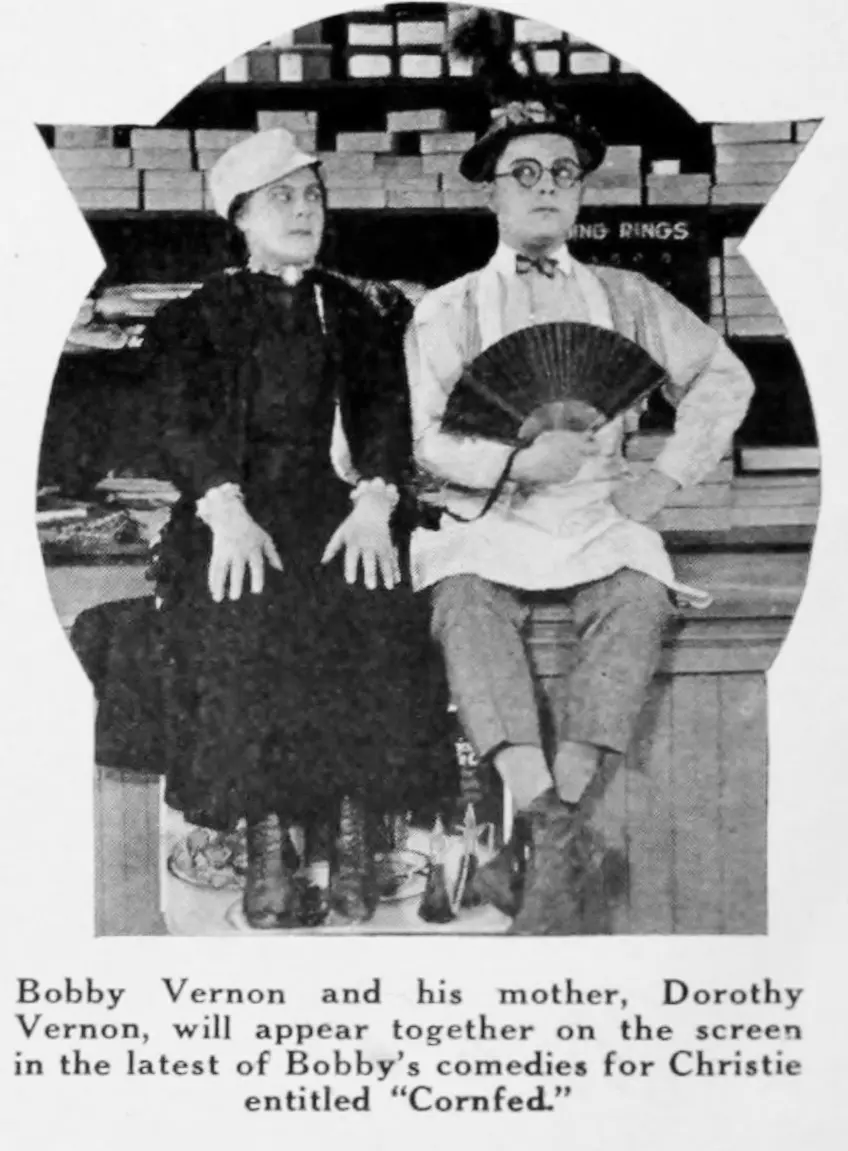
In the pantheon of silent-era comedies, few films capture the idiosyncratic pulse of rural Americana with as much zest as Cornfed. Directed with a keen eye for the absurdities of social climbing, this 1924 relic serves as a fascinating specimen of the Christie Comedies brand, where the stakes are as high as a harvest moon and the rivalries as thick as summer humidity. The film doesn't just present a love triangle; it orchestrates a collision between two distinct philosophies of American life: the sweat-equity of the mercantile class and the polished, often hollow, prestige of the financial elite.
The casting of Bobby Vernon as the store-keeper’s son is a masterstroke of archetypal positioning. Vernon, with his characteristic energy and diminutive yet resilient stature, embodies the everyman. His pursuit of the squire’s daughter, played with an effervescent charm by Duane Thompson, is a journey fraught with the obstacles of tradition and bank balances. Opposite him, the banker’s son represents a looming shadow of institutional power, creating a dynamic that feels both timeless and specifically rooted in the anxieties of the 1920s. Unlike the epic scale of The Queen of Sheba, 'Cornfed' finds its grandeur in the microcosm of the village green.
What distinguishes 'Cornfed' from its contemporaries is the subtle layering of its script, penned by Keene Thompson. While many films of the period relied on purely physical gags—reminiscent of the nautical mishaps in The Skipper's Narrow Escape—this film leans into the psychological tension of the 'village belle' trope. The squire’s daughter is not merely a passive trophy; she is the fulcrum upon which the social stability of the town rests. The store-keeper’s son must prove that his worth exceeds his ledger, a theme that resonates deeply with the sentimental domesticity found in The Old Nest.
The physical comedy is meticulously choreographed, utilizing the rustic environment to heighten the absurdity of the romantic competition. Whether it’s a chase through the general store or a confrontation at a town gathering, the film utilizes the spatial limitations of its setting to create a sense of claustrophobia that mirrors the characters' social constraints. This is a far cry from the sprawling maritime brutality of The Sea Wolf, yet it possesses an intensity of spirit that is equally compelling.
One cannot discuss 'Cornfed' without acknowledging the presence of Jack Duffy. Known for his uncanny ability to portray elderly characters with a sprightly, almost supernatural vitality, Duffy adds a layer of seasoned wisdom—or perhaps seasoned cynicism—to the proceedings. His interactions with the younger cast members provide a bridge between the old-world values of the squire and the modern ambitions of the suitors. This intergenerational friction is a staple of silent cinema, often seen in the more dramatic frameworks of Barnaby Rudge, but here it is played for delightful, resonant laughs.
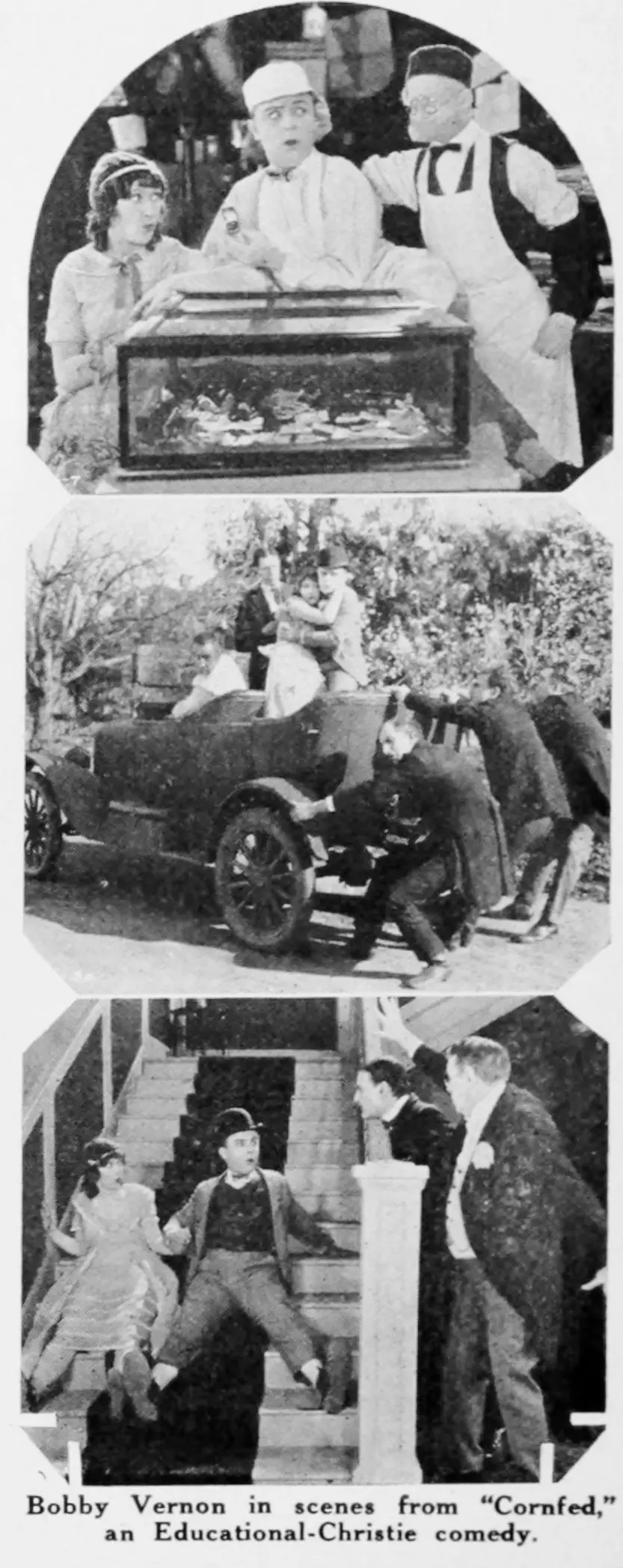
Visually, the film employs a bright, high-key lighting style that emphasizes the 'cornfed' wholesomeness of its subjects. The cinematography avoids the moody shadows of European imports like De røvede Kanontegninger, opting instead for a clarity that suits its comedic intent. The pacing is relentless, a hallmark of the Christie production house, ensuring that the audience is never more than a few moments away from a narrative pivot or a visual punchline. This briskness is comparable to the energetic flow of This Way Out, another example of how the 1920s mastered the art of the concise featurette.
The rivalry between the two sons serves as a microcosm for the American Dream itself. Is success achieved through the accumulation of capital (the banker) or through the service of the community (the store-keeper)? While 'Cornfed' never becomes overtly didactic, the preference for the store-keeper’s son suggests a populist leaning that was common in comedies of the era. This thematic preoccupation with financial standing and moral integrity can also be seen in $5, 000 Reward, where the lure of wealth tests the protagonist's soul.
Duane Thompson’s portrayal of the squire’s daughter is nuanced enough to avoid the 'damsel' trap. She navigates the attentions of her suitors with a playful intelligence, often appearing to be the only character truly aware of the absurdity surrounding her. Her role is the anchor of the film, much like the central figures in The Stimulating Mrs. Barton or the titular character in Mr. Opp. She represents the prize, yes, but also the judge and jury of the suitors' characters.
The film’s climax, involving a series of escalating misunderstandings and a desperate attempt at social one-upmanship, is a masterclass in silent construction. The absence of dialogue forces the actors to rely on micro-expressions and grand physical gestures, a language that George Williams and Victor Rodman handle with veteran expertise. This era of filmmaking required a level of expressive vulnerability that is often lost in modern talkies, a sentiment echoed when viewing the raw emotionality of The Dawn of Freedom.
"In 'Cornfed', the rural landscape is not merely a setting; it is a character that dictates the rhythm of the heart and the speed of the pursuit. It is a world where a store-keeper's son can stand tall against the weight of a bank vault."
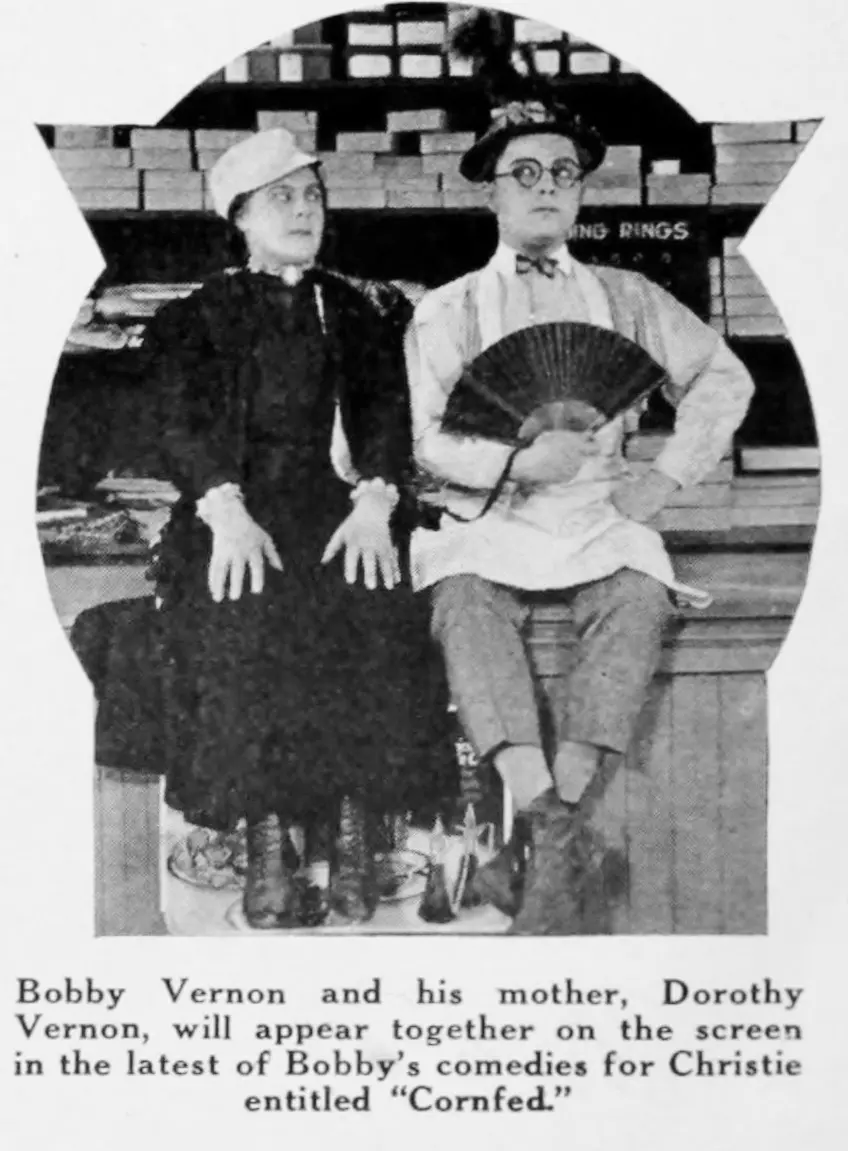
Comparing 'Cornfed' to other films of its time, such as Under Suspicion, reveals a lighter touch in its handling of conflict. While 'Under Suspicion' might lean into the noirish elements of doubt, 'Cornfed' remains steadfastly optimistic. Even when the banker’s son uses his status to gain an advantage, the film’s internal logic ensures that genuine merit—and perhaps a bit of comedic luck—will prevail. It’s a narrative structure that shares DNA with Dodging a Million, focusing on the comedic fallout of sudden or perceived status changes.
The supporting cast, including Lincoln Plumer and George B. French, fills the village with a sense of lived-in reality. These are not just background extras; they are the gossips, the skeptics, and the observers who make the village feel like a functioning ecosystem. This attention to world-building is what separates a great silent comedy from a mere collection of gags. It’s a quality found in the atmospheric depictions of place in When Broadway Was a Trail or the localized drama of Centocelle.
As we look back at 'Cornfed' from a century’s distance, its charm remains remarkably untarnished. The film captures a moment in time when the transition from purely agrarian life to a more complex economic reality was being negotiated through the lens of humor. It is a testament to the talent of Bobby Vernon and the Christie Comedies team that the film still elicits genuine laughter and empathy. The store-keeper’s son’s struggle is our own—the perennial fight for recognition and love in a world that often values the size of one’s pocketbook over the size of one’s heart.
In conclusion, 'Cornfed' is a vital piece of cinematic history that deserves more than a footnote. It is a vibrant, funny, and surprisingly insightful look at the American social fabric. For fans of silent cinema, it is an essential watch, offering a perfect blend of slapstick and sentiment. It stands as a reminder that while technology in film may change, the fundamental human stories of rivalry, romance, and the quest for social standing are as enduring as the cornfields themselves.

IMDb 6
1933
Community
Log in to comment.