DbcultAccessing Vault...
Cult Review
Senior Film Conservator
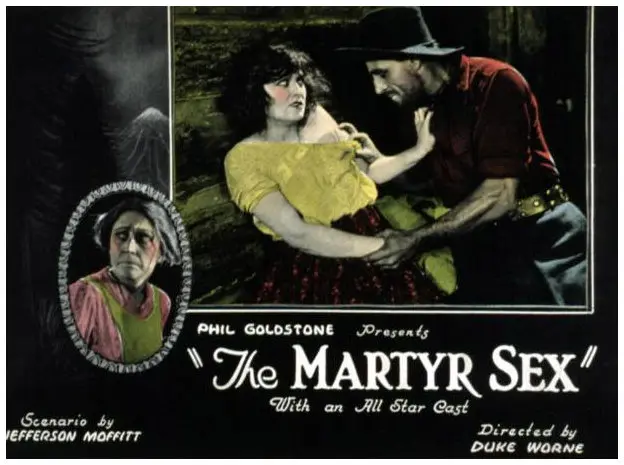
Cinema in 1924 was often a landscape of high melodrama, yet Jefferson Moffitt’s 'The Martyr Sex' carves out a niche that feels startlingly modern in its exploration of medical trauma and tribal vengeance.
The Southern wilderness has long served as a cinematic shorthand for lawlessness, a place where the reach of the state is eclipsed by the shadow of the canopy. In The Martyr Sex, this setting is not merely a backdrop but an active antagonist. Dr. Ross Wayne, portrayed with a stoic, almost weary intelligence by William Fairbanks, represents the intrusion of Enlightenment values into a realm governed by atavistic codes of conduct. When he is called to the Paxton cabin, the atmosphere is thick with more than just humidity; there is a palpable sense of dread that transcends the silent medium's typical theatricality.
The amputation of Branch Paxton’s arm is handled with a restraint that paradoxically heightens the horror. We do not see the bone saw, but we see the transformation of Branch—played with a feral intensity by William Dyer—from a formidable patriarch into a wounded animal. This loss of physical wholeness triggers a psychological fracture. To Branch, the missing limb is not a life saved; it is a theft. This fundamental misunderstanding of science as malice is the engine that drives the film’s middle act, reminiscent of the ethical friction found in Moral Suicide, though here the stakes are rooted in the physical rather than the purely existential.
Dorothy Revier’s Beulah is the titular 'martyr,' a character whose body becomes the battlefield for the film’s conflicting ideologies. Unlike the more conventional heroines of the era, such as those in Polly Put the Kettle On, Beulah is a figure of profound exhaustion. Her illness is not a mere plot device but a manifestation of the domestic tyranny she has endured. The film subtly critiques the patriarchal structure of the Paxton clan, where women are treated as renewable resources until they are simply... spent.
The visual language used to depict Beulah’s decline is haunting. Moffitt utilizes deep shadows and tight framing to emphasize her entrapment. When Wayne prescribes 'rest and quiet,' he is essentially prescribing an escape from her own family. The tragedy of the film lies in the fact that her father views this medical advice as a further encroachment upon his property—his daughter’s labor.
The third act shifts from a domestic drama into a high-stakes survivalist thriller. The pursuit through the woods is edited with a rhythmic urgency that belies the technical limitations of 1924. As Paxton, Lem (Frank Hagney), and the treacherous Ed Carter (Pat Harmon) close in on the shack, the film adopts a proto-horror aesthetic. The shack, isolated and crumbling, becomes a sanctuary that feels more like a tomb.
Then comes the blood transfusion. In the modern era, we take the transfer of fluids for granted, but in the early 1920s, this was still a procedure of significant public fascination and lingering mystery. By having Dr. Wayne forcibly take blood from Lem to save Beulah, the film performs a radical act of poetic justice. Lem, who has been a tool of his father’s violence, is literally drained of his aggression to sustain the life he helped diminish. It is a moment of visceral intensity that rivals the thematic weight of The Man Who Saw Tomorrow, though it grounds its 'vision' in the sanguine reality of the body.
William Fairbanks delivers a performance that eschews the broad gesticulation common to the period. His Ross Wayne is a man of economy—both in movement and in spirit. This contrasts sharply with Les Bates and Pat Harmon, who lean into the more traditional villainy of the era. However, it is Frank Hagney as Lem who provides the most interesting foil. His physicality is imposing, making his eventual submission to the doctor’s needle all the more impactful. The power dynamic shifts from the brute strength of the woodsman to the intellectual dominance of the physician.
Directorial choices by Moffitt suggest a familiarity with European expressionism, particularly in the way the woods are lit. There are sequences that feel as though they could have been lifted from a lost reel of Fridericus Rex - 1. Teil: Sturm und Drang, where the environment reflects the internal turmoil of the protagonists. The use of natural light, filtering through the dense canopy, creates a dappled effect that mirrors the moral ambiguity of Wayne’s final actions. Is it ethical to forcibly bleed one man to save another? The film answers with a resounding 'yes,' prioritizing the survival of the innocent over the autonomy of the aggressor.
While often overshadowed by the larger-than-life epics like Famous Battles of Napoleon, The Martyr Sex deserves recognition for its intimate, gritty portrayal of the human condition. It lacks the polish of Vanity's Price, but it makes up for it with a raw, unvarnished look at frontier medicine and the cycles of revenge. It shares a certain rural DNA with At Piney Ridge, yet it feels more dangerous, more willing to explore the darker impulses of its characters.
The happy resolution—a requirement of the era’s commercial sensibilities—feels somewhat earned here because it is preceded by such genuine suffering. The reconciliation between Wayne and the Paxtons isn't just a handshake; it is a biological bond formed in the heat of a crisis. It suggests that civilization isn't something that is brought to the wilderness through laws or sermons, but through the shared recognition of our collective fragility.
Technical Note: The surviving prints of this film show a remarkable use of tinting, particularly the amber hues used for the cabin interiors which contrast sharply with the cool, sea-blue tones of the nocturnal forest. This color palette reinforces the divide between the perceived safety of the hearth and the looming threat of the exterior world.
In the broader context of 1920s cinema, where films like A Sister to Salome or Maddalena Ferat often leaned into high-society intrigue, The Martyr Sex remains a vital piece of Americana. it captures a moment when the world was pivoting from the superstitions of the past to the cold certainties of the future. Dr. Wayne is the harbinger of that future, a man who carries the weight of progress in his medical bag, even when the world he seeks to heal would rather see him dead. It is a film of blood, bone, and the messy, beautiful business of staying alive against the odds.
Ultimately, the film asks us to consider what we owe to one another. Is it enough to simply 'do no harm,' or must we, like Wayne, be willing to commit a smaller transgression to prevent a greater tragedy? This moral complexity ensures that while the silent era has long since passed, the questions raised in that small shack in the Southern woods remain as sharp as a surgeon’s blade.
IMDb —
1927
Community
Log in to comment.