DbcultAccessing Vault...
6.1/10
Senior Film Conservator
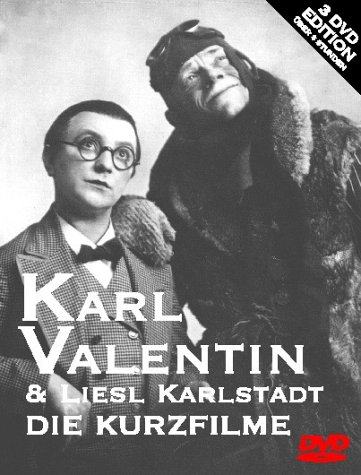
A definitive 6.1/10 rating for a film that redefined the boundaries of cult cinema. The Mysteries of a Hairdresser's Shop remains a cornerstone of transgressive art.
The opening tableau of The Mysteries of a Hairdresser's Shop is less a conventional exposition than a tableau vivant of absurdity. The camera lingers on a narrow, soot‑stained room where the fluorescent hum of a single bulb casts long shadows over a battered wooden chair. Karl Valentin, half‑asleep on a threadbare mattress, is introduced not through dialogue but through the slow, deliberate rise of his massive beard, a visual metaphor for the weight of his own inertia.
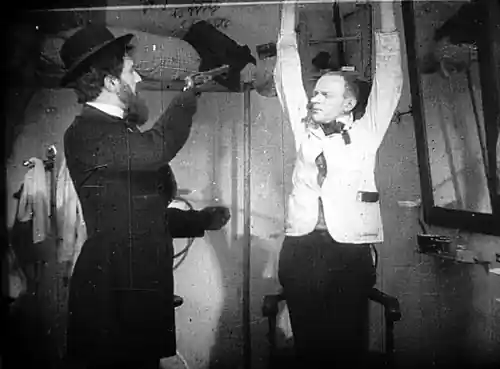
When a patron finally drags himself into the shop—a hulking, heavily bearded man demanding a trim—Valentin’s reluctance is palpable. He glances at the ceiling, then at the patient, before reaching for a hammer instead of scissors. The hammer, gleaming with an almost ceremonial luster, becomes an instrument of both comedy and dread. The audience, aware of the film’s Brechtian lineage, is invited to recognize the theatricality of the violence rather than to be shocked by it.
Each implement Valentin employs carries a symbolic resonance that deepens the narrative beyond slapstick. The hammer, traditionally a carpenter’s ally, here serves as a subversive scalpel, dismantling the veneer of civility. The chisel, precise yet brutal, extracts boils with the same reverence a surgeon would apply to a tumor, suggesting a critique of society’s tendency to excise discomfort without addressing its root.
Pincers, delicate yet unforgiving, are employed to pluck hair follicles as though they were insects. This act transforms a routine haircut into a ritualistic exorcism, stripping away not just hair but identity. The film’s visual language, saturated in the stark contrast of black background and white faces, underscores the binary between appearance and essence.
The supporting ensemble functions as a chorus of societal archetypes. Annemarie Hase, playing the sardonic assistant, delivers lines laced with irony, her eyes constantly scanning for the next absurdity. Carola Neher’s bewildered regular provides a foil to Valentin’s apathy; her attempts to maintain normalcy in a shop where heads literally roll become a commentary on the human desire for routine amidst chaos.
Erwin Faber, the bemused observer, often breaks the fourth wall with a subtle raise of his eyebrows, reminding viewers of the performative nature of the spectacle. Hans Leibelt, the stoic overseer, embodies the bureaucratic indifference that permits such madness to persist, while Dr. Koch, the skeptical physician, attempts to rationalize the inexplicable, his medical jargon clashing with the surreal tableau.
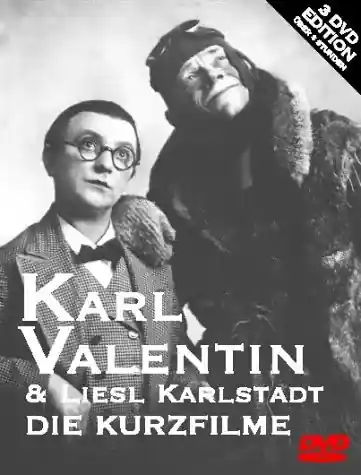
Josef Eichheim’s hapless apprentice, constantly slipping on shaving cream, adds a layer of physical comedy that tempers the darker moments. Liesl Karlstadt’s witty confidante offers philosophical asides that echo Brecht’s alienation effect, urging the audience to contemplate rather than merely consume.
Max Schreck, whose presence looms like a shadow, appears intermittently, his silence speaking louder than any dialogue. Kurt Horwitz’s bureaucratic interloper, clutching paperwork, represents the absurdity of administrative oversight in a world where logic has been upended. Blandine Ebinger’s enigmatic patron, whose motives remain opaque, adds an air of mystery that aligns with the film’s title.
The screenplay, a collaborative effort between Valentin, Bertolt Brecht, and Erich Engel, eschews linear progression in favor of episodic vignettes. Each scene functions as a self‑contained tableau, allowing the audience to reset expectations repeatedly. This fragmentation mirrors Brecht’s epic theatre, where the goal is to prevent emotional immersion and instead provoke critical reflection.
For instance, the sequence where Valentin transforms a long‑haired patron into a skin‑head is not merely a visual gag; it is a stark allegory for the stripping away of bourgeois pretensions. The subsequent decapitation scene, rendered with a theatrical flourish—a sudden flash, a stylized spin, and a slow‑motion fall—serves as a hyperbolic illustration of the ultimate consequence of unchecked authority.
Visually, the film employs high‑contrast chiaroscuro, the interplay of deep shadows and harsh lighting emphasizing the moral ambiguity of the characters. The use of static long shots, interspersed with sudden close‑ups of bloodied tools, creates a rhythm that oscillates between calm observation and visceral shock.
The sound design, though sparse, is meticulously crafted. The metallic clang of the hammer, the sizzle of a scalp being shaved, and the occasional muffled scream are amplified, immersing the viewer in the sensory overload of the shop. The occasional die‑getic jazz riff, reminiscent of the era’s cabaret scene, adds an ironic levity that undercuts the horror.
When placed beside contemporaneous works such as The Hiding of Black Bill or Jacqueline, or Blazing Barriers, Valentin’s film stands out for its unapologetic embrace of grotesque humor. While the former employs suspense to interrogate societal oppression, and the latter uses melodrama to explore personal emancipation, The Mysteries of a Hairdresser's Shop fuses satire with carnage, creating a hybrid that defies easy categorization.
Even within the broader canon of German Expressionist cinema, the film’s stark set design and exaggerated performances echo the visual language of Under the Red Robe, yet its narrative daring pushes beyond the typical confines of the genre, venturing into a realm where absurdity becomes a vehicle for social critique.
Karl Valentin’s portrayal is a masterclass in paradox. He oscillates between lethargic indifference and manic precision, a duality that keeps the audience perpetually off‑balance. His physical comedy—slipping on a bar of soap, exaggerated yawns—contrasts sharply with the cold efficiency of his violent acts, creating a dissonance that is both unsettling and captivating.
Valentin’s timing, honed through years of vaudeville, ensures that each gag lands with surgical accuracy. Yet, his eyes often betray a glimmer of existential fatigue, suggesting an underlying commentary on the futility of his own craft. This layered performance invites multiple readings: is Valentin a nihilist, a victim of his own boredom, or a satirical embodiment of authoritarian excess?
Annemarie Hase’s delivery is razor‑sharp; her sarcasm cuts deeper than any blade, providing a necessary counterweight to Valentin’s chaotic energy. Carola Neher’s subtle trembling, conveyed through minute gestures, adds a humanizing thread that grounds the film’s more outlandish moments.
Max Schreck, whose reputation for embodying darkness precedes him, appears only fleetingly, yet his presence casts a lingering pall over the narrative. In one memorable scene, he watches a decapitation from a shadowed doorway, his expression inscrutable, reinforcing the notion that evil can be both overt and silently observing.
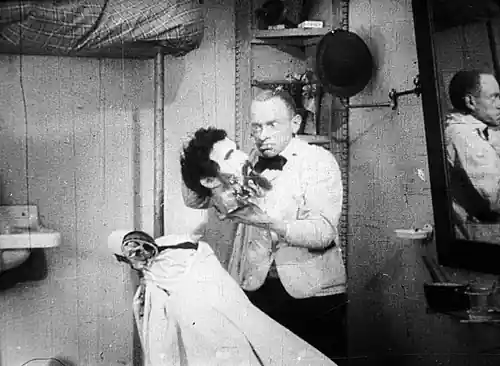
At its core, the film interrogates the commodification of personal grooming—a seemingly benign service that becomes a conduit for power dynamics. By turning a hairdresser’s shop into a site of literal and figurative dismemberment, the narrative suggests that intimacy can be weaponized, that the act of trimming someone’s hair can parallel the act of trimming their autonomy.
Furthermore, the recurring motif of the bed—a place of rest that Valentin prefers over his work—serves as a metaphor for escapism. The juxtaposition of the sterile, clinical environment of the shop with the soft, chaotic realm of the bedroom underscores the tension between societal expectations and personal desire.
Released in the interwar period, the film captures the zeitgeist of a Germany grappling with political turbulence and artistic experimentation. The collaboration with Bertolt Brecht, a titan of epic theatre, infuses the work with a political edge that, while not overtly propagandistic, subtly critiques the authoritarian impulses rising in Europe.
The film’s daring blend of comedy and horror anticipates later avant‑garde works, such as the surrealist provocations of Luis Buñuel. Its willingness to confront the audience with graphic imagery—head‑chopping scenes that would be censored in many contemporary markets—demonstrates a boldness that cements its place as a cult classic.
When examined alongside later genre‑blending pieces like Die Narbe am Knie or Eldorado, the film’s influence becomes apparent. Its unapologetic use of gore for satirical ends paved the way for directors who would later fuse visceral spectacle with political commentary.
Even modern black comedy horror such as Prohibition echoes Valentin’s technique of juxtaposing mundane settings with extreme violence, proving the film’s enduring relevance.
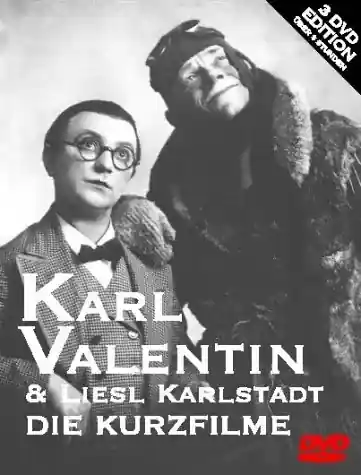
The cinematographer employs a series of tracking shots that follow the swing of the hammer, creating a kinetic rhythm that mirrors Valentin’s internal turmoil. The occasional use of Dutch angles heightens the sense of disorientation, especially during the decapitation sequences, where the camera spins in tandem with the falling head, emphasizing the surreal nature of the act.
Lighting, deliberately harsh, casts stark silhouettes that evoke the chiaroscuro of classic German Expressionism. The occasional burst of yellow light—filtered through a cracked window—introduces a fleeting warmth that contrasts with the pervasive darkness, symbolizing the fleeting moments of humanity amidst the carnage.
The film’s score, composed of discordant piano chords interlaced with a low, throbbing bass, underscores the tension between comedy and horror. Each time a tool strikes flesh, a sharp, metallic note punctuates the scene, creating an auditory motif that becomes synonymous with the film’s brand of dark humor.
Silence, too, plays a crucial role. In moments where Valentin gazes at a patient’s trembling hands, the absence of sound forces the viewer to confront the raw vulnerability on screen, amplifying the emotional impact without resorting to melodrama.
The film’s pacing is deliberately uneven, mirroring the erratic nature of its protagonist. Rapid-fire sequences of slapstick violence are interspersed with languid, contemplative moments where characters stare into mirrors, reflecting on their own fragmented identities.
This rhythm, while potentially disorienting, serves a purpose: it prevents the audience from settling into complacency, ensuring that each new tableau feels fresh and unsettling. The lack of a conventional climax—there is no singular, final showdown—reinforces the notion that the absurdity is perpetual, a never‑ending cycle of exploitation.
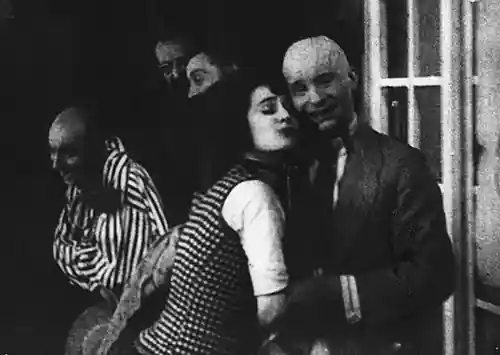
Throughout the film, subtle nods to contemporary theater and literature surface. A poster on the wall references The Dummy (1920), hinting at the theme of dehumanization. A line of dialogue echoes a famous Brechtian monologue about the alienation of labor, further embedding the film within a broader intellectual discourse.
These intertextual elements reward attentive viewers, offering layers of meaning that extend beyond the immediate visual spectacle.
Upon its release, the film divided critics: some lauded its daring blend of humor and horror, while others condemned its graphic content as gratuitous. Over the decades, however, it has garnered a cult following, celebrated at retrospectives for its bold experimentation and its influence on the dark comedy genre.
Modern scholars cite the film as an early exemplar of the “grotesque satire” that would later be popularized by directors like Werner Herzog and Lars von Trier. Its status as a bridge between Weimar-era expressionism and post‑war avant‑garde cinema underscores its historical importance.
In sum, The Mysteries of a Hairdresser's Shop is a daring, genre‑defying work that leverages absurdist violence to interrogate power structures, societal expectations, and the fragile veneer of civility. Its rich tapestry of visual motifs, layered performances, and Brechtian undercurrents coalesce into a film that is as intellectually provocative as it is viscerally striking.
For viewers willing to navigate its unsettling terrain, the film offers a rewarding experience that lingers long after the final frame fades to black.
IMDb —
1919
Community
Log in to comment.