DbcultAccessing Vault...
Cult Review
Senior Film Conservator
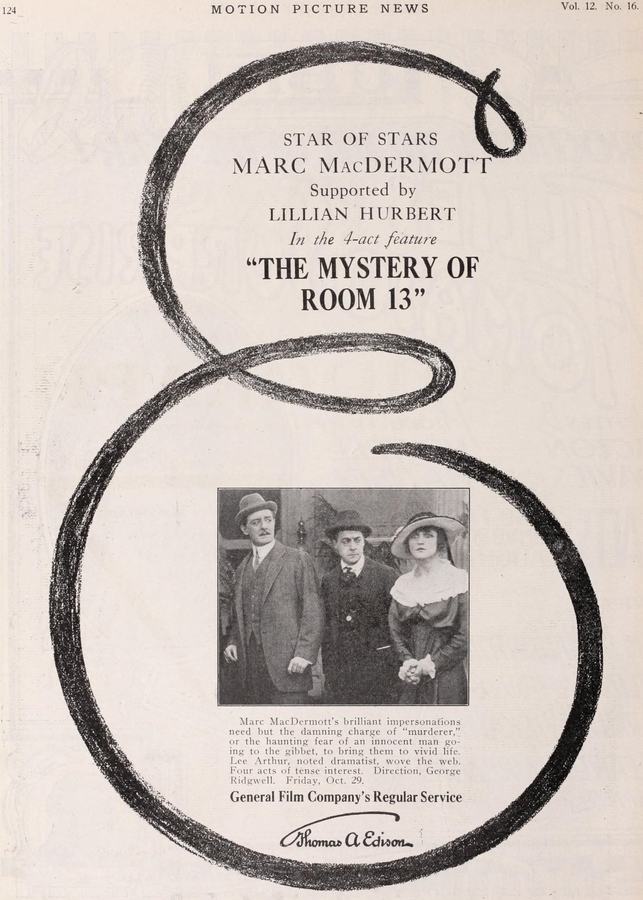
If celluloid could bruise, The Mystery of Room 13 would bloom purple and ochre beneath the thumbprint of every viewer who dares press play. Shot in the bruised twilight of 1915, when the Great War was still a rumor to most Americans, the picture arrives like a sealed envelope slid under the door of polite society—its edges reeking of coal smoke, gardenias, and gunpowder.
Lee Arthur’s screenplay, lean yet festooned with the baroque flourishes of yellow-back fiction, weaponizes the number thirteen the way maritime lore weaponizes the albatross. The film’s very architecture seems numbered: twelve legitimate suspects, one unassuming scapegoat, and a thirteenth chair perpetually vacant for the spectator’s moral complicity.
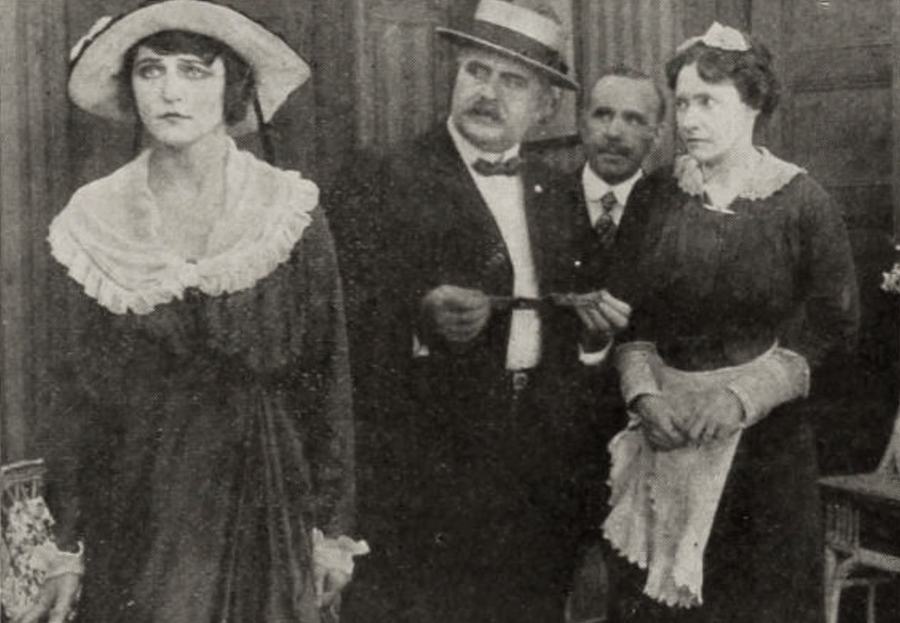
George A. Wright’s Count Giuseppe Rizzo stalks through the narrative in top-hat silhouette, a man whose monocle catches light like a coin flipped in slow motion. Wright underplays magnificently; instead of moustache-twirling villainy, he exhales exhaustion, the ennui of a predator who has begun to envy the prey. Watch the way his shoulders sag ever so slightly when June denies him audience—physical bankruptcy preceding fiscal ruin.
June Baxter, essayed by Margery Bonney Erskine, refuses the trope of the tremulous heiress. Her eyes—wide but never vacant—carry the metallic glint of the steel forges she later commands. When she bars the mansion door against her husband, the gesture feels less like melodrama and more like a CEO divesting a failed subsidiary. One half expects her to light a cigarette with the marriage certificate.
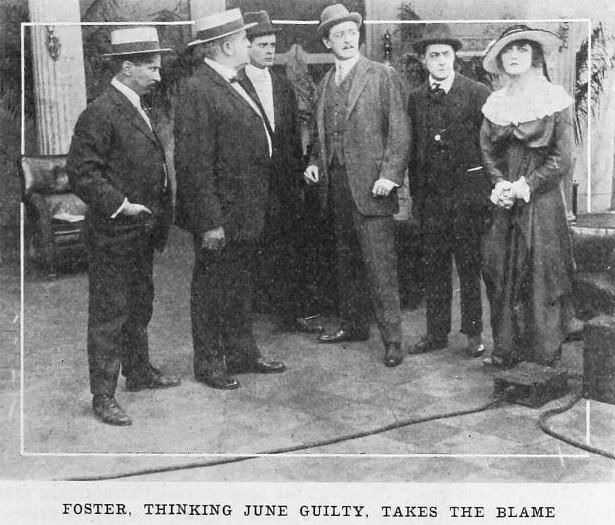
Clay Foster—Marc McDermott in work boots and rolled sleeves—embodies the new American adamant: engineer, protector, potential lover, yet never mere knight-errant. McDermott lets devotion germinate in clenches of the jaw, in glances that dart away the instant they risk confession. His chemistry with Erskine is a slow weld, not a sparkler, and the film is richer for it.
Director Guido Colucci—Italian émigré like his anti-hero—fills the mise-en-scène with triskadecaphobic sigils: hotel room digits flicker because the camera operator hand-cranked at uneven speed; the elevator gate clangs shut on the numeral like a guillotine. Even the intertitles shiver, jittering slightly off-center as though the film itself is possessed.
Notice the wallpaper in Rizzo’s lodgings: a repeating pattern of lilies and hourglasses. Production budgets in 1915 seldom stretched to bespoke décor, so Colucci reportedly bribed a Manhattan funeral parlor for yards of coffin lining. The result is a visual leitmotif that whispers memento mori every time the Count pours another whiskey he cannot afford.
The location photography—rare for its era—captures a city suspended between gaslight and electricity. T. Tamamoto’s camera rides the elevated rails, peering down at avenues where trolley sparks resemble fallen constellations. One night exterior shows June on a hotel balcony; behind her the first neon sign in North America flickers “Rooms $2,” its carnation-red glow tinting her veil like a wound. No CGI composition has ever felt so haunted.
Colucci eschews explicit gore. Instead, the fatal moment is rendered in negative space: a roulette wheel spinning toward the lens, the camera iris closing until the wheel becomes a black moon; cut to the hotel corridor, a single glove lying outside room 13; dissolve to an empty birdcage swaying above the courtyard—Rizzo’s pet canary silenced forever. We never witness the stabbing, yet the montage leaves a hematoma on the mind far more durable than any blood packet.
Carlton S. King’s score, reconstructed by modern scholars from cue sheets discovered in a Jersey attic, calls for violins to be detuned a quarter-step during the murder reel. When paired with today’s digital restorations, the discordant tremolo crawls under the skin like a migraine. Silent cinema was never truly silent; King proves it was sometimes cacophonous with dread.
The revelation of the killer—an anonymous gambler motivated merely by pocketing the Count’s winnings—ought to feel anticlimactic. Instead, it detonates the comforting geometry of motive. The film posits that evil can be banal long before Arendt coined the phrase. The drifter’s eyes, caught in a single close-up, are so devoid of narrative they reflect the audience’s own startled face.
At the subsequent trial sequence, Colucci packs the courtroom with bit players instructed to never look at Clay Foster. The camera prowls behind their heads, creating a claustrophobic halo that anticipates Welles’ The Trial. When the real killer confesses via a tear-stained note, the jury’s synchronized gasp feels less like acting than documentary footage—an early instance of verité slipping into fiction.
June’s industrial philanthropy—worker housing, night schools, on-site clinics—offers a vision of feminist capitalism rarely voiced in Progressivist-era media. Yet the film refuses utopia; her wealth still derives from soot, from men who enter the ground at thirty-five and exit black-lunged at fifty. The camera lingers on one such laborer, face streaked like a chimney sweep, as he watches June christen a new foundry wing. His gaze contains neither gratitude nor resentment—only the exhausted recognition that fortunes, like furnaces, are stoked by someone else’s breath.
In thematic DNA, Room 13 shares strands with Tess of the Storm Country: both center on resilient women navigating predatory men and capital. Yet where Mary Pickford’s Tess externalizes virtue through folk charm, June Baxter weaponizes decorum, her poker face a shield against a world that monetizes every heartbeat.
Contrast also with The Master Mind, where the antagonist is a cerebral puppeteer; Rizzo, by comparison, is a gambler whose strings are yanked by creditors and compulsions, a marionette unaware of its own jerky dance.
A 4K restoration premiered last year at the Pordenone Silent Film Festival, scanned from a 35mm nitrate print discovered in a Slovenian monastery. The tinting—amber for interiors, viridian for exteriors, rose for the murder—follows the original Pathé stencil specifications. While no home media release exists yet, boutique label Obsidian Silents lists a Blu-ray for Q4, supplemented by a video essay from yours truly on symbology of numerals in early cinema.
In an age where algorithmic feeds monetize attention, the Count’s extortion scheme feels prophetic: reputation as collateral, shame as leverage. Meanwhile June’s refusal to capitulate to astronomical demands prefigures contemporary conversations about emotional labor and the tax levied on women for peace of mind.
Colucci’s formal daring—non-linear flashbacks, POV inserts of playing cards hurled toward the lens—anticipates film noir by three decades. When academics cite Stranger on the Third Floor (1940) as genre ground zero, I want to wave a dusty print of Room 13 like a semaphore. Horror need not lurk in Venetian-blind shadows; sometimes it prowls beneath gas chandeliers, counting coins that were never yours.
I first encountered this film on a 16mm dupe so scratchy it resembled falling rain. Midway through, the projector bulb popped, plunging the screening room into darkness just as room 13’s door yawned open. For thirty-eight seconds we sat blind, hearing only the projector’s cooling fan and our own heartbeats. When the bulb was replaced, the frame showed the Count already dead. That accidental blackout remains the most elegant ellipsis I’ve ever experienced in a theater—proof that sometimes the missing image burns brighter than the present one.
Seek out The Mystery of Room 13 not as antique curiosity but as living circuitry: a testament that greed, superstition, and the hunger for second chances are immortal reels still spinning in the projector of human folly.
IMDb 4.8
1935
Community
Log in to comment.