DbcultAccessing Vault...
6.5/10
Senior Film Conservator
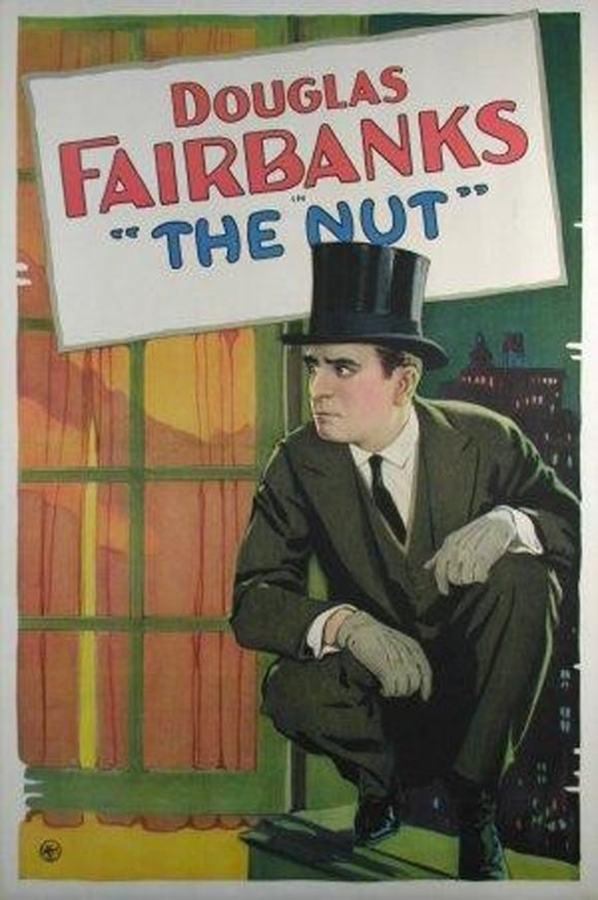
A definitive 6.5/10 rating for a film that redefined the boundaries of cult cinema. The Nut remains a cornerstone of transgressive art.
To witness Douglas Fairbanks in The Nut (1921) is to observe a hurricane contained within the frame of a silent film. Before he became the definitive swashbuckler of Hollywood’s golden age, Fairbanks was the master of the 'modern' comedy—a genre he essentially invented to showcase his own impossible vitality. In this particular outing, the athleticism is not directed toward dueling with swords but toward the navigation of a domestic space transformed into a labyrinth of levers and pulleys. Unlike the more grounded domesticity found in Neat But Not Gaudy, The Nut embraces a surrealist edge that predates the more polished studio comedies of the late twenties.
The film serves as a fascinating bridge in Fairbanks' career. We see the remnants of the 'everyman' character he perfected in his early shorts, such as The Star Boarder, yet there is a burgeoning sense of the larger-than-life hero that would soon dominate his filmography. Charlie Jackson is a character of profound idiosyncrasy; he is a man who cannot simply walk through a door when he can instead be propelled through it by a pneumatic device of his own creation. This penchant for mechanical complexity serves as a brilliant metaphor for the frenetic pace of the early 1920s—a world caught between Victorian sensibilities and the dawning of the machine age.
The narrative engine of The Nut is fueled by a surprisingly poignant social objective. While the film is ostensibly a comedy of errors, the stakes are rooted in the desperate need for urban reform. Marguerite De La Motte, playing Estrell, provides the moral compass of the film. Her desire to help children from impoverished neighborhoods is the catalyst for Charlie’s madness. It is a theme that resonates with the social consciousness seen in The Law of Nature, though The Nut approaches the subject with a lighter, more satirical touch.
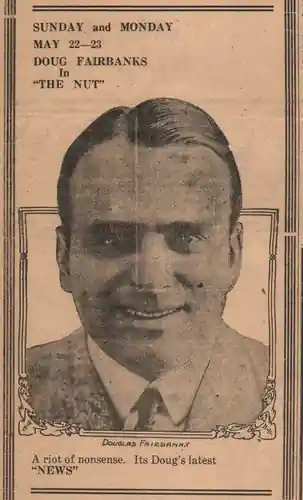
Charlie’s attempts to woo the wealthy investors are where the film’s lexical diversity of movement truly shines. He doesn't just pitch an idea; he performs it. He orchestrates elaborate 'happenings'—precursors to modern performance art—to grab the attention of the bored aristocracy. There is a sequence involving a wax figure that is so expertly choreographed it rivals the best work of Chaplin or Keaton. Fairbanks’ timing is impeccable, utilizing his entire body to convey the desperation and the genius of a man who is perpetually misunderstood by the very people he seeks to impress. This struggle against the rigid structures of high society mirrors the thematic undercurrents of The Little Diplomat, though Fairbanks replaces diplomacy with sheer, unadulterated chaos.
From a technical standpoint, The Nut is a marvel of its era. The set design of Charlie’s apartment is a character in its own right. The Rube Goldberg machines are not merely props; they are integrated into the cinematography in a way that requires precise coordination between the actors and the camera crew. The lighting, while standard for the period, manages to highlight the metallic textures of Charlie’s inventions, creating a visual contrast between the cold steel of his gadgets and the warm, soft-focus world of the socialites he pursues. This technical sophistication is a far cry from the more static presentations found in contemporary dramas like The Silver Horde.
The writing, credited to Fairbanks alongside Kenneth Davenport and William Parker, is sharp and self-aware. The intertitles are infused with a dry wit that complements the physical absurdity on screen. There is a conscious effort to subvert the audience's expectations of a typical romantic lead. Charlie is frequently the butt of the joke, his inventions failing at the most inopportune moments, yet his resilience is what makes him endearing. This resilience is a hallmark of the Fairbanks persona—a belief that through enough physical exertion and mental agility, any obstacle can be overcome. It is the same spirit that drives the narrative in Go West, Young Man, albeit in a vastly different setting.
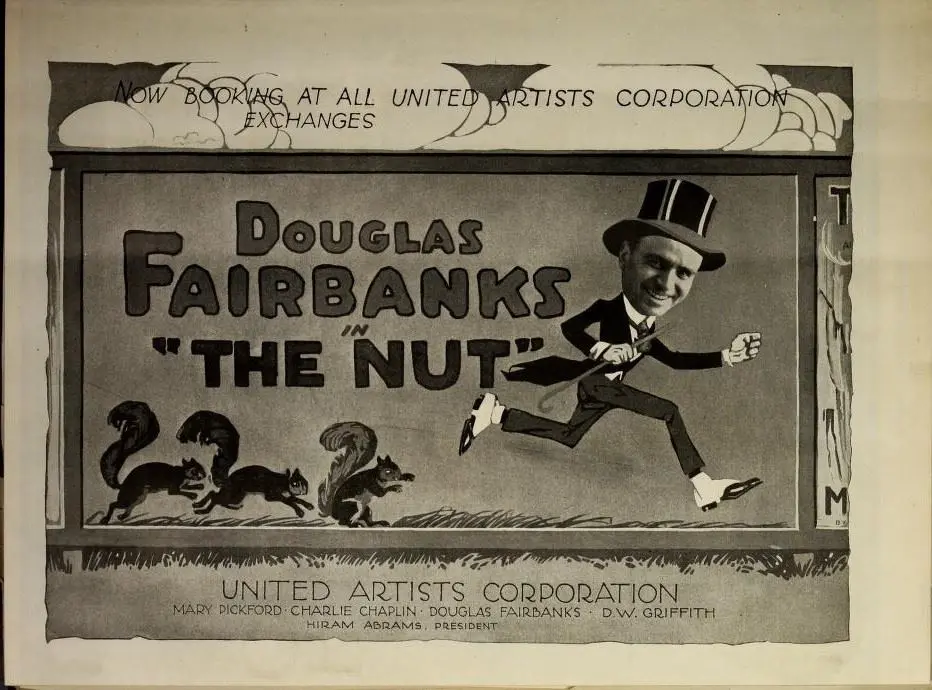
While Fairbanks is undoubtedly the sun around which the film orbits, the supporting cast provides essential gravity. William Lowery and Gerald Pring deliver performances that anchor the more fantastical elements of the plot. They represent the 'sane' world that Charlie is constantly disrupting, and their baffled reactions to his antics provide much of the film's situational humor. Marguerite De La Motte, in particular, avoids the trap of being a mere 'damsel' or 'love interest.' She is a woman with a mission, and her partnership with Charlie is one of mutual respect, even if she occasionally finds his methods exhausting.
Comparing The Nut to other works of the period reveals its unique position in the cinematic landscape. While films like Die Brüder von Zaarden or Das Glück der Frau Beate were exploring the depths of European melodrama, Fairbanks was busy defining a specifically American brand of optimistic absurdity. There is no room for the existential dread found in Professor Nissens seltsamer Tod; instead, The Nut suggests that the world’s problems can be solved with a bit of ingenuity and a well-placed trampoline.
The film’s critique of the wealthy is remarkably prescient. Charlie’s attempts to gain the attention of the 'moneyed interests' often involve him pretending to be someone he is not—a commentary on the performative nature of social climbing. The 'investors' are portrayed as fickle and easily swayed by spectacle rather than substance. This theme of deceptive appearances is a common thread in silent cinema, explored with varying degrees of gravity in films like Counterfeit and Shadows of Her Pest. However, in The Nut, the deception is played for laughs, even as it exposes the superficiality of the philanthropic circles Charlie tries to navigate.
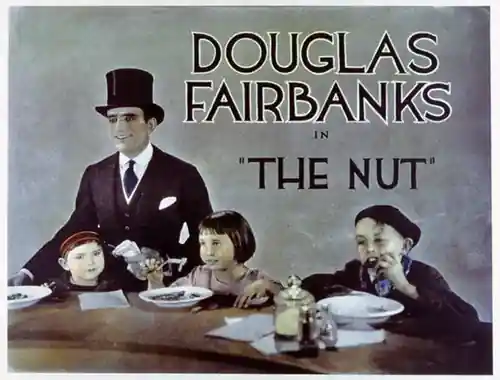
One cannot discuss this film without mentioning the sheer joy of its pacing. It moves with the velocity of a freight train, rarely pausing for breath. This 'Fairbanks tempo' became a signature of his later works, but here, in a contemporary setting, it feels almost avant-garde. The way he interacts with the environment—climbing walls, jumping over furniture, and utilizing his inventions—creates a sense of three-dimensional space that was rare in 1921. It is a masterclass in spatial awareness and physical storytelling, far surpassing the more traditional staging of Little Sunset or The Lad and the Lion.
In the grand tapestry of silent film, The Nut is often overshadowed by Fairbanks’ more spectacular historical epics. Yet, it remains a vital piece of the puzzle for anyone seeking to understand the evolution of the action-comedy. It possesses a raw, unpolished energy that is infectious. The film doesn't just want to tell a story; it wants to show you what the human body is capable of when pushed to its limits by a hyperactive imagination. It shares a certain kinship with the whimsical experimentation of The Pousse Cafe, though Fairbanks operates on a much grander scale.
The climax of the film, involving a series of mistaken identities and a frantic chase through a high-society party, is a precursor to the screwball comedies of the 1930s. It relies on a linguistic and visual dexterity that requires the audience to pay close attention to every frame. The resolution, while satisfyingly comedic, also leaves the viewer with a sense of the protagonist's genuine altruism. Charlie Jackson may be 'a nut,' but his heart is as large as his imagination. This blend of sentiment and slapstick is what made Fairbanks a global icon, and The Nut is a testament to his enduring appeal.
Even when compared to the more calculated humor of An Eye for Figures, The Nut feels spontaneous and alive. It is a film that celebrates the outlier, the tinkerer, and the dreamer. In an era that was rapidly industrializing and standardizing, Charlie Jackson stands as a beacon of individualistic chaos. He reminds us that the most powerful machine ever invented is the human mind, especially when it is fueled by love and a touch of madness. To watch The Nut today is to take a trip back to a time when the possibilities of cinema were as limitless as the energy of its greatest star. It is a vibrant, loud, and brilliantly messy explosion of creativity that remains as entertaining now as it was a century ago.
Ultimately, The Nut is more than just a vehicle for Douglas Fairbanks' stunts; it is a sophisticated piece of social commentary wrapped in a layer of exuberant physical comedy. It captures a specific moment in time—the dawning of the Roaring Twenties—with a clarity and a sense of fun that few other films of the period can match. Whether you are a student of silent film or simply a fan of high-energy storytelling, this film is an essential experience. It is a reminder that sometimes, to change the world, you have to be a little bit crazy.
IMDb 5.8
1931
Community
Log in to comment.