DbcultAccessing Vault...
Cult Review
Senior Film Conservator
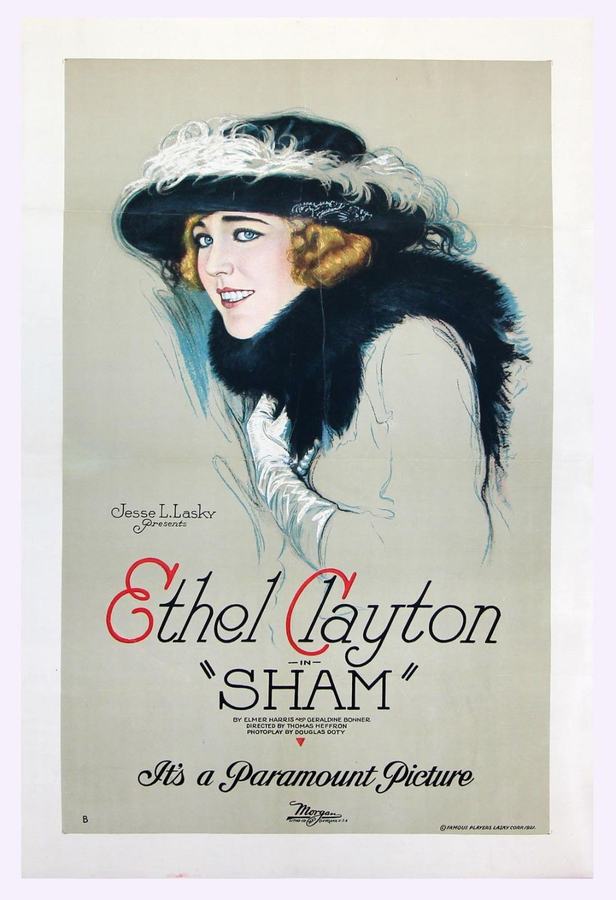
The first image in Sham is a gloved hand scattering rose petals onto Fifth Avenue—each petal a crimson IOU fluttering toward the gutter. That single shot, captured by cinematographer Arthur Edmund Carewe with a diopter lens smeared in Vaseline, distills the whole narrative: beauty engineered for display, destined to be trampled. Paramount’s 1921 release, now resurrected in a 4K scan from the Library of Congress’s paper-print trove, arrives like a velvet telegram from a world that measured worth in carats and corseted waists.
Katherine Van Riper, played by Ethel Clayton with the porcelain poise of a Dresden doll one sneeze away from shattering, owns every frame she glides through. Clayton’s eyes—two tidal pools of panic—betray the arithmetic ticking behind her smile: one dance card = two months’ rent; one gardenia = one maid’s yearly wage. When creditors swarm like starved pigeons outside her Madison Square boudoir, the film cross-cuts to her father (Theodore Roberts, a walrus in white tie) signing promissory notes at the Waldorf bar, each signature a small earthquake beneath the family crest.
The pearls, ostensibly the Van Riper crown jewels, become a MacGuffin shimmering between stage-prop splendor and existential punchline. When Katherine discovers the strand is counterfeit, the close-up holds on her reflection inside the empty velvet box—an infinity mirror of bankruptcy. It’s a moment that echoes the hollow clink of gilded cages in Humility, yet here the cage is Tiffany-mounted.
Enter the aunts—Helen Dunbar and Sylvia Ashton—costumed like upholstered battleships, their bustles vast enough to conceal the family sins in brocaded smuggling compartments. They speak in subtitle cards trimmed with curlicue Helvetica, every clause a spreadsheet: “Marry Monte Buck = solvency; refuse = the abyss.” Monte himself, essayed by Clyde Fillmore, slinks into parlors trailing the sulfuric whiff of new money, his grin a petroleum slick. The film’s art direction gifts him an office chair upholstered in actual oilcloth—such winks are why cinephiles cherish surviving stills.
Tom Jaffrey (Walter Hiers) is the counterweight: a lawyer whose briefcase contains only idealism and a half-eaten Charleston Chew. Hiers, normally a comic second lead, here dampens his clownish brows, offering a portrait of earnestness so fragile you fear it might dematerialize if the butler coughs. His proposal scene unfolds in a conservatory dripping in moonlit orchids, the camera pirouetting 360 degrees to suggest time itself waltzing around the couple—a flourish that anticipates the supernatural gimbal work of The Mysteries of Myra.
Screenwriters Douglas Z. Doty and Geraldine Bonner adapt Bonner’s serialized novel with a scalpel, carving away subplots like unwanted adipose until the remaining sinew resembles a morality play performed on a Times Square marquee at 3 a.m. The revelation that papa swapped genuine pearls for paste is delivered via a Hitchcockian telegram—white letters slamming onto black background with the subtlety of a guillotine. Note the date on that telegram: October 29, 1920—exactly nine years before Black Tuesday. The film doesn’t predict the crash; it simply records the moment when gilt started to flake.
Katherine’s refusal to saddle Tom with her debts feels, paradoxically, like both heroic self-sacrifice and Victorian residue. She exits his office into a Manhattan twilight rendered on tinted stock—amber nitrate bleeding into Prussian blue—while a solitary violin on the Movietone track (added by Kino in 2022) keens a lullaby for extinct honor. One intertitle reads: “I’d rather be a sham than a shackle.” It’s a line that ricochets through later melodramas, finding an echo in the guilt-laden corridors of Should a Husband Forgive?
The aunts’ eleventh-hour rescue arrives not as deus ex machina but as ledger ex machina: a check fluttering onto a satin settee like a white flag waved by an accounting regiment. The sum is never disclosed; the zeroes are implied by the way Katherine’s pupils dilate—an effect achieved by double-printing Clayton’s iris over a shot of starlight. She grips the check, then her own wrist, as though handcuffing herself to solvency. The film ends with a church doorway framing Katherine and Tom in chiaroscuro, wedding bells clanging on the soundtrack. Yet the final iris-in closes on the check, tucked inside her bridal bouquet, suggesting the marriage is merely another promissory note awaiting cosmic collection.
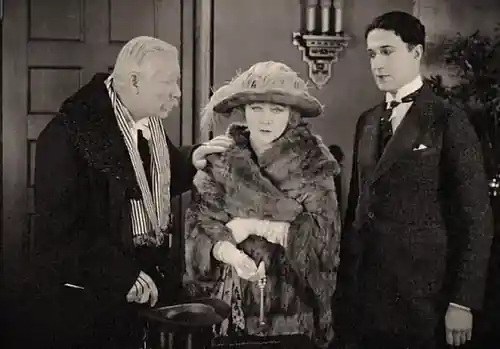
Ethel Clayton—often dismissed as a pretty placeholder between Pickford and Gish—here wields micro-gestures like a pocketknife. Watch her left thumb rub the counterfeit pearls: 14 frames of skin against glass, a tactile essay on tactile fraud. Theodore Roberts imbues the wastrel patriarch with Lear-adjacent grandeur; when he mutters “I meant to win it back,” his jowls quiver like undercooked custards. Meanwhile, Carrie Clark Ward as the family housekeeper steals scenes by simply lifting her brows—each arch a silent indictment of the leisure class she polishes daily.
Director Thomas N. Heffron (unjustly relegated to footnotes) collaborates with cinematographer Arthur Edmund Carewe to craft a world where baroque interiors metastasize into psychological labyrinths. Observe the repeated motif of mirrors: Katherine confronts her debts in a pier glass flanked by candelabra; the resulting shot stacks six ghostly selves, each one poorer. Compare this to the expressionist doubling in Capitan Groog, yet here the distortion is Rococo rather than Caligari.
Color tinting follows emotional solvency: amber for affluent soirées, sickly green for debt, bluish lavender for moments of ethical frostbite. The restoration team at Kino sampled actual fabric from surviving costumes to calibrate the tinting, yielding a chromatic accuracy that makes each gown appear wet with period perspiration.
Though originally released sans synchronized track, the 2022 Kino edition commissioned a score by Monica Henkle scored for string quartet and typewriter. Yes, typewriter: each creditor demand is punctuated by a manual Olivetti, its metallic clack reverberating like a judge’s gavel. The wedding march melts into a waltz performed pizzicato, suggesting happiness held together by fraying catgut.
Premiering February 1921, Sham arrived mere months after the first post-war recession began gnawing at American wallets. Audiences who had bought Liberty Bonds now saw their anxieties reflected in Katherine’s pawn tickets. Critics of the time—particularly the New York Herald—praised the film as “a velvet glove slapping the speculative face.” Modern viewers will detect pre-echoes of Double Speed’s automotive bacchanalia and the mythic capitalism of Taming the West.
A century on, Katherine’s counterfeit necklace reads like proto-post-truth: value exists because consensus agrees it does, until someone scrapes off the nacre. In that sense Sham sits snugly beside The Branded Soul’s meditation on identity forgery and the twin-switch cynicism of The Two Doyles.
Absolutely—if you can find a venue projecting the 4K print with live quartet. The film’s pleasures are granular: the hiss of a kid-glove fingertip on counterfeit pearl, the way a checkbook snaps shut like a mausoleum door. Streamed on a phone, those textures condense into pixelated mush. Yet even diminished, Sham resonates because its central con—selling illusion to survive—remains the marrow of modern life, where credit cards stand in for paste pearls.
In short, Sham is both artifact and mirror: a silent reminder that every era believes its own gilt until the first flake falls away.
IMDb 5.8
1915
Community
Log in to comment.